
Sustainable Design Certificate Online: A Practical Pathway to Regenerative Design and Permaculture

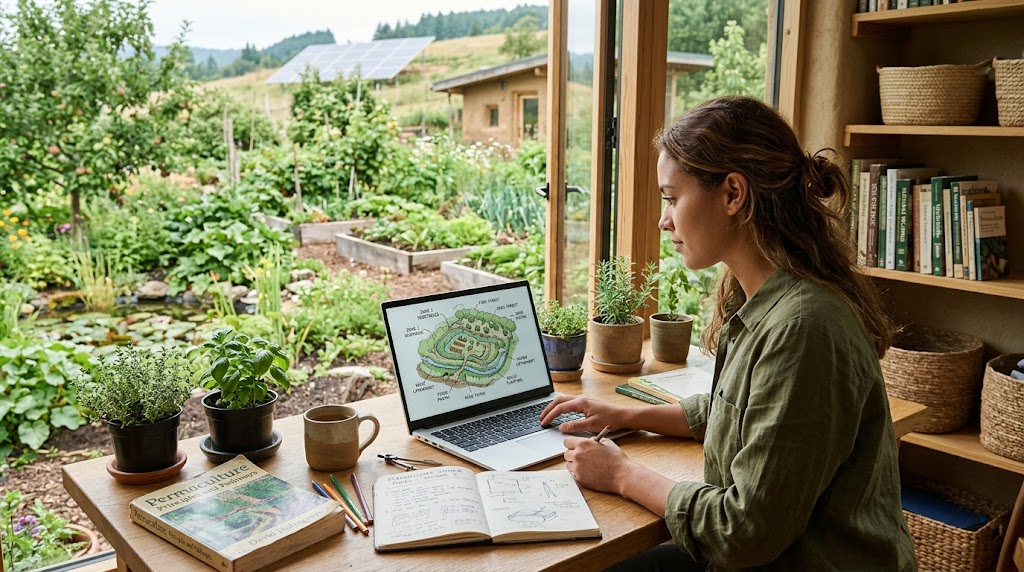
The way we design our homes, communities, businesses, food systems, and landscapes has a lasting impact on the planet. As environmental challenges become increasingly interconnected, there is a growing need for people who can think beyond conventional sustainability and develop solutions that restore ecological health while supporting human well-being.
For individuals interested in permaculture, ecological restoration, and regenerative living, education is an important starting point. A sustainable design certificate online offers an opportunity to explore the principles of responsible design, understand how natural systems function, and develop practical approaches to creating more resilient environments.
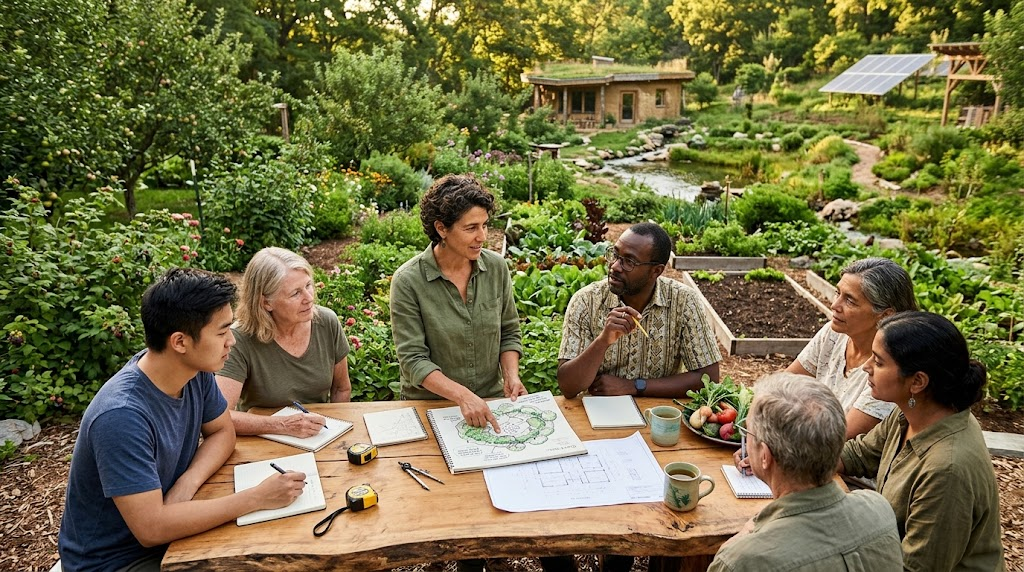
Unlike traditional educational pathways that may focus primarily on theory, sustainable design education can connect ecological knowledge with real-world applications. Students can explore how energy, water, soil, food, buildings, communities, and economies interact. They can also learn to identify opportunities for positive change within existing systems.
Online learning makes this knowledge more accessible to people with different professional backgrounds, geographical locations, and personal commitments. Whether you are beginning your permaculture journey, preparing for a permaculture diploma, or looking to expand your existing sustainability knowledge, a structured learning experience can help you develop the perspective and capabilities needed to contribute to regenerative change.
But what should you expect from a sustainable design certificate? How does it relate to permaculture? And how can online education help you move from understanding ecological principles to applying them in practical projects?
This guide explores these questions and explains how sustainable design education can become part of a meaningful journey toward regenerative practice.
What Is a Sustainable Design Certificate Online?
A sustainable design certificate online is an educational program that introduces learners to the principles, methods, and applications of designing systems that reduce environmental harm and support long-term ecological and social well-being.
The word design is important. Sustainability is not simply about adopting environmentally friendly habits or choosing products with lower environmental impacts. It involves understanding how systems are created, how their components interact, and how design decisions influence outcomes over time.
A sustainable design program may explore subjects such as:
- Ecological principles and natural patterns.
- Sustainable resource management.
- Permaculture ethics and design principles.
- Renewable energy and energy efficiency.
- Water conservation and responsible water management.
- Soil health and regenerative agriculture.
- Sustainable buildings and materials.
- Community resilience and participatory development.
- Circular economies and resource recovery.
- Systems thinking and regenerative approaches.
The specific curriculum varies between educational providers. Some programs focus on sustainable architecture, product development, or environmental management. Others take a broader approach that includes ecological design, community development, and regenerative systems.
For permaculture diploma seekers, the most valuable programs are those that help connect these different areas of knowledge.
Rather than treating sustainability as a collection of separate technical subjects, an integrated approach encourages learners to understand the relationships between ecological, social, cultural, and economic systems.
The online format also provides flexibility. Students can often study from different locations, organize their learning around personal responsibilities, and apply concepts directly to projects in their own communities.
Why Sustainable Design Education Matters for Permaculture Diploma Seekers
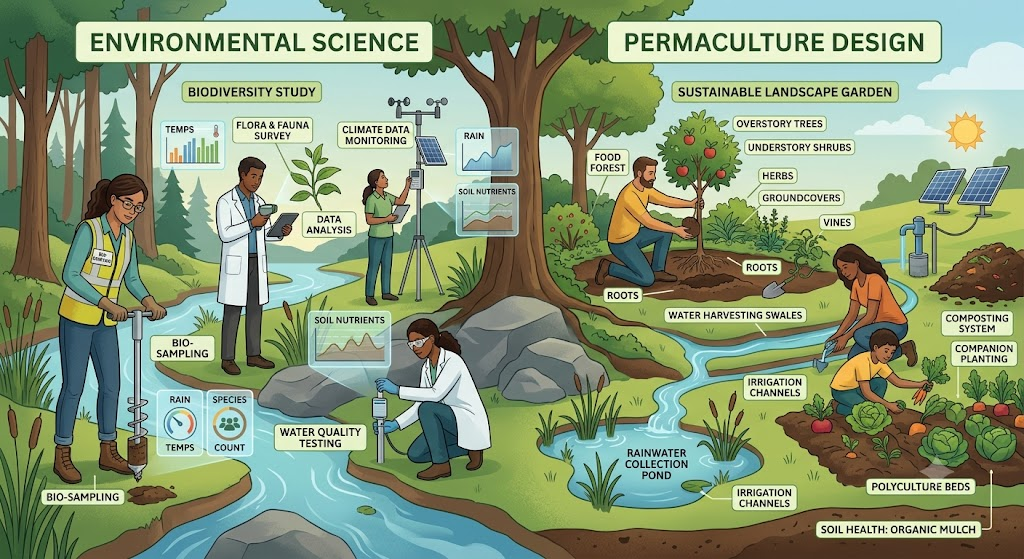
Permaculture is a design approach that uses ecological principles to develop sustainable and regenerative human systems. It encourages people to observe natural processes, recognize relationships, and design environments that meet human needs while supporting the health of the ecosystems on which they depend.
For someone pursuing a permaculture diploma, sustainable design education can provide a broader foundation for applying these ideas.
A permaculture diploma journey often involves more than learning gardening techniques. It requires the ability to observe landscapes, understand patterns, assess resources, identify problems, and develop appropriate design responses.
These capabilities become particularly important when working on complex projects.
For example, designing a productive landscape involves considering more than plant selection. A successful design may need to account for:
- Soil composition and fertility.
- Water availability and movement.
- Sunlight and microclimates.
- Existing vegetation and biodiversity.
- Human activities and accessibility.
- Local climate conditions.
- Food production requirements.
- Long-term maintenance.
- Economic and community needs.
A sustainable design certificate online can help learners develop the systems-oriented perspective needed to understand these relationships.
It can also introduce design approaches that complement permaculture practice, including life-cycle thinking, resource efficiency, circular design, and regenerative development.
Connecting Permaculture Ethics With Practical Design
Permaculture is commonly associated with three central ethics:
- Earth Care: Protecting and regenerating the natural systems that support life.
- People Care: Supporting human health, well-being, and meaningful participation.
- Fair Share: Using resources responsibly and distributing surplus in ways that benefit communities and ecosystems.
These ethics provide a foundation for making design decisions.
For example, a community food garden can support Earth Care by improving soil health and creating habitat for beneficial organisms. It can support People Care by providing access to nutritious food and opportunities for collaboration. It can reflect Fair Share through shared resources, community participation, and the distribution of surplus produce.
Sustainable design education helps learners translate these ethical principles into practical decisions.
It encourages them to ask not only whether a project is environmentally responsible, but also whether it is socially beneficial, economically realistic, and capable of supporting long-term resilience.
Core Skills Developed Through Sustainable Design Training
A well-rounded sustainable design program should help learners develop a combination of ecological knowledge, analytical abilities, creative thinking, and practical design skills.
These competencies are useful whether you want to work on a small garden, develop a regenerative enterprise, or contribute to a larger community transformation project.
1. Systems Thinking
Systems thinking is the ability to understand how different elements interact within a larger whole.
In conventional problem-solving, people often focus on individual issues. For example, a community experiencing water shortages might respond by increasing water extraction or building additional storage infrastructure.
A systems-thinking approach investigates the broader situation.
It considers rainfall patterns, soil conditions, vegetation, land use, infrastructure, consumption habits, and community needs.
This wider perspective can reveal opportunities that would otherwise remain unnoticed.
For permaculture designers, systems thinking is particularly valuable because it helps identify relationships between different elements and recognize how one design decision can influence several outcomes.
2. Ecological Observation and Analysis
Effective sustainable design begins with observation.
Before introducing changes to a landscape or community, designers need to understand the existing conditions.
This includes studying:
- Climate and seasonal patterns.
- Soil structure and fertility.
- Water movement and availability.
- Native vegetation and biodiversity.
- Existing infrastructure.
- Human activities and resource requirements.
- Opportunities for ecological restoration.
Observation helps prevent designs based on assumptions rather than actual conditions.
For example, a designer planning a food-producing landscape should first investigate sunlight exposure, soil quality, water availability, and local climate.
These observations provide the foundation for choosing appropriate plants, designing water systems, and organizing productive spaces.
3. Regenerative Resource Management
Sustainable resource management focuses on using resources efficiently while reducing environmental pressure.
Regenerative resource management goes further by seeking opportunities to improve the condition of the systems that provide those resources.
Consider soil management.
A conventional approach might focus on maintaining soil productivity through external inputs. A regenerative approach considers how organic matter, biological activity, vegetation, and natural nutrient cycles can contribute to improving soil health over time.
Similar thinking can be applied to water, energy, materials, and food systems.
Learners can explore ways to:
- Reduce unnecessary resource consumption.
- Reuse materials and recover valuable resources.
- Improve water retention in landscapes.
- Support biological soil processes.
- Reduce dependence on nonrenewable inputs.
- Design systems that generate useful outputs.
These skills are relevant to agricultural projects, sustainable buildings, community gardens, and ecological enterprises.
4. Creative Problem-Solving
Sustainable design rarely involves applying one universal solution.
Every landscape, organization, and community has unique characteristics. Solutions must respond to local conditions, available resources, cultural considerations, and practical limitations.
Creative problem-solving helps designers identify opportunities within these constraints.
For instance, a small urban property may have limited ground space but offer opportunities for vertical growing, rainwater collection, composting, and shared food production.
A rural community may have access to agricultural land but face challenges involving transportation, market access, or declining soil fertility.
In both situations, successful design depends on understanding the context and developing solutions that work within it.
5. Project Planning and Implementation
Ideas become meaningful when they can be translated into action.
Sustainable design education should therefore introduce learners to project development, planning, implementation, and evaluation.
Important capabilities include:
- Defining project objectives.
- Identifying stakeholders.
- Assessing available resources.
- Establishing realistic priorities.
- Developing implementation plans.
- Monitoring progress.
- Evaluating results.
- Adjusting designs as conditions change.
These capabilities are particularly important for permaculture diploma seekers because advanced learning often involves documenting and developing real-world projects.
Important Subjects to Explore in an Online Sustainable Design Program
When evaluating a sustainable design certificate online, consider whether the curriculum offers a broad understanding of the relationships between natural systems and human activities.
The following subjects provide a useful foundation.
Permaculture Design Principles
Permaculture provides a practical framework for designing human environments using patterns and relationships observed in nature.
Its principles encourage observation, thoughtful resource use, diversity, efficiency, and long-term thinking.
Students should explore how these principles can be applied to landscapes, buildings, food systems, communities, and organizations.
An important part of permaculture education is understanding that principles are not rigid instructions. They are guidelines that help designers respond intelligently to different conditions.
Regenerative Agriculture and Food Systems
Food production has significant environmental and social implications.
Sustainable design education can help learners understand how agricultural systems influence soil, water, biodiversity, climate, and communities.
Relevant subjects include:
- Agroecology.
- Food forests.
- Polyculture.
- Soil regeneration.
- Composting systems.
- Perennial food production.
- Seed diversity.
- Local food networks.
- Community-supported agriculture.
For permaculture diploma seekers, these subjects offer opportunities to develop designs that integrate food production with ecosystem restoration.
Sustainable Water Management
Water is one of the most important resources in any ecological design.
A sustainable water strategy considers where water comes from, how it moves through a landscape, how it is stored, and how it is used.
Learners can explore rainwater harvesting concepts, soil infiltration, water conservation, watershed protection, and ecological approaches to managing water.
The goal is to understand water as part of a connected system rather than treating it as an isolated resource.
Sustainable Buildings and Materials
The built environment influences energy consumption, material use, waste generation, and human health.
Sustainable design introduces approaches for reducing these impacts throughout the life cycle of buildings and infrastructure.
Relevant concepts include:
- Passive solar design.
- Natural ventilation.
- Energy efficiency.
- Responsible material selection.
- Reuse and recycling.
- Building orientation.
- Thermal performance.
- Integration of buildings into their surrounding landscapes.
These concepts can complement permaculture by helping designers consider how buildings interact with the wider environment.
Circular Economy and Waste Reduction
Traditional production systems often follow a linear pattern: resources are extracted, transformed into products, consumed, and discarded.
Circular design seeks to reduce this pattern of resource loss.
It encourages systems in which materials remain useful for longer through maintenance, repair, reuse, recycling, and resource recovery.
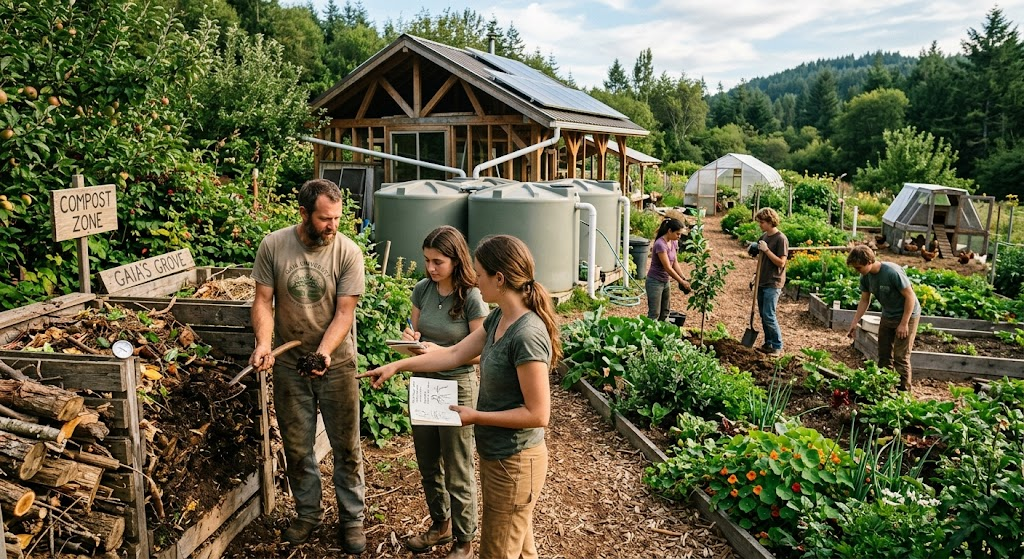
For example, an organic waste management system can transform food scraps and other biodegradable materials into compost that supports soil fertility.
This creates a useful connection between consumption, resource recovery, and food production.
Permaculture designers can apply similar thinking when developing households, community projects, farms, and regenerative businesses.
Social and Community Design
Sustainability is not exclusively an environmental issue.
A project may demonstrate excellent ecological performance but still fail if it ignores local needs, cultural values, accessibility, or community participation.
Social design examines how people interact, collaborate, make decisions, and organize shared resources.
Students can explore participatory planning, community resilience, collaborative leadership, social innovation, and regenerative livelihoods.
These subjects help broaden the role of the designer from someone who creates physical solutions to someone who can facilitate positive change within communities.
How Online Learning Supports Practical Sustainable Design
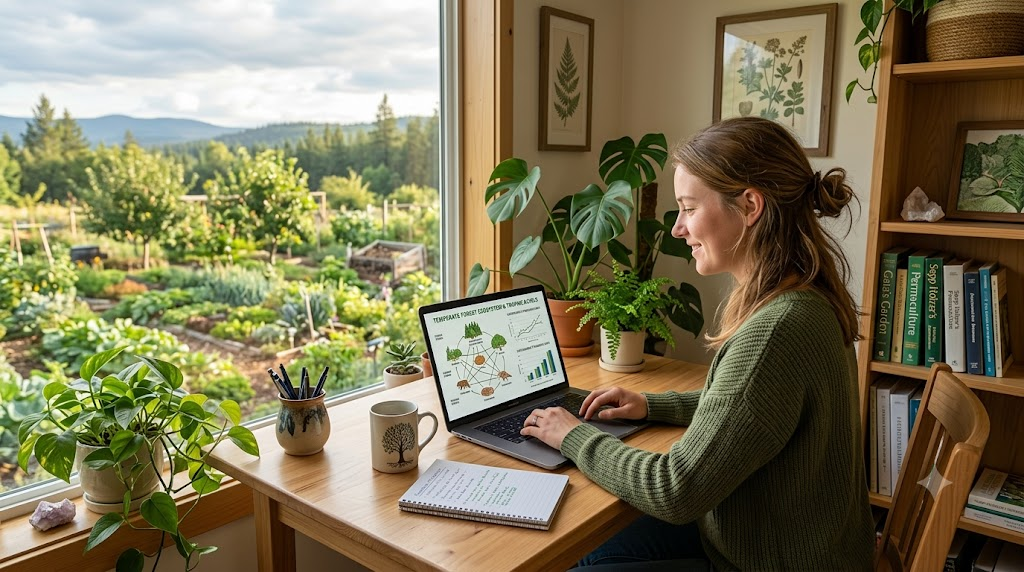
One of the main advantages of choosing a sustainable design certificate online is the opportunity to connect structured education with the environment in which you live and work.
Instead of limiting learning to classroom exercises, students can investigate local conditions and apply new concepts to real situations.
For example, someone living in an urban environment might study:
- Opportunities for community food production.
- Sustainable household resource management.
- Urban biodiversity.
- Local composting initiatives.
- Community resilience.
Someone living in a rural area might investigate:
- Soil restoration opportunities.
- Water management.
- Agricultural diversification.
- Woodland restoration.
- Regenerative land management.
Both learners can study similar design principles while working with very different environments.
Combining Independent Study With Practical Activities
Online education is most valuable when it provides opportunities for active learning.
Reading about ecological design is useful, but applying concepts helps develop a deeper understanding.
Consider using the following activities during your studies:
Create an observation journal.
Record observations about a landscape, garden, building, or community. Include seasonal changes, resource flows, environmental conditions, and potential design opportunities.
Develop a small design project.
Choose an area that you can observe regularly. It could be a garden, balcony, community space, or suitable local landscape.
Identify its current characteristics and develop a design that addresses a specific need.
Map resource flows.
Investigate how water, energy, food, and materials enter and leave a particular system. Identify opportunities to reduce waste and improve efficiency.
Document your learning.
Keep records of your research, observations, design decisions, challenges, and project outcomes.
Reflect on your results.
Consider what worked, what did not work as expected, and what you would change in the next design cycle.
These activities can gradually build the practical experience and documentation skills needed for more advanced study.
How to Choose the Right Sustainable Design Certificate Online
Not all sustainable design programs offer the same educational experience. Some emphasize technical environmental knowledge, while others focus on ecological design, leadership, systems thinking, or practical project development.
For prospective permaculture diploma students, choosing the right program requires looking beyond the certificate itself.
Here are seven factors worth considering.
1. Look for an Integrated Curriculum
A strong program should connect environmental, social, and economic dimensions of sustainability.
Look for learning opportunities that combine ecological principles with practical design methods.
A course that examines only one subject may provide useful specialist knowledge, but an integrated curriculum can help you understand how different systems influence one another.
2. Prioritize Practical Learning
Sustainable design is an applied discipline.
Choose a program that encourages you to work with real situations, investigate practical challenges, and develop solutions.
Assignments, project work, design exercises, and reflective activities can help turn theoretical knowledge into useful capabilities.
3. Consider the Learning Structure
Online education can take several forms:
- Self-paced courses with independent study materials.
- Structured courses with defined learning periods.
- Programs with interactive webinars.
- Mentored learning experiences.
- Project-based educational pathways.
Think about the amount of structure and interaction you need to maintain consistent progress.
4. Investigate the Educators and Learning Community
Learning from people with experience in ecological design, permaculture, sustainability, and regenerative development can provide valuable insights.
A diverse learning community also introduces different perspectives.
Students can learn from the experiences of people working in different climates, cultures, professional environments, and communities.
5. Evaluate Project Documentation Opportunities
A certificate demonstrates participation in an educational program, but a documented portfolio can provide additional evidence of your developing capabilities.
Look for programs that encourage you to record:
- Design projects.
- Research activities.
- Practical experiments.
- Learning reflections.
- Project outcomes.
- Professional development.
This documentation can become useful when pursuing further education or presenting your experience to potential collaborators and employers.
6. Understand the Credential
The term certificate can describe different educational achievements.
Some certificates confirm that a student completed a particular course. Others form part of a larger educational pathway.
Before enrolling, investigate:
- The institution awarding the certificate.
- The curriculum and learning objectives.
- Completion requirements.
- Assessment methods.
- Whether mentoring is included.
- Opportunities for further study.
- Whether the qualification is accredited, internally awarded, or a certificate of completion.
It is important to understand what a certificate represents rather than assuming that all credentials have the same status.
7. Consider Your Long-Term Educational Goals
If your objective is to pursue a permaculture diploma, choose learning opportunities that support this direction.
Consider whether the program helps you develop the competencies required for independent project work, ecological observation, research, design development, and professional practice.
A certificate can be an important educational milestone, but it should ideally contribute to a broader learning journey.
Sustainable Design Education at Gaia University
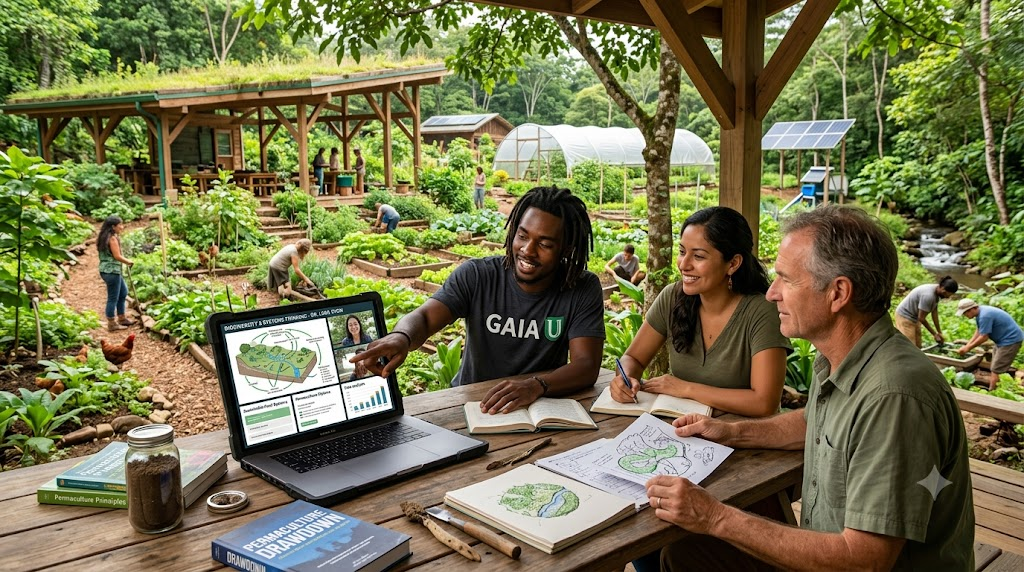
For learners interested in combining ecological design, permaculture, and regenerative development, Gaia University offers an educational approach centered on action learning and real-world projects.
Its approach connects learning with practical experience, encouraging students to develop their knowledge while working on projects that relate to their personal, professional, and community goals.
Rather than treating education as the accumulation of theoretical information, Gaia University emphasizes the relationship between learning, experimentation, reflection, and implementation.
This approach is particularly relevant to people interested in regenerative design because meaningful ecological change requires more than understanding environmental challenges. It requires the ability to develop and implement appropriate responses.
Certificate in Ecosocial Design
One relevant educational pathway is the Certificate in Ecosocial Design.
The program brings together subjects related to regenerative livelihoods, organizational development, learning methodologies, worldviews, project thinking, and community resilience.
According to Gaia University’s program information, the certificate consists of eight online modules incorporating readings, activities, and interactive webinars.
The educational experience explores several interconnected areas:
Creating Regenerative Livelihoods
Learners investigate how economic activities can contribute to regenerative outcomes and support meaningful livelihoods.
Managing Time and Promises
This subject examines accountability, commitments, and ways of organizing work and relationships.
Learning and Unlearning
Students explore approaches to self-directed learning, reflection, and personal development.
Thinking About Worldviews
This module encourages learners to examine how assumptions and perspectives influence decisions and behavior.
Growing Resilient Communities
Learners investigate approaches to organizational development, leadership, and community resilience.
Project and Design Thinking
Students explore ways to develop projects, identify opportunities, and translate ideas into practical action.
Tracking the Learning Journey
The program also introduces approaches to documenting learning and developing a professional portfolio.
You can explore the Gaia University program offerings for further information about the available educational pathways.
Connecting Certificate Studies With a Permaculture Diploma
For students with longer-term educational ambitions, it is useful to understand how certificate studies can connect with diploma-level learning.
Gaia University’s diploma programs include the International Diploma of Permaculture Design and the Diploma in Action for Resilience.
The university describes its diploma approach as flexible and project-oriented, combining online learning, mentoring, self-directed development, and documented practical work.
This creates an opportunity to connect foundational studies with the development of more advanced competencies.
For permaculture diploma seekers, this relationship can be particularly valuable.
Rather than viewing a certificate as an isolated achievement, learners can use their studies to develop the skills, experience, and documentation needed for continued professional and personal development.
Program structures and admission requirements can change, so prospective students should review the current program information before making enrollment decisions.
How to Apply Sustainable Design Principles to Real Projects
The best way to understand sustainable design is to begin applying its principles.
You do not need to start with a large or complicated project. A relatively small initiative can provide meaningful opportunities to develop observation, planning, and design skills.
Here are five practical project ideas.
Project 1: Design a Regenerative Home Garden
A home garden provides an accessible environment for exploring ecological design.
Begin by studying the available space, sunlight, soil conditions, water sources, and existing vegetation.
Then consider how different elements could work together.
For example, a garden might integrate:
- Perennial food plants.
- Seasonal vegetables.
- Composting.
- Rainwater management.
- Pollinator-friendly vegetation.
- Mulching and soil improvement.
Your objective should be to develop a productive system that supports ecological health while meeting household needs.
Project 2: Develop a Community Food Initiative
Community food projects provide opportunities to combine environmental and social design.
You could investigate the potential for a shared garden, local food exchange, seed-sharing initiative, or educational growing space.
Consider the needs of participants, available resources, governance, maintenance responsibilities, and long-term viability.
This type of project demonstrates how sustainable design can support both ecological and community resilience.
Project 3: Create a Resource Flow Assessment
Choose a household, small business, or community organization.
Map the movement of important resources, including water, energy, food, and materials.
Identify where resources are consumed, where waste is generated, and where opportunities for reuse exist.
Then develop a set of recommendations for improving the system.
This exercise helps build analytical skills and encourages a more comprehensive understanding of sustainability.
Project 4: Explore Ecological Restoration
Identify an appropriate area that could benefit from ecological improvement.
Investigate its existing condition, vegetation, soil characteristics, and environmental pressures.
Develop a conceptual restoration plan based on local conditions.
Potential design considerations include native vegetation, habitat connectivity, soil protection, and water management.
Any restoration activity should account for local ecological conditions and relevant permissions.
Project 5: Design a Regenerative Livelihood
Sustainable design can also be applied to economic activities.
Consider an enterprise that creates value while supporting ecological and social well-being.
Examples might include:
- Ecological education.
- Regenerative food production.
- Sustainable landscape services.
- Community-based resource recovery.
- Nature-based learning experiences.
- Local ecological restoration initiatives.
Examine how the enterprise creates value, uses resources, interacts with its community, and supports long-term resilience.
This exercise can help connect ecological design with entrepreneurship and professional development.
Career and Personal Development Opportunities
A sustainable design certificate online can contribute to professional development in several areas.
The knowledge gained through ecological and regenerative design education may be relevant to:
Permaculture design: Developing knowledge of ecological relationships, landscape observation, and integrated design.
Sustainable agriculture: Exploring regenerative food production and responsible resource management.
Environmental education: Communicating sustainability concepts and supporting practical learning initiatives.
Community development: Contributing to projects that strengthen local resilience and resource sharing.
Regenerative entrepreneurship: Developing business models that integrate environmental and social objectives.
Ecological restoration: Supporting projects focused on biodiversity, soil health, and ecosystem improvement.
Sustainable living: Applying design principles to household decisions, resource use, and community participation.
It is important to recognize that completing a certificate does not automatically qualify someone for every professional role. Employment opportunities depend on the specific qualification, practical experience, professional requirements, and relevant local regulations.
Nevertheless, combining education with documented project experience can help build a stronger professional foundation.
Frequently Asked Questions About Sustainable Design Certificates Online
What is a sustainable design certificate online?
A sustainable design certificate online is an educational credential awarded after completing a course or program focused on designing systems that reduce environmental impacts and support ecological, social, and economic well-being.
Depending on the curriculum, students may explore permaculture, regenerative design, resource management, sustainable buildings, systems thinking, and community development.
Is a sustainable design certificate useful for permaculture diploma seekers?
Yes. Sustainable design education can complement permaculture studies by developing systems thinking, ecological observation, project planning, and practical design capabilities.
It can also introduce subjects that expand the application of permaculture principles beyond agriculture and gardening.
Can I study sustainable design without previous experience?
Many introductory programs are suitable for people who are new to sustainability and ecological design.
However, the entry requirements vary between institutions. Check the curriculum and prerequisites to determine whether a particular program matches your experience.
What is the difference between sustainable design and regenerative design?
Sustainable design generally focuses on reducing negative environmental and social impacts while maintaining the systems that support human well-being.
Regenerative design goes further by seeking to restore and improve ecological and social systems.
For example, a sustainable agricultural design might reduce water consumption and soil degradation. A regenerative approach would also seek to rebuild soil health, improve biodiversity, and strengthen the ecological relationships that support long-term productivity.
The two approaches are complementary, and regenerative design often builds on sustainability principles.
How long does an online sustainable design certificate take?
There is no universal duration.
Some introductory courses take only a few weeks, while more comprehensive programs may require several months.
The total learning commitment depends on the curriculum, number of modules, assessment requirements, and practical activities.
Do online sustainable design certificates include practical projects?
Some do, while others focus primarily on theoretical learning.
If your goal is to develop practical design capabilities, look for programs that include assignments, project development, reflection, feedback, and opportunities to apply concepts in real situations.
Can a sustainable design certificate lead to a permaculture diploma?
A certificate may provide foundational knowledge for further study, but it does not automatically guarantee admission to a diploma program.
Educational pathways and entry requirements differ between institutions. Contact the relevant university to understand whether previous studies can be recognized or transferred.
What should I look for in a sustainable design course?
Prioritize a curriculum that covers ecological principles, systems thinking, practical design, and resource management.
Also consider the learning format, educator experience, project requirements, mentoring opportunities, credential structure, and potential progression to further education.
Is online sustainable design education effective?
Online learning can be effective when it combines well-organized educational materials with active participation and practical application.
Students can study concepts remotely while investigating environmental conditions and developing projects in their own communities.
However, online learning should not be viewed as a substitute for all forms of practical experience. Observation, experimentation, collaboration, and real-world application remain essential.
Conclusion: Start Your Journey Toward Regenerative Design
Choosing a sustainable design certificate online can be an important step toward developing the knowledge and practical abilities needed to create more resilient human and ecological systems.
For permaculture diploma seekers, sustainable design education offers an opportunity to expand their understanding of ecological relationships, resource management, regenerative practices, and community development.
The most valuable learning experiences go beyond theoretical knowledge. They encourage students to observe, experiment, develop projects, reflect on their decisions, and apply what they learn to real situations.
By combining sustainable design principles with permaculture ethics and systems thinking, learners can develop a broader understanding of how human activities interact with the natural world.
Whether your goal is to improve a landscape, support a community initiative, develop a regenerative enterprise, or pursue advanced permaculture studies, the journey begins with curiosity, observation, and a willingness to learn through action.
A certificate can provide the foundation. Practical experience can turn that foundation into capability. And continued learning can help you contribute to a future in which human systems actively support the regeneration of the planet.
Responses