
Online Master’s Degree in Sustainability: A Powerful Path for Permaculture Diploma Seekers to Build Regenerative Futures

Introduction: Why Sustainability Education Matters for Permaculture Practitioners
The world is facing complex environmental, social, and economic challenges. Climate change, biodiversity loss, resource depletion, and community resilience have become central concerns for people who want to create a healthier planet. For many permaculture diploma seekers, learning practical ecological design principles is only the beginning. The next step often involves gaining deeper academic knowledge, research skills, and leadership abilities through advanced education.
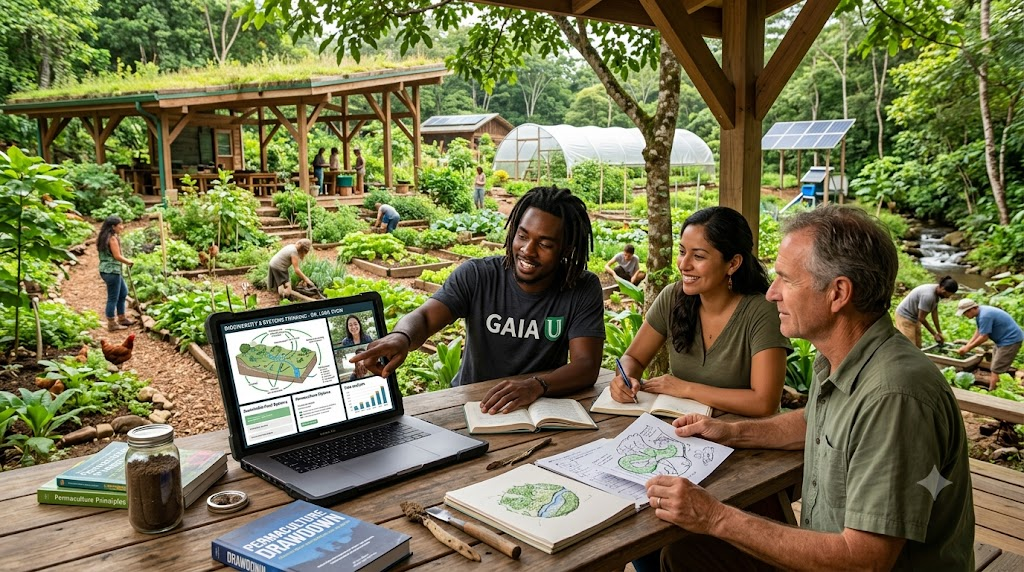
An online master’s degree in sustainability offers an opportunity for permaculture practitioners to connect hands-on ecological experience with broader sustainability frameworks. It allows learners to explore regenerative systems, sustainable development, social innovation, and ecological leadership while continuing their personal or professional projects.
Permaculture is built on observation, cooperation with nature, and designing systems that support life. Sustainability education expands these ideas by adding research methods, systems thinking, policy awareness, and organizational skills. Together, these areas create a powerful foundation for people who want to influence communities, organizations, and environmental movements.
For individuals seeking a flexible learning pathway, an online sustainability master’s program can provide the structure needed to transform passion into professional expertise. It enables students to study advanced concepts while maintaining commitments such as farms, ecological projects, businesses, or community initiatives.
One example of an advanced learning pathway designed around transformational sustainability education is the Masters Degree program offered by Gaia University Masters Degree page.
Understanding the Connection Between Permaculture and Sustainability Education
Permaculture as a Foundation for Regenerative Thinking
Permaculture is more than gardening or ecological farming. It is a design philosophy that encourages people to understand natural patterns and create systems that work with the environment rather than against it.
Permaculture diploma programs commonly introduce students to:
- Ecological design principles
- Sustainable agriculture techniques
- Natural resource management
- Community development approaches
- Ethical decision-making
- Regenerative practices
These concepts provide valuable practical experience. However, many practitioners eventually want to explore larger questions:
- How can ecological solutions influence public policy?
- How can communities transition toward regenerative economies?
- How can sustainability projects be measured and improved?
- How can local solutions create global impact?
This is where advanced sustainability education becomes valuable.
Expanding Practical Knowledge Into Professional Expertise
A permaculture diploma helps students understand how sustainable systems function at a local level. A master’s degree can help them analyze, communicate, and scale those solutions.
Advanced sustainability studies often include areas such as:
| Area of Study | How It Supports Permaculture Practitioners |
| Systems thinking | Helps understand relationships between environmental, social, and economic systems |
| Sustainability leadership | Develops skills for guiding organizations and communities |
| Ecological research | Improves the ability to evaluate environmental projects |
| Social innovation | Supports creative solutions for community challenges |
| Sustainable development | Connects local projects with global sustainability goals |
By combining practical ecological knowledge with academic frameworks, learners can become more effective sustainability professionals.
What Is an Online Master’s Degree in Sustainability?
An online master’s degree in sustainability is a graduate-level program focused on understanding and solving environmental and social challenges through interdisciplinary learning.
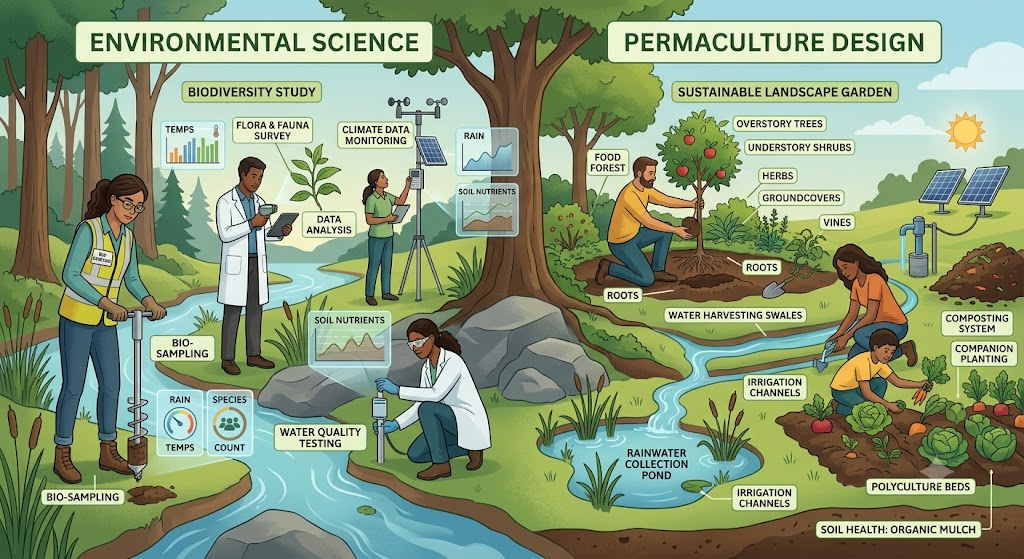
Unlike traditional academic fields that focus on one specific area, sustainability combines multiple subjects, including:
- Environmental science
- Community development
- Economics
- Leadership
- Agriculture
- Ecology
- Design thinking
- Ethics
The online format allows students to access education remotely, making it suitable for individuals who are already working, managing projects, or living in locations where traditional university programs are difficult to attend.
For permaculture diploma seekers, this flexibility is especially valuable. Many practitioners are involved in land-based projects, ecological businesses, or community initiatives. An online program allows them to continue their work while developing advanced knowledge.
Key Features of a Sustainability Master’s Program
Interdisciplinary Learning Approach
Sustainability challenges rarely have simple solutions. Environmental issues often involve human behavior, economic systems, cultural values, and ecological conditions.
A strong sustainability master’s program encourages students to examine problems from multiple perspectives. For example, restoring damaged land is not only an ecological task. It may also involve:
- Community participation
- Financial planning
- Education
- Policy considerations
- Long-term management
This broader perspective helps learners design solutions that are practical and lasting.
Research and Critical Thinking Skills
Permaculture practitioners often learn through observation and experience. A master’s degree adds research skills that allow students to document, evaluate, and improve their work.
Research abilities can help sustainability professionals:
- Measure project outcomes
- Analyze environmental impacts
- Present findings clearly
- Develop evidence-based solutions
- Share knowledge with wider audiences
These skills are increasingly important as organizations seek sustainability professionals who can combine practical experience with analytical thinking.
Why Permaculture Diploma Seekers Should Consider Advanced Sustainability Studies
Creating Bigger Environmental Impact
Many permaculture graduates begin with personal projects such as gardens, farms, eco-homes, or community initiatives. Over time, they may want to influence larger systems.
A sustainability master’s degree can help bridge the gap between small-scale action and broader transformation.
Graduates may apply their knowledge in areas such as:
- Regenerative agriculture
- Environmental education
- Sustainability consulting
- Community development
- Ecological entrepreneurship
- Climate adaptation projects
The combination of permaculture knowledge and sustainability education creates a unique skill set.
Developing Leadership Abilities
Sustainability challenges require leaders who can inspire collaboration. Technical knowledge alone is not enough. Successful projects often depend on communication, teamwork, and the ability to bring people together.
Advanced sustainability education can strengthen leadership skills by helping students understand:
- How organizations create change
- How communities work together
- How to manage complex projects
- How to communicate sustainability ideas effectively
For permaculture practitioners, leadership development can transform individual projects into movements that benefit wider communities.
Choosing the Right Online Sustainability Master’s Program
Selecting the right program is an important decision. Permaculture diploma seekers should consider several factors before enrolling.
Curriculum Alignment
The program should match the learner’s goals and interests. Some students may focus on ecological restoration, while others may want to explore sustainability leadership, education, or social transformation.
Important curriculum areas may include:
- Regenerative design
- Ecological systems
- Sustainability strategy
- Community resilience
- Innovation and entrepreneurship
- Environmental ethics
A program that connects theory with real-world application can provide greater value.
Flexible Learning Structure
Many sustainability students are active practitioners. They may be managing farms, businesses, or community projects.
An effective online program should provide:
- Flexible scheduling
- Accessible learning materials
- Opportunities for collaboration
- Practical assignments
- Supportive learning communities
Flexibility allows students to apply their learning immediately in real situations.
Career Opportunities After Sustainability Education
A master’s degree in sustainability can open doors to many professional pathways. When combined with permaculture experience, graduates may bring a distinctive perspective to employers and organizations.
Potential career directions include:
| Career Path | Example Responsibilities |
| Sustainability consultant | Helping organizations improve environmental practices |
| Regenerative agriculture specialist | Designing ecological farming systems |
| Community development professional | Supporting sustainable community projects |
| Environmental educator | Teaching sustainability principles |
| Social entrepreneur | Creating mission-driven businesses |
| Sustainability coordinator | Managing sustainability programs |
The demand for sustainability-focused skills continues to grow as organizations recognize the importance of environmental responsibility.
The Future of Regenerative Education
The future of sustainability depends on people who can combine knowledge, creativity, and action. Education plays a major role in preparing individuals to respond to environmental challenges.
Permaculture teaches people how to work with nature. Sustainability education teaches them how to connect those principles with wider systems. Together, they create a pathway for meaningful transformation.
An online master’s degree in sustainability is not only an academic achievement. For many learners, it represents a commitment to creating healthier relationships between people and the planet.
Building Practical Skills Through an Online Sustainability Master’s Degree
An important advantage of advanced sustainability education is the ability to combine theoretical understanding with practical application. For permaculture diploma seekers, this connection is especially valuable because permaculture itself is based on learning through observation, experimentation, and real-world action.
An online master’s degree in sustainability can help students strengthen several important abilities that support regenerative projects and environmental leadership.
Systems Thinking for Complex Environmental Challenges
Sustainability challenges are interconnected. A decision about agriculture, energy, housing, or resource use can influence many other areas of life.
Systems thinking helps learners understand relationships between different parts of a system instead of focusing on isolated problems.
For example, a permaculture project may involve:
- Soil health and biodiversity
- Water conservation
- Food production
- Community participation
- Local economic development
A systems approach allows practitioners to consider how each element supports the others. This perspective is essential for creating solutions that remain effective over time.
Project Planning and Implementation
Many sustainability ideas fail because they are not supported by strong planning and management. A master’s-level education can help learners develop skills for organizing and completing complex projects.
Students may learn how to:
- Define sustainability goals
- Develop project strategies
- Manage resources
- Evaluate outcomes
- Communicate results to stakeholders
These abilities are useful for permaculture practitioners who want to expand from individual projects into larger community initiatives.
Communication and Knowledge Sharing
Sustainability work depends on collaboration. Whether someone is educating communities, working with organizations, or leading environmental programs, communication skills are essential.
Advanced sustainability studies often encourage learners to present ideas clearly through:
- Reports
- Presentations
- Research projects
- Community discussions
- Educational materials
A knowledgeable sustainability professional must not only understand ecological principles but also inspire others to participate in positive change.
How an Online Master’s Degree in Sustainability Supports Regenerative Development
Regenerative development focuses on restoring and improving natural and social systems rather than simply reducing harm. It aligns closely with many permaculture principles.
While traditional sustainability often focuses on maintaining resources, regenerative approaches aim to create conditions where ecosystems and communities can thrive.
Moving Beyond Sustainability Toward Regeneration
Permaculture practitioners often share a similar vision: creating systems that produce abundance while respecting natural limits.
A regenerative mindset asks questions such as:
- How can damaged ecosystems recover?
- How can communities become more resilient?
- How can human activities support biodiversity?
- How can economic systems encourage ecological responsibility?
An online master’s program can provide frameworks for exploring these questions from environmental, social, and organizational perspectives.
Supporting Climate Resilience Through Education
Climate change has increased the need for professionals who understand adaptation and resilience. Communities around the world are looking for innovative approaches to:
- Water management
- Food security
- Sustainable housing
- Renewable resources
- Ecosystem restoration
Permaculture diploma holders already have practical knowledge in many of these areas. Additional sustainability education can help them develop strategies that address larger environmental challenges.
Creating Community-Based Solutions
Sustainability is not only about technology or scientific knowledge. It is also about people.
Successful environmental projects often depend on:
- Local involvement
- Cultural understanding
- Shared decision-making
- Education
- Long-term cooperation
A sustainability master’s degree helps students explore the human side of environmental change. This knowledge can be especially valuable for permaculture practitioners working with communities.
Important Factors for Permaculture Students Choosing an Online Sustainability Program
Choosing the right educational pathway requires careful consideration. Every learner has different goals, professional interests, and personal commitments.
Look for Programs That Value Real-World Experience
Permaculture learners often bring valuable practical knowledge from working with land, communities, and ecological systems. A strong sustainability program should recognize the importance of lived experience.
Programs that encourage students to connect coursework with real projects can create deeper learning opportunities.
For example, students may be able to explore:
- Their own ecological designs
- Community initiatives
- Sustainability challenges in their region
- Regenerative business ideas
This approach transforms education from a purely academic exercise into a practical journey.
Consider the Learning Community
Online education does not have to mean learning alone. Many effective programs create communities where students exchange ideas, experiences, and perspectives.
A diverse learning environment can introduce students to:
- Different ecological approaches
- International sustainability challenges
- New design methods
- Collaborative opportunities
For permaculture practitioners, connecting with like-minded learners can become an important part of professional growth.
Evaluate the Program Philosophy
Sustainability education is influenced by different perspectives. Some programs focus heavily on scientific research, while others emphasize social transformation, ecological design, or community empowerment.
Permaculture diploma seekers may benefit from programs that recognize sustainability as a combination of:
- Environmental responsibility
- Human well-being
- Ethical decision-making
- Creative problem-solving
A strong philosophical alignment helps students stay connected to their personal mission.
Skills Graduates Can Develop Through Sustainability Education
An advanced sustainability program can help learners develop a broad range of skills that are useful across many industries.
| Skill | Sustainability Application |
| Research ability | Studying environmental challenges and evaluating solutions |
| Strategic thinking | Creating long-term sustainability plans |
| Leadership | Guiding teams and communities toward change |
| Communication | Sharing sustainability ideas effectively |
| Innovation | Developing creative solutions for ecological problems |
| Collaboration | Working with diverse groups and organizations |
These skills can help graduates become effective change-makers in environmental and social fields.
Combining Permaculture Knowledge With Professional Opportunities
Permaculture provides a practical understanding of ecological relationships. A sustainability master’s degree can add professional recognition and broader application.
Together, these areas can prepare graduates for roles where they can:
- Design regenerative systems
- Support sustainable organizations
- Educate future environmental leaders
- Develop community resilience programs
- Create ecological enterprises
This combination is increasingly relevant as more organizations seek people who understand both environmental principles and practical implementation.
The Role of Lifelong Learning in Sustainability
Sustainability is an evolving field. New technologies, environmental challenges, and social needs continue to shape how communities approach ecological responsibility.
For this reason, lifelong learning is an important part of sustainability leadership.
Permaculture itself encourages continuous observation and adaptation. Advanced education follows the same principle by encouraging students to keep developing their knowledge and skills.
An online learning pathway allows practitioners to continue growing without stepping away from their projects and responsibilities.
Frequently Asked Questions About an Online Master’s Degree in Sustainability
1. Is an online master’s degree in sustainability suitable for permaculture diploma seekers?
Yes. An online sustainability master’s program can complement permaculture education by expanding practical ecological knowledge with research, leadership, and systems-thinking skills.
2. What can I study in a sustainability master’s program?
Students may study topics such as regenerative development, environmental systems, sustainability leadership, community resilience, ecological design, and social innovation.
3. Can I complete a sustainability master’s degree while working on permaculture projects?
Many online programs are designed for flexibility, allowing learners to continue professional work, ecological projects, or community activities while studying.
4. How does sustainability education support regenerative agriculture?
Sustainability education helps students understand ecological systems, resource management, community needs, and long-term strategies that support regenerative agriculture.
5. What careers are available after completing sustainability education?
Graduates may pursue careers in sustainability consulting, environmental education, regenerative agriculture, community development, ecological entrepreneurship, and sustainability management.
6. Why should permaculture practitioners consider advanced education?
Advanced education can help permaculture practitioners expand their influence, improve project effectiveness, develop leadership skills, and connect local solutions with broader sustainability goals.
7. Does an online sustainability master’s program include practical learning?
Many programs encourage practical application through projects, research activities, and real-world sustainability challenges.
Conclusion: Building a Regenerative Future Through Advanced Sustainability Learning
Permaculture diploma seekers already possess an important foundation: the ability to observe nature, design ecological systems, and create practical solutions. An online master’s degree in sustainability can build upon that foundation by adding advanced knowledge, research abilities, and leadership skills.
The environmental challenges of today require people who can think creatively, work collaboratively, and develop solutions that support both ecosystems and communities. By combining permaculture principles with sustainability education, learners can become better prepared to contribute to regenerative development.
For those who want to deepen their understanding of ecological transformation and explore advanced sustainability learning, programs such as the Gaia University Masters Degree pathway provide an example of how education can support personal growth and planetary change.
The journey toward a regenerative future begins with knowledge, action, and a commitment to continuous learning. For permaculture practitioners, advanced sustainability education can be a meaningful step toward creating lasting positive impact.

Responses