
Study Permaculture Online: A Complete Guide to Learning, Practicing, and Earning a Permaculture Diploma

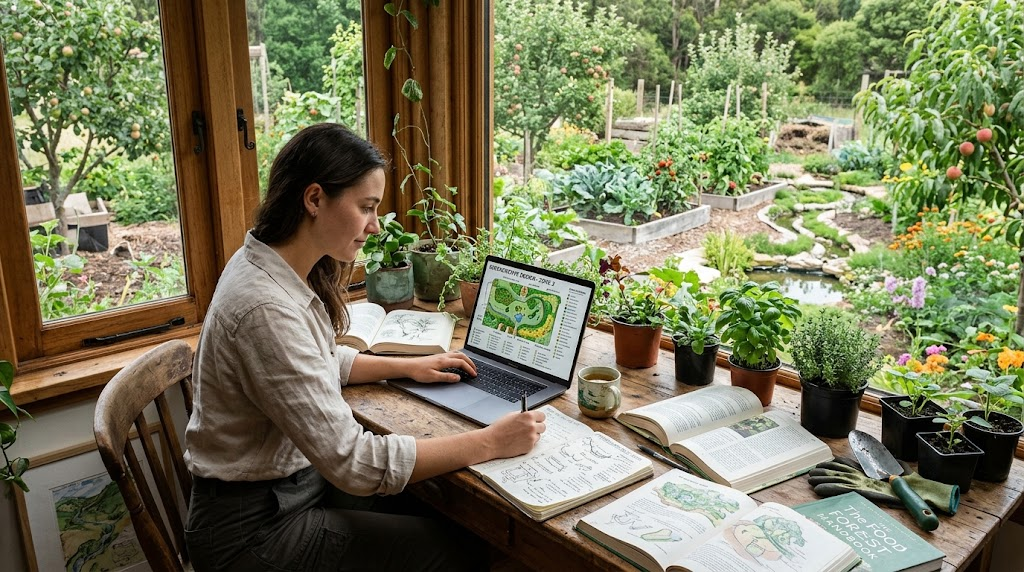
Permaculture offers a practical way to understand how natural systems work and how people can design healthier relationships with the environment. From growing food and restoring soil to developing resilient communities and sustainable livelihoods, its principles can be applied to many aspects of everyday life. As interest in ecological solutions continues to grow, more people are looking for accessible ways to develop these skills. One increasingly popular option is to study permaculture online.
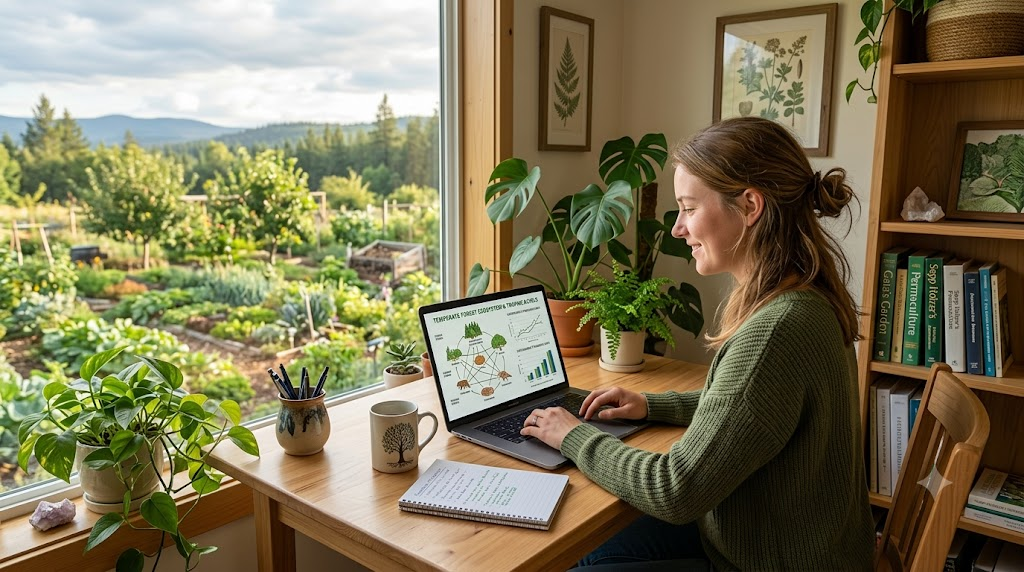
Online permaculture education makes it possible to explore ecological design, sustainable agriculture, regenerative systems, and community development without attending a traditional classroom. Learners can study at their own pace, connect with experienced practitioners, access educational resources, and apply new ideas in their own environments.
For people interested in pursuing a Permaculture Diploma, online learning can also provide a pathway toward more advanced study. Rather than focusing exclusively on theoretical knowledge, a well-structured learning experience can combine research, practical experimentation, design projects, reflection, and mentorship.
Whether you are a beginner exploring sustainable living or an experienced practitioner seeking professional development, studying permaculture online can help you build the knowledge and confidence needed to contribute to ecological and social regeneration.
This guide explains what online permaculture education involves, what you can learn, how to choose an appropriate program, and how to turn your studies into meaningful practical experience.
What Does It Mean to Study Permaculture Online?
To study permaculture online means learning the principles, methods, and applications of permaculture through digital educational resources and guided independent work.
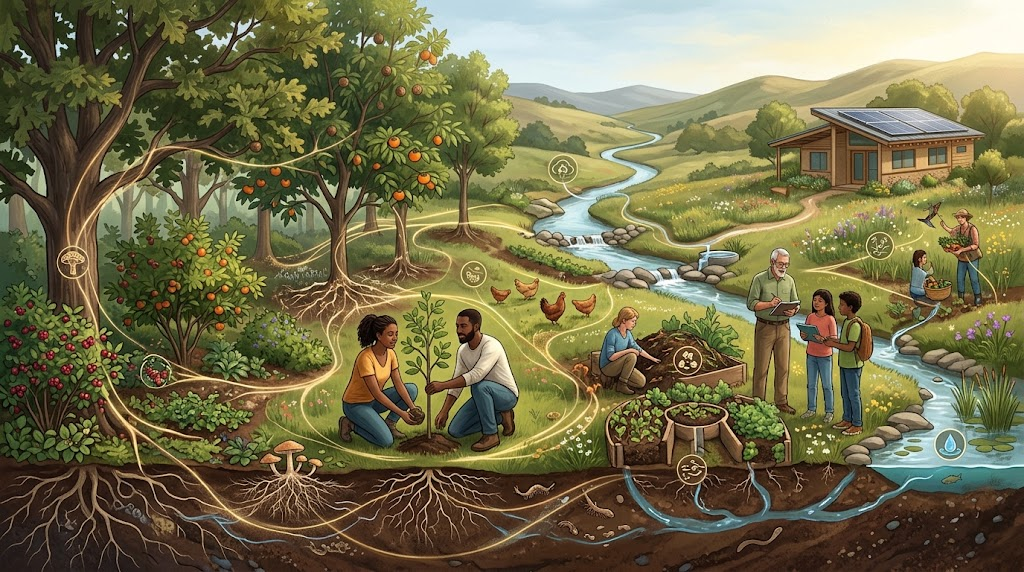
Permaculture is a design approach that draws inspiration from natural ecosystems. It encourages people to observe relationships between different elements of a system and create arrangements that support ecological health, resource efficiency, and long-term resilience.
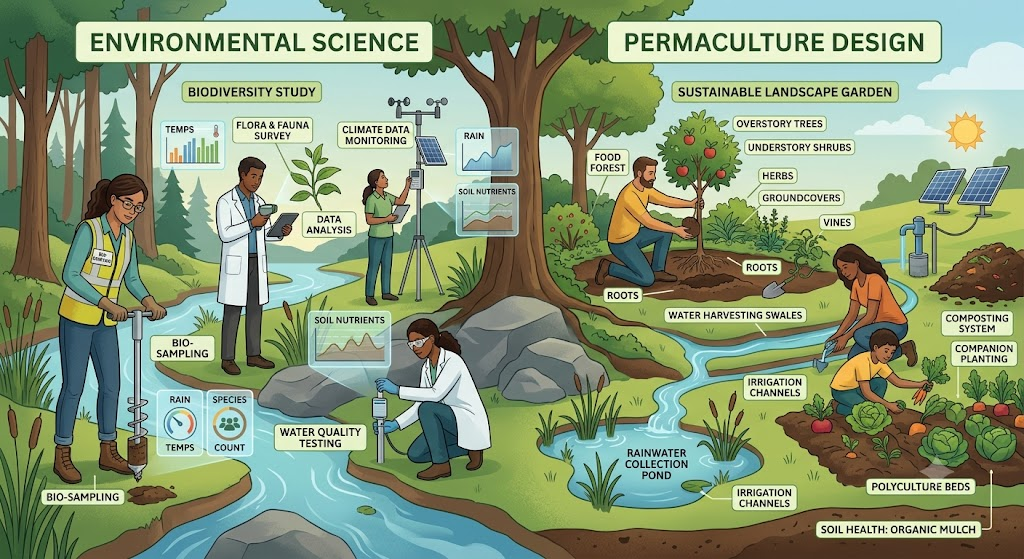
Although permaculture is often associated with gardening and sustainable agriculture, its applications extend much further. It can inform architecture, education, business, community organization, water management, landscape restoration, and social development.
Online education allows students to explore these subjects through different learning formats, including:
- Video lessons and recorded lectures.
- Digital reading materials and research resources.
- Online workshops and interactive discussions.
- Independent design assignments.
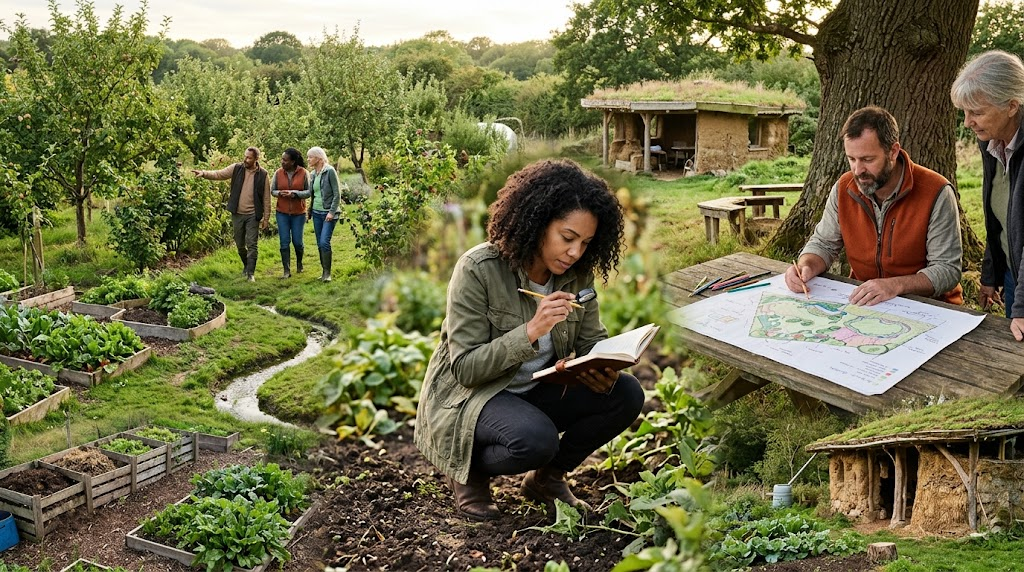
- Practical projects conducted at home or in local communities.
- Mentorship and feedback from experienced practitioners.
- Portfolio development and reflective learning.
The flexibility of online study is particularly valuable because permaculture is highly contextual. A design that works in a humid tropical climate may not be appropriate for a dry continental region. Students therefore benefit from learning general principles while investigating how those principles apply to their own surroundings.
An effective online program should encourage learners to move beyond memorizing concepts. The objective is to develop systems-thinking abilities and understand how ecological, economic, and social elements influence one another.
Why Study Permaculture Online?
There are several reasons why aspiring permaculture designers choose online education. Accessibility, flexibility, practical relevance, and opportunities for independent research make this learning format suitable for people with different professional and personal backgrounds.
1. Learn at Your Own Pace
Traditional education often follows fixed schedules and predetermined classroom structures. Online learning can offer greater flexibility, allowing students to organize their studies around work, family responsibilities, and other commitments.
Self-paced learning is especially useful when studying complex subjects such as ecological design. Students can revisit difficult concepts, spend additional time researching unfamiliar topics, and gradually develop their understanding.
This flexibility also makes it easier to connect theoretical learning with real-life observations. For example, someone studying water management can examine rainfall patterns, drainage, and water availability in their local environment while working through the relevant educational materials.
2. Access Permaculture Education from Anywhere
Not everyone lives near a permaculture training center or has access to experienced local teachers. Online education reduces geographical barriers and makes specialist knowledge available to a wider audience.
Students can explore international perspectives, study examples from different climates, and learn how practitioners address ecological challenges in various communities.
This global perspective is valuable because permaculture is based on observation and adaptation rather than applying one universal solution everywhere.
3. Combine Theory with Practical Experience
Permaculture cannot be fully understood through reading and watching videos alone. Its principles become meaningful when applied to actual landscapes, communities, and organizational systems.
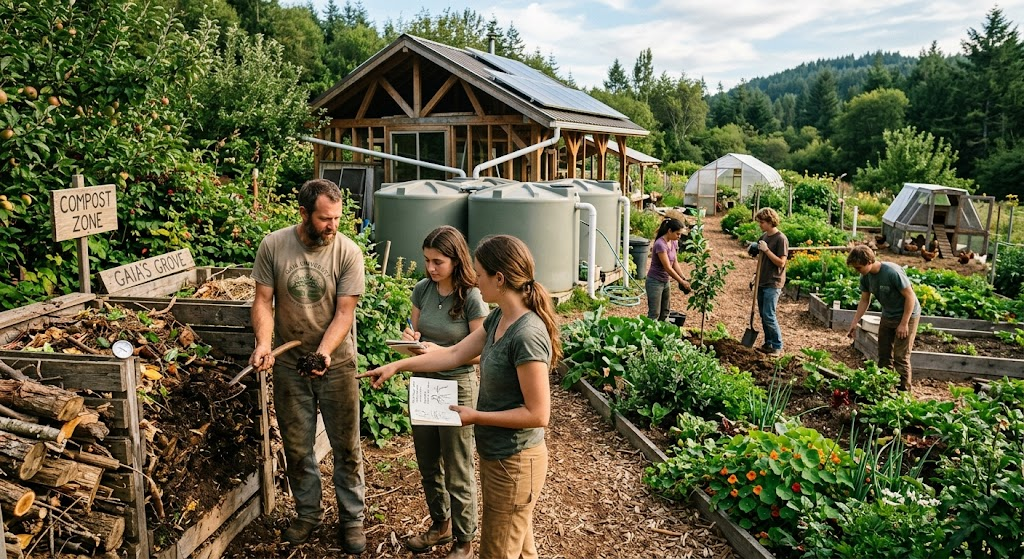
Online programs can support practical learning by assigning projects that students complete in their own environments.
Examples include:
- Creating a home garden using ecological design principles.
- Mapping water flows across a property.
- Investigating local soil conditions.
- Developing a composting system.
- Designing a small food production area.
- Evaluating opportunities for community food projects.
- Developing a regenerative land-use proposal.
These activities help students understand the relationship between observation, analysis, planning, implementation, and evaluation.
4. Explore Different Areas of Sustainability
Permaculture provides a framework for connecting subjects that are often taught separately.
Students can investigate agriculture, ecology, architecture, economics, education, and community development within a broader systems perspective.
This interdisciplinary approach is particularly useful for people interested in working on complex sustainability challenges.
5. Prepare for Advanced Study and Professional Development
For learners interested in a Permaculture Diploma, online education can provide an opportunity to develop a substantial body of work.
Depending on the program, this may include design projects, research, practical implementation, documentation, and reflective analysis.
A portfolio of completed work can help demonstrate how a student understands and applies permaculture principles in different contexts.
How Gaia University Supports Online Permaculture Learning
For learners seeking a structured pathway toward advanced permaculture practice, Gaia University’s International Diploma of Permaculture Design offers an educational model that combines online learning with independent project development and professional guidance.
The program is designed for people who want to move beyond introductory permaculture knowledge and develop their abilities through practical work.
Its learning pathway includes two online certificate programs, followed by a mentored and self-directed project phase. Students develop projects, document their learning, and receive professional mentoring, advising, and peer support.
Several aspects of this approach are particularly relevant to aspiring permaculture designers.
Self-Directed Learning
Students take an active role in shaping their educational experience. Rather than following only a predetermined sequence of classroom exercises, they develop projects connected to their interests, professional ambitions, and real-world opportunities.
This encourages independent research, personal responsibility, and the ability to manage complex learning processes.
Learning Through Real Projects
Project-based learning provides opportunities to apply permaculture concepts in practical contexts.
Students can investigate ecological challenges, develop design proposals, explore regenerative approaches, and document the results of their work.
Mentorship and Professional Feedback
Guidance from experienced practitioners can help students strengthen their designs and develop professional competencies.
Feedback also encourages critical thinking, helping learners recognize limitations, reconsider assumptions, and improve their decision-making.
ePortfolio Development
Documenting projects and learning outcomes is an important part of the educational process.
An ePortfolio can demonstrate competencies through project descriptions, research, design documentation, reflections, and evidence of practical experience.
For aspiring consultants, educators, and project developers, this creates a useful record of professional development.
You can explore the wider educational approach and available pathways on the Gaia University program offerings page.
Career Opportunities After Studying Permaculture Online
Studying permaculture online can support several professional and entrepreneurial directions. The opportunities available depend on the depth of your education, practical experience, portfolio, and local professional requirements.
Here are some areas in which permaculture knowledge can be applied.
Permaculture Design and Consulting
Permaculture designers help individuals, organizations, farms, and communities develop more sustainable systems.
Their work may involve:
- Site observation and landscape analysis.
- Water-management planning.
- Ecological food production.
- Biodiversity enhancement.
- Sustainable land-use strategies.
- Integrated landscape design.
A strong project portfolio can help demonstrate the ability to approach these challenges systematically.
Regenerative Agriculture
Permaculture knowledge can complement work in regenerative agriculture, agroecology, and sustainable food production.
Practitioners may contribute to projects involving soil health, diversified cropping systems, agroforestry, and ecological resource management.
Environmental Education
People with appropriate knowledge and experience can develop educational activities, workshops, and learning resources.
These may introduce communities to ecological principles, sustainable gardening, resource conservation, and regenerative design.
Community Development
Permaculture can also support community-level initiatives.
Examples include community gardens, local food networks, shared resource systems, ecological restoration, and neighborhood resilience projects.
These initiatives often require collaboration, communication, facilitation, and an understanding of social systems alongside ecological knowledge.
Regenerative Entrepreneurship
Some learners use their education to develop businesses and social enterprises based on regenerative principles.
Potential areas include ecological consulting, sustainable food production, educational services, natural building, and community-oriented projects.
In each case, the ability to connect ecological knowledge with practical project management is important.
Practical Tips for Getting the Most from Online Permaculture Education
To make online study more effective, approach it as an ongoing process of observation, experimentation, and reflection.
Consider these strategies:
- Create a dedicated learning schedule. Set aside consistent time for lessons, reading, research, and practical activities.
- Maintain a learning journal. Record important concepts, questions, observations, and personal insights.
- Choose a practical project. Find a local landscape, garden, community initiative, or other system that you can investigate.
- Apply concepts as you learn. Connect theoretical subjects with observations and design exercises.
- Seek feedback. Discuss your ideas with mentors, teachers, and other learners.
- Document your progress. Keep photographs, diagrams, maps, research notes, and project descriptions.
- Reflect and adapt. Evaluate your decisions and identify opportunities for improvement.
These habits help transform online education into a meaningful learning experience.
Frequently Asked Questions About Studying Permaculture Online
Can I study permaculture online without previous experience?
Yes. Many introductory programs are designed for beginners. You can start by learning the ethics and principles of permaculture, developing observation skills, and exploring basic ecological design methods.
More advanced diploma pathways may have specific educational stages or certificate requirements, so it is important to review the program structure before enrolling.
Can I earn a Permaculture Diploma through online learning?
Yes, some educational institutions offer diploma pathways that include online coursework, independent study, mentoring, and practical project development.
The format and requirements vary between institutions. Before choosing a program, check its assessment methods, accreditation or recognition arrangements, mentoring provisions, and project requirements.
Do I need land to study permaculture online?
No. Owning land is not essential.
You can study and practice observation using accessible locations such as community gardens, parks, farms, educational spaces, or public landscapes.
Many design exercises can be completed through site analysis and planning without owning or directly managing the property.
Is an online Permaculture Design Certificate enough to become a professional designer?
A Permaculture Design Certificate can provide foundational knowledge, but professional competence usually requires additional experience.
Advanced project work, mentoring, practical implementation, research, and portfolio development can help you build the skills needed to undertake more complex design assignments.
You should also consider relevant local regulations and professional requirements when offering services.
What is the difference between a PDC and a Permaculture Diploma?
A Permaculture Design Course (PDC) generally introduces the foundational principles, ethics, and methods of permaculture design.
A diploma pathway typically involves deeper study, more extensive project work, independent research, and the development of professional competencies.
The exact distinction depends on the institution and its educational framework.
How long does it take to complete an online Permaculture Diploma?
There is no universal duration.
Some programs can be completed within a structured timeframe, while others offer flexible pathways that accommodate independent project development.
For example, Gaia University’s International Diploma of Permaculture Design is structured as a longer learning pathway involving online certificate programs and mentored project phases. Prospective students should consult the current program requirements for the latest information.
Conclusion: Start Your Permaculture Learning Journey Online
Choosing to study permaculture online is an opportunity to develop knowledge and practical skills that can contribute to a more regenerative future.
Online education makes it possible to learn from different perspectives, explore ecological design principles, and develop projects without relocating or following a traditional classroom schedule.
For aspiring Permaculture Diploma students, the most important consideration is finding an educational pathway that connects foundational knowledge with practical application, independent research, mentorship, and documented learning outcomes.
Permaculture is ultimately about designing systems that work with nature rather than against it. Developing this ability requires curiosity, observation, experimentation, and a willingness to learn continuously.
Whether your ambitions involve ecological design, regenerative agriculture, community development, environmental education, or sustainable entrepreneurship, online permaculture education can provide a foundation for meaningful progress.
The journey begins with learning, but its real value emerges when that knowledge becomes thoughtful action and demonstrable experience.
Responses