
Holistic Learning Model: Powerful Benefits for Permaculture Diploma Seekers

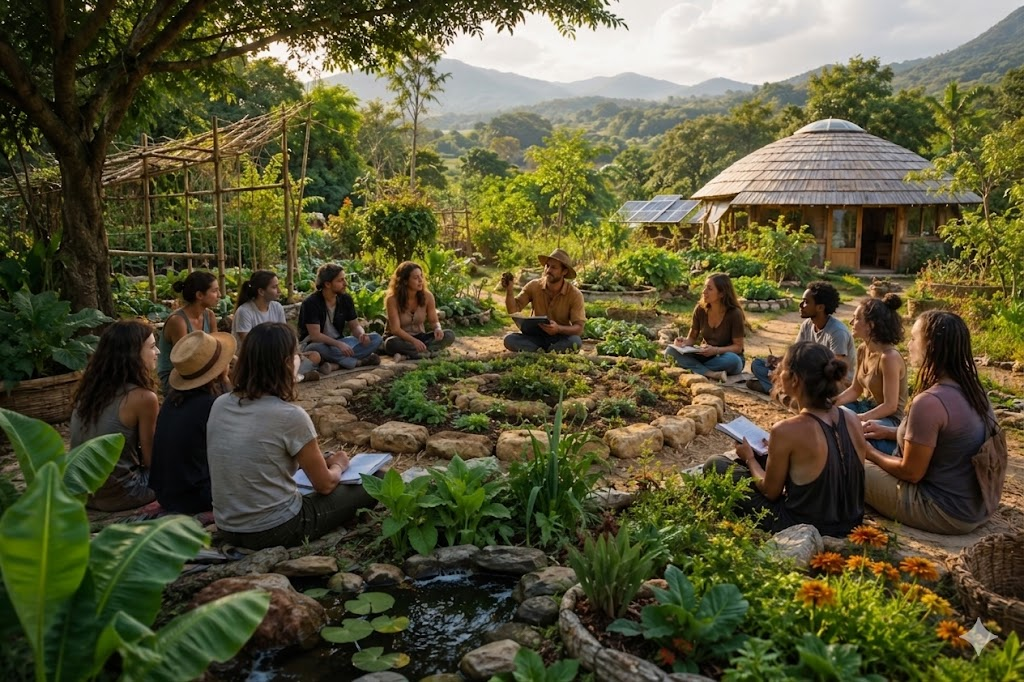
Introduction to the Holistic Learning Model
A holistic learning model is an educational approach that recognizes learning as a whole-person process rather than simply the transfer of information. Instead of focusing only on academic knowledge, it integrates practical experience, reflection, mentorship, personal development, and real-world application.
For permaculture diploma seekers, this approach is especially valuable because permaculture itself is based on understanding relationships, patterns, ecosystems, and interconnected systems. Learning about regenerative design cannot be separated from practicing it.
Many regenerative education programs increasingly emphasize self-directed projects, experiential learning, mentorship, and portfolio development because these methods allow learners to develop genuine competence rather than simply memorizing concepts. Gaia University, for example, structures its diploma pathways around Transformative Action Learning, combining project work, mentoring, documentation, and reflective practice to support meaningful learning outcomes.
Understanding Holistic Education in Permaculture
Beyond Traditional Academic Learning
Traditional educational systems often separate theory from practice. Students learn concepts in a classroom and later attempt to apply them in real-world situations.
A holistic learning model reverses this pattern. Learners engage directly with real situations, projects, communities, and ecosystems while simultaneously building theoretical understanding.
This creates stronger learning because knowledge becomes connected to lived experience.
Learning Through Real-Life Experience
Permaculture thrives on observation, experimentation, and adaptation.
Whether designing water systems, creating food forests, building community resilience, or developing regenerative businesses, learners gain deeper understanding through direct engagement.
Real-world learning encourages:
- Critical thinking
- Problem-solving
- Creativity
- Observation skills
- Adaptability
- Systems awareness
These capabilities are often more valuable than the ability to recall isolated facts.
Core Principles of a Holistic Learning Model
Integration of Mind, Body, and Practice
Holistic learning recognizes that people learn through multiple pathways.
Knowledge is strengthened when learners:
- Read and study concepts
- Discuss ideas with peers
- Apply concepts in projects
- Reflect on outcomes
- Receive feedback
- Adjust their actions
This cycle creates deeper understanding and long-term retention.
Systems Thinking and Ecological Awareness
Permaculture teaches that everything is connected.
A holistic learning model mirrors this principle by helping learners recognize relationships between:
- Ecology
- Economics
- Culture
- Community
- Personal development
- Leadership
The ability to see interconnected systems is essential for successful regenerative design.
Reflection and Continuous Improvement
Reflection is one of the most important aspects of holistic learning.
Through reflective practice, learners can:
- Identify successes
- Understand mistakes
- Improve future actions
- Clarify goals
- Deepen self-awareness
This process transforms experience into wisdom.
Why Permaculture Requires Holistic Learning
Designing for Complexity
Natural systems are complex.
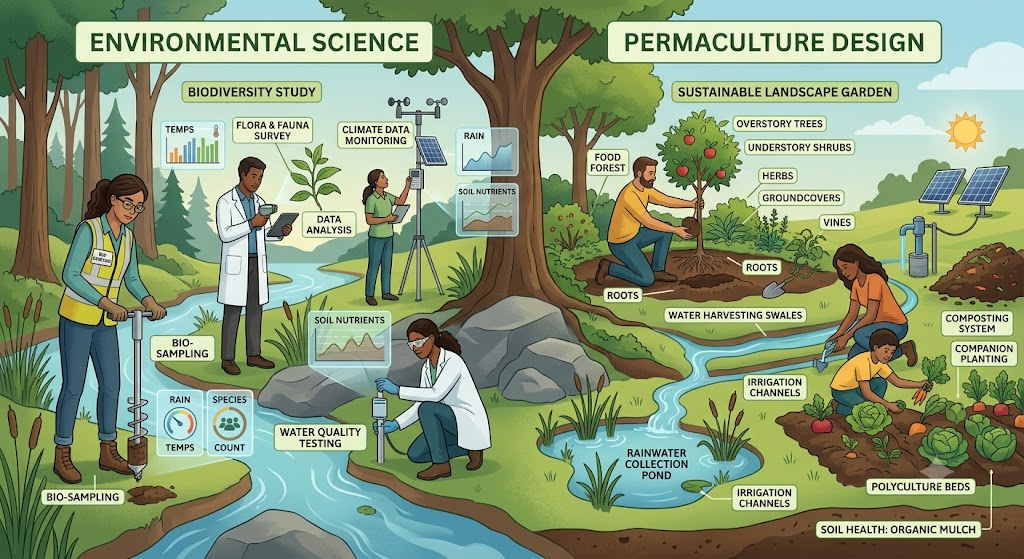
A food forest, for example, involves relationships among:
- Soil organisms
- Water cycles
- Plant communities
- Wildlife
- Climate conditions
- Human management
Understanding these relationships requires more than technical knowledge.
A holistic learning model encourages learners to recognize patterns and interactions across entire systems.
Working With Living Systems
Permaculture is fundamentally about working with living systems rather than controlling them.
This requires:
- Observation
- Patience
- Adaptability
- Creativity
- Long-term thinking
These skills develop most effectively through experience-based learning.
The Role of Action Learning
Learning Through Projects
Action learning places projects at the center of education.
Rather than studying hypothetical examples, learners engage with real challenges.
Examples include:
- Designing edible landscapes
- Restoring degraded ecosystems
- Creating regenerative enterprises
- Building community initiatives
- Developing educational programs
Gaia University’s diploma pathways emphasize project-centered learning supported by mentoring, documentation, and feedback systems.
Documentation and Reflection
Documentation strengthens learning by creating a record of:
- Objectives
- Actions
- Results
- Lessons learned
- Future improvements
Portfolio-based documentation also provides evidence of competence and growth.
Mentorship Within the Holistic Learning Model
Personalized Guidance
Mentors play a critical role in regenerative education.
They help learners:
- Clarify goals
- Navigate challenges
- Improve project quality
- Expand perspectives
- Build confidence
Mentorship accelerates learning because feedback is specific to the learner’s unique circumstances.
Accelerating Skill Development
Many skills develop faster when learners receive expert guidance.
Examples include:
- Design thinking
- Project management
- Ecological assessment
- Facilitation
- Leadership
Effective mentorship reduces unnecessary trial and error while preserving learner autonomy.
Self-Directed Learning and Ownership
Creating Individual Learning Pathways
One hallmark of the holistic learning model is learner ownership.
Instead of following identical educational paths, learners design pathways aligned with their:
- Interests
- Goals
- Communities
- Professional aspirations
- Ecological contexts
This flexibility often leads to higher engagement and motivation.
Developing Lifelong Learning Skills
The world is constantly changing.
Successful regenerative practitioners must continue learning throughout their lives.
Self-directed learning develops:
- Curiosity
- Initiative
- Research abilities
- Adaptability
- Self-management
These capacities remain valuable long after a diploma is completed.
Building Regenerative Leadership
Community Engagement
Permaculture extends beyond landscapes.
Many regenerative projects require collaboration with:
- Neighbors
- Organizations
- Educators
- Businesses
- Local governments
Holistic learning helps learners build communication and facilitation skills necessary for community engagement.
Ethical Decision-Making
Permaculture ethics emphasize:
- Earth Care
- People Care
- Fair Share
A holistic learning model supports ethical decision-making by encouraging reflection on the consequences of actions and designs.
Holistic Assessment Methods
Portfolio-Based Evaluation
Traditional exams often measure memory rather than competence.
Portfolio-based assessment evaluates:
- Real projects
- Demonstrated skills
- Reflective practice
- Documented outcomes
- Continuous growth
This approach aligns closely with professional practice.
Demonstrating Competence Through Action
Regenerative practitioners are often judged by what they can accomplish rather than what they can memorize.
Action-based assessment allows learners to demonstrate meaningful capabilities in authentic contexts.
Practical Applications for Permaculture Diploma Seekers
Ecological Restoration Projects
Learners may focus on:
- Soil regeneration
- Watershed restoration
- Habitat creation
- Agroforestry
- Biodiversity enhancement
Community Development Initiatives
Projects can include:
- Community gardens
- Educational workshops
- Food sovereignty programs
- Cooperative enterprises
- Resilience networks
Regenerative Enterprise Design
Entrepreneurial projects may involve:
- Ecological consulting
- Sustainable agriculture
- Permaculture education
- Eco-tourism
- Regenerative product development
These projects create opportunities to integrate learning with livelihood development.
Challenges and Opportunities
Common Obstacles
Learners may encounter:
- Time management difficulties
- Project uncertainty
- Information overload
- Self-doubt
- Resource limitations
Strategies for Success
Successful learners often:
- Set clear goals
- Maintain consistent documentation
- Seek regular feedback
- Engage with supportive communities
- Reflect frequently on progress
These practices strengthen learning outcomes and project effectiveness.
Future of Holistic Learning in Regenerative Education
As environmental and social challenges become more complex, educational systems are evolving.
Many regenerative programs increasingly recognize that effective learning requires:
- Real-world engagement
- Mentorship
- Systems thinking
- Reflective practice
- Flexible pathways
The holistic learning model aligns naturally with these needs because it treats education as an integrated process of personal, professional, and ecological development.
For permaculture diploma seekers interested in action-based regenerative education, Gaia University’s diploma pathways provide examples of project-centered, mentored learning supported by portfolios and Transformative Action Learning methodologies.
For additional information, visit Gaia University, explore the International Diploma of Permaculture Design, or review the Diploma Programs Overview.
Frequently Asked Questions
1. What is a holistic learning model?
A holistic learning model integrates knowledge, practical experience, reflection, mentorship, and personal development into a unified educational process.
2. Why is holistic learning important in permaculture?
Permaculture focuses on interconnected systems. Holistic learning helps students understand and work effectively within those complex relationships.
3. How does action learning support permaculture education?
Action learning allows students to learn through real projects, applying concepts immediately while receiving feedback and guidance.
4. What role does mentorship play in holistic learning?
Mentors provide personalized support, helping learners improve skills, overcome challenges, and deepen understanding.
5. How are learners assessed in a holistic learning model?
Assessment often focuses on portfolios, project outcomes, reflective practice, and demonstrated competence rather than traditional exams.
6. Can holistic learning support professional development?
Yes. It helps learners build practical skills, leadership abilities, project experience, and professional portfolios that support long-term career growth.
7. Is self-directed learning part of the holistic learning model?
Absolutely. Self-directed learning encourages ownership, motivation, adaptability, and lifelong learning habits.
8. How does holistic learning contribute to regenerative leadership?
It develops systems thinking, ethical awareness, collaboration skills, and the ability to create positive ecological and social impact.
Conclusion
The holistic learning model represents a powerful educational approach for permaculture diploma seekers because it aligns closely with the principles of regenerative design. By integrating action learning, mentorship, reflective practice, systems thinking, and self-directed pathways, learners develop capabilities that extend far beyond academic knowledge.
Rather than simply studying sustainability, students actively participate in creating it. Through real projects, meaningful feedback, and continuous reflection, they cultivate the skills, understanding, and leadership needed to contribute to ecological regeneration and community resilience. For aspiring permaculture professionals, the holistic learning model offers a pathway not only to deeper knowledge but also to transformative practice and lasting impact.

Responses