When Curiosity Becomes our Fuel

by Ava Klinger
One of the most surprising things about becoming a parent has been watching motivation emerge in real time.
My daughter is five years old. At this stage, motivation is fairly straightforward. Rewards and consequences make sense. “Brush your teeth and then we can read a story.” “If you throw your toys, we’ll need to put them away.” These are developmentally appropriate ways of helping a young child learn self-regulation and understand cause and effect.
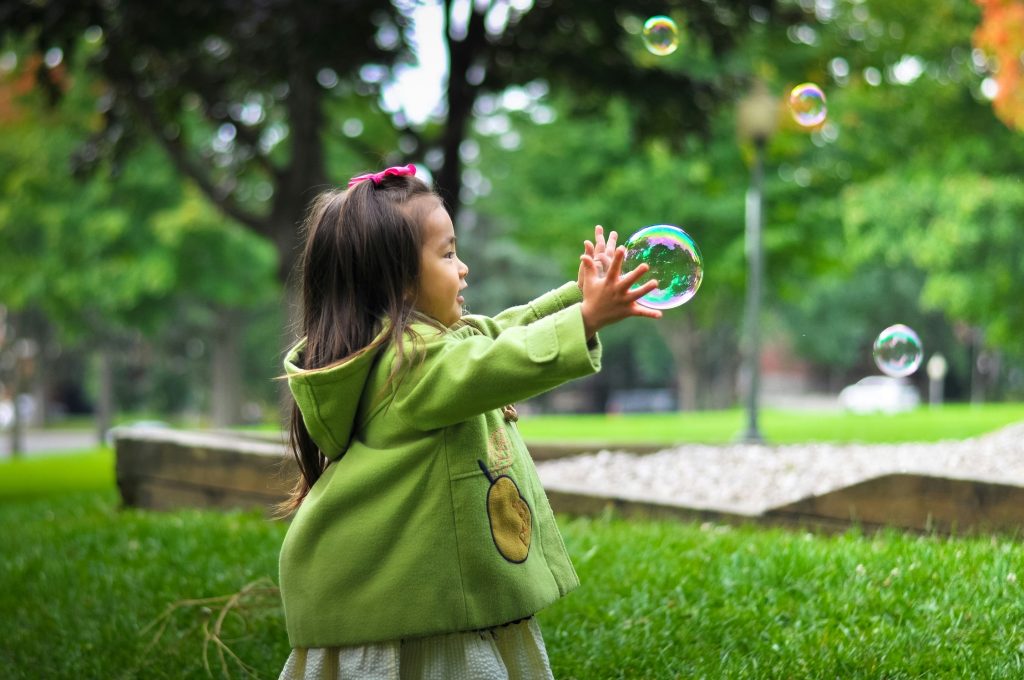
But as I watch her grow, I find myself asking a different question… not how do I get her to do what I want? but what kind of motivation do I hope she develops over the course of her life?
Because somewhere along the way, many of us stop being motivated by curiosity and begin being motivated by fear.
We become afraid of failure. Afraid of disappointing others. Afraid of not being productive enough, successful enough, or worthy enough. We learn that shame can keep us in line, guilt can keep us compliant, and competition can keep us striving. These become the invisible engines of much of modern society. To be fair, they work.
Fear is an incredibly effective short-term motivator. So are guilt and shame. Competition can push us to extraordinary achievements. Schools use grades. Employers use performance reviews. Governments use laws and punishments. Parents use time-outs. Every society needs mechanisms that coordinate behavior.
The question is not whether these forms of motivation work. The question is what they cost.
Psychologists Edward Deci and Richard Ryan have spent decades studying human motivation through Self-Determination Theory, one of the most influential frameworks in motivational psychology. Across hundreds of studies, their research consistently shows that while external rewards, punishments, and pressures can produce compliance, they are often associated with lower well-being, diminished creativity, and weaker long-term engagement. In contrast, intrinsic motivation (doing something because it is inherently meaningful or enjoyable) is consistently linked to greater persistence, learning, psychological health, and life satisfaction.
What strikes me is that many of the dominant motivators in our culture are built on avoiding something rather than moving toward something.
Avoid embarrassment.
Avoid poverty.
Avoid punishment.
Avoid failure.
Avoid disappointing your parents.
Avoid not being enough.
That is a heavy way to move through life.
I wonder how many of us have become extraordinarily capable while simultaneously becoming exhausted.
Perhaps burnout is not simply the result of doing too much. Perhaps it is the result of being powered by the wrong fuel.
As adults, we often assume motivation is something we have or don’t have. We wait for discipline to arrive. We blame ourselves for procrastination. We search for hacks and productivity systems. But maybe motivation is less about willpower than alignment.
When my work aligns with my values, I rarely need someone to push me. Curiosity pulls me forward. I lose track of time. Collaboration becomes energizing rather than draining. The work itself becomes rewarding.
This isn’t to suggest that passion is effortless. The things I care about most often require difficult conversations, long hours, and uncomfortable uncertainty. But there is a profound difference between being tired because you are building something you believe in and being tired because you are running from shame.
One of the most important insights from Self-Determination Theory is that people thrive when three psychological needs are supported: autonomy, competence, and relatedness. In other words, we are most motivated when we experience choice, feel ourselves growing, and know we belong. These conditions consistently predict healthier and more sustainable forms of motivation than external pressure alone.
Competition offers another interesting example.
Competition isn’t inherently harmful. In fact, it can be deeply motivating when it feels playful, voluntary, and growth-oriented. But when it becomes controlling( when our worth depends on winning or outperforming others) it often undermines the very curiosity and intrinsic motivation it seeks to inspire. Research has found that competitive environments can diminish intrinsic motivation when they reduce people’s sense of autonomy, even while increasing performance in the short term.
As I think about my daughter, I find myself asking a different question than the one I imagined parenting would require.
Not: How do I motivate her?
But: How do I protect the motivations she already possesses?
How do I help her remain curious?
How do I nurture collaboration before comparison?
How do I teach responsibility without shame?
How do I help her discover work that feels meaningful rather than merely rewarded?
Perhaps the goal of parenting (and perhaps education as well) is not to become better at motivating people through fear, guilt, or competition.
Perhaps it is to create the conditions in which people no longer need those things.
Where values are aligned.
Where contribution feels meaningful.
Where belonging replaces comparison.
Where joy is not a distraction from meaningful work, but the energy that sustains it.
If we want a regenerative future, perhaps we need regenerative motivation.
Not motivation that extracts effort through fear, but motivation that grows from purpose, relationship, curiosity, and love. Those forms of motivation don’t simply help us accomplish more. They help us become more fully ourselves.