
Higher Education as an Agent of Change: Powerful Ways Permaculture Diploma Seekers Can Transform Communities and Ecosystems

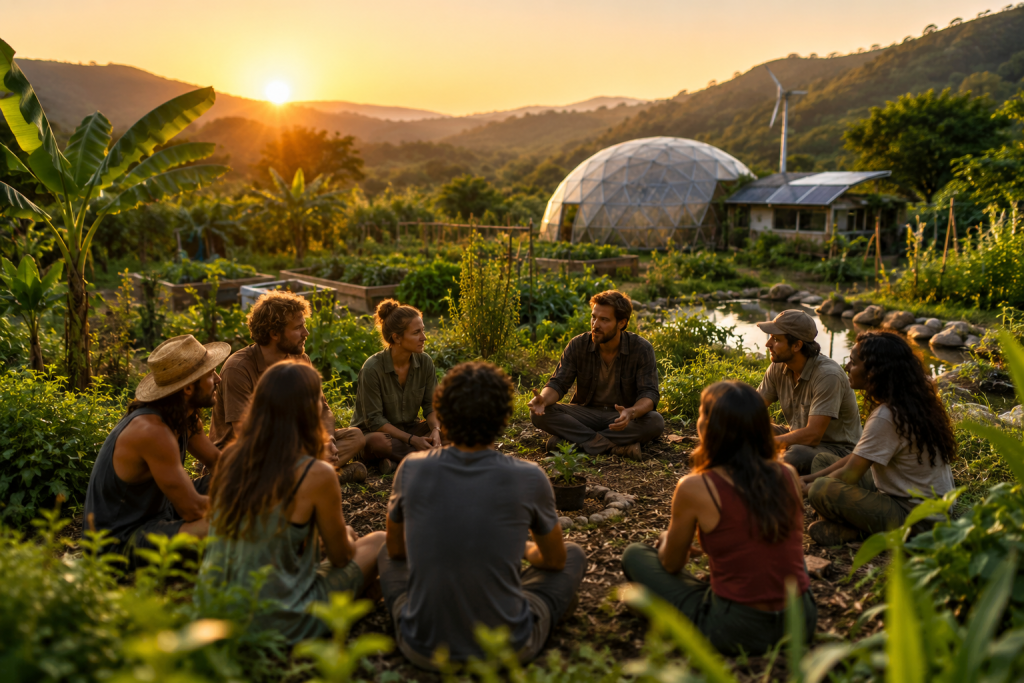
Introduction to Higher Education as an Agent of Change
The concept of higher education as an agent of change has become increasingly important in a world facing ecological degradation, climate instability, social inequality, and economic uncertainty. Traditional educational systems often focused on transferring information from teacher to student. Today, many educators and learners recognize that education must do more. It must empower people to solve real-world problems, strengthen communities, and regenerate ecosystems.
For permaculture diploma seekers, this perspective is particularly relevant. Permaculture is not merely a design system for sustainable agriculture. It is a framework for creating resilient human settlements, regenerative economies, and thriving communities. As a result, higher education becomes more than academic achievement—it becomes a pathway toward meaningful transformation.
Modern regenerative learning models increasingly emphasize action-based education, ecological literacy, systems thinking, and community engagement. Institutions such as Gaia University have helped pioneer approaches that integrate learning directly with real-world projects, allowing students to become active contributors to social and ecological regeneration rather than passive recipients of information.
Understanding the Meaning of Educational Transformation
Historical Influence of Higher Education
Throughout history, higher education has shaped society in profound ways. Universities have influenced scientific discoveries, political reforms, technological innovation, and cultural development. Educational institutions have often served as catalysts for societal progress by producing leaders, researchers, and innovators.
However, many conventional systems were designed during industrial eras, emphasizing specialization, standardization, and knowledge accumulation. While these approaches produced significant advancements, they often neglected the interconnected nature of environmental and social challenges.
Why Change-Oriented Education Matters Today
Today’s challenges require new educational paradigms. Climate change, biodiversity loss, food insecurity, and social fragmentation are complex issues that cannot be solved through isolated disciplines alone.
Research in sustainability education highlights the need for transformative learning approaches that enable students to engage directly with real-world challenges while developing practical solutions. Higher education increasingly serves as a platform for sustainability transitions and community transformation.
The Connection Between Higher Education and Permaculture
Learning Beyond the Classroom
Permaculture education demonstrates that meaningful learning occurs everywhere—not only in classrooms. Farms, forests, communities, watersheds, and social enterprises all become learning environments.
Students learn by designing systems, implementing projects, observing ecological relationships, and evaluating outcomes. This experiential approach creates deeper understanding because learners directly encounter the consequences of their decisions.
Systems Thinking and Ecological Literacy
One of permaculture’s greatest contributions to higher education is systems thinking. Rather than studying isolated components, learners examine relationships between elements.
For example, food production is not viewed solely as agriculture. It intersects with economics, ecology, community health, energy systems, water management, and social justice. Understanding these relationships allows learners to design solutions that address root causes rather than symptoms.
Core Principles That Make Education a Change Agent
Critical Thinking
Transformative education encourages learners to question assumptions, analyze systems, and evaluate evidence. Rather than memorizing information, students develop the ability to think independently and creatively.
Community Engagement
Education becomes transformative when learners engage with real communities. Community participation helps students understand diverse perspectives while developing practical problem-solving skills.
Regenerative Practice
Regenerative education moves beyond sustainability. Instead of merely reducing harm, learners seek ways to restore ecosystems, strengthen social relationships, and enhance community resilience.
Research suggests that regenerative collaboration can help higher education evolve from a knowledge-focused model toward wisdom-centered action and ecological restoration.
Higher Education as an Agent of Change in Sustainability
Addressing Climate Challenges
Climate change presents one of the most significant challenges of our era. Higher education plays a critical role in preparing learners to develop adaptive and regenerative solutions.
Permaculture practitioners learn to:
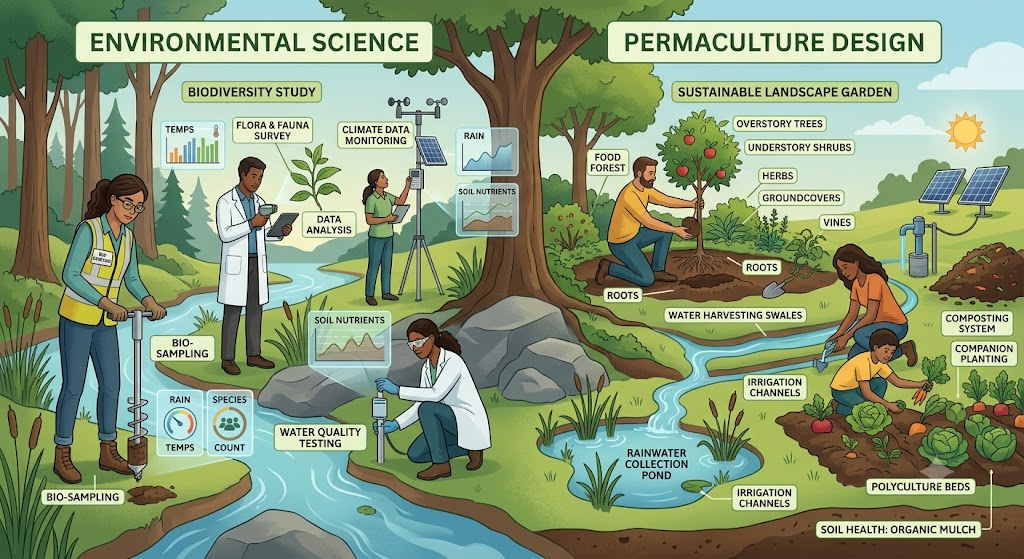
- Design resilient landscapes
- Improve soil health
- Increase biodiversity
- Enhance water retention
- Reduce carbon emissions
These practical interventions contribute directly to climate resilience.
Supporting Food Security
Food systems remain vulnerable to environmental and economic disruptions. Through regenerative agriculture and permaculture design, learners develop methods that improve productivity while restoring ecosystem health.
Projects may include:
- Food forests
- Agroforestry systems
- Community gardens
- Seed-saving initiatives
- Local food networks
Building Resilient Communities
Strong communities are essential for long-term sustainability. Educational programs focused on social change help learners develop communication, facilitation, and leadership skills that support collective action.
Experiential Learning and Real-World Impact
Learning Through Projects
Project-based learning represents one of the most effective approaches within regenerative education.
Students may engage in:
- Ecosystem restoration
- Watershed management
- Community development
- Renewable energy initiatives
- Social entrepreneurship
By working on actual projects, learners gain practical experience while creating measurable impact.
Reflective Practice
Reflection transforms experience into learning. Students evaluate outcomes, identify lessons, and refine future actions. This continuous cycle of action and reflection strengthens both competence and confidence.
Educational models emphasizing transformative action learning integrate doing and learning simultaneously, helping students address real-world challenges while developing expertise.
Leadership Development for Permaculture Practitioners
Facilitating Community Change
Permaculture practitioners frequently become facilitators of community transformation. Effective leadership involves listening, collaboration, and shared vision rather than command-and-control approaches.
Leaders help communities:
- Identify challenges
- Build consensus
- Coordinate resources
- Implement solutions
- Evaluate outcomes
Collaborative Decision-Making
Participatory processes encourage inclusive decision-making. When communities contribute to project design, implementation, and evaluation, outcomes are often more effective and sustainable.
The Role of Action Learning in Transformation
Integrating Knowledge and Practice
Action learning bridges the gap between theory and practice. Instead of separating study from action, learners integrate both processes continuously.
This approach encourages:
- Immediate application of knowledge
- Ongoing experimentation
- Adaptive problem-solving
- Lifelong learning habits
Developing Regenerative Livelihoods
Many permaculture diploma seekers aim to create livelihoods aligned with ecological values. Action-oriented higher education supports this goal by helping learners develop practical skills, professional networks, and entrepreneurial capacity.
Community-Based Education Models
Local Knowledge Systems
Transformative education recognizes the value of local and indigenous knowledge. Communities often possess generations of wisdom related to ecology, agriculture, culture, and resilience.
By integrating local knowledge with contemporary research, learners develop context-specific solutions.
Participatory Learning Approaches
Participatory education treats learners as co-creators rather than passive recipients. Students contribute experiences, insights, and perspectives that enrich the learning process.
This collaborative approach fosters ownership, engagement, and innovation.
Challenges Facing Transformative Higher Education
Institutional Constraints
Traditional accreditation systems may prioritize standardized outcomes over experiential learning and community engagement.
Cultural Barriers
Alternative educational models sometimes encounter skepticism from individuals accustomed to conventional approaches.
Resource Limitations
Field-based learning often requires land, mentors, community partnerships, and long-term commitment, which may not always be readily available.
Despite these challenges, innovative institutions continue demonstrating that transformative education can be both rigorous and impactful.
Emerging Trends in Regenerative Education
Flexible Learning Pathways
Many modern programs now offer flexible structures that allow learners to pursue projects within their own communities while receiving mentorship and academic support.
Those interested in action-based learning models can explore the educational philosophy behind Gaia University’s approach at Gaia University Programs.
Global Learning Communities
Digital technologies enable learners to collaborate across continents while remaining rooted in local contexts. Global learning communities facilitate knowledge sharing, innovation, and mutual support.
Case Studies of Educational Transformation
Numerous examples demonstrate how education can catalyze change:
| Area | Educational Impact |
| Ecological Restoration | Restoration of degraded landscapes |
| Sustainable Agriculture | Increased soil fertility and food production |
| Community Development | Stronger social networks and resilience |
| Renewable Energy | Reduced dependence on fossil fuels |
| Social Enterprise | Creation of regenerative livelihoods |
Studies involving permaculture practitioners frequently identify transformative learning experiences as pivotal turning points that enable systems-level thinking and long-term community impact.
Frequently Asked Questions
1. What does higher education as an agent of change mean?
It refers to educational systems that actively contribute to social, ecological, cultural, and economic transformation rather than simply transmitting information.
2. Why is this concept important for permaculture diploma seekers?
Permaculture practitioners work directly with ecosystems and communities, making transformative education essential for creating effective regenerative solutions.
3. How does experiential learning support social change?
Experiential learning connects theory with practice, allowing students to develop practical skills while addressing real-world challenges.
4. What role does systems thinking play in transformative education?
Systems thinking helps learners understand relationships between ecological, social, and economic systems, enabling more effective problem-solving.
5. Can higher education contribute to climate resilience?
Yes. Through sustainability-focused programs, learners develop skills related to ecological restoration, regenerative agriculture, and community adaptation.
6. How does project-based learning differ from traditional education?
Project-based learning emphasizes real-world application, active participation, and measurable outcomes rather than passive knowledge acquisition.
7. What leadership skills are developed through regenerative education?
Learners often develop facilitation, communication, collaboration, conflict resolution, and strategic planning skills.
8. Where can learners explore action-learning approaches to regenerative education?
Learners can explore regenerative, project-based educational pathways through Gaia University’s learning approach.
Conclusion
The idea of higher education as an agent of change is especially relevant for permaculture diploma seekers. Modern regenerative challenges require more than technical expertise; they demand systems thinking, community leadership, ecological literacy, and practical action.
When higher education integrates experiential learning, project-based practice, and regenerative principles, it becomes a powerful force for transformation. Learners move beyond acquiring credentials and become active participants in restoring ecosystems, strengthening communities, and creating resilient futures.
For permaculture diploma seekers, higher education is not merely preparation for life—it is a living process of transformation that begins today and continues through every project, relationship, and contribution made toward a more regenerative world.



Responses