
Powerful Online Experiential Learning Activities: Transformative Approaches for Permaculture Diploma Seekers

Understanding the Role of Experiential Learning in Permaculture Education
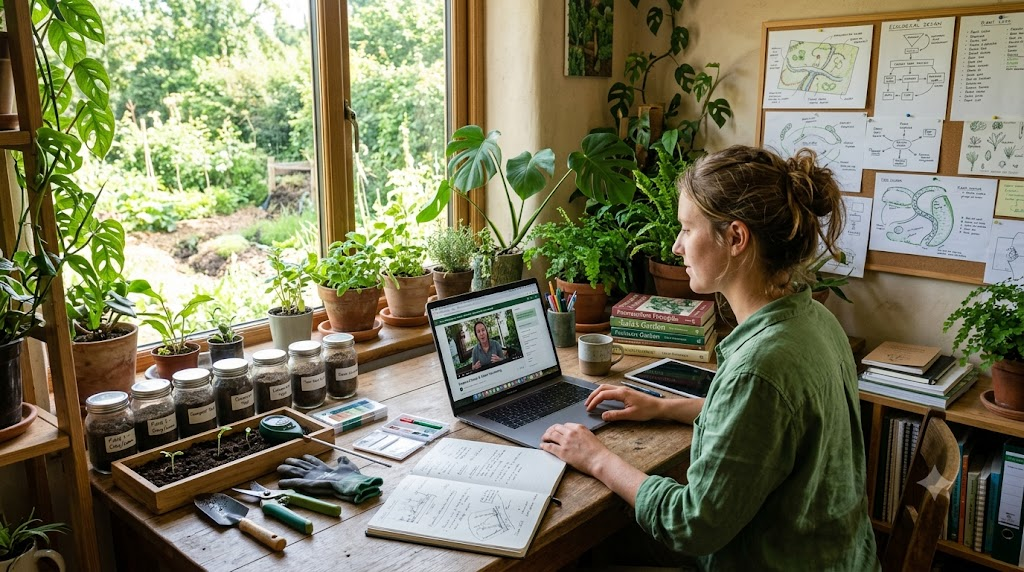
Permaculture is more than an academic subject. It is a practical design philosophy that encourages learners to observe nature, understand ecological relationships, and create sustainable solutions for real-world challenges. For Permaculture Diploma Seekers, learning requires more than reading books or watching lectures. It requires observation, experimentation, reflection, and active participation.
This is where online experiential learning activities become valuable. These activities combine the accessibility of online education with practical experiences that allow students to apply permaculture principles in their own environments. Instead of simply memorizing concepts, learners engage with landscapes, communities, and design challenges.
Experiential learning follows a simple but powerful process:
- Experience – Students participate in an activity or project.
- Reflection – They analyze what happened and what they learned.
- Concept Development – They connect their observations with permaculture principles.
- Application – They use their knowledge in new situations.
This approach helps diploma learners become confident practitioners who can design regenerative systems rather than only understand theoretical ideas.
Permaculture education often focuses on relationships: between people and nature, between resources and needs, and between local actions and global impacts. Online learning environments can support this approach by connecting students from different regions, climates, and cultures.
Through structured digital activities, learners can share experiences, compare ecosystems, collaborate on projects, and develop solutions together.
Why Traditional Online Learning Is Not Enough for Permaculture Students
Online education has expanded opportunities for people who cannot attend physical campuses. However, some online courses rely heavily on passive learning methods such as watching videos, reading materials, and completing quizzes.
While these methods can provide important information, they may not develop the practical confidence required for permaculture work.
Permaculture practitioners need skills such as:
- Observing natural patterns
- Understanding landscapes
- Designing ecological systems
- Working with communities
- Testing sustainable solutions
- Adapting designs based on feedback
These skills develop through practice.
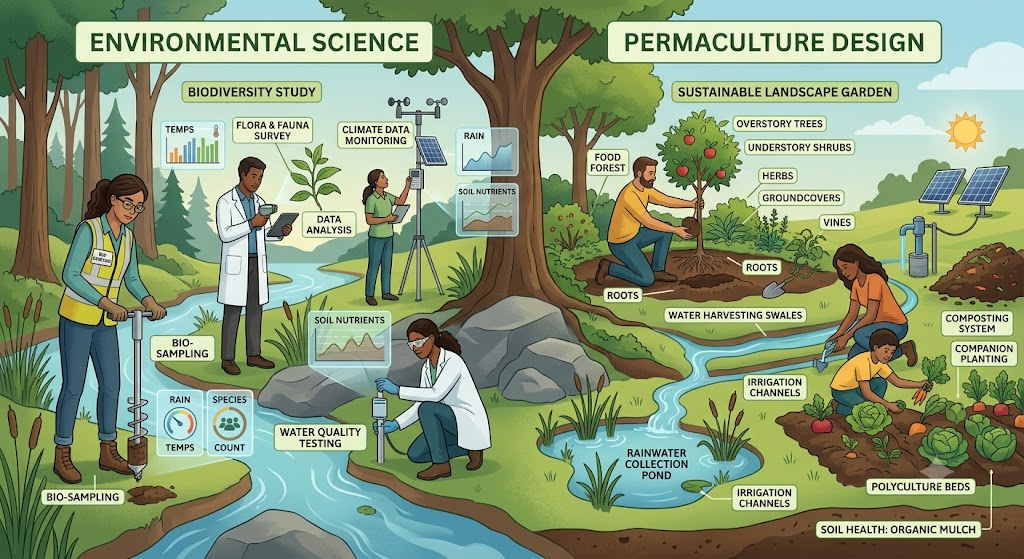
For example, a student learning about water management should not only understand concepts like swales, rainwater harvesting, or watershed patterns. They should also learn how to observe water movement, analyze site conditions, and create appropriate designs.
Online experiential learning activities allow students to practice these skills wherever they live. A learner in an urban apartment, rural farm, or suburban garden can complete meaningful exercises based on their own environment.
The flexibility of online experiential education also supports diverse learners. Many Permaculture Diploma Seekers are working professionals, farmers, educators, or community organizers. They need learning methods that fit into their existing responsibilities while still providing practical experience.
The Connection Between Experience, Reflection, and Ecological Design
A key principle of permaculture is observation before action. Good ecological design begins with understanding existing systems.
Experiential learning mirrors this principle because students first engage with an experience before creating conclusions.
For instance, a learner might:
- Observe seasonal changes in their local ecosystem
- Record plant relationships in a garden
- Study community resource patterns
- Analyze local sustainability challenges
After gathering information, they reflect on their observations and consider possible solutions.
This reflective process develops deeper understanding. Students begin seeing connections instead of isolated problems.
A permaculture designer does not only ask:
“Where should I plant vegetables?”
They ask:
“How does this landscape function? What resources already exist? How can humans participate positively within this ecosystem?”
Online experiential learning activities encourage this systems-thinking approach by allowing learners to document, discuss, and improve their ideas over time.
How Online Experiential Learning Activities Transform Permaculture Diploma Studies
Building Practical Skills Through Digital Learning Environments
A common misconception is that online education cannot provide hands-on learning. However, carefully designed activities can create powerful practical experiences.
For Permaculture Diploma Seekers, digital platforms can become spaces for:
- Project collaboration
- Design feedback
- Ecological observation
- Community discussions
- Portfolio development
- Mentor guidance
Students can document their practical work through photographs, drawings, maps, videos, and written reflections.
For example, a learner developing a food forest design can share:
- Site observations
- Plant selections
- Design sketches
- Challenges encountered
- Lessons learned
Other students and mentors can provide feedback, helping improve the design process.
This creates a learning community where knowledge flows between participants.
Gaia University’s approach to regenerative education emphasizes self-directed learning, practical engagement, and transformation through experience. Learners interested in exploring this educational model can learn more through the official Gaia University website: https://gaiauniversity.org/
Developing Systems Thinking for Regenerative Design
Systems thinking is one of the most important skills for permaculture practitioners.
Natural systems are interconnected. Soil health affects plants. Plants influence water cycles. Water availability affects communities. Human decisions influence all these relationships.
Online experiential learning activities help students practice seeing these connections.
Examples include:
- Creating ecosystem relationship diagrams
- Mapping resource flows
- Studying local environmental challenges
- Designing integrated solutions
A learner may begin with a simple question:
“How can I improve my garden?”
Through systems thinking, that question expands:
- How does soil quality influence plant growth?
- How can biodiversity support resilience?
- How can waste become a resource?
- How can the design benefit people and ecosystems?
This broader perspective prepares diploma students to address complex sustainability challenges.
Effective Online Experiential Learning Activities for Permaculture Diploma Seekers
1. Virtual Site Assessments and Ecological Observation Exercises
Site assessment is one of the foundations of permaculture design. Students can practice observation skills through online-guided exercises.
Activities may include:
- Recording sunlight patterns
- Identifying local plants
- Observing water movement
- Documenting wildlife interactions
- Mapping existing resources
Students can share findings with peers and compare observations from different climates.
This activity teaches an essential lesson: every place has unique characteristics, and successful designs must respond to local conditions.
2. Online Permaculture Design Projects
Design projects allow students to apply knowledge in realistic situations.
A diploma learner may create a complete design proposal for:
- A home garden
- A community space
- An educational site
- A small farm
- An urban sustainability project
The process may include:
- Client needs assessment
- Site analysis
- Design development
- Implementation planning
- Reflection and evaluation
These projects create valuable portfolios that demonstrate practical ability.
3. Digital Learning Journals and Reflective Practice
Reflection is one of the most important parts of experiential education. A digital learning journal allows Permaculture Diploma Seekers to record their observations, challenges, discoveries, and personal growth throughout their learning journey.
A strong learning journal may include:
- Weekly observations from a garden or landscape
- Reflections on ecological patterns
- Notes from design experiments
- Personal insights about sustainability
- Questions for further exploration
- Feedback received from mentors and peers
The purpose of journaling is not simply to document activities. It helps students understand how their thinking changes over time.
For example, a student may begin a course believing that gardening is mainly about producing food. Through reflection, they may discover that a garden is also a living ecosystem that supports soil organisms, pollinators, water cycles, human wellbeing, and community relationships.
This deeper understanding is essential for regenerative design.
Digital journals also help students create evidence of their learning. For diploma pathways that require portfolios or project documentation, reflective records provide valuable proof of practical development.
4. Community-Based Sustainability Research
Permaculture is strongly connected to community resilience. Sustainable solutions are more successful when they consider local people, cultures, resources, and needs.
Online experiential learning activities can involve students researching sustainability challenges within their own communities.
Possible research topics include:
- Local food systems
- Waste management practices
- Water conservation challenges
- Community gardening opportunities
- Indigenous ecological knowledge
- Urban resilience strategies
Students can conduct interviews, gather observations, and analyze existing systems.
For example, a learner might study how food moves through their local community. They may investigate where food comes from, how it is distributed, what waste is created, and how regenerative alternatives could improve the system.
This activity develops research skills while helping students connect permaculture principles to real social situations.
5. Online Peer Collaboration and Knowledge Exchange
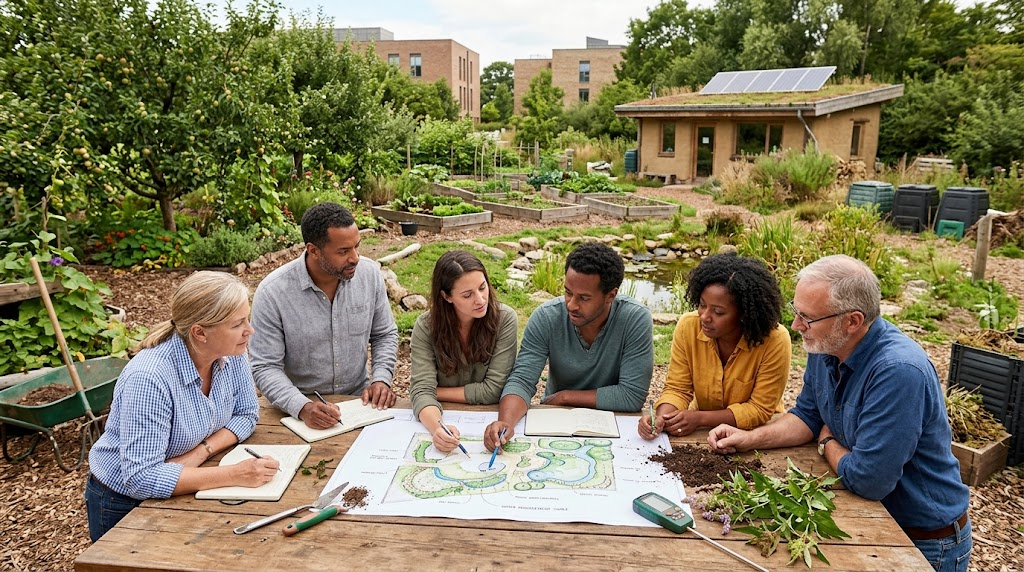
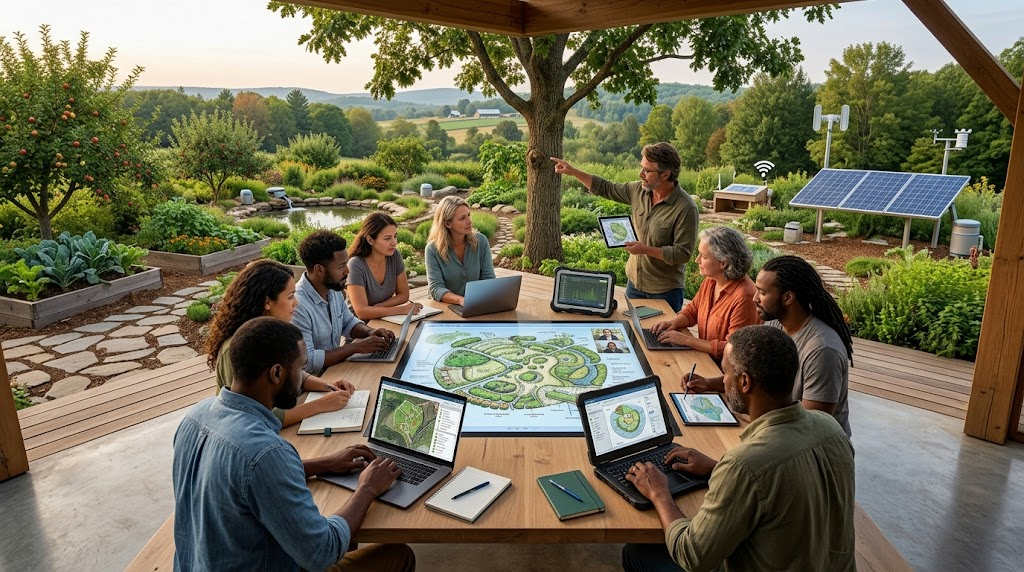
Permaculture is built on sharing knowledge. Online learning environments create opportunities for students from different regions to collaborate and exchange ideas.
Peer-based activities may include:
- Group design challenges
- Discussion forums
- Virtual study circles
- Feedback sessions
- Collaborative research projects
Working with others exposes learners to different perspectives.
A student living in a dry climate may approach water management differently from someone living in a tropical environment. By sharing experiences, students understand that permaculture solutions must be adaptable rather than universal.
Collaboration also strengthens communication skills. Permaculture practitioners often work with communities, organizations, and land managers, making clear communication an essential ability.
6. Virtual Garden Planning and Mapping Activities
Garden design provides an excellent opportunity for practical online learning.
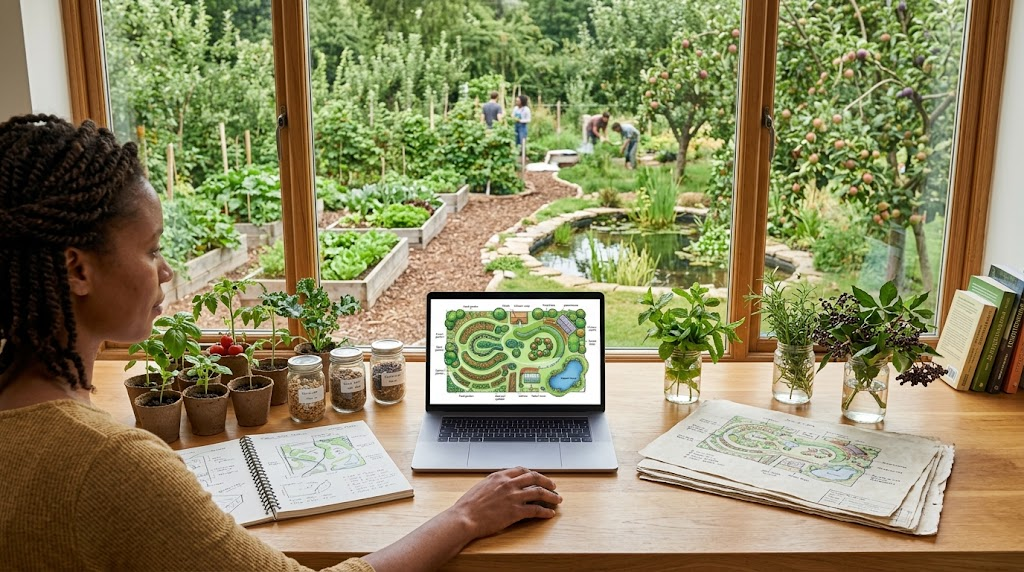
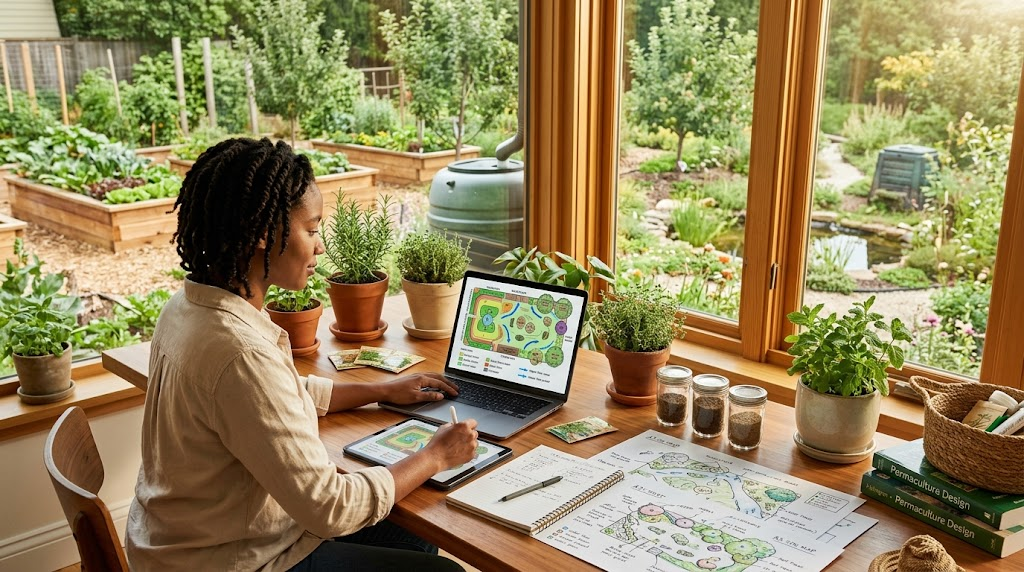
Students can use digital tools to create:
- Garden layouts
- Food forest plans
- Companion planting designs
- Resource maps
- Seasonal planting schedules
Even without physically building a garden, learners can practice important design decisions.
They can analyze:
- Plant relationships
- Water requirements
- Sun exposure
- Soil conditions
- Human access patterns
For example, a learner designing a backyard food system must consider where plants receive sunlight, how water moves through the space, and how people interact with the garden.
These activities develop design confidence before implementation begins.
7. Climate and Ecosystem Analysis Exercises
Every permaculture design must respond to climate and ecological conditions.
Online experiential learning activities can help students investigate:
- Local weather patterns
- Seasonal changes
- Climate challenges
- Natural resources
- Ecosystem relationships
Students may create climate observation reports that explore questions such as:
- When does rainfall occur?
- Which plants naturally thrive in the region?
- What environmental challenges affect local communities?
- How can designs increase resilience?
This encourages learners to work with nature rather than against it.
Understanding ecological patterns helps students create systems that require fewer external inputs and can adapt to changing conditions.
8. Regenerative Business and Social Enterprise Projects
Permaculture is not only about landscapes. It also involves creating sustainable human systems.
Many Permaculture Diploma Seekers want to develop careers in ecological design, education, consulting, farming, or community development.
Online experiential projects can help students explore regenerative business ideas such as:
- Community-supported agriculture models
- Ecological education programs
- Sustainable product development
- Local food enterprises
- Environmental consulting services
Students can develop business plans that consider:
- Environmental impact
- Social benefits
- Financial sustainability
- Community needs
This activity connects ecological values with practical livelihood opportunities.
9. Online Workshops and Mentor-Led Learning
Guided learning experiences provide structure and support for students.
Online workshops can include:
- Live design sessions
- Guest discussions
- Project reviews
- Skill demonstrations
- Question-and-answer sessions
Mentors help learners connect theory with practice by sharing experience from real projects.
For Permaculture Diploma Seekers, mentorship is especially valuable because ecological design often involves complex decisions that cannot always be solved through textbooks alone.
A mentor can help students evaluate:
- Whether a design matches site conditions
- How realistic implementation plans are
- What improvements could strengthen a project
The combination of independent exploration and expert guidance creates a balanced learning experience.
10. Case Study Analysis of Real Permaculture Systems
Studying existing examples helps learners understand how permaculture principles work in practice.
Students can analyze case studies involving:
- Farms
- Gardens
- Community projects
- Ecological restoration efforts
- Sustainable living systems
A case study activity may ask students to examine:
- What challenges existed?
- What design principles were applied?
- What resources were used?
- What outcomes occurred?
- What lessons can be applied elsewhere?
Case studies develop analytical thinking and help learners recognize patterns across different environments.
Essential Skills Developed Through Online Experiential Learning Activities
Ecological Literacy and Environmental Awareness
One of the greatest benefits of experiential learning is the development of ecological literacy.
Students begin to understand:
- Natural cycles
- Biodiversity relationships
- Soil health
- Water systems
- Human impact on ecosystems
This knowledge allows learners to make better design decisions.
Instead of viewing environmental problems as separate issues, they begin seeing connections between social, economic, and ecological systems.
Leadership and Community Facilitation Skills
Permaculture practitioners often become educators, organizers, and community leaders.
Online experiential learning activities strengthen leadership skills by encouraging students to:
- Facilitate discussions
- Present ideas
- Collaborate with others
- Manage projects
- Communicate sustainability concepts
These skills are valuable for anyone seeking to create positive change within communities.
Creative Problem-Solving and Innovation
Permaculture rarely involves one perfect solution. Designers must adapt ideas based on available resources and changing conditions.
Experiential activities encourage creativity through challenges such as:
- Designing with limited resources
- Improving existing systems
- Finding local solutions
- Testing new approaches
Students learn that innovation often comes from careful observation and experimentation.
Designing a Successful Online Experiential Learning Journey
Combining Theory With Practical Application
A strong permaculture education balances knowledge with action.
Theory provides important foundations, including:
- Ethics of permaculture
- Ecological principles
- Design methods
- Sustainability concepts
Practical activities transform this knowledge into usable skills.
The most effective learning journey allows students to move between studying concepts and applying them in real situations.
For example:
| Learning Stage | Student Activity |
| Learn | Study ecological design principles |
| Observe | Analyze a local environment |
| Design | Create a sustainable solution |
| Reflect | Evaluate results and lessons |
| Improve | Adjust the design based on feedback |
This cycle mirrors natural systems, where adaptation and improvement are ongoing processes.
Creating Meaningful Learning Assessments
Traditional exams are not always the best way to measure practical abilities.
Experiential learning assessments may include:
- Design portfolios
- Project reports
- Reflection journals
- Community research
- Presentations
- Peer feedback
These methods allow students to demonstrate real understanding.
A portfolio, for example, can show the complete journey of a project from initial observation to final design recommendations.
This approach recognizes that learning is not only about knowing information. It is about applying knowledge effectively.
Frequently Asked Questions About Online Experiential Learning Activities
1. What are online experiential learning activities in permaculture education?
Online experiential learning activities are practical learning experiences completed through digital platforms. They allow students to apply permaculture concepts through projects, observations, research, collaboration, and reflection while learning remotely.
2. Can Permaculture Diploma Seekers gain practical skills online?
Yes. While physical practice remains important, online learning can develop many practical skills through guided projects, ecological observation exercises, design work, and real-world applications within a student’s own environment.
3. Why is experiential learning important for permaculture students?
Experiential learning helps students move beyond theory. It allows them to observe natural systems, test ideas, solve problems, and develop confidence as ecological designers.
4. What types of projects can students complete online?
Students can complete projects such as garden designs, community research, sustainability assessments, ecological mapping exercises, and regenerative business plans.
5. How does online collaboration support permaculture learning?
Online collaboration connects learners from different regions and backgrounds. Students can exchange ideas, receive feedback, and understand how permaculture solutions change according to local conditions.
6. Are online experiential learning activities suitable for beginners?
Yes. These activities can be adapted for beginners while still providing meaningful challenges for experienced learners. They encourage gradual skill development through observation and practice.
7. How can students document their experiential learning?
Students can use digital portfolios, photographs, videos, written reflections, project reports, and design documents to record their progress and demonstrate their skills.
Conclusion: Building Real-World Permaculture Skills Through Online Experiences
The future of sustainability education depends on learning approaches that combine knowledge, action, and reflection. For Permaculture Diploma Seekers, online experiential learning activities provide a powerful way to develop practical skills while studying from anywhere in the world.
These activities transform online education from passive information consumption into active participation. Through ecological observation, design projects, collaboration, research, and reflection, students develop the confidence needed to create regenerative solutions.
Permaculture is ultimately about relationships — between people, landscapes, resources, and communities. Effective learning should reflect those relationships by encouraging curiosity, experimentation, and continuous improvement.
By engaging in meaningful online experiences, learners can prepare themselves to become capable ecological designers, community leaders, and contributors to a more sustainable future.
For those exploring regenerative education pathways, Gaia University provides opportunities focused on self-directed learning, practical action, and transformational education.
Responses