
Education as Agent of Social Change: Guide for Permaculture Diploma Seekers

Introduction to Educational Transformation
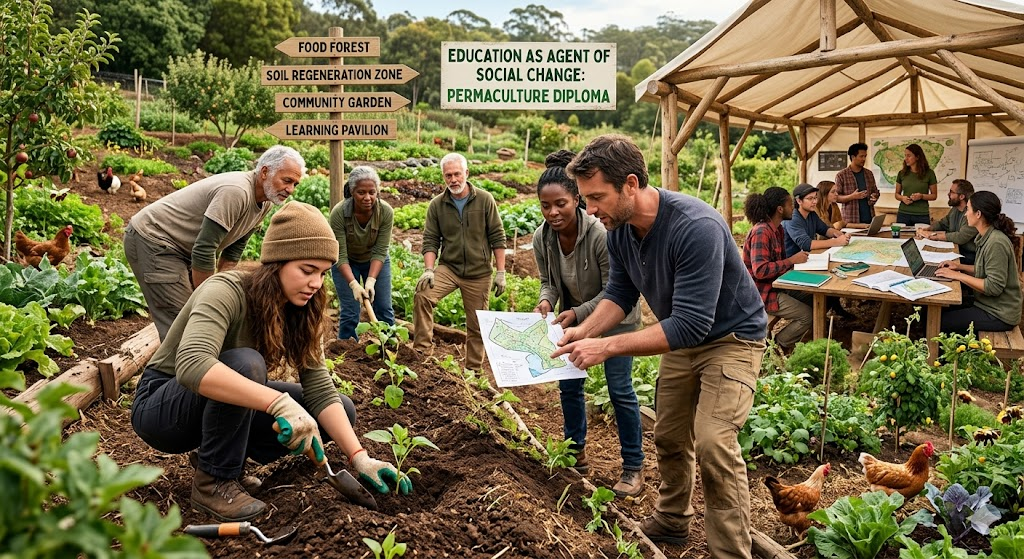
Education as agent of social change is not just a theory—it is a living practice shaping how communities think, act, and evolve. In permaculture diploma learning environments, education becomes a tool for rebuilding ecosystems, strengthening communities, and restoring balance between humans and nature.
Instead of simply transferring knowledge, this approach transforms learners into active participants in solving real-world problems. For permaculture diploma seekers, this means stepping into a learning journey where soil, society, and sustainability are deeply interconnected.
Understanding Social Change Through Learning
The Historical Role of Education in Society
Throughout history, education has influenced revolutions, reforms, and cultural transformations. From agricultural revolutions to industrial shifts, learning systems have consistently guided how societies evolve.
Traditional systems often focused on memorization. However, modern interpretations emphasize critical thinking, environmental awareness, and community engagement.
Modern Interpretations of Social Change
Today, education is increasingly viewed as a dynamic system that:
- Encourages ecological responsibility
- Promotes equality and inclusion
- Builds resilience in communities
- Supports sustainable economic systems
This is where the idea of education as agent of social change becomes especially powerful for permaculture learners.
Connection Between Permaculture and Education
Principles of Permaculture in Learning Systems
Permaculture is more than gardening—it is a design philosophy for sustainable living. When applied to education, it reshapes how knowledge is shared and practiced.
Earth Care in Educational Context
Students learn to respect ecosystems, understanding how human actions affect soil, water, and biodiversity.
People Care and Community Learning
Education fosters cooperation rather than competition, helping learners build strong, supportive communities.
Fair Share as a Teaching Philosophy
Resources, knowledge, and opportunities are distributed in ways that support long-term sustainability.
Education as Agent of Social Change in Permaculture Diploma Programs
Curriculum Design for Sustainability
Permaculture diploma programs integrate theory with hands-on experience. Students learn design principles, ecological restoration, and sustainable agriculture practices.
Experiential Learning and Real-World Application
Instead of purely classroom-based learning, students engage in:
- Food forest design
- Soil regeneration projects
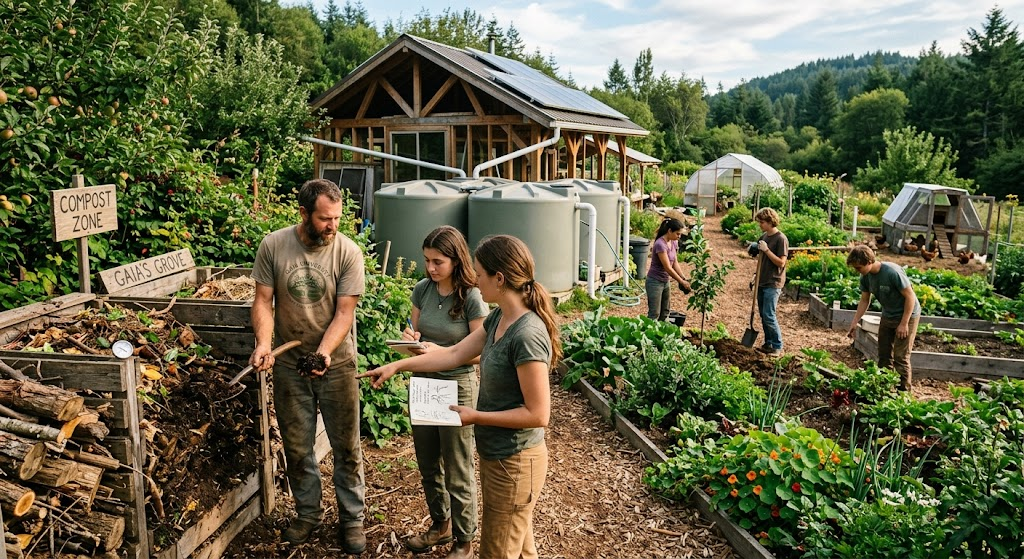
- Water management systems
Farm-Based Learning Models
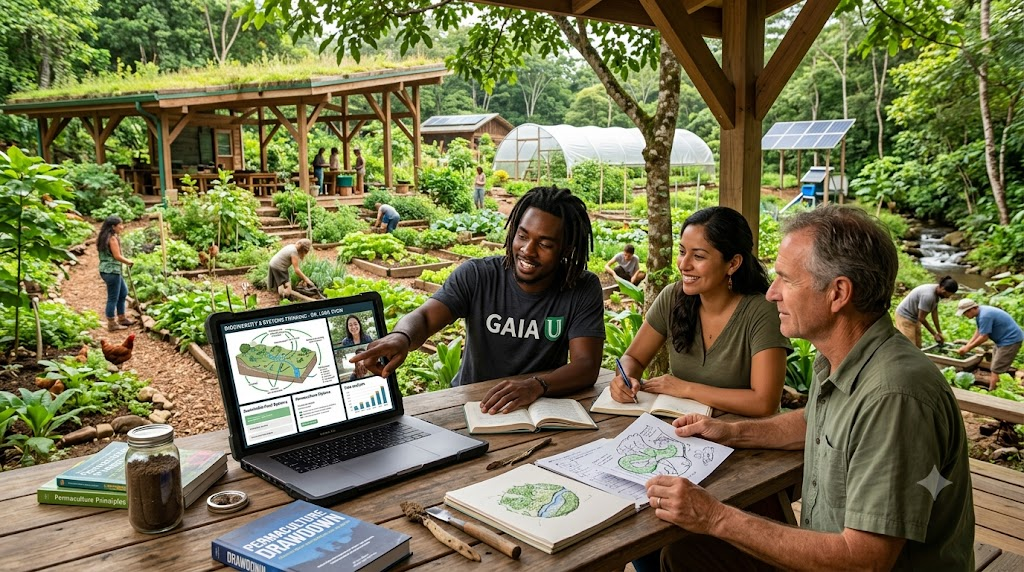
Many programs use farms as living classrooms where students observe ecological cycles directly.
Community-Based Projects
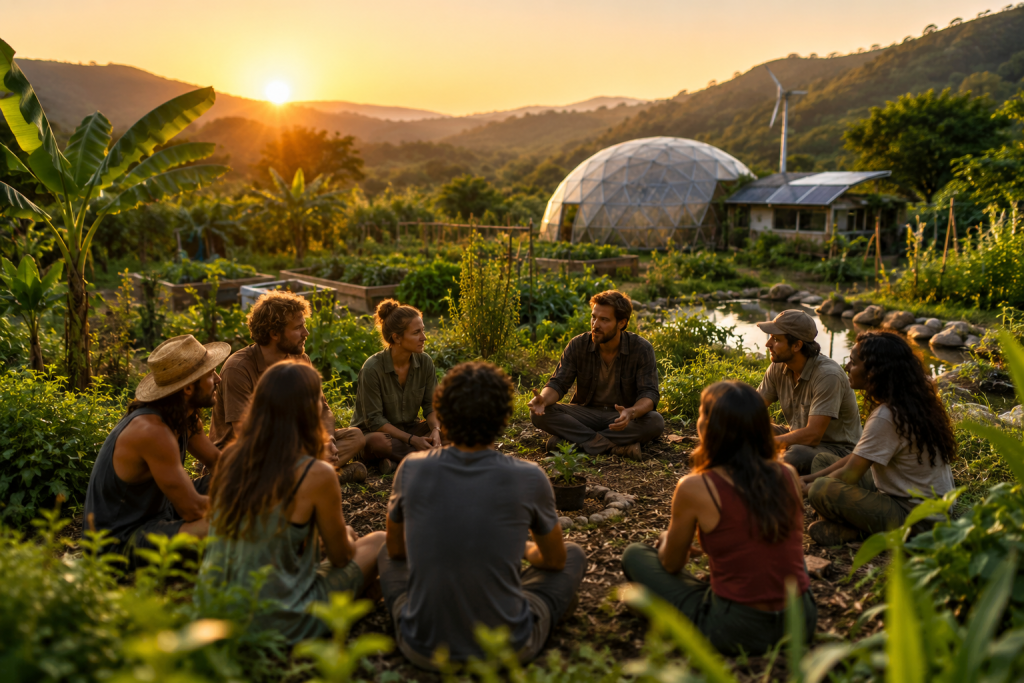
Learners often collaborate with local communities to implement sustainable solutions, making education practical and impactful.
Gaia University and Transformative Education
Overview of Gaia University Approach
Gaia University represents a flexible, learner-centered approach where education is deeply connected to ecological regeneration and social transformation.
Flexible Learning Pathways
Students design their own learning journey based on real-world projects, rather than fixed classroom schedules.
Integration of Ecology and Education
Explore Gaia University Programs
Ecological restoration, community engagement, and personal development are combined into one integrated learning process.
Skills Developed Through Transformative Education
Ecological Literacy
Students learn how ecosystems function and how human systems can support rather than harm nature.
Systems Thinking
Understanding relationships between social, ecological, and economic systems is key to designing sustainable solutions.
Community Leadership Skills
Learners develop the ability to guide groups, facilitate collaboration, and support collective decision-making.
Challenges in Using Education for Social Change
Institutional Barriers
Traditional education systems may resist flexible or non-traditional learning approaches.
Cultural Resistance
Some communities may initially struggle to accept alternative educational models.
Resource Limitations
Hands-on, community-based education often requires land, tools, and long-term commitment.
Strategies to Strengthen Educational Impact
Participatory Learning Models
Students actively participate in designing their learning journey, increasing engagement and ownership.
Localized Knowledge Systems
Education becomes more effective when adapted to local environments and cultures.
Digital and Field Integration
Blending online learning with real-world practice ensures flexibility and accessibility.
Case Studies in Educational Transformation
Community Restoration Projects
In many regions, learners have successfully restored degraded land using permaculture design techniques.
Sustainable Agriculture Education Models
Educational farms demonstrate how food production can regenerate ecosystems instead of depleting them.
Future of Education as a Social Catalyst
The future of education as agent of social change lies in decentralization, sustainability, and collaboration. As global challenges increase—climate change, food insecurity, and biodiversity loss—education must evolve into a system that actively restores balance rather than simply describing problems.
Permaculture diploma seekers are at the forefront of this shift, learning to design systems that benefit both people and the planet.
Frequently Asked Questions (FAQs)
1. What does education as agent of social change mean?
It refers to education systems that actively transform society by promoting sustainability, equality, and ecological awareness.
2. How does permaculture relate to education?
Permaculture applies ecological design principles to learning systems, emphasizing sustainability and community resilience.
3. Why is experiential learning important in permaculture education?
It allows students to apply theory in real-world environments, making learning more practical and impactful.
4. What skills do permaculture diploma seekers gain?
They gain ecological literacy, systems thinking, design skills, and community leadership abilities.
5. How does Gaia University support social change?
Gaia University Learning Model offers flexible, project-based education focused on ecological and social regeneration.
6. Can education really solve environmental problems?
Education alone is not enough, but it is a powerful driver of awareness, innovation, and collective action.
Conclusion
The concept of education as agent of social change is especially powerful within permaculture diploma pathways. It transforms learners into designers of sustainable systems, capable of reshaping communities and ecosystems.
By integrating ecological principles, experiential learning, and community engagement, education becomes more than instruction—it becomes regeneration in action.

Responses