
Mental Health and Sustainability: A Powerful Guide for Permaculture Diploma Seekers

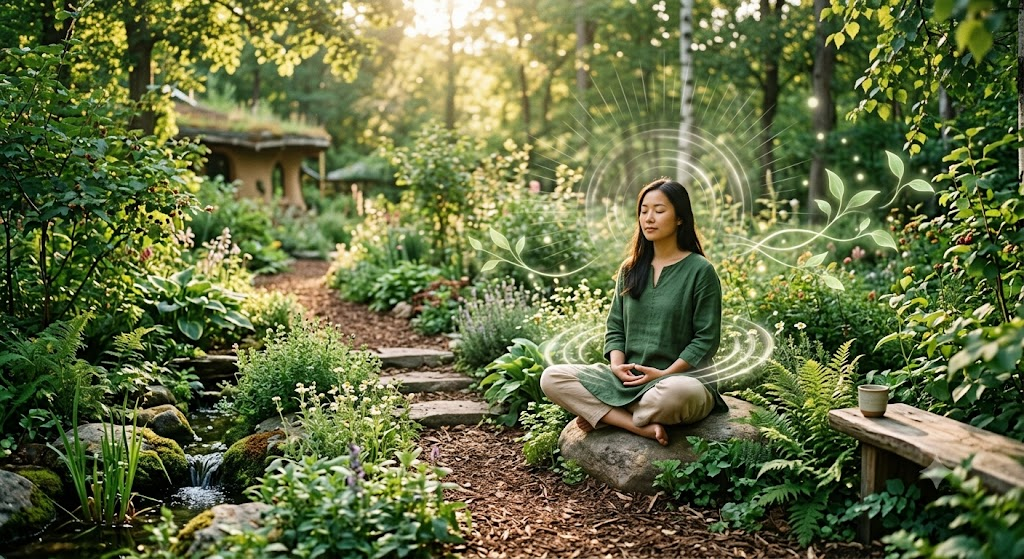
Introduction: The Growing Connection Between Mental Health and Sustainability
In today’s rapidly changing world, sustainability is no longer only about protecting natural resources, reducing waste, or designing environmentally responsible systems. It is also about understanding the relationship between people, communities, and the planet. For students pursuing a Permaculture Diploma, learning about mental health and sustainability provides a deeper understanding of how ecological systems and human well-being influence each other.
Permaculture is built on the idea that healthy environments create healthy communities. When people work with nature instead of against it, they often experience stronger connections, improved emotional balance, and a greater sense of purpose. Sustainability education therefore includes not only environmental knowledge but also awareness of psychological resilience, social relationships, and personal wellness.
For aspiring permaculture designers in the United States, understanding this relationship can transform the way they approach ecological challenges. A sustainable future requires people who can care for landscapes while also caring for themselves and others.
Understanding the Connection Between Mental Health and Sustainability
Sustainability is often discussed through environmental concepts such as renewable energy, soil regeneration, biodiversity, and conservation. However, human beings are part of every ecological system. The choices people make, the communities they build, and the emotional connections they develop all influence sustainability outcomes.
Mental health affects how individuals respond to environmental issues, make decisions, collaborate with others, and participate in regenerative projects. When people experience emotional exhaustion or disconnection, it becomes harder to contribute positively to sustainability efforts.
A balanced approach recognizes that environmental health and human health are interconnected. Healthy ecosystems support healthy people, and healthy people are more capable of protecting ecosystems.
Why Sustainability Education Includes Human Well-Being
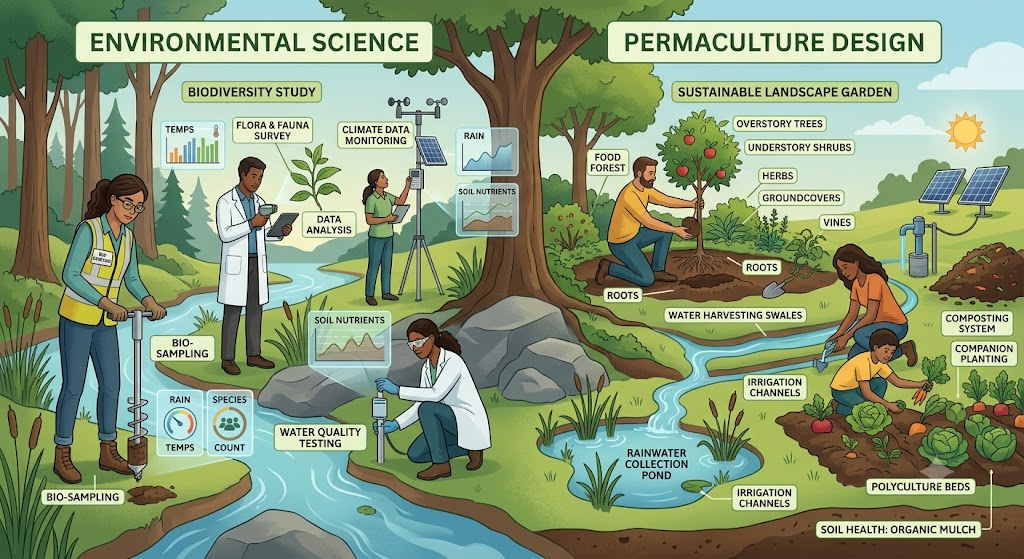
Permaculture education focuses on creating systems that support long-term survival and resilience. Traditional approaches sometimes separate human needs from environmental needs, but permaculture takes a different approach by recognizing that people are active participants within ecological networks.
The three core ethics of permaculture are:
| Permaculture Ethics | Connection to Well-Being |
| Earth Care | Encourages respect for nature and supports emotional connection with the environment |
| People Care | Recognizes the importance of community health and individual wellness |
| Fair Share | Promotes cooperation, balance, and responsible resource use |
These principles show that sustainability is not only about physical resources. It is also about relationships, values, and emotional awareness.
Students studying permaculture learn that successful sustainable systems must consider human behavior. A community garden, for example, is not successful only because it produces food. It also succeeds because it creates social connections, encourages outdoor activity, and provides a meaningful shared purpose.
The Role of Ecological Awareness in Emotional Balance
Many people experience stress because of increasing environmental challenges, social pressures, and feelings of uncertainty about the future. Developing ecological awareness can help individuals understand their place within larger natural systems.
Spending time in nature, observing seasonal changes, and participating in regenerative practices can encourage mindfulness and reduce feelings of isolation. Permaculture provides practical ways to rebuild a connection between humans and the living world.
For diploma seekers, this understanding is essential because future sustainability leaders must design systems that support both ecological and emotional resilience.
How Permaculture Supports Mental Health and Personal Resilience
Permaculture offers more than techniques for growing food or managing landscapes. It provides a framework for designing healthier ways of living. Through direct interaction with nature, community participation, and creative problem-solving, permaculture practices can support mental wellness.
Students who explore sustainability through a holistic approach often discover that ecological design principles can also be applied to personal development.
Nature Connection and Psychological Well-Being
Human beings have evolved alongside natural environments. Modern lifestyles, especially in urban areas, can create distance between people and natural systems. This separation may contribute to stress, loneliness, and reduced feelings of connection.
Permaculture encourages people to reconnect with nature through activities such as:
- Growing food sustainably
- Observing natural patterns
- Caring for soil ecosystems
- Restoring damaged landscapes
- Creating wildlife-friendly spaces
These activities provide opportunities for reflection, learning, and personal growth.
A permaculture garden is not simply a place where plants grow. It is a living classroom where students can observe cycles of growth, change, cooperation, and renewal.
The Healing Power of Gardens and Natural Systems
Gardening has long been associated with positive emotional experiences. Working with plants encourages patience because natural processes cannot be rushed. Seeds require care, seasons require acceptance, and ecosystems require balance.
For permaculture diploma students, gardens demonstrate important life lessons:
- Healthy systems develop gradually.
- Diversity creates strength.
- Cooperation improves resilience.
- Small actions can create meaningful change.
These lessons apply beyond the garden. They can influence how individuals manage challenges, relationships, and personal goals.
Community Building Through Permaculture Practices
One of the most important aspects of sustainability is community. Environmental challenges cannot be solved by individuals working alone. Cooperation, communication, and shared knowledge are essential.
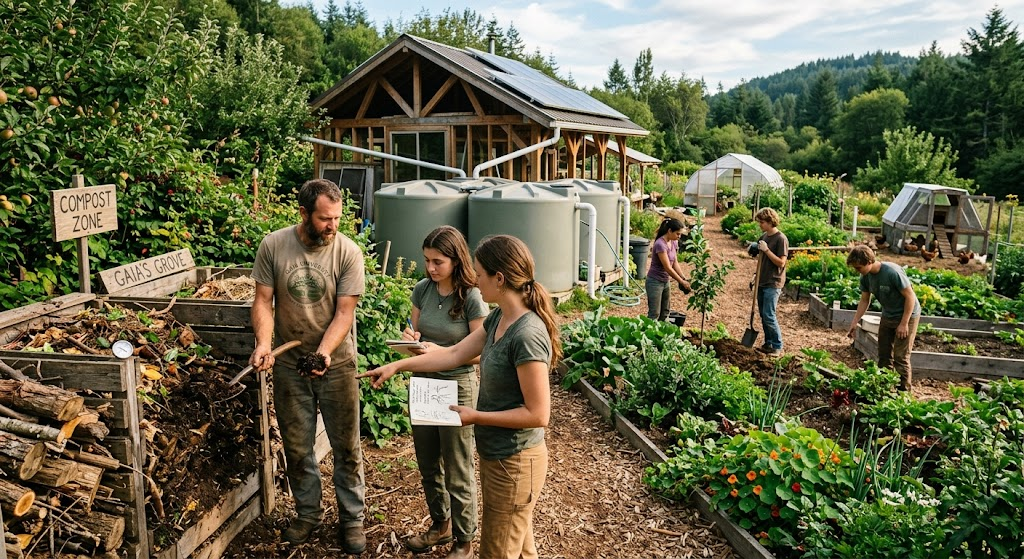
Permaculture creates spaces where people can learn together, exchange ideas, and support one another. Community gardens, educational workshops, and ecological restoration projects bring people together around common goals.
Strong communities often provide:
- Emotional support
- Shared responsibility
- Opportunities for learning
- A sense of belonging
- Increased confidence
For students pursuing a Permaculture Diploma, understanding community dynamics is as important as understanding ecological systems. A successful designer must consider how people interact within the landscapes they create.
Mental Health Challenges Faced by Sustainability Practitioners
Although sustainability work can be rewarding, it also comes with challenges. Environmental professionals, activists, educators, and permaculture practitioners may experience emotional pressure because they are aware of ecological problems affecting the planet.
Understanding these challenges helps future sustainability leaders develop healthier approaches.
Eco-Anxiety and Environmental Concerns
Eco-anxiety refers to feelings of worry, fear, or stress related to environmental issues. Many people who deeply care about sustainability experience concern about climate change, biodiversity loss, and ecological degradation.
While these feelings can be difficult, they can also become a source of motivation. Permaculture provides practical solutions by encouraging people to focus on positive action.
Instead of feeling overwhelmed by global challenges, students can focus on meaningful contributions such as:
- Restoring local ecosystems
- Educating communities
- Designing sustainable systems
- Sharing regenerative practices
Action can transform concern into empowerment.
Avoiding Burnout in Ecological Work
People working toward environmental change sometimes feel pressure to solve large problems quickly. This can lead to exhaustion if personal boundaries and self-care are ignored.
Sustainability itself requires balance. Just as ecosystems need periods of rest and regeneration, humans also need recovery.
Healthy sustainability practitioners often prioritize:
- Regular time in nature
- Community support
- Realistic goals
- Continuous learning
- Personal reflection
A person cannot effectively support a healthy planet without also supporting their own well-being.
The Importance of Mental Health and Sustainability in Permaculture Education
Permaculture education is designed to help learners understand relationships between natural systems, human communities, and personal responsibility. For students pursuing a Permaculture Diploma, integrating mental wellness into sustainability studies creates a more complete understanding of regenerative living.
A successful permaculture practitioner does not simply design productive landscapes. They design systems where people can thrive alongside nature. This requires awareness of emotions, communication styles, social relationships, and community needs.
The connection between mental health and sustainability is especially important because environmental solutions depend on human participation. A technically advanced ecological design will struggle if the people involved feel disconnected, overwhelmed, or unsupported.
Permaculture diploma programs encourage learners to develop a systems-based mindset. This approach helps students see that problems are rarely isolated. Soil health, food security, community relationships, and personal wellness are connected parts of one larger system.
Developing Holistic Thinking Skills
One of the greatest benefits of permaculture education is learning how to recognize patterns and relationships. Instead of focusing only on individual problems, students learn to examine entire systems.
For example, a community experiencing food insecurity may not only need more food production. It may also need:
- Stronger social connections
- Better education opportunities
- Increased access to natural spaces
- More community involvement
- Greater emotional support
A holistic approach considers all these factors together.
This type of thinking can improve mental resilience because it encourages people to move away from feelings of helplessness. Instead of seeing challenges as impossible problems, students learn to identify opportunities for positive change.
Integrating Mind, Community, and Environment
Permaculture recognizes that humans are not separate from ecological systems. Every decision affects the surrounding environment, and environmental conditions affect human experiences.
A balanced sustainable lifestyle includes:
| Area of Life | Sustainable Approach |
| Physical Environment | Creating healthy, regenerative spaces |
| Emotional Health | Practicing mindfulness and self-awareness |
| Social Connections | Building supportive communities |
| Daily Habits | Making conscious lifestyle choices |
| Learning | Continuing personal and ecological growth |
For Permaculture Diploma seekers, this integration creates stronger leadership skills. Future designers, educators, and community organizers must understand both environmental principles and human behavior.
Practical Permaculture Strategies for Better Mental Wellness
Permaculture provides many practical strategies that support emotional well-being. These methods are valuable for students, educators, and sustainability professionals because they combine ecological action with personal development.
Mindful Gardening Practices
Mindful gardening involves paying attention to natural processes rather than rushing toward results. It encourages observation, patience, and appreciation.
When practicing mindful gardening, individuals may focus on:
- The changing seasons
- Plant growth patterns
- Soil conditions
- Wildlife interactions
- Weather patterns
This simple practice encourages people to slow down and become more aware of their surroundings.
For many permaculture students, gardening becomes a form of active learning. Each garden provides lessons about adaptation, resilience, and cooperation.
A damaged landscape can recover when given the right conditions. Similarly, people can develop resilience when they have supportive environments and healthy practices.
Sustainable Lifestyle Design
Permaculture is not limited to farms or gardens. It can influence everyday choices, including how people organize homes, communities, and personal routines.
Sustainable lifestyle design may include:
- Reducing unnecessary consumption
- Creating efficient daily routines
- Growing some personal food
- Supporting local systems
- Using resources responsibly
These practices can create a stronger sense of purpose. Many people experience greater satisfaction when their daily actions align with their values.
Living sustainably does not require perfection. Instead, it encourages continuous improvement and thoughtful decision-making.
Creating Supportive Learning Communities
Education becomes more powerful when people learn together. Permaculture courses often create communities where students share experiences, challenges, and discoveries.
Supportive learning environments can help students:
- Exchange knowledge
- Develop confidence
- Practice teamwork
- Build professional relationships
- Find inspiration
For sustainability learners, community is an important resource. Environmental work often involves collaboration, and learning how to communicate effectively is a valuable skill.
Building Emotional Resilience Through Ecological Design
Resilience is a key concept in both sustainability and mental wellness. In ecology, resilience describes the ability of systems to recover from disturbance. In human life, resilience refers to the ability to adapt to challenges while maintaining well-being.
Permaculture teaches that resilient systems contain diversity, flexibility, and strong connections. These same principles can guide personal development.
Systems Thinking and Personal Growth
Systems thinking helps individuals understand that every action creates effects beyond the immediate moment.
For example:
A person who creates a backyard food garden may improve:
- Their access to fresh food
- Their connection with nature
- Their physical activity
- Their neighborhood relationships
- Their environmental awareness
One small action can create multiple positive outcomes.
This principle encourages hope and creativity. Instead of focusing only on problems, students learn to identify relationships and possibilities.
Permaculture Diploma seekers can apply systems thinking to leadership, education, design, and community development.
Career Benefits of Understanding Mental Health and Sustainability
The demand for sustainability professionals continues to grow as communities, organizations, and individuals seek regenerative solutions. Professionals who understand both ecological design and human well-being can bring valuable skills to many fields.
Knowledge of mental health and sustainability can benefit careers in:
| Career Area | Application |
| Permaculture Design | Creating human-centered ecological systems |
| Environmental Education | Teaching sustainable practices |
| Community Development | Supporting resilient neighborhoods |
| Regenerative Agriculture | Improving food systems |
| Sustainability Consulting | Helping organizations create positive change |
A successful sustainability leader understands that people are at the center of every environmental solution.
Preparing for Leadership in Regenerative Communities
Future sustainability leaders must do more than understand ecological principles. They must inspire participation, encourage collaboration, and create environments where people feel valued.
Leadership skills developed through permaculture education include:
- Communication
- Observation
- Problem-solving
- Creativity
- Collaboration
- Adaptability
These skills are essential because sustainability challenges require collective action.
Students interested in expanding their knowledge of regenerative education can explore programs and learning opportunities through Gaia University, an organization focused on transformative learning and regenerative development.
Frequently Asked Questions About Mental Health and Sustainability
1. What is the connection between mental health and sustainability?
Mental health and sustainability are connected because human well-being depends on healthy relationships with communities and natural environments. Sustainable practices can support emotional resilience by encouraging connection, purpose, and meaningful action.
2. Why should Permaculture Diploma students learn about mental health?
Permaculture students need to understand human well-being because sustainable systems must support both ecological health and community needs. Mental wellness knowledge helps future practitioners design more balanced and supportive environments.
3. Can permaculture practices improve emotional well-being?
Yes. Activities such as gardening, ecological restoration, and community participation can encourage mindfulness, connection, and a sense of accomplishment.
4. How does nature connection support sustainability education?
Nature connection helps students understand ecological relationships while encouraging appreciation and responsibility toward the environment. It creates a stronger personal connection to sustainability principles.
5. What is eco-anxiety, and how can permaculture help address it?
Eco-anxiety involves stress or concern about environmental challenges. Permaculture can help by providing practical ways to take positive action and participate in regenerative solutions.
6. How can sustainability professionals avoid burnout?
Sustainability professionals can reduce burnout by maintaining healthy boundaries, building supportive communities, practicing self-care, and recognizing that meaningful change takes time.
7. Why is community important in permaculture?
Community is essential because sustainable solutions require cooperation. Shared learning, collaboration, and mutual support help create stronger ecological and social systems.
Conclusion: Creating a Healthier Future Through Permaculture
The relationship between mental health and sustainability reveals an important truth: caring for the planet and caring for people are deeply connected. A sustainable future requires more than environmental technology or ecological knowledge. It requires individuals and communities that are emotionally resilient, socially connected, and committed to positive change.
For Permaculture Diploma seekers, understanding this connection provides a stronger foundation for creating regenerative systems. Permaculture teaches that healthy ecosystems depend on diversity, balance, and cooperation. These same principles can guide human well-being.
By combining ecological design with awareness of mental wellness, future sustainability professionals can create solutions that support both people and the Earth.
The path toward regeneration begins with recognizing that every person is part of nature. When individuals learn to care for themselves, support their communities, and restore the environment, they contribute to a healthier and more sustainable world.
Students interested in exploring regenerative education pathways can learn more through Gaia University Programs.
For further exploration of ecological learning approaches, the Gaia University learning resources provide additional perspectives on transformational education and sustainability practices: Gaia University Learning Resources.

Responses