
Permaculture Design Certificate Near Me: A Guide for Aspiring Diploma Seekers

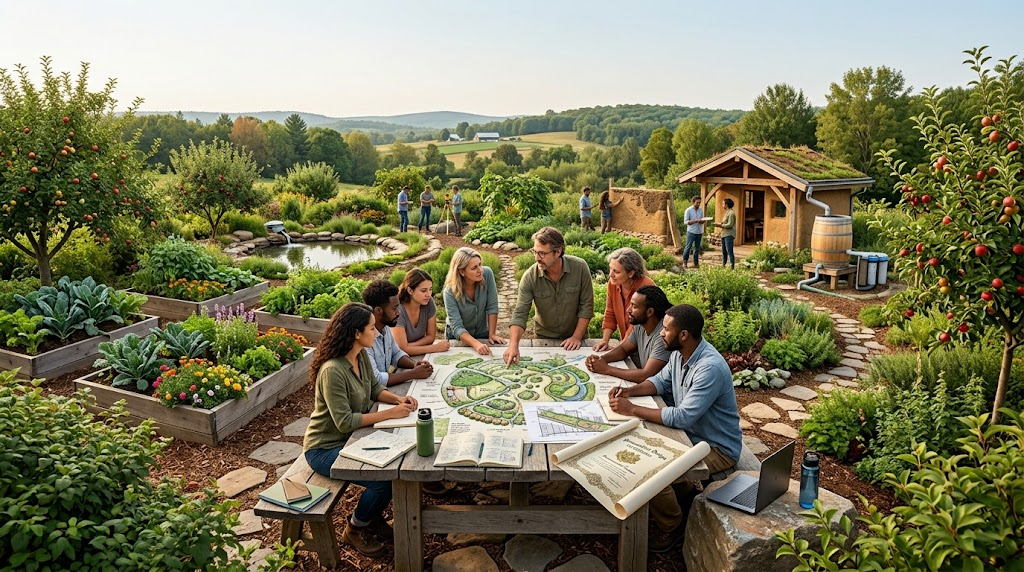
Permaculture Design Certificate Near Me: Finding the Right Learning Path
Searching for “permaculture design certificate near me” usually means you want more than a basic introduction to sustainable gardening. You may be looking for structured education, practical design experience, a recognized certificate, and a pathway toward more advanced permaculture studies.
A Permaculture Design Certificate (PDC) can provide a foundation in ecological design, systems thinking, sustainable resource management, and regenerative practices. For someone planning to pursue a permaculture diploma, choosing the right certificate program is particularly important because the learning experience can influence the skills, project portfolio, and practical confidence you develop later.
The good news is that “near me” does not necessarily have to mean a classroom located within a few kilometers of your home. A local course can provide valuable face-to-face experience, but an online or blended program may offer greater flexibility while allowing you to apply your learning to projects in your own community.
This guide explains what to consider when searching for a permaculture design certificate near me, how to compare programs, and how to think beyond the certificate toward long-term permaculture education.
What Is a Permaculture Design Certificate?
A Permaculture Design Certificate is generally awarded after completing a structured Permaculture Design Course. The purpose is to introduce learners to the principles, ethics, methods, and applications of permaculture design.
Permaculture is broader than organic gardening. It involves looking at relationships between people, landscapes, resources, ecosystems, and built environments. Depending on the course, students may explore topics such as:
- Ecological design
- Soil and land management
- Water systems
- Food production
- Renewable resources
- Natural patterns
- Sustainable buildings
- Community resilience
- Systems thinking
- Landscape design
- Regenerative practices
- Project planning
The most useful PDC programs connect these ideas rather than presenting them as isolated subjects.
For a future diploma student, this systems perspective is especially valuable. A diploma-level learner needs to move beyond knowing individual techniques and develop the ability to analyze situations, identify relationships, design interventions, implement projects, and reflect on results.
Why Search for a Permaculture Design Certificate Near Me?
A local PDC can have several advantages.
1. Hands-On Learning
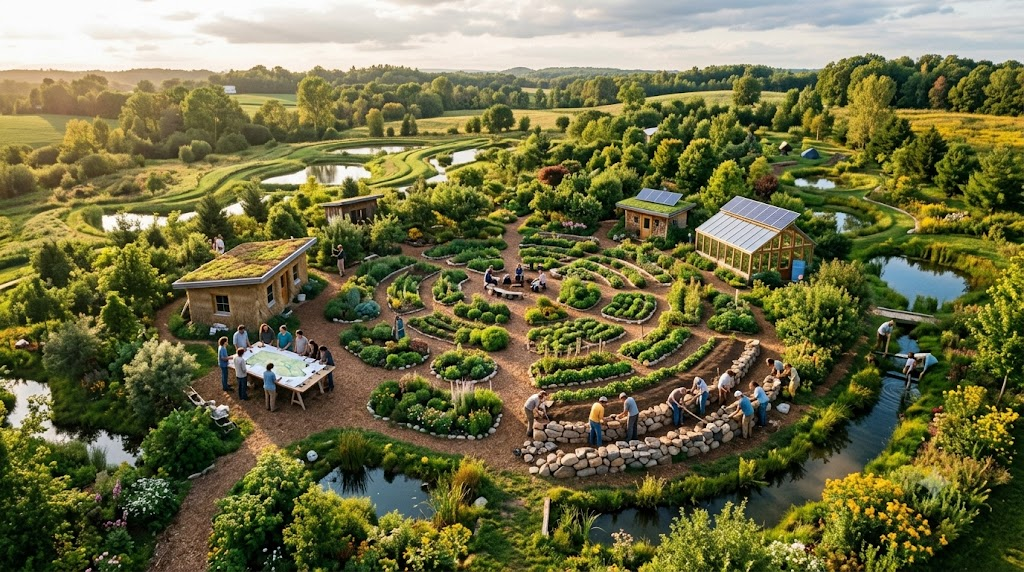
Permaculture is an applied discipline. Seeing land, observing ecological patterns, working with materials, and participating in practical activities can make concepts easier to understand.
A local course may allow you to work directly with:
- Gardens
- Farms
- Community spaces
- Food systems
- Water-management projects
- Forest gardens
- Urban environments
- Ecological restoration sites
This experience can help turn theoretical knowledge into practical design skills.
2. Local Ecological Knowledge
Permaculture solutions depend heavily on context.
A water-management strategy suitable for a dry climate may not make sense in a region with abundant rainfall. Likewise, plant selection, soil management, building methods, and food-production systems vary considerably between locations.
A local PDC can therefore help you understand the ecological characteristics of your own region.
3. Community Connections
One of the strongest reasons to consider a local program is the opportunity to meet people interested in similar questions.
Your classmates may become:
- Project collaborators
- Community organizers
- Designers
- Farmers
- Educators
- Entrepreneurs
- Future professional contacts
For someone planning a permaculture diploma, these relationships can become part of a much broader learning network.
4. Access to Local Projects
A nearby course may make it easier to participate in real projects after classes finish.
Instead of treating your certificate as the end of your education, you can use it as a starting point for continued practice.
That distinction matters. A certificate demonstrates that you completed a course, while practical projects demonstrate how you can apply what you learned.
Does “Near Me” Mean You Need an In-Person PDC?
Not necessarily.
One of the most important questions for modern permaculture learners is whether location should determine their education.
Online learning can remove geographical limitations. Instead of traveling to a course site, you can study from home and apply design principles to a project in your own environment.
For diploma seekers, this can be particularly useful because advanced learning often benefits from combining structured study with independent project work.
Gaia University, for example, describes its educational model as a combination of online studies, hands-on action learning, and self-directed project work. Its programs emphasize learning through practical application rather than relying exclusively on conventional classroom instruction.
You can explore the university’s program offerings to understand how its certificate and diploma pathways are structured.
Local vs. Online Permaculture Design Certificate
When evaluating a permaculture design certificate near me, compare the learning format rather than assuming that local automatically means better.
| Factor | Local/In-Person PDC | Online PDC |
| Face-to-face interaction | Usually high | Varies |
| Travel required | Often | Minimal |
| Local ecological context | Strong potential | Can be applied locally |
| Schedule flexibility | Often limited | Usually greater |
| Practical activities | Often included | Depends on course |
| International community | Usually smaller | Potentially broader |
| Ability to study while working | May be harder | Often easier |
| Project-based learning | Depends on provider | Depends on provider |
The best choice depends on how you learn and what you want to accomplish.
If your primary objective is immediate hands-on experience, an in-person course may be attractive. If your priority is flexibility and progressing toward a longer educational pathway, an online or blended model may be more practical.
What Should a Good PDC Curriculum Include?
Not every course marketed around permaculture provides the same depth of learning.
When researching permaculture design certificate near me, examine the curriculum carefully.
Permaculture Ethics and Principles
A strong foundation should explain the ethical framework and design principles underlying permaculture.
You should understand not only what a technique is but also why it is appropriate within a larger ecological system.
Site Observation and Analysis
Observation is fundamental to good design.
A useful program should help students learn how to analyze factors such as:
- Sun
- Wind
- Water
- Topography
- Soil
- Existing vegetation
- Access
- Human activity
- Seasonal changes
- Existing infrastructure
Good design begins with understanding the system before attempting to change it.
Design Methodology
Students should gain experience turning observations into design decisions.
Depending on the program, this might include:
- Site assessment
- Mapping
- Zoning
- Sector analysis
- Pattern recognition
- Functional relationships
- Design iteration
- Implementation planning
Water and Soil
Water and soil are central to many regenerative systems.
A PDC may introduce strategies for conserving water, improving soil health, managing runoff, reducing erosion, and supporting productive landscapes.
Food Systems
Food production is an important application of permaculture, but it should generally be understood within the broader ecological system.
Topics can include:
- Food forests
- Polycultures
- Perennial crops
- Agroecology
- Home-scale production
- Regenerative agriculture
- Integrated systems
Social and Community Systems
Permaculture design is not limited to physical landscapes.
People are part of every human-designed system. Advanced learners should therefore develop an understanding of collaboration, communication, community resilience, and social design.
How a PDC Can Support a Permaculture Diploma
If your ultimate goal is a permaculture diploma, don’t evaluate a certificate solely by the credential printed at the end.
Consider how well it prepares you for your next stage.
A useful PDC should help you develop:
- Foundational ecological knowledge
- Systems-thinking abilities
- Design skills
- Practical experience
- Documentation habits
- Confidence working on real projects
- A foundation for continued study
Gaia University’s International Diploma of Permaculture Design is specifically positioned as an advanced program following Permaculture Design Course education. The program combines additional content with project design, documentation, mentoring, feedback, and practical engagement.
Its diploma information also explains that students begin with online certificate programs before moving into mentored, self-directed project work.
For a learner searching for permaculture design certificate near me, this highlights an important consideration: the certificate can be part of a larger educational pathway rather than an isolated qualification.
What Does a Permaculture Certificate Cost?
Cost is one of the first things most prospective students consider.
However, comparing only tuition prices can produce misleading results.
Two programs may have very different fees because they provide different amounts of:
- Instructor time
- Mentoring
- Practical instruction
- Learning materials
- Assessments
- Community interaction
- Project support
- Certification
- Student services
Before choosing a program, calculate the total educational investment.
Ask:
- What is included in tuition?
- Are learning materials included?
- Are there additional project costs?
- Is mentoring included?
- Are assessments included?
- Are there travel or accommodation expenses?
- Can the program be completed while working?
- Does the course contribute toward a future diploma?
For example, Gaia University’s current program information lists its certificate and diploma offerings separately and describes different durations, engagement expectations, and fees.
The important lesson is to compare the complete learning experience rather than choosing solely on the lowest advertised price.
How Long Does a PDC Take?
Course duration varies considerably.
Some intensive programs are completed within several weeks, while other programs use a more flexible schedule.
If you are preparing for diploma-level education, consider whether you want an accelerated experience or a learning structure that gives you time to apply concepts between lessons.
A longer learning rhythm can provide opportunities to:
- Observe seasonal changes
- Test design ideas
- Work on real projects
- Document results
- Reflect on mistakes
- Refine your design process
For applied education, this practical cycle can be more valuable than simply completing lessons as quickly as possible.
What Makes a PDC Valuable for Diploma Seekers?
A certificate becomes more useful when it creates evidence of capability.
For example, imagine completing a PDC and producing:
- A site analysis
- A base map
- A water-management design
- A food-system plan
- A written design rationale
- Implementation documentation
- Reflections on what worked and what did not
These materials can become part of a portfolio demonstrating how you think as a designer.
This is particularly relevant to project-based educational models. Gaia University describes its diploma programs as emphasizing real-world projects, documentation, mentoring, and development of competencies that can be demonstrated through an ePortfolio.
For someone planning advanced study, that can be a more meaningful outcome than simply having a certificate with a title on it.
Questions to Ask Before Choosing a Permaculture Course
Before enrolling in the first program you find through a permaculture design certificate near me search, ask the provider these questions.
Is the Course Actually a PDC?
Confirm what the certificate represents and what the curriculum covers.
Don’t assume every sustainability, gardening, or regenerative agriculture course is equivalent to a Permaculture Design Course.
Who Teaches the Course?
Look at the instructors’ practical and educational experience.
A good instructor should be able to connect principles with real applications.
Is There Practical Design Work?
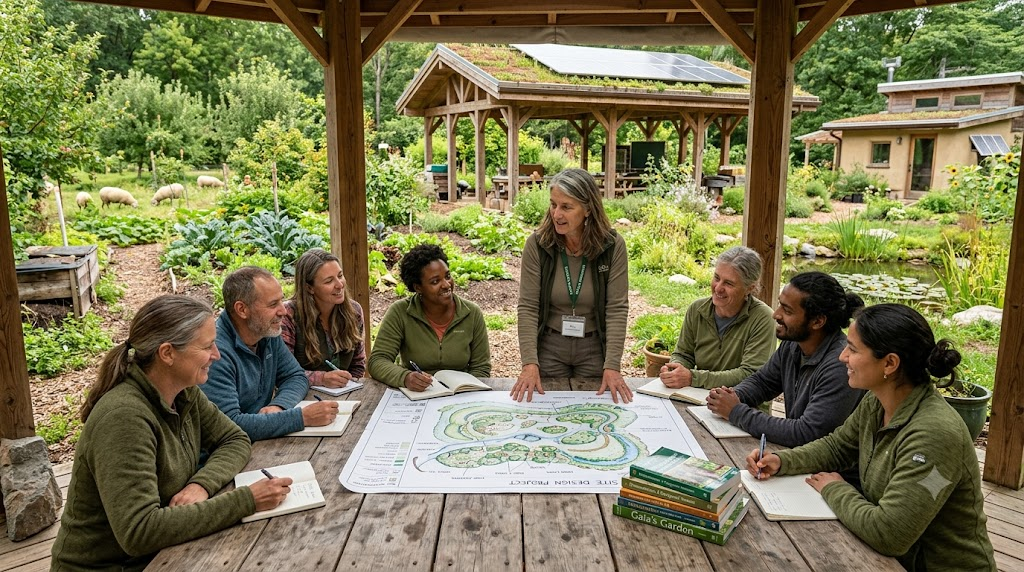
Ask whether students complete an actual design project.
Projects are particularly important if your eventual objective is diploma-level education.
Is Mentoring Available?
Feedback can significantly improve your learning.
A mentor can help you identify weaknesses in your designs, question assumptions, and develop better approaches.
How Flexible Is the Program?
Consider your existing responsibilities.
If you work or study simultaneously, an online or flexible program may be easier to sustain than an intensive residential course.
What Happens After the Certificate?
This question is often overlooked.
Ask whether the certificate can lead naturally into:
- Advanced permaculture education
- Diploma study
- Specialized design training
- Independent projects
- Professional development
A certificate should fit into your larger learning strategy.
How to Prepare for a Permaculture Design Certificate
You don’t need to be an experienced farmer or landscape designer to begin.
However, you can make your PDC more valuable by developing several habits beforehand.
Start Observing Your Environment
Spend time observing your local environment.
Look at:
- Where sunlight falls throughout the day
- How water moves after rain
- Which plants thrive naturally
- Where wind is strongest
- How people move through the space
- Which resources are abundant
- Which resources are wasted
Observation develops the mindset needed for ecological design.
Keep a Learning Journal
Write down questions, observations, sketches, and ideas.
A design journal can help you recognize patterns over time.
Practice Systems Thinking
Instead of asking, “What should I add?” ask:
“What relationships already exist, and how could they be improved?”
This simple change in perspective is central to permaculture design.
Identify a Real Project
If possible, choose a small site or community challenge that you can study during your education.
It could be a garden, community space, educational project, or another appropriate setting.
Having a real context makes abstract concepts easier to apply.
Common Mistakes When Searching for a PDC Near You
Choosing Based Only on Location
The closest course is not automatically the strongest course.
Curriculum, mentoring, practical work, instructor experience, and progression opportunities can matter more than geographic distance.
Focusing Only on the Certificate
A credential is useful, but capability matters too.
Ask what you will be able to do after completing the program.
Ignoring Project Work
Permaculture is an applied design discipline. A program with meaningful project work can provide stronger preparation for advanced study than one based almost entirely on passive content consumption.
Comparing Prices Without Comparing Support
A cheaper course may offer fewer learning resources or less instructor interaction.
Compare the complete package.
Assuming Online Means Less Practical
An online course can still involve substantial practical application if students work on projects in their own communities.
The key question is how the program connects learning with action.
Can an Online Program Be Better Than a Local Certificate?
For some learners, yes.
An online program may allow you to study with people from different regions and apply design principles to your own ecological context.
This can also be valuable for future diploma seekers because advanced permaculture problems rarely fit neatly into one geographic model.
Learning how practitioners in different environments approach ecological and social challenges can broaden your design perspective.
Gaia University describes its certificate programs as foundations that can be taken independently or incorporated into broader diploma and degree pathways.
You can also review the International Diploma of Permaculture Design to see how certificate-level study can connect with advanced project-based learning.
Building a Career After Your PDC
A PDC does not automatically guarantee employment, but it can provide a foundation for developing a portfolio and pursuing further experience.
Possible areas of application include:
- Permaculture design
- Regenerative agriculture
- Ecological restoration
- Community development
- Environmental education
- Sustainable land management
- Food-system projects
- Community gardens
- Ecovillage development
- Sustainability initiatives
Your professional opportunities will depend on your experience, additional education, practical abilities, location, and portfolio.
For this reason, diploma seekers should think strategically about what they build after their PDC.
Instead of collecting certificates, focus on developing demonstrable capabilities.
A Practical Checklist for Choosing Your Program
Before enrolling in a program found through your permaculture design certificate near me search, use this checklist:
- Does the program provide a clearly defined PDC?
- Is the curriculum comprehensive?
- Does it teach design methodology?
- Does it include practical projects?
- Are instructors experienced?
- Is mentoring available?
- Can you complete the course with your current schedule?
- Are all costs clearly explained?
- Will you receive useful documentation of your work?
- Can the program support your longer-term education goals?
- Will you develop a portfolio rather than simply complete lessons?
- Does the learning approach match how you learn best?
The answers will help you distinguish between a course that simply introduces permaculture concepts and one that can genuinely prepare you for advanced study.
Frequently Asked Questions
What should I search for besides “permaculture design certificate near me”?
You can also consider searches such as “Permaculture Design Course,” “PDC course,” “online PDC,” or “permaculture diploma pathway.” These variations can reveal programs that aren’t physically located nearby but may still be suitable.
Is a PDC necessary before a permaculture diploma?
Many advanced permaculture programs expect learners to have foundational PDC-level knowledge. Requirements vary, so always check the specific diploma pathway.
Is an online PDC worth considering?
Yes. Online study can provide flexibility and allow learners to apply design concepts to projects in their own locations. Its value depends on curriculum quality, practical application, feedback, and student support.
Should I choose a local or online certificate?
Choose based on your learning objectives. If direct physical instruction and local networking are priorities, a local course may be preferable. If flexibility and geographical access matter more, online learning can be an excellent alternative.
What should I do after completing my PDC?
Continue applying what you learned. Work on real projects, document your results, build a portfolio, develop specialized skills, and consider advanced education if a permaculture diploma is your goal.
Can a PDC help with a permaculture diploma?
Yes, particularly when the certificate develops the foundational design knowledge required for advanced work. Some educational pathways explicitly integrate certificate-level learning with subsequent diploma studies.
Final Thoughts: Look Beyond “Near Me”
Searching for a permaculture design certificate near me is a useful starting point, but proximity should not be the only factor in your decision.
For aspiring diploma seekers, the better question is:
Which PDC will give me the strongest foundation for becoming a capable permaculture designer?
Look for a program that combines ecological principles with design methodology, practical application, reflection, documentation, and meaningful feedback. Consider both local and online options. Evaluate the curriculum, instructors, project requirements, mentoring, flexibility, cost, and progression opportunities.
Most importantly, think of the certificate as the beginning of your development rather than the final destination.
A strong PDC can help you move from learning about permaculture to actually designing and implementing regenerative systems. From there, continued project work and advanced education can help you develop the deeper capabilities needed for a permaculture diploma and long-term practice.
If your goal is to become a skilled permaculture practitioner, the best educational pathway is not necessarily the one closest to you—it is the one that helps you learn, apply, document, reflect, and keep progressing.
Responses