
Permaculture Certification Near Me: How to Choose the Right Path to a Permaculture Diploma

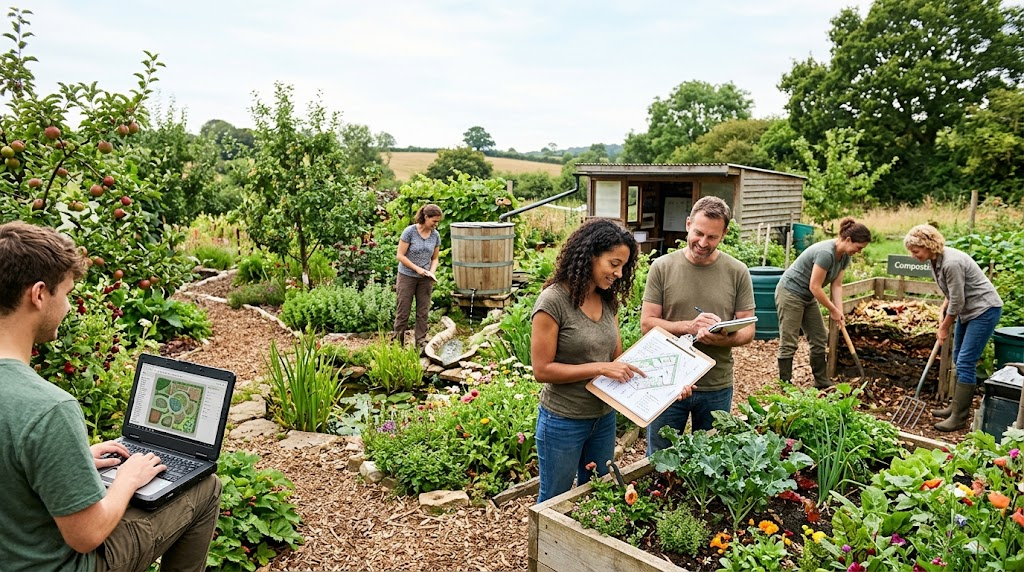
Searching for “permaculture certification near me” often means you are ready to move beyond simply reading about sustainable living. You may want structured training, practical design skills, a recognized certificate, or a longer-term pathway toward a permaculture diploma.
The challenge is that not every permaculture course provides the same learning experience. Some programs are short introductory workshops. Others are comprehensive Permaculture Design Certificate (PDC) courses. Some are delivered entirely in person, while others use online learning, project-based education, mentoring, or a combination of approaches.
That means location should not be your only consideration.
The better question is: Which permaculture certification pathway will give me the knowledge, practical experience, design skills, and learning environment I need for my goals?
For aspiring permaculture professionals and diploma seekers, this distinction matters. A course should ideally help you understand ecological systems while also teaching you how to observe, analyze, design, document, and improve real-world projects.
This guide explains what to look for when searching for permaculture certification near you and how an online or flexible program may sometimes be a better fit than a course based solely on physical proximity.
What Is Permaculture Certification?
Permaculture certification generally refers to completing a structured educational program focused on the principles and practices of permaculture.
One of the most common credentials is the Permaculture Design Certificate, often called a PDC. A comprehensive PDC introduces learners to the foundations of permaculture design and explores how ecological principles can be applied to gardens, farms, homes, communities, organizations, and broader social systems.
Depending on the program, subjects may include:
- Permaculture ethics and principles
- Ecological observation
- Site analysis
- Landscape design
- Water management
- Soil and fertility
- Food production
- Agroecology
- Renewable resources
- Natural building concepts
- Social systems
- Community resilience
- Appropriate technology
- Systems thinking
- Permaculture design methodologies
However, certification is not simply about collecting information.
For someone pursuing a permaculture diploma, the more important question is whether the educational experience helps you develop the ability to apply what you learn.
A strong learning pathway should encourage you to move from theory to observation, from observation to design, and from design to practical action.
Why Search for “Permaculture Certification Near Me”?
The phrase “permaculture certification near me” reflects an understandable preference for local learning.
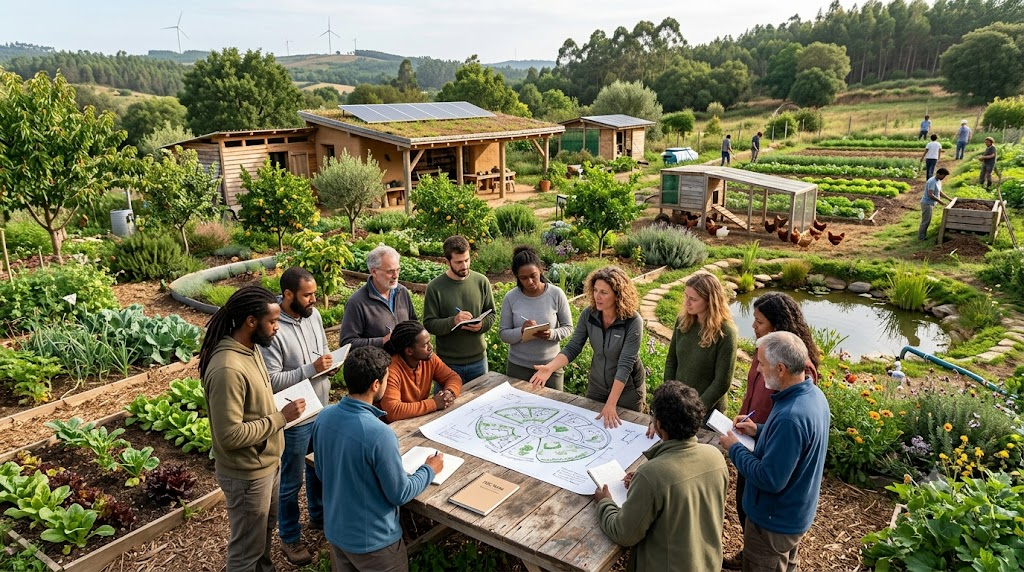
In-person education can offer several advantages. You may be able to visit demonstration sites, participate in practical activities, meet local practitioners, and develop relationships with people working on sustainability projects in your region.
Local courses can also make it easier to understand the ecological conditions of your own area.
For example, a learner in a dry climate may need to think differently about water harvesting and plant selection than someone living in a humid environment. Soil, rainfall, temperature, local food systems, land availability, regulations, and community needs can all influence design decisions.
Yet there is another side to consider.
The closest course is not necessarily the best course.
If you limit your search exclusively to programs within driving distance, you may overlook educational models that offer more flexibility, mentoring, international collaboration, or project-based learning.
That is why modern diploma seekers should consider location, curriculum, learning methodology, mentorship, project work, and long-term educational pathways together.
PDC Certification vs. a Permaculture Diploma
One of the most important distinctions to understand is the difference between a PDC and a longer-term permaculture diploma pathway.
A PDC is generally designed to provide foundational knowledge of permaculture design. It can be an excellent starting point for someone who wants to understand the discipline and begin applying its principles.
A diploma, by contrast, can involve a deeper and more sustained body of work.
For a diploma seeker, the goal may be to develop a portfolio of projects, demonstrate design competence, explore a particular specialization, and build the capacity to work independently.
Think of the difference this way:
PDC:
“I want to learn the foundations of permaculture design.”
Diploma pathway:
“I want to develop and demonstrate my ability to apply permaculture thinking through substantial projects.”
Neither objective is inherently better. They simply represent different stages of learning.
If you are already certain that your long-term goal is advanced permaculture education, investigate how your initial certification can fit into that larger pathway.
What Should You Look for in a Permaculture Certification Program?
When evaluating permaculture certification near me, avoid choosing a program based only on its title or distance from your home.
Instead, examine the educational structure.
1. Curriculum Depth
Start by reviewing what the program actually teaches.
A serious permaculture education should go beyond gardening tips. Look for coverage of systems thinking, observation, design processes, ecological relationships, and practical applications.
A broad curriculum can help you understand how individual elements interact within larger systems.
For example, water management should not be considered independently from soil, vegetation, landscape contours, climate, food production, and human needs.
That systems perspective is central to effective permaculture design.
2. Practical Design Experience
Ask whether students actually create designs.
Design work can transform abstract principles into practical skills. You may learn how to conduct a site assessment, identify opportunities and constraints, develop zones and sectors, consider resource flows, and communicate your proposed design.
If your long-term objective is a diploma, project experience becomes particularly valuable.
3. Mentorship and Feedback
Independent learning has benefits, but feedback can accelerate development.
Find out whether instructors or mentors review student projects and provide constructive guidance.
Useful feedback can help you identify weaknesses in your analysis, improve your design decisions, strengthen documentation, and develop confidence in presenting your work.
4. Learning Flexibility
If there is no comprehensive certification program close to you, do not assume that your education has to stop there.
Online and distributed learning can connect you with instructors and students beyond your immediate geographic area.
For working adults, parents, travelers, land stewards, and international students, flexible learning can make advanced education much more accessible.
5. Project-Based Learning
Project-based learning is particularly relevant for students interested in a diploma.
Rather than only completing quizzes or memorizing concepts, you can learn by working on meaningful challenges.
Projects may involve land, food systems, communities, organizations, education, ecological restoration, or other areas where permaculture principles can be applied.
The important point is that your learning becomes connected to action.
Does Permaculture Certification Have to Be Local?
No.
The internet has changed what “near me” can mean in education.
A course can be geographically distant while still being highly relevant to your local environment.
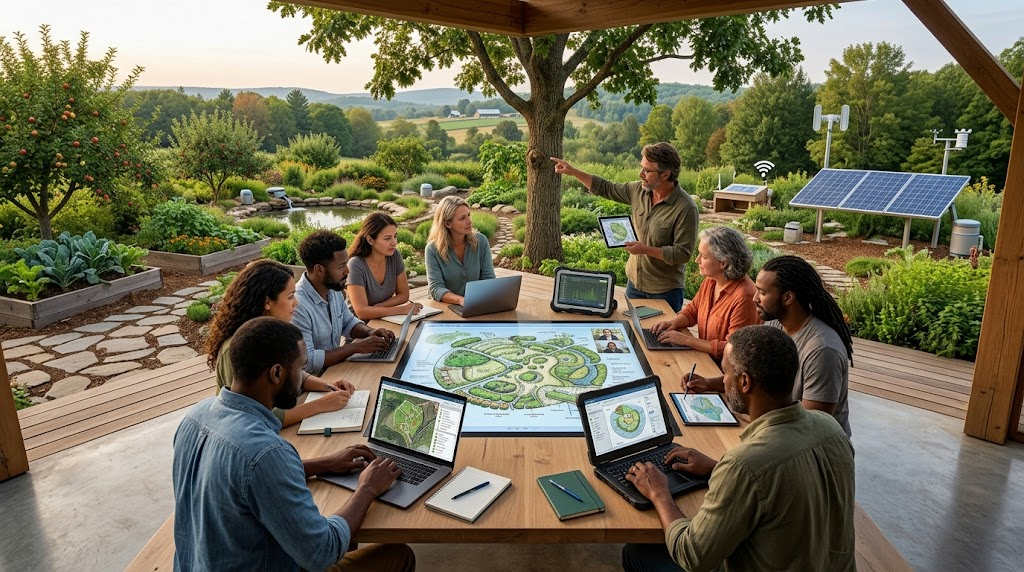
For example, you could study permaculture through an online program while applying the concepts to a garden, community project, farm, educational initiative, or other project in your own region.
This approach can provide an interesting combination:
Global learning + local application.
You gain exposure to ideas and perspectives from outside your immediate community while testing those ideas against the realities of your own environment.
For diploma seekers, this can be especially useful because permaculture itself is fundamentally contextual. Good design requires observation of the specific system rather than blindly copying a solution from somewhere else.
Why Online Permaculture Certification Can Be a Strong Alternative
If your search for permaculture certification near me is producing limited results, consider online education before compromising on your goals.
An online program can remove geographic barriers while allowing you to study at a manageable pace.
Potential benefits include:
- Flexible scheduling
- Access from different countries
- Opportunities to learn from diverse practitioners
- Integration with your existing projects
- Reduced need for relocation
- Long-term access to educational materials
- Opportunities for collaborative learning
- Greater freedom to apply concepts in your own environment
Online education is not automatically superior to in-person education. The quality depends on the curriculum, instructors, learning design, student support, and opportunities for application.
The key is to evaluate how you learn, not simply where the classroom is located.
Gaia University and a Project-Based Approach
For learners who want to connect permaculture education with broader systems change, Gaia University offers an alternative to conventional location-based education.
Its approach can be particularly relevant to students who want to integrate learning with real-world projects and develop capabilities through action.
This type of educational model changes the emphasis from simply completing a course to documenting what you are learning, doing, and creating.
For a diploma seeker, that distinction can be important.
A long-term educational pathway can become an opportunity to develop a body of work rather than simply accumulate certificates.
How to Evaluate a Permaculture Certificate
Before enrolling, create a simple comparison checklist.
Ask each program the following questions:
What credential do I receive?
Determine whether the program awards a certificate, diploma, or another form of recognition.
Do not assume that every course using the word “certification” represents the same level of education.
How comprehensive is the curriculum?
Look beyond a list of attractive topics. Examine whether the program teaches design methodology, systems thinking, ecological principles, and practical application.
How is learning assessed?
Assessment methods can reveal a great deal about a program.
Does the course rely primarily on multiple-choice tests? Are students expected to complete designs, projects, reflective work, or practical assignments?
For a diploma seeker, project-based assessment can be particularly valuable.
Is mentoring available?
Find out whether you will receive personal or group feedback.
Can I apply my learning to my own projects?
This is one of the most important questions.
If you already have access to a garden, farm, community project, educational initiative, or other real-world challenge, ask whether you can use it as part of your learning.
What happens after certification?
A good program should fit into your broader goals.
If your ambition is to pursue advanced permaculture education, investigate whether the certificate can serve as a foundation for further study.
Permaculture Design Skills That Matter for Diploma Seekers
A permaculture diploma is not only about knowing terminology.
You should aim to develop practical capabilities.
Observation
Effective design begins with careful observation.
You need to understand patterns, resources, constraints, relationships, and changes over time before deciding what to do.
Systems Thinking
Permaculture encourages learners to look at relationships rather than isolated components.
A water system affects plants. Plants affect soil. Soil affects food production. Food production affects people and economics.
Understanding these relationships can lead to more resilient designs.
Design
Design is where observation and systems thinking become actionable.
A designer considers the needs of the system, identifies opportunities, evaluates constraints, and develops arrangements that create useful relationships between elements.
Documentation
Documentation matters because it allows you to explain your reasoning and demonstrate your development.
For diploma seekers, maintaining a portfolio of projects can provide evidence of learning and practical capability.
Communication
Permaculture projects often involve other people.
You may need to communicate ideas to landowners, community members, students, organizations, clients, or collaborators.
A strong permaculture education should therefore develop communication alongside ecological knowledge.
How to Make a Local Permaculture Course More Valuable
If you do find a suitable permaculture certification near me, you can increase its value by connecting classroom learning to local observation.
Start a project alongside your coursework.
It could be something relatively small.
For example, you might document:
- Existing water flows
- Soil conditions
- Sun and shade patterns
- Existing vegetation
- Food production opportunities
- Human movement patterns
- Resource use
- Waste streams
- Social relationships
- Potential improvements
Do not rush into solutions.
The purpose is to develop the habit of observing before designing.
You can then use your observations to develop increasingly sophisticated proposals.
This process creates a bridge between certification and real-world competence.
Building a Permaculture Portfolio
If you plan to pursue a diploma, start building a portfolio early.
A portfolio can document your development over time and demonstrate how your thinking changes as you gain experience.
Possible portfolio components include:
- Site observations
- Maps and diagrams
- Design proposals
- Written analyses
- Implementation records
- Reflections
- Photographs of project progress
- Research notes
- Community or organizational projects
- Lessons learned
Your portfolio does not have to consist entirely of large land-based projects.
Permaculture can be applied to many systems.
You could explore food systems, education, community development, organizational structures, ecological restoration, urban environments, or other areas where regenerative thinking is relevant.
Common Mistakes When Choosing Permaculture Certification
Choosing the Closest Course Automatically
Distance is useful, but it should not outweigh educational quality.
Assuming Every PDC Is the Same
Programs can differ considerably in curriculum, delivery, assessment, teaching philosophy, and student support.
Focusing Only on the Certificate
A credential may be useful, but the knowledge and capabilities you develop are more important for long-term growth.
Ignoring the Learning Method
Consider whether you learn best through lectures, practical work, projects, collaboration, independent study, or a combination.
Waiting for the Perfect Local Opportunity
If your region has limited options, online and international programs may provide an alternative.
How to Choose the Right Permaculture Path for You
Instead of asking only, “Where can I find permaculture certification near me?”, ask five broader questions:
What do I want to learn?
Identify whether you need an introduction, a comprehensive PDC, advanced design education, or a diploma pathway.
What do I want to do with the knowledge?
Your goals might include personal land management, professional design work, education, community development, ecological restoration, entrepreneurship, or further academic exploration.
How do I learn best?
Consider whether you need hands-on instruction, flexible online study, mentoring, group collaboration, or project-based learning.
What projects can I work on?
The more directly you can connect learning with action, the more meaningful your education can become.
Where do I want this education to lead?
If a diploma is your long-term goal, select your initial certification with that destination in mind.
Frequently Asked Questions About Permaculture Certification Near Me
Is a permaculture certification worth it?
It can be valuable if you want structured education and a foundation in permaculture design. Its usefulness ultimately depends on the quality of the program and how you apply what you learn.
What is the best permaculture certification?
There is no single program that is best for everyone. The right choice depends on your goals, learning style, budget, schedule, preferred delivery method, and long-term plans.
Can I get permaculture certification online?
Yes. Online education can provide a flexible way to study permaculture without relocating. The most important consideration is whether the program provides substantive curriculum, guidance, opportunities for application, and meaningful assessment.
Do I need a PDC before pursuing a permaculture diploma?
Requirements vary between educational providers. If your goal is a diploma, examine the specific pathway and determine what prior learning or experience is expected.
Can permaculture certification help with a career?
Permaculture education can develop knowledge and capabilities relevant to areas such as ecological design, education, sustainability, community development, food systems, land management, and regenerative projects. However, a certificate alone does not guarantee employment or professional success.
Should I choose an in-person or online course?
Choose based on educational fit rather than geography alone. In-person programs can provide direct practical experiences, while online programs can offer flexibility and access to a wider learning community.
Your Search for “Permaculture Certification Near Me” Can Lead Further
Searching for “permaculture certification near me” is a useful starting point, but it should not be the end of your research.
The best educational choice is not necessarily the program closest to your location. It is the program that aligns with your goals and helps you develop meaningful capabilities.
If you are a permaculture diploma seeker, look beyond the certificate itself. Investigate curriculum depth, design practice, mentorship, project-based learning, flexibility, assessment, and opportunities to build a portfolio.
Most importantly, think about how your education will translate into action.
Permaculture is fundamentally about relationships, patterns, systems, and practical design. Your learning journey should reflect those same principles.
Whether you ultimately choose a local course, an online PDC, or a longer-term diploma pathway, the objective should be more than adding another credential to your résumé. The stronger goal is to develop the ability to observe systems carefully, design thoughtfully, work collaboratively, and turn ideas into regenerative action.
That is what can transform permaculture education from a short course into a foundation for lifelong practice.
Responses