
Trauma Informed Educational Practices: A Guide for Regenerative Learning

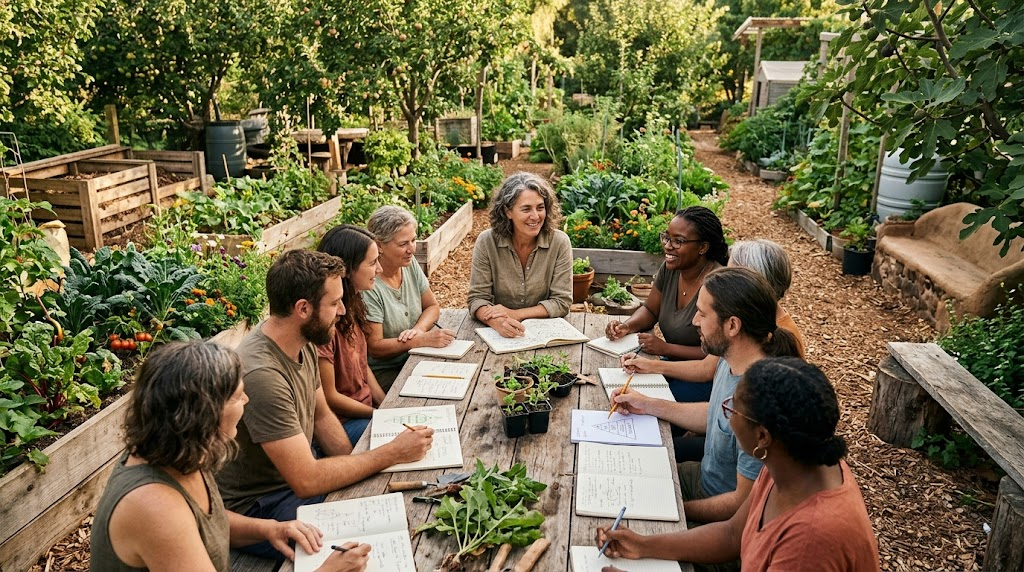
Education is about more than transferring knowledge. It is also about creating environments where people feel safe, respected, supported, and capable of meaningful growth. Every learner brings a unique set of experiences, emotions, strengths, and challenges into an educational setting. Some experiences can influence how individuals communicate, participate, process information, and respond to new situations. Understanding these differences is essential for creating effective learning environments.
This is where trauma informed educational practices become particularly important.
Trauma informed education recognizes that difficult life experiences can influence how people learn and interact with others. Rather than viewing challenging behavior as a lack of motivation or ability, trauma informed educators consider the broader circumstances that may affect a learner’s experience. They prioritize emotional safety, trust, empowerment, collaboration, and inclusion.
These principles are especially relevant to regenerative education and permaculture learning. Permaculture encourages people to understand relationships, work with natural systems, respect diversity, and create conditions that support long-term wellbeing. Applying similar principles to education helps establish learning environments that are responsive to human needs while encouraging personal responsibility and collective growth.
For individuals pursuing a Permaculture Diploma, understanding trauma informed educational practices can strengthen their ability to facilitate workshops, support community learning, guide collaborative projects, and develop inclusive educational initiatives.
This article explores the foundations of trauma informed education, its practical applications, and how these approaches can contribute to more resilient, regenerative, and supportive learning communities.
What Are Trauma Informed Educational Practices?
Trauma informed educational practices are approaches to teaching, learning, and facilitation that recognize the potential effects of traumatic experiences on individuals and communities.
Trauma can result from many circumstances, including accidents, violence, discrimination, displacement, natural disasters, neglect, loss, and prolonged exposure to stressful environments. Its effects vary considerably. Not everyone who experiences adversity develops trauma-related difficulties, and individuals may respond to similar experiences in very different ways.
In educational environments, these experiences can influence concentration, memory, emotional regulation, communication, relationships, and a person’s sense of belonging.
A trauma informed approach does not assume that every learner has experienced trauma. Instead, it acknowledges that adversity is part of human experience and creates learning conditions that avoid unnecessary stress, humiliation, exclusion, and powerlessness.
The objective is not to diagnose learners or provide therapy. Educators are not expected to become mental health professionals. Their responsibility is to establish supportive environments where individuals can participate in ways that respect their needs and boundaries.
Important characteristics include:
- Emotional and physical safety: Creating environments where learners feel respected and protected.
- Trust and transparency: Communicating expectations clearly and consistently.
- Choice and empowerment: Giving learners meaningful opportunities to make decisions.
- Collaboration: Encouraging shared responsibility and respectful participation.
- Peer support: Building relationships that strengthen connection and belonging.
- Cultural sensitivity: Recognizing different backgrounds, identities, experiences, and perspectives.
Together, these principles help transform education from a purely instructional process into a more holistic learning experience.
Why Trauma Informed Education Matters
Traditional educational approaches sometimes assume that every learner has similar emotional, social, and cognitive resources available. However, people do not enter learning environments with identical circumstances.
Stressful experiences can affect how the brain processes information, responds to challenges, and maintains attention. When someone feels overwhelmed or unsafe, concentrating on unfamiliar concepts or participating in group activities may become more difficult.
A trauma informed learning environment considers these realities when designing educational activities, communication methods, and assessment processes.
Supporting Emotional Safety
Emotional safety is an essential foundation for effective learning.
People are generally more willing to ask questions, experiment, share ideas, and acknowledge uncertainty when they feel respected. Conversely, environments characterized by intimidation, public criticism, unpredictable expectations, or excessive pressure can discourage participation.
Trauma informed educators establish clear boundaries, communicate respectfully, and avoid practices that unnecessarily embarrass or isolate learners.
In a permaculture education setting, this might mean allowing participants to observe an activity before joining, providing alternatives to public presentations, or establishing group agreements that protect everyone’s right to participate without pressure.
Improving Participation and Engagement
Learning requires active involvement. However, participation does not look the same for everyone.
Some learners contribute confidently during discussions, while others prefer writing, observation, practical activities, or individual reflection.
Trauma informed educational practices recognize these differences and provide multiple ways to engage.
For example, during a group discussion about sustainable land management, participants could contribute through conversation, diagrams, written reflections, or small-group activities.
Providing different participation options helps create more inclusive learning experiences without lowering educational expectations.
Strengthening Relationships and Trust
Healthy relationships are central to effective education.
Learners are more likely to engage with educators and peers when communication is respectful, consistent, and transparent. Trust also makes it easier to navigate disagreements and collaborative challenges.
In community-based permaculture education, trust is particularly important because projects often involve shared responsibilities, different cultural perspectives, and long-term cooperation.
Trauma informed facilitation helps establish relationships based on mutual respect rather than authority or control.
The Core Principles of Trauma Informed Educational Practices
Understanding the underlying principles makes it easier to translate trauma awareness into everyday educational decisions.
1. Safety
Safety includes physical, emotional, psychological, and social dimensions.
A safe learning environment has clear expectations, accessible facilities, respectful communication, and procedures for addressing conflict or inappropriate behavior.
In outdoor education, safety also involves considering weather conditions, physical accessibility, environmental hazards, and the individual needs of participants.
Educators should communicate relevant information in advance and ensure that learners understand their options.
2. Trustworthiness and Transparency
Uncertainty can make educational environments unnecessarily stressful.
Trauma informed educators reduce uncertainty by explaining learning objectives, schedules, assessment criteria, responsibilities, and changes to planned activities.
For example, if a practical permaculture workshop requires participants to work outdoors, facilitators should explain what the activity involves, what equipment is needed, and whether alternative participation arrangements are available.
Consistency between expectations and actions helps develop trust.
3. Choice and Empowerment
Learners should have opportunities to exercise agency over their educational experiences.
This does not mean removing all structure or responsibility. Instead, it means providing appropriate choices within clear learning objectives.
Participants might choose between different project topics, select how to document their learning, or decide whether to contribute through individual or collaborative work.
Choice supports autonomy and encourages learners to recognize their own strengths.
4. Collaboration and Mutual Respect
Education becomes more meaningful when learners are treated as active contributors rather than passive recipients of information.
Collaborative learning encourages people to exchange knowledge, recognize different perspectives, and develop solutions together.
This principle is closely connected to permaculture, where successful systems depend on relationships, cooperation, and the effective use of diverse resources.
Educators can apply it by involving learners in establishing group agreements, planning activities, and reflecting on collective progress.
5. Peer Support and Community Connection
Supportive relationships can strengthen resilience and belonging.
Peer learning provides opportunities for participants to share experiences, develop practical skills, and learn from different perspectives.
In a permaculture diploma program, peer support might involve mentoring partnerships, collaborative garden projects, community mapping, or group reflections.
However, participation in personal storytelling should always remain voluntary. Learners should never be pressured to disclose difficult experiences to demonstrate engagement.
6. Cultural, Historical, and Gender Awareness
Trauma informed education must recognize that experiences of adversity are influenced by social, cultural, historical, and economic conditions.
Indigenous communities, displaced populations, marginalized groups, and communities affected by environmental degradation may face particular forms of historical or ongoing adversity.
Educators should avoid assuming that one teaching approach works equally well for everyone.
Culturally responsive education involves respecting local knowledge, acknowledging historical contexts, challenging discriminatory practices, and creating opportunities for different voices to contribute.
Applying Trauma Informed Practices to Permaculture Education
Permaculture education provides many opportunities to integrate trauma awareness into practical learning.
Its emphasis on observation, diversity, cooperation, ecological relationships, and long-term thinking offers a valuable foundation for designing supportive educational experiences.
The following applications demonstrate how trauma informed educational practices can become part of everyday permaculture learning.
Creating Inclusive Outdoor Learning Environments
Outdoor education can provide valuable opportunities for observation, experimentation, and practical skill development.
However, outdoor environments can also present challenges. Unfamiliar locations, physical demands, sensory stimulation, unpredictable weather, and accessibility barriers may affect participation.
Trauma informed facilitators consider these factors when planning activities.
Practical approaches include:
- Providing information about locations and activities in advance.
- Identifying accessible routes and alternative participation options.
- Offering appropriate breaks during physically demanding sessions.
- Establishing clear meeting points and schedules.
- Allowing learners to participate through observation when appropriate.
- Avoiding unnecessary pressure to complete activities at a particular pace.
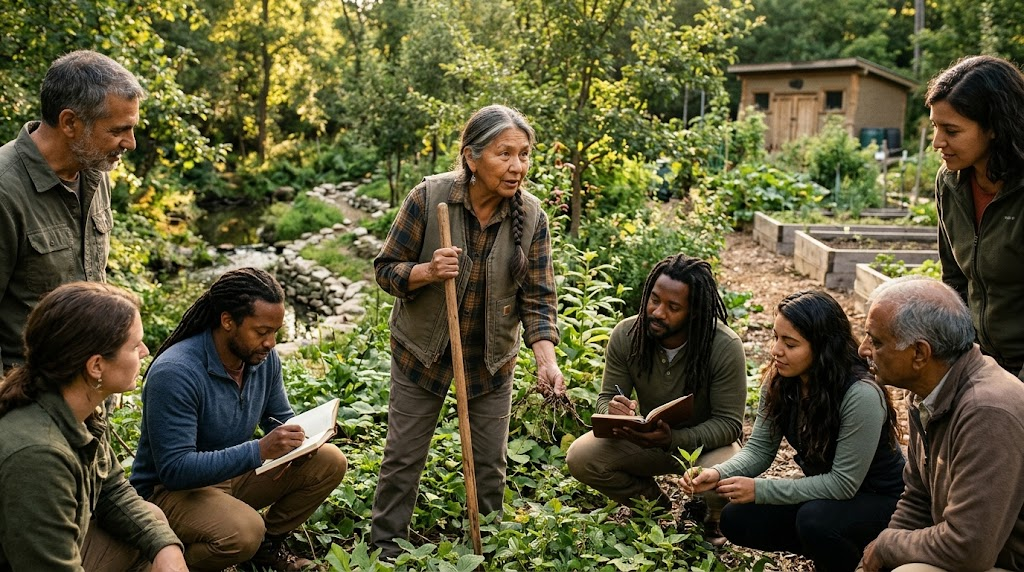
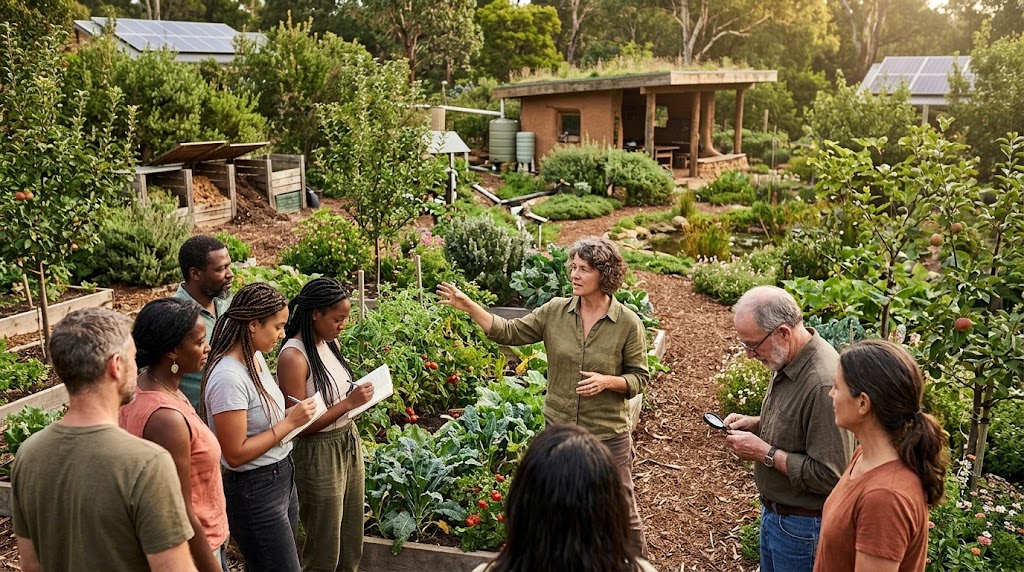
For example, a forest garden workshop could include several participation options. Some learners might undertake planting activities, while others document plant relationships, map the site, or observe ecological interactions.
Everyone contributes to the shared learning objective through different forms of engagement.
Using Observation Before Intervention
Observation is one of the central principles of permaculture design.
Before making changes to a landscape, designers study its patterns, relationships, resources, and limitations.
The same principle can be applied to education.
Rather than immediately interpreting a learner’s behavior, educators can observe the learning environment and consider what factors might be influencing participation.
A learner who remains quiet during group activities may prefer reflection before speaking. Someone who struggles with an unfamiliar practical task may need clearer instructions or additional time.
Observation encourages educators to respond thoughtfully instead of making assumptions.
It also reinforces an important distinction: understanding behavior does not require diagnosing the person displaying it.
Establishing Group Agreements
Group agreements create shared expectations for communication, collaboration, and conflict resolution.
They are particularly valuable in participatory learning environments where individuals bring different experiences and perspectives.
At the beginning of a permaculture course, facilitators can invite participants to develop agreements covering:
- Respectful communication.
- Confidentiality and appropriate boundaries.
- The right to ask questions.
- Freedom to decline personal disclosure.
- Constructive approaches to disagreement.
- Shared responsibility for learning activities.
- Respect for different cultural and environmental perspectives.
Agreements should be developed collaboratively rather than imposed without discussion.
They should also be revisited when necessary to ensure that they remain relevant and effective.
Encouraging Multiple Forms of Learning
People process information differently.
Some learn effectively through practical experience, while others benefit from reading, discussion, visual materials, or individual reflection.
Trauma informed education recognizes this diversity and avoids relying exclusively on one teaching method.
Permaculture diploma facilitators can combine:
- Practical demonstrations.
- Visual mapping exercises.
- Group discussions.
- Individual research.
- Outdoor observation.
- Reflective journaling.
- Collaborative design projects.
- Peer-to-peer knowledge exchange.
Offering different ways to engage supports accessibility and gives learners opportunities to demonstrate their understanding through their strengths.
Integrating Reflection Without Pressure
Reflection helps learners connect theoretical concepts with practical experiences.
However, reflective activities should distinguish between learning about a subject and sharing personal experiences.
For example, participants studying community resilience might reflect on the characteristics of supportive communities without being expected to discuss personal histories.
Useful reflection questions include:
- What did I observe during this activity?
- Which aspects of the process supported collaboration?
- What assumptions did I reconsider?
- How could this approach be improved?
- What did I learn about relationships within the system?
These questions encourage meaningful learning while respecting personal boundaries.
Trauma Informed Facilitation in Community-Based Learning
Permaculture education often takes place beyond traditional classrooms.
Community gardens, ecological restoration projects, local food initiatives, and participatory design workshops provide opportunities for people to learn together while addressing real-world challenges.
In these settings, facilitators have an important responsibility to establish conditions that support inclusive participation.
Recognizing Different Levels of Participation
Not every participant will contribute in the same way or at the same pace.
Some individuals may confidently coordinate activities, while others prefer specific tasks or gradual involvement.
Facilitators should avoid treating quieter participation as a lack of interest.
Instead, they can offer different responsibilities and encourage learners to identify roles that match their interests and abilities.
This approach supports individual agency while maintaining shared accountability.
Managing Conflict Constructively
Disagreements are a normal part of collaborative learning.
Different values, communication styles, expectations, and approaches to problem-solving can create tension within groups.
Trauma informed facilitation emphasizes addressing conflict without humiliation, intimidation, or unnecessary escalation.
Useful strategies include:
- Establishing clear expectations for respectful communication.
- Allowing participants time to explain their perspectives.
- Separating the behavior or issue from assumptions about an individual’s character.
- Identifying shared interests and practical solutions.
- Agreeing on specific next steps.
- Following up to assess whether the situation has improved.
Facilitators should also recognize when a situation requires additional support or formal safeguarding procedures.
Building a Sense of Belonging
A sense of belonging can improve motivation, confidence, and engagement.
Community-based learning offers opportunities to build belonging through shared projects and collective achievements.
For example, participants might establish a community food garden, develop a composting initiative, or collaborate on a neighborhood ecological assessment.
These projects create practical opportunities to contribute to something meaningful.
Importantly, belonging should not depend on constant participation or personal disclosure. People should feel welcome even when they need time, space, or alternative ways to contribute.
Trauma Informed Assessment and Feedback
Assessment is an important part of educational development, but the way it is conducted can significantly influence the learner experience.
Traditional assessment methods sometimes emphasize comparison, public performance, and high-pressure evaluation.
Although standards and accountability remain important, trauma informed assessment focuses on clarity, fairness, constructive feedback, and opportunities for improvement.
Providing Clear Assessment Criteria
Learners should understand what is expected before beginning an assessment.
In a Permaculture Diploma program, assessment criteria might cover:
- Understanding ecological principles.
- Applying observation and analysis.
- Developing practical design solutions.
- Demonstrating systems thinking.
- Reflecting on learning and project development.
- Evaluating environmental and social outcomes.
Clear criteria reduce uncertainty and allow learners to prepare effectively.
Using Constructive Feedback
Feedback should focus on specific actions, skills, and opportunities for development.
Instead of making broad judgments about a person’s ability, educators can identify what is working and suggest practical improvements.
For example:
Rather than saying, “Your design is poorly developed,” a facilitator might say, “Your design identifies several useful resources. The next step is to explore how water movement and plant relationships could be integrated more effectively.”
This approach communicates expectations without undermining the learner’s confidence.
Allowing Different Ways to Demonstrate Learning
Where educational requirements permit, assessment can include multiple formats.
These might involve:
- Written assignments.
- Practical demonstrations.
- Design portfolios.
- Oral presentations.
- Reflective reports.
- Project documentation.
- Collaborative learning activities.
Alternative assessment methods should maintain the required learning outcomes while recognizing different ways of demonstrating competence.
The Connection Between Trauma Informed Education and Regenerative Learning
Regenerative education seeks to develop knowledge, skills, and attitudes that contribute to healthier relationships between people, communities, and the natural environment.
Trauma informed educational practices support this objective by recognizing that learning environments are themselves systems.
Just as ecological systems depend on healthy relationships, diversity, feedback, and appropriate conditions, educational systems depend on trust, communication, participation, and adaptability.
Applying Systems Thinking to Human Learning
Permaculture encourages learners to examine relationships rather than viewing individual elements in isolation.
This perspective can also be applied to educational challenges.
For example, low participation in a workshop might be influenced by several interacting factors:
- Unclear instructions.
- Inaccessible learning materials.
- Group dynamics.
- Language barriers.
- Unfamiliar environments.
- Insufficient preparation time.
- Assessment pressure.
Rather than assuming that individuals lack motivation, educators can examine the wider system.
This systems-oriented approach supports more effective and inclusive solutions.
Developing Resilience Through Supportive Relationships
Resilience is not simply an individual’s ability to tolerate difficult circumstances.
It is also influenced by access to supportive relationships, resources, opportunities, and environments.
Educational communities can strengthen resilience by developing collaborative networks, encouraging mutual support, and creating opportunities for meaningful participation.
In permaculture projects, these relationships may extend beyond the classroom into local communities, food networks, ecological initiatives, and knowledge-sharing partnerships.
Connecting Personal Wellbeing With Ecological Wellbeing
Permaculture’s ethical foundations include Earth Care, People Care, and Fair Share.
These principles provide a useful framework for understanding the relationship between individual wellbeing, community health, and environmental responsibility.
People Care is especially relevant to trauma informed educational practices.
It encourages educators to consider the human consequences of their decisions and create learning environments that respect dignity, diversity, and individual needs.
Earth Care and Fair Share extend this perspective by encouraging learners to consider the wider systems in which human communities operate.
Together, these principles support a holistic understanding of regeneration.
Practical Strategies for Implementing Trauma Informed Educational Practices
Understanding trauma informed education is only the first step. Its principles become meaningful when translated into consistent educational practices.
The following strategies can help permaculture educators, facilitators, and community learning organizers integrate trauma awareness into their work.
1. Review the Learning Environment
Begin by evaluating the physical, social, and organizational characteristics of the learning space.
Consider whether participants can access facilities, understand expectations, communicate concerns, and participate without unnecessary pressure.
Ask whether the environment accommodates different physical abilities, cultural backgrounds, and learning preferences.
2. Establish Predictable Learning Structures
Develop clear schedules, communicate changes, and provide instructions before activities begin.
Predictability helps learners understand what will happen and how they can prepare.
It also reduces avoidable confusion during collaborative projects.
3. Offer Meaningful Choices
Give participants appropriate opportunities to influence their learning experiences.
This could include selecting project topics, choosing between different learning activities, or contributing through different assessment formats.
Ensure that choices are genuine and do not create unfair expectations.
4. Build Relationships Through Consistent Communication
Use respectful language, listen actively, and follow through on commitments.
Explain decisions and provide opportunities for learners to ask questions.
Consistency helps develop trust over time.
5. Respect Personal Boundaries
Never require learners to disclose personal experiences as a condition of participation.
Avoid activities that assume everyone is comfortable discussing sensitive subjects.
If a participant chooses to share something personal, listen respectfully without attempting to diagnose or provide treatment.
6. Develop Referral and Safeguarding Procedures
Educators should understand the limits of their role.
When a learner requires support beyond the educator’s competence, appropriate professional services or safeguarding procedures may be necessary.
Educational organizations should establish clear processes for responding to concerns while respecting confidentiality and applicable legal requirements.
7. Reflect and Improve Continuously
Trauma informed education is an ongoing process rather than a checklist that can be completed once.
Facilitators should regularly evaluate their approaches, invite feedback, and identify opportunities for improvement.
This is consistent with permaculture design, where observation, feedback, and adaptation are essential to developing effective systems.
Common Challenges When Introducing Trauma Informed Education
Although trauma informed approaches offer important benefits, implementing them requires thoughtful planning.
Misunderstanding Trauma Awareness
One common misconception is that trauma informed education requires educators to become therapists.
This is incorrect.
The objective is to understand how adversity may influence learning and to create supportive environments. Educators should remain within their professional responsibilities and refer individuals to qualified professionals when appropriate.
Confusing Flexibility With a Lack of Structure
Another misconception is that trauma informed education removes expectations or accountability.
In reality, clear boundaries and consistent expectations are important components of a supportive learning environment.
The difference lies in how expectations are communicated, applied, and adapted to reasonable individual needs.
Avoiding Difficult Conversations
Creating a supportive environment does not mean avoiding disagreement or challenging subjects.
Education should still encourage critical thinking, constructive debate, and honest evaluation.
The goal is to facilitate difficult conversations in ways that respect participants and avoid unnecessary humiliation or exclusion.
Addressing Organizational Barriers
Individual educators cannot always change institutional policies, limited resources, or broader structural inequalities.
Successful implementation may require organizational commitment, staff development, accessible learning materials, and clear safeguarding procedures.
Trauma informed education is most effective when its principles are reflected throughout the learning organization rather than left to individual facilitators.
Developing Trauma Informed Competencies Through a Permaculture Diploma
A Permaculture Diploma offers an opportunity to explore the relationship between ecological design, community development, and human learning.
For learners interested in education, facilitation, and regenerative community initiatives, trauma informed competencies can strengthen practical project work.
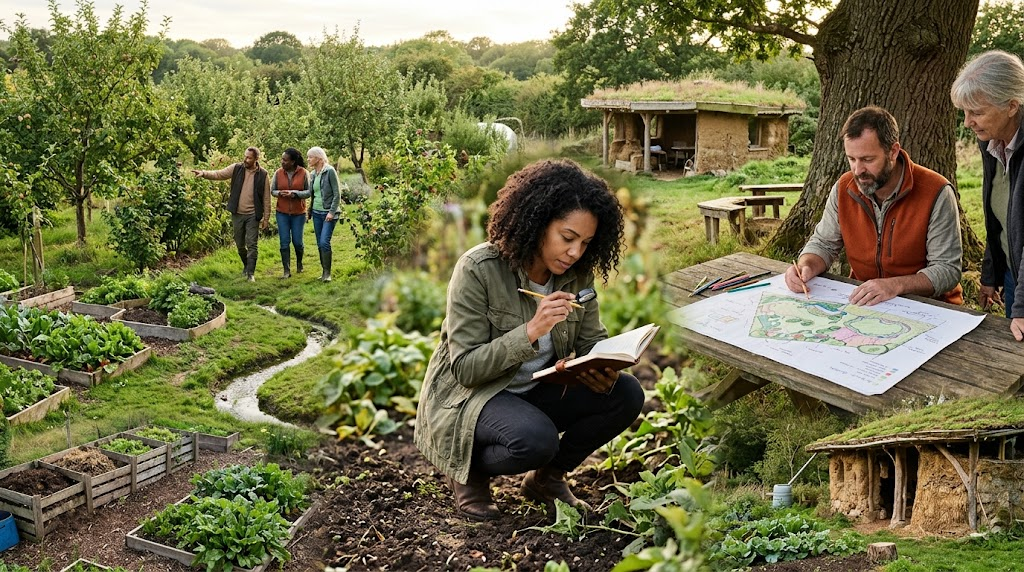
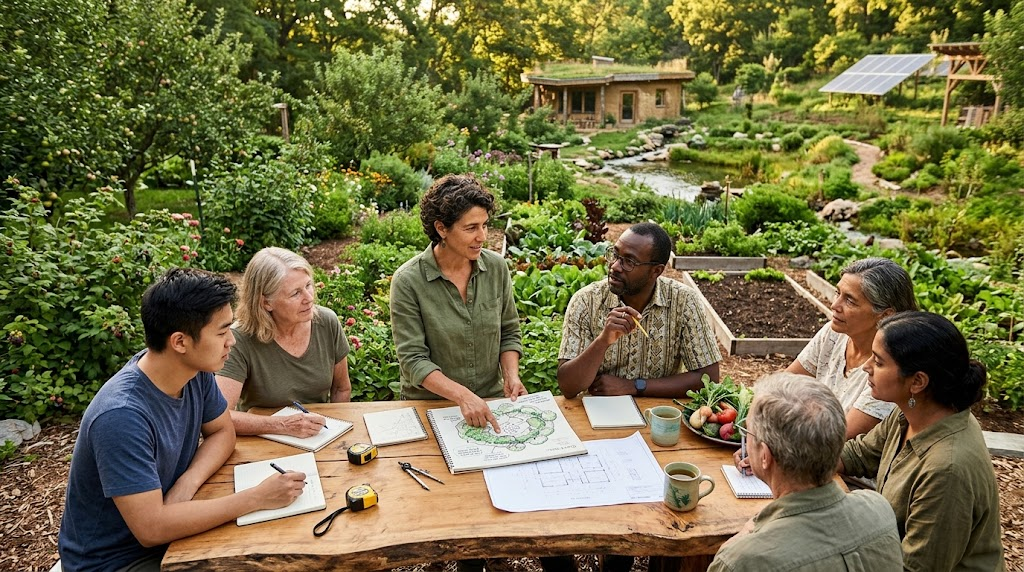
A diploma project could explore how to design a community learning garden that supports inclusive participation, or how to facilitate ecological workshops for people with different learning needs.
Other possible projects include:
- Developing inclusive facilitation guidelines for community workshops.
- Designing accessible outdoor learning spaces.
- Creating peer-support structures for collaborative projects.
- Exploring the relationship between community resilience and educational participation.
- Developing culturally responsive approaches to local knowledge exchange.
- Evaluating how group agreements influence participation and cooperation.
These projects allow learners to apply permaculture principles to real educational and community contexts.
They also demonstrate that regenerative design extends beyond physical landscapes. It includes the relationships, processes, and social structures that influence collective wellbeing.
For individuals interested in this broader approach, Gaia University provides a context for exploring self-directed, participatory, and regenerative approaches to education and transformation.
Frequently Asked Questions About Trauma Informed Educational Practices
What are the main goals of trauma informed educational practices?
The main goals are to create safe, supportive, inclusive, and predictable learning environments. These practices recognize that difficult experiences can influence learning and participation. They emphasize trust, empowerment, collaboration, choice, and respect for individual differences.
How does trauma affect learning?
Traumatic experiences and prolonged stress can influence attention, memory, emotional regulation, communication, and relationships. These effects vary between individuals. Some learners may find certain activities or environments challenging, while others may participate without noticeable difficulties.
What is the difference between trauma informed teaching and traditional teaching?
Traditional teaching methods may focus primarily on delivering content and assessing academic performance. Trauma informed teaching also considers how the learning environment influences participation, trust, and emotional safety. It maintains educational standards while offering more responsive and inclusive ways to support learners.
Can trauma informed education be used in permaculture courses?
Yes. Permaculture education frequently involves collaboration, practical activities, outdoor learning, community engagement, and personal reflection. Trauma informed practices can make these experiences more accessible by providing clear expectations, multiple participation options, respectful communication, and appropriate boundaries.
How can educators create a trauma informed classroom?
Educators can begin by establishing clear group agreements, communicating expectations, offering meaningful choices, respecting personal boundaries, providing constructive feedback, and creating multiple ways for learners to participate.
They should also understand safeguarding responsibilities and know when to refer individuals to appropriate professional support.
Does trauma informed education require learners to share personal experiences?
No. Personal disclosure should never be required. Trauma informed education respects privacy and recognizes that learners can develop knowledge and skills without discussing sensitive experiences.
How does trauma informed education support regenerative communities?
It supports regenerative communities by encouraging trust, inclusion, cooperation, mutual respect, and collective resilience. These qualities strengthen relationships and help communities develop more responsive approaches to shared challenges.
Why is trauma awareness important for permaculture educators?
Permaculture educators often work with diverse groups in collaborative and community-based settings. Understanding trauma informed principles helps them facilitate activities more responsibly, recognize different participation needs, and create learning environments that reflect the People Care ethic.
Conclusion: Making Education More Inclusive, Resilient, and Regenerative
Trauma informed educational practices offer an important framework for creating learning environments that recognize the complexity of human experience.
By prioritizing safety, trust, choice, collaboration, empowerment, and cultural awareness, educators can support meaningful participation without making assumptions about individual histories or abilities.
For permaculture diploma seekers, these approaches provide a valuable connection between regenerative design and human development. They demonstrate that the principles used to create healthy ecological systems can also inform the development of healthier educational and community systems.
Applying trauma informed practices does not require educators to become therapists or abandon established learning objectives. It requires thoughtful facilitation, clear communication, respect for personal boundaries, and a willingness to adapt educational environments to the needs of diverse learners.
Ultimately, regenerative education should create conditions in which people can learn, contribute, collaborate, and develop their capabilities while respecting themselves and others.
By integrating trauma awareness into permaculture education, facilitators can help build learning communities that reflect the deeper values of People Care, Earth Care, and Fair Share.
The result is an educational approach that goes beyond knowledge acquisition to support lasting relationships, community resilience, and meaningful regenerative change.

Responses