Indigenous Inheritance: Learning From the Land

By Ntsikelelo Colossa
In our land, we embrace Ubuntu and stewardship, learning from the past so that we can protect the future. Indigenous-led education is the empowerment of both people and land. It reminds us that true wisdom does not only come from books, but from the soil beneath our feet, the rivers that give us life, and the stories passed down by our elders.
As the African proverb says: “A tree without roots cannot stand.”
Without understanding where we come from, we cannot know where we are going.
Through my work in Indigenous-led permaculture projects across South Africa, I have seen how traditional knowledge continues to guide communities toward resilience and healing. As a traditional healer, activist, and member of the Ikhwelo Healers Collective, as well as a National Coordinator of No Regulations Without Healers and part of the Steering Committee of Faith Action Against GBVF, my work is rooted in promoting humanity, equality, and positive masculinity. Listening to the voice of the Ancestors and serving their wisdom through community work and advocacy has taught me that healing the land and healing people are deeply connected.
In our communities, people once lived by sharing fairly and caring for one another. Indigenous knowledge taught us to unlearn harmful ways and relearn how to live in balance with nature and humanity. Ancient education was deeply connected to culture, customs, and caring for the land. It carried the wisdom of survival, healing, farming, and community living.
Our mothers and grandmothers were teachers long before classrooms existed. While many fathers left villages to work under systems shaped by colonialism and capitalism, women remained at home, raising children, farming the land, and preserving knowledge. They taught generations how to survive hunger, respect rivers, protect the soil, and use herbs and natural foods for healing.
Another proverb says: “Wisdom is like a baobab tree; no one individual can embrace it.”
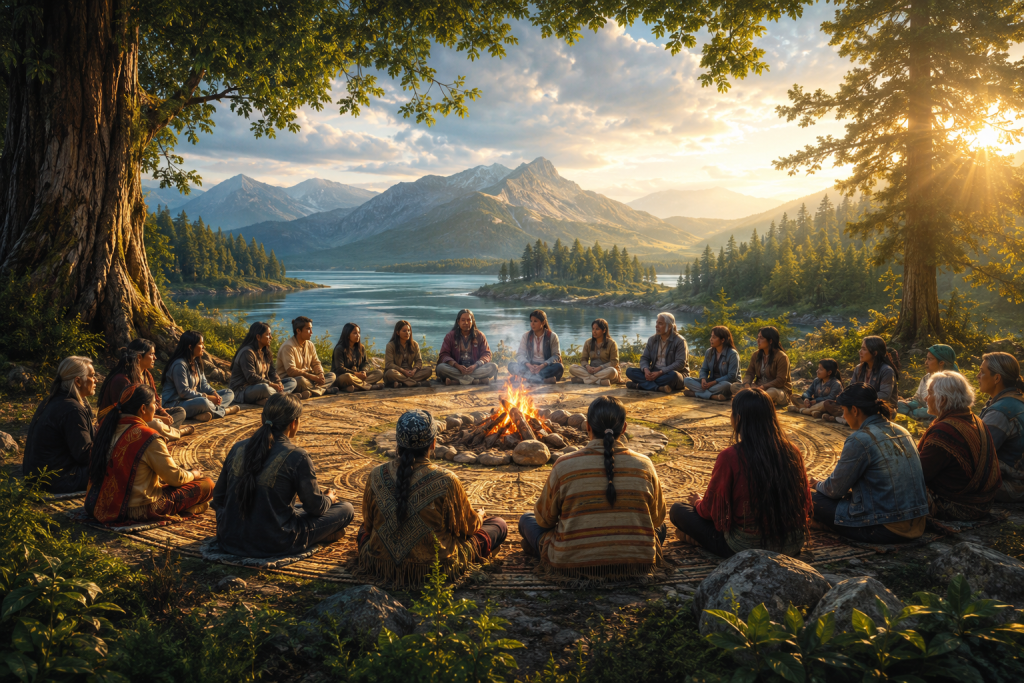
Indigenous knowledge belongs to the community. It grows when shared from one generation to another.
Even today, the land is protected by people who still remember these teachings. Those who learn from the past are often the ones who inspire change in the future. Indigenous-led knowledge is more than education — it is a way of life. It teaches us identity, responsibility, healing, and connection.
We live in a world where sickness, environmental destruction, and inequality continue to affect our communities. Yet our ancestors understood the healing power of plants, healthy food, and living in harmony with nature. Their knowledge can still guide us toward healthier and more sustainable lives.
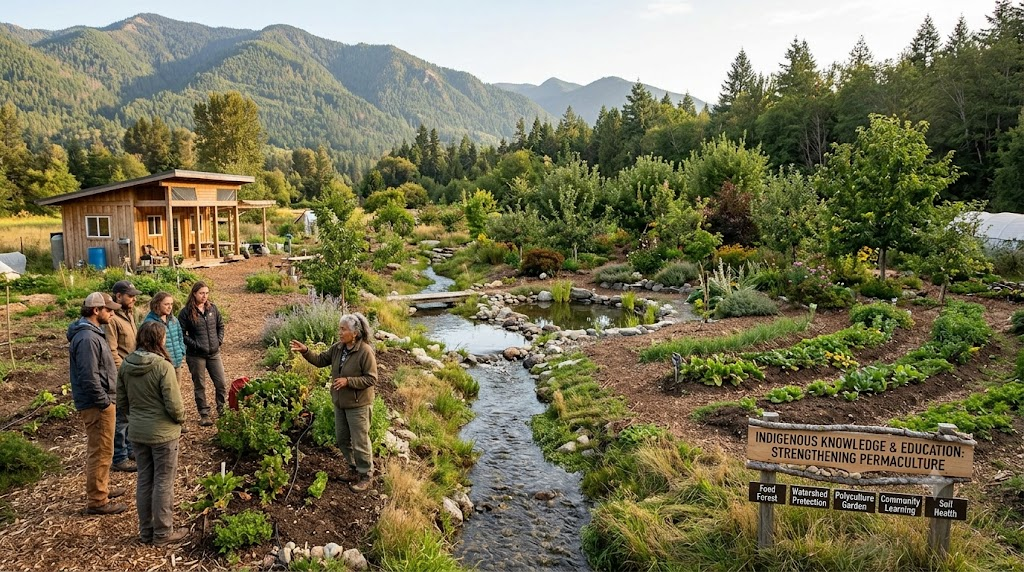
The meeting of Indigenous wisdom and modern permaculture creates strong, resilient communities. Together, they teach us how to produce food responsibly, care for ecosystems, and build societies based on fairness rather than greed. Through projects such as Indigenous-Led Permaculture, we continue to create spaces where ancestral wisdom and ecological design work hand in hand to restore both people and land. Too often, systems driven only by profit become enemies of harmony among people and the earth.
Indigenous traditions and permaculture principles lead us toward a future free from abuse and inequality. They teach us to respect women and men, young and old, able and disabled. They remind us that humanity is strongest when everyone is valued. This is also why gender justice work is essential to healing our communities. Positive masculinity, dignity, and equality are not separate from Indigenous teachings — they are part of restoring balance.
As another African proverb says: “When an old person dies, a library burns.”
Our elders carry knowledge that cannot be replaced. Their stories, teachings, and experiences are treasures we must protect.
Indigenous knowledge is a stream of hope. We are nothing without our past, because the footsteps of our ancestors guide our direction. Their journey teaches us that beyond borders, race, and colour, we are one human family.
This inheritance shapes how we connect with the land, how we heal ourselves and others, and how we treat one another with dignity. Our elders teach us that the greatest treasure lies in the soil — because from the soil comes both life and death. Only those who listen, remember, and respect the past will truly find their future.
In the end, Indigenous inheritance is not only about preserving traditions; it is about restoring balance between humanity and the earth. It is about remembering that healing the land also means healing ourselves.