
11 Powerful Insights Into the first nations holistic lifelong learning model for Permaculture Diploma Seekers

Introduction to the first nations holistic lifelong learning model
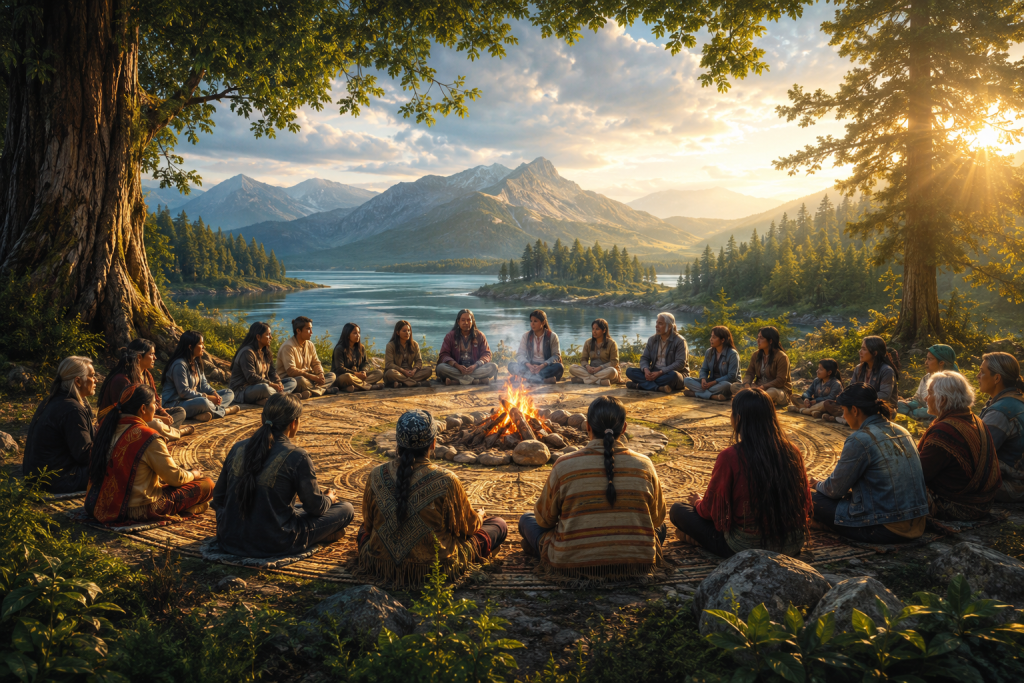
The first nations holistic lifelong learning model is one of the most influential Indigenous educational frameworks developed in Canada. It presents learning as a continuous, interconnected process that occurs throughout life and extends beyond the individual to include family, community, culture, nature, and future generations. Unlike conventional educational models that often focus primarily on academic achievement, this framework recognizes spiritual, emotional, physical, and intellectual development as equally important aspects of learning.
For Permaculture Diploma Seekers, this model offers valuable insights because both approaches emphasize relationships, systems thinking, ecological awareness, and community well-being. Learning is not viewed as a separate activity but as part of living responsibly within a larger web of relationships.
Historical Origins and Indigenous Foundations
Development of the Learning Model
The model emerged through collaboration among First Nations educators, researchers, community practitioners, and knowledge holders. It was developed to reflect Indigenous perspectives on learning and to provide a framework that measures success beyond conventional academic indicators. The model recognizes that learning is cyclical, cumulative, and interconnected rather than linear.
Indigenous Worldviews and Knowledge Systems
At its foundation lies the understanding that all life is interconnected. Human beings are not separate from nature but are active participants within a living system. Knowledge comes from relationships with the natural world, family, ancestors, community members, languages, traditions, and ceremonies.
This perspective closely aligns with permaculture principles, which encourage observing natural patterns and designing systems that work with ecological processes rather than against them.
Core Principles of Holistic Lifelong Learning
Learning as a Lifelong Journey
Learning begins before birth and continues throughout childhood, adulthood, elderhood, and beyond through the sharing of knowledge with future generations. The model rejects the idea that education is confined to schools or universities.
Learning Through Relationships
Knowledge emerges through relationships. These include relationships with:
- Family
- Community
- Elders
- Ancestors
- Nature
- Culture
- Language
The quality of these relationships directly influences learning outcomes.
Learning Through Experience
Experiential learning is central to Indigenous educational traditions. People learn by doing, observing, participating, reflecting, and contributing to community life. Activities such as storytelling, ceremonies, land-based learning, and practical work all serve as educational experiences.
For permaculture practitioners, this resonates strongly with the principle that observation and interaction are foundational to meaningful learning.
Understanding the Living Tree Framework
One of the most recognizable features of the first nations holistic lifelong learning model is its use of a living tree as a metaphor for learning.
The Roots: Sources of Knowledge
The roots represent the many sources from which learning emerges:
- Self
- Family
- Ancestors
- Community
- Nation
- Other nations
- Natural world
- Language
- Traditions
- Ceremonies
Just as a tree relies on healthy roots for nourishment, learners depend on these sources of knowledge for growth and resilience.
The Trunk: Integration of Knowledge Systems
The trunk symbolizes the integration of Indigenous and Western knowledge traditions. Rather than viewing these systems as opposing forces, the model encourages learners to draw strength from both.
For permaculture learners, this may involve combining traditional ecological knowledge with contemporary sustainability science.
The Rings: Dimensions of Human Development
The rings of the tree represent continuous growth through life. Learning develops across four interconnected dimensions:
- Spiritual
- Emotional
- Physical
- Mental
Each dimension contributes to a balanced and healthy learning journey.
The Branches and Leaves: Collective Well-Being
The branches and leaves symbolize collective well-being. Individual learning contributes to broader cultural, social, economic, and political health within communities.
The Four Dimensions of Learning
Spiritual Development
Spiritual learning involves understanding purpose, connection, responsibility, and respect for life. It is often expressed through ceremonies, reflection, gratitude, and relationships with the natural world.
In permaculture, spiritual development may emerge through deep observation of ecosystems and a growing sense of stewardship.
Emotional Development
Emotional learning involves empathy, resilience, self-awareness, and healthy relationships. Communities thrive when emotional intelligence is valued alongside technical knowledge.
Physical Development
Physical learning includes practical skills, health, work, movement, and direct engagement with the environment.
For permaculture students, activities such as planting, soil building, water harvesting, and ecosystem restoration contribute significantly to physical learning.
Mental Development
Mental development encompasses critical thinking, analysis, creativity, and problem-solving. While important, it is balanced with the other dimensions rather than prioritized above them.
Community and Intergenerational Learning
The Role of Elders
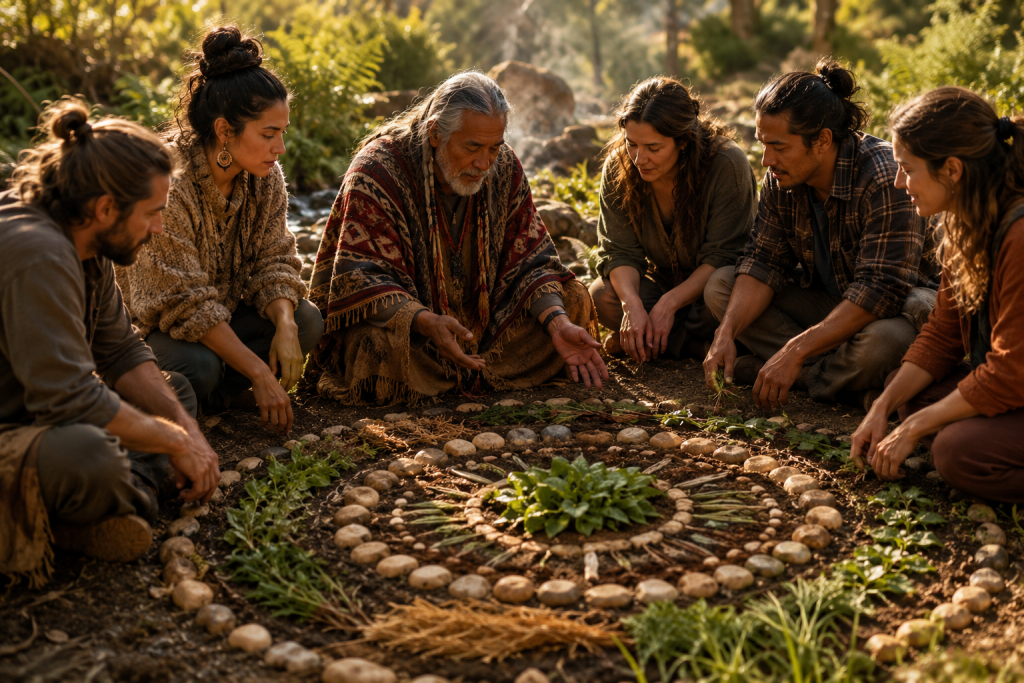
Elders play a central role as mentors, teachers, and guardians of knowledge. They transmit wisdom accumulated over generations and help learners understand responsibilities within their communities.
Family and Community Participation
Learning is viewed as a collective activity. Families and communities actively participate in nurturing learners throughout life. Success is measured not only by personal achievement but also by contributions to collective well-being.
Connections Between Indigenous Learning and Permaculture
Learning From the Land
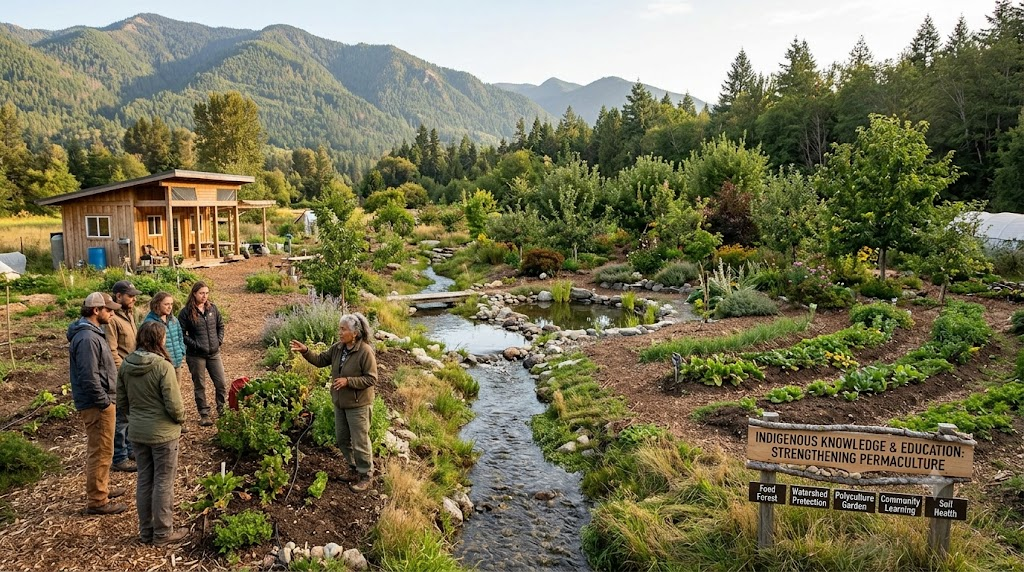
Both Indigenous learning systems and permaculture emphasize direct engagement with the land. Observation, listening, and participation become powerful educational tools.
Observation and Ecological Awareness
Permaculture’s principle of “Observe and Interact” closely mirrors Indigenous approaches to learning through experience and relationship-building.
Regenerative Community Design
The model highlights that learning should benefit both individuals and communities. Similarly, permaculture design seeks solutions that enhance ecological and social resilience simultaneously.
Applying the Model in Permaculture Diploma Studies
Portfolio-Based Learning
Permaculture diploma programs often use portfolios to document learning journeys. This aligns naturally with the model’s understanding that learning occurs across many life experiences rather than solely through examinations.
Experiential Projects
Hands-on projects provide opportunities to integrate intellectual knowledge with physical, emotional, and spiritual growth.
Examples include:
- Food forest development
- Water management systems
- Community gardens
- Ecological restoration projects
- Indigenous plant stewardship initiatives
Reflective Practice
Reflection transforms experience into wisdom. Maintaining journals, conducting observations, and engaging in community dialogue can strengthen learning outcomes.
Learners pursuing regenerative education through programs such as Gaia University may find that reflective and self-directed approaches complement many of the principles embodied in the first nations holistic lifelong learning model.
Measuring Success Beyond Academic Achievement
Traditional education often relies heavily on grades and credentials. The first nations holistic lifelong learning model proposes broader measures of success, including:
| Dimension | Indicators of Success |
| Spiritual | Purpose, values, connection |
| Emotional | Healthy relationships, resilience |
| Physical | Skills, health, stewardship |
| Mental | Knowledge, creativity, problem-solving |
| Community | Contribution to collective well-being |
This perspective is especially relevant for regenerative practitioners whose impact is often measured through ecological and community outcomes rather than test scores.
Challenges and Opportunities in Modern Education
Modern educational systems frequently compartmentalize knowledge into separate subjects and prioritize standardized assessments. The holistic model challenges these assumptions by emphasizing interconnectedness, lived experience, and community participation.
As sustainability challenges become increasingly complex, educational frameworks that foster systems thinking and holistic understanding may become even more valuable.
How Gaia University Learners Can Benefit
Permaculture Diploma Seekers engaged in self-directed learning can apply several principles from this model:
- Integrate practical and theoretical learning.
- Learn through community engagement.
- Develop all dimensions of personal growth.
- Maintain strong relationships with the natural environment.
- Document learning through reflective practice.
- Value both traditional and contemporary knowledge systems.
Those exploring regenerative and community-based education may also find relevant learning pathways through programs described at Gaia University Academic Programs.
Frequently Asked Questions
1. What is the primary purpose of the first nations holistic lifelong learning model?
Its purpose is to describe learning as a lifelong, holistic, and interconnected process that supports both individual growth and collective community well-being.
2. Why is a tree used as the model’s symbol?
The tree represents growth, interconnectedness, regeneration, and the relationship between individual learning and collective well-being.
3. How does the model differ from conventional education systems?
It emphasizes spiritual, emotional, physical, and mental development equally, rather than focusing mainly on academic achievement.
4. Is the model relevant outside Indigenous communities?
Yes. Many of its principles—lifelong learning, systems thinking, experiential education, and community engagement—have broad applications.
5. How does it relate to permaculture education?
Both emphasize ecological awareness, experiential learning, observation, community relationships, and regenerative thinking.
6. What role do Elders play in the model?
Elders serve as mentors, teachers, and knowledge keepers who help transmit cultural wisdom across generations.
7. Can self-directed learners use this framework?
Absolutely. Self-directed learners can integrate reflection, community engagement, practical experience, and holistic development into their educational journeys.
Conclusion
The first nations holistic lifelong learning model offers a profound vision of education that extends far beyond classrooms, examinations, and credentials. Rooted in Indigenous understandings of interconnectedness, it views learning as a lifelong journey involving spiritual, emotional, physical, and mental growth. The model’s living tree framework reminds us that knowledge flourishes when nourished by community, culture, language, experience, and relationships with the natural world.
For Permaculture Diploma Seekers, the model provides a powerful lens through which to understand regenerative learning. Both traditions recognize that genuine education emerges through participation, observation, stewardship, and service. By embracing holistic development and collective well-being, learners can cultivate not only knowledge but also wisdom, resilience, and meaningful contributions to their communities and ecosystems.
Responses