
Leadership and Systems Thinking: 9 Powerful Ways Permaculture Students Can Transform Ecological Leadership

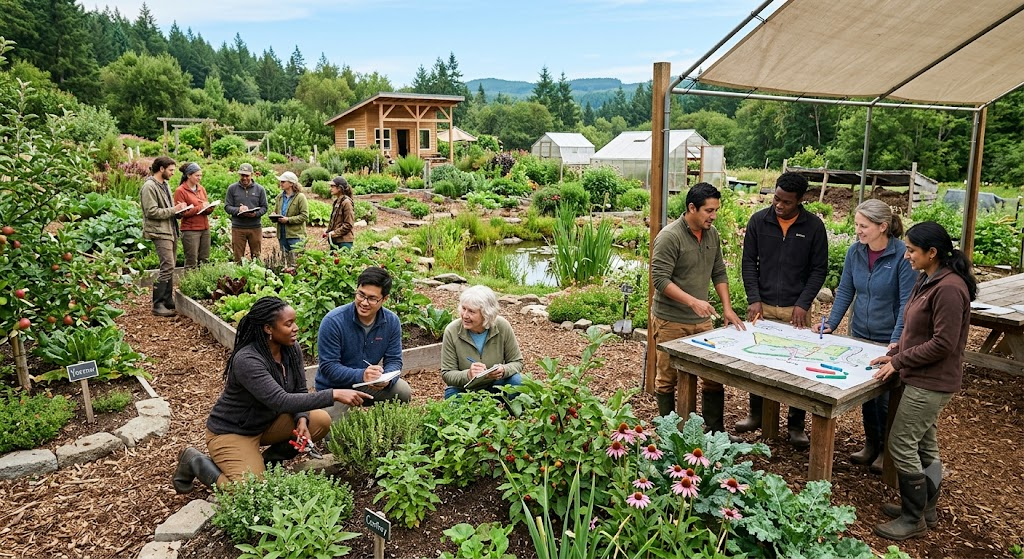
Permaculture is more than a method for growing food or designing sustainable landscapes. It is a way of understanding relationships, patterns, and connections within living systems. For students pursuing a Permaculture Diploma, developing leadership and systems thinking skills is essential because regenerative change requires more than technical knowledge. It requires people who can understand complexity, inspire cooperation, and guide communities toward healthier relationships with the Earth.
Modern ecological challenges are interconnected. Climate change, biodiversity loss, food insecurity, and social inequality cannot be solved through isolated actions. They require leaders who can recognize patterns and work with the natural intelligence already present in ecosystems.
This is where systems thinking becomes a powerful leadership approach. Instead of focusing only on individual problems, systems thinkers examine relationships, feedback cycles, and the deeper structures that create outcomes.
For aspiring permaculture practitioners, leadership is not about authority or control. It is about stewardship, awareness, and creating conditions where people and ecosystems can thrive together.
Students exploring regenerative education through programs such as Gaia University often discover that effective leadership begins with understanding how living systems function.
Understanding the Connection Between Leadership and Systems Thinking in Permaculture
Permaculture is built on the idea that everything is connected. A garden is not simply a collection of plants. It is a network of soil organisms, insects, water cycles, sunlight patterns, climate conditions, and human relationships.
The same principle applies to leadership.
A leader working within a complex system must understand that every decision creates ripple effects. A change in one area may influence many other areas in unexpected ways.
For example, a permaculture designer introducing a new agricultural technique must consider:
- How will it affect soil health?
- Will it support biodiversity?
- How will community members respond?
- Does it require resources that are locally available?
- Can the system maintain itself over time?
A systems-thinking leader does not ask only, “What problem are we solving?”
They ask:
- “What relationships created this situation?”
- “What patterns continue to influence this outcome?”
- “How can we create conditions for positive change?”
This approach creates deeper and more lasting solutions.
Why Traditional Leadership Models Often Fail in Complex Systems
Many traditional leadership models focus on hierarchy, authority, and short-term results. These approaches may work well in simple environments where problems have clear causes and solutions.
However, ecological systems are different.
Nature does not operate through strict commands. Forests, wetlands, and ecosystems develop through cooperation, adaptation, and continuous feedback.
Permaculture leaders face similar realities. Community projects involve many perspectives, changing conditions, and unpredictable challenges.
A leader who tries to control every detail can limit creativity and reduce resilience.
Instead, systems-based leadership encourages:
- Shared decision-making
- Active listening
- Adaptability
- Community participation
- Continuous learning
This style recognizes that valuable knowledge exists throughout a system.
A farmer, community member, student, or local expert may each hold important insights. Effective leaders create spaces where these perspectives can combine.
The Role of Ecological Awareness in Modern Leadership
Ecological awareness is the ability to understand humans as part of nature rather than separate from it.
For permaculture students, this mindset changes how leadership is understood.
A conventional leader may ask:
“How can we make nature provide what we need?”
An ecological leader asks:
“How can we cooperate with natural systems while meeting human needs?”
This shift creates a foundation for regenerative thinking.
Ecological leaders understand concepts such as:
| Systems Principle | Leadership Application |
| Diversity | Encourage different perspectives and skills |
| Observation | Understand situations before making decisions |
| Feedback | Learn from results and adjust actions |
| Resilience | Build systems that can handle change |
| Relationships | Strengthen connections between people and environments |
These principles help future permaculture practitioners design solutions that are both practical and sustainable.
The Foundations of Systems Thinking for Permaculture Diploma Seekers
Systems thinking is the practice of understanding how different parts influence one another within a larger whole. Instead of analyzing isolated events, systems thinkers examine structures, relationships, and patterns.
For permaculture diploma seekers, this skill is especially valuable because ecosystems are living networks.
A garden, farm, or community project is not a machine with separate parts. It is an evolving system where every element affects others.
A successful permaculture leader learns to observe these connections.
Seeing Patterns Instead of Isolated Problems
One of the most important systems-thinking skills is recognizing patterns.
Imagine a community garden struggling with poor plant growth. A traditional approach might focus only on adding fertilizer.
A systems-thinking approach investigates deeper:
- Is the soil ecosystem healthy?
- Is water being managed effectively?
- Are plants suitable for the local climate?
- Are community members engaged?
- Are resources being used efficiently?
The visible problem may only be a symptom.
Systems thinking helps leaders discover root causes instead of repeatedly treating surface-level issues.
This ability is crucial for permaculture because regenerative design focuses on creating healthy relationships rather than temporary fixes.
Feedback Loops, Relationships, and Interdependence
A key concept in systems thinking is understanding feedback loops. Feedback loops describe how actions within a system create responses that influence future actions.
In natural ecosystems, feedback loops help maintain balance. For example, healthy soil supports stronger plants, stronger plants provide more organic material, and organic material improves soil quality. The cycle continues and strengthens over time.
Permaculture leaders apply the same understanding when designing human systems.
A community project may create positive feedback when:
- People feel included in decision-making.
- Shared knowledge improves collective skills.
- Successful projects inspire further participation.
- Local resources are valued and protected.
However, negative feedback loops can also occur. A lack of communication may reduce trust, which decreases participation, which may weaken the project further.
A systems-thinking leader learns to identify these cycles and create interventions that improve overall system health.
This ability separates reactive leadership from regenerative leadership. Instead of responding only when problems appear, systems-based leaders look for the conditions that create those problems.
How Leadership and Systems Thinking Builds Regenerative Communities
Regenerative communities require leaders who understand that sustainability is not only about reducing harm. It is about restoring relationships between people and the natural world.
Permaculture provides a framework for creating these relationships through ethical principles such as:
- Care for the Earth
- Care for people
- Fair sharing of resources
Leadership and systems thinking allows practitioners to transform these principles into practical action.
A regenerative leader does not simply manage a project. They nurture a living system.
This means supporting:
- Healthy communication networks
- Local knowledge exchange
- Ecological restoration
- Community resilience
- Long-term planning
The goal is not to create a perfect system. Instead, the goal is to create systems that can adapt, learn, and continue improving.
Moving From Control-Based Leadership to Collaborative Leadership
Many people associate leadership with having authority over others. However, permaculture encourages a different understanding of leadership.
Collaborative leadership recognizes that communities are complex systems where every person contributes value.
A collaborative leader focuses on:
- Asking meaningful questions
- Encouraging participation
- Creating shared visions
- Supporting personal responsibility
- Building trust
This approach reflects how natural ecosystems function.
A forest does not have a single manager directing every tree, insect, and microorganism. Instead, relationships create balance and resilience.
Likewise, effective community leaders create environments where individuals can contribute their unique abilities.
For permaculture students, developing collaborative leadership skills is essential because many future projects will involve working with diverse groups of people.
Developing Adaptive Decision-Making Skills
Permaculture teaches students that observation comes before action.
This principle is equally important in leadership.
Systems are constantly changing. Weather patterns shift, community needs evolve, and resources become available or limited.
A rigid leader may continue following an outdated plan even when conditions change.
An adaptive leader observes, learns, and adjusts.
Adaptive decision-making includes:
- Gathering information from multiple sources.
- Understanding possible consequences.
- Testing ideas on a small scale.
- Learning from outcomes.
- Adjusting strategies when needed.
This process mirrors natural evolution.
Strong systems-based leaders understand that mistakes are opportunities for learning rather than failures.
Applying Systems Thinking Principles in Permaculture Design
Permaculture design is essentially systems thinking applied to landscapes, communities, and human activities.
Every design decision considers relationships between elements.
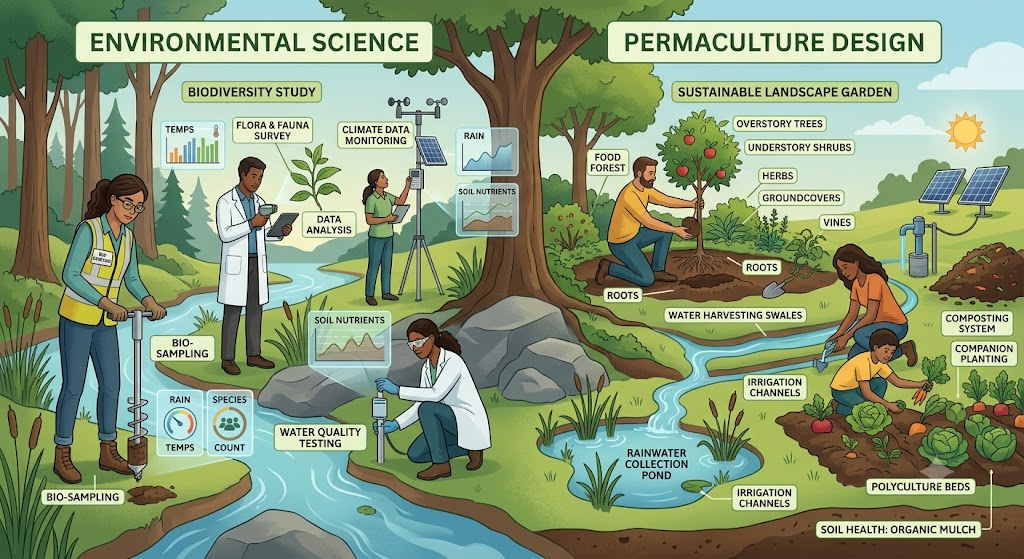
For example, planting trees is not only about producing fruit. Trees may also:
- Provide shade.
- Improve soil conditions.
- Support wildlife.
- Protect water resources.
- Create habitat.
A systems thinker sees multiple functions within one element.
This approach creates efficient and resilient designs.
Students studying permaculture learn to ask:
- What functions does this element provide?
- What relationships does it create?
- How can one action create multiple benefits?
These questions develop both design skills and leadership awareness.
Observing Before Acting
One of the most important permaculture principles is observation.
Before changing a system, leaders must understand it.
Observation requires patience and curiosity.
A permaculture practitioner may spend time studying:
- Seasonal changes
- Water movement
- Wildlife patterns
- Soil conditions
- Human interactions
The same approach applies to leadership.
Before attempting to solve a community challenge, a leader should understand:
- The history of the situation
- The perspectives of participants
- Existing strengths
- Hidden challenges
Observation prevents rushed decisions and creates more thoughtful solutions.
Designing With Nature Rather Than Against It
Traditional approaches often attempt to control natural processes.
Permaculture takes another path.
Instead of fighting ecological systems, it works alongside them.
This philosophy also applies to leadership.
A systems-thinking leader does not try to force change through pressure alone. Instead, they create supportive conditions where positive transformation can naturally develop.
For example:
A community interested in local food production may not need a leader who gives instructions. It may need someone who connects people, shares resources, organizes learning opportunities, and supports experimentation.
Leadership becomes a process of cultivation.
Just as gardeners create conditions for plants to grow, regenerative leaders create conditions for communities to flourish.
Essential Leadership Skills for Future Permaculture Practitioners
Permaculture diploma seekers need a broad range of leadership abilities because ecological projects involve both environmental and social systems.
Technical knowledge alone is not enough.
A skilled permaculture practitioner must also understand people, communication, and collaboration.
Communication and Community Facilitation
Communication is one of the most important leadership skills in regenerative work.
Permaculture projects often bring together people with different experiences, values, and expectations.
A strong facilitator helps groups:
- Share ideas openly
- Resolve conflicts respectfully
- Make decisions together
- Build common goals
Good communication requires listening as much as speaking.
Systems-thinking leaders understand that every person is part of the larger system. Ignoring certain voices can weaken the entire project.
Ethical Responsibility and Long-Term Vision
Permaculture leadership requires responsibility beyond immediate results.
A decision that creates short-term benefits may create long-term problems.
For example, a farming method that increases production quickly may damage soil health over time.
Systems-thinking leaders consider future impacts.
They ask:
- Will this decision support future generations?
- Does this strengthen relationships?
- Does this increase resilience?
- Does this respect ecological limits?
Long-term vision is one of the defining qualities of regenerative leadership.
The Importance of Self-Leadership in Systems Change
Before leading communities, permaculture practitioners must develop self-awareness.
Self-leadership involves understanding personal values, habits, strengths, and areas for growth.
A leader who understands themselves can better understand others.
Self-leadership includes:
- Emotional awareness
- Personal responsibility
- Continuous learning
- Reflection
- Adaptability
Regenerative change begins internally and expands outward.
Personal Growth as a Foundation for Ecological Leadership
Systems thinking encourages people to recognize that they are part of the systems they seek to change.
A permaculture student is not separate from the environment, community, or challenges being addressed.
Personal transformation may involve:
- Developing patience
- Practicing observation
- Challenging assumptions
- Building empathy
- Becoming comfortable with uncertainty
These qualities help leaders respond thoughtfully rather than react emotionally.
Educational pathways focused on regenerative leadership, such as those offered through Gaia University programs, emphasize learning through action, reflection, and community engagement.
Practical Examples of Systems Thinking in Permaculture Projects
Systems thinking becomes easier to understand when applied to real situations.
Food Systems, Water Management, and Community Resilience
A permaculture food system demonstrates interconnected thinking.
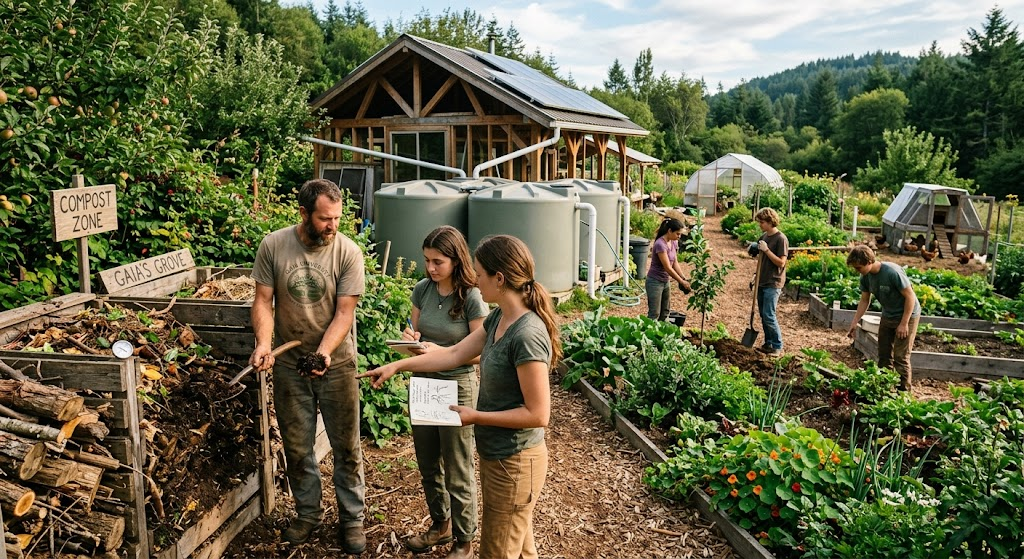
A garden design may include:
- Composting systems that recycle nutrients
- Rainwater collection that supports plants
- Diverse crops that improve resilience
- Community involvement that strengthens relationships
Each element supports others.
Similarly, community resilience depends on connected systems.
A resilient community may have:
| Area | Systems Thinking Approach |
| Food | Local production and sharing networks |
| Water | Conservation and natural management |
| Education | Knowledge exchange |
| Leadership | Collaboration and participation |
| Economy | Support for local resources |
These examples show why systems thinking is such an important leadership skill.
How Permaculture Diploma Students Can Develop Systems-Based Leadership
Developing systems-based leadership is an ongoing journey.
Students can strengthen these abilities through practice, reflection, and participation.
Useful approaches include:
- Working on real-world projects
- Observing natural systems
- Participating in community activities
- Learning from experienced practitioners
- Reflecting on personal decisions
A diploma program can provide knowledge, but leadership develops through application.
Permaculture leaders grow by engaging with complexity rather than avoiding it.
Frequently Asked Questions About Leadership and Systems Thinking
1. What is leadership and systems thinking in permaculture?
Leadership and systems thinking in permaculture combines ecological understanding with collaborative leadership skills. It helps practitioners recognize relationships, patterns, and long-term impacts when designing solutions.
2. Why is systems thinking important for permaculture students?
Systems thinking helps students understand that environmental and social challenges are connected. It allows them to create solutions that address root causes instead of only treating symptoms.
3. How does systems thinking change leadership styles?
Systems thinking shifts leadership from control-based approaches toward collaboration, adaptability, and shared decision-making.
4. Can systems thinking be learned through a permaculture diploma?
Yes. Permaculture education often includes observation, design principles, ecological relationships, and practical experiences that develop systems-thinking abilities.
5. What skills should a future permaculture leader develop?
Important skills include communication, observation, adaptability, facilitation, ethical decision-making, and the ability to understand complex relationships.
6. How does systems thinking support regenerative communities?
Systems thinking helps communities recognize connections between social, environmental, and economic systems. This allows them to create solutions that strengthen resilience over time.
Conclusion: Growing Leaders for a Regenerative Future
The future of ecological leadership depends on people who can see beyond isolated problems and understand the larger systems shaping our world.
For Permaculture Diploma Seekers, developing leadership and systems thinking skills creates the foundation for meaningful change. These skills help practitioners design healthier landscapes, support stronger communities, and create solutions that work with nature rather than against it.
The most effective regenerative leaders are not those who control every outcome. They are those who observe carefully, listen deeply, encourage collaboration, and help living systems reach their potential.
As ecological challenges become more complex, the need for systems-based leadership will continue to grow. By combining permaculture knowledge with thoughtful leadership practices, future practitioners can become powerful contributors to a more resilient and regenerative world.



Responses