
Reasons Why Environmental Design Courses Can Transform Your Permaculture Diploma Journey

Environmental Design Courses
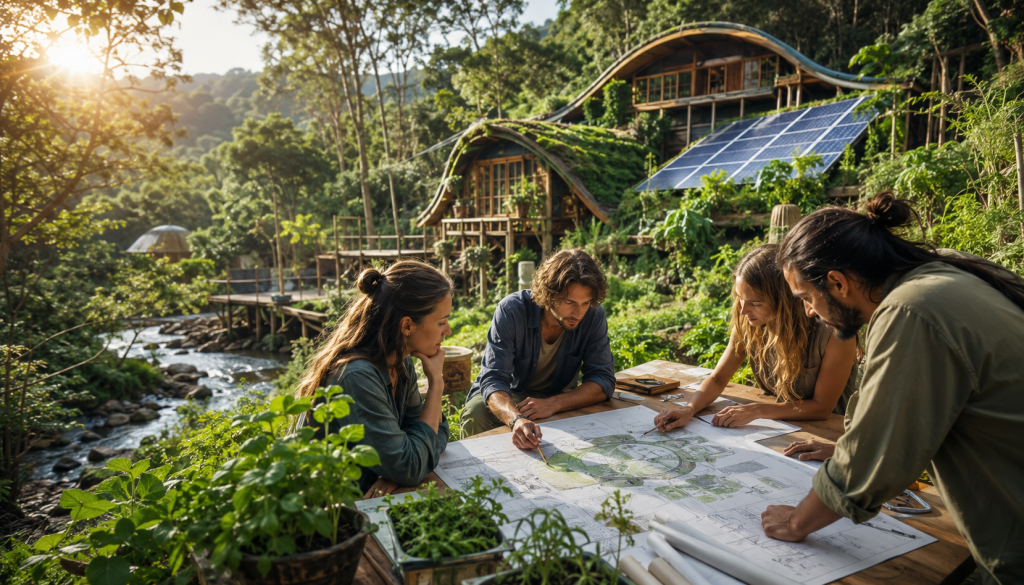
Environmental challenges across the globe have created an urgent need for people who can design regenerative solutions. For aspiring permaculture diploma seekers, environmental design courses provide a critical bridge between ecological theory and practical implementation. These courses help learners understand how natural systems function, how human settlements interact with ecosystems, and how thoughtful design can create resilient communities.
Whether your goal is restoring degraded landscapes, creating productive food systems, designing sustainable homesteads, or leading community regeneration projects, environmental design education offers the tools needed to turn vision into reality.
Understanding Environmental Design
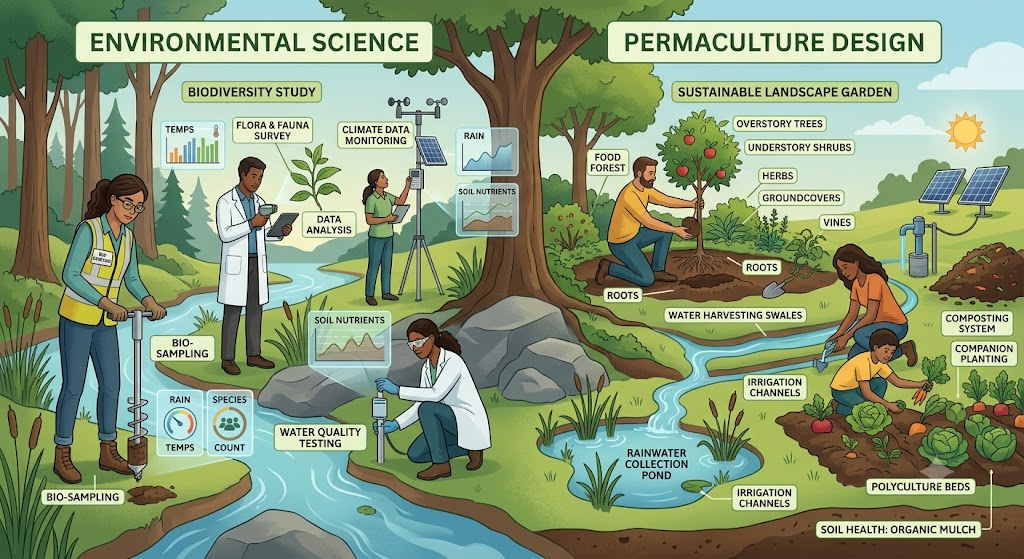
Environmental design is an interdisciplinary field focused on creating sustainable relationships between people and the natural world. It integrates ecology, agriculture, architecture, water systems, landscape planning, and social systems into a unified design approach.
Rather than treating environmental challenges separately, environmental design examines how all elements interact within larger systems. This holistic perspective aligns closely with permaculture principles, making it especially valuable for diploma seekers.
Students learn to evaluate landscapes, identify ecological patterns, and design interventions that improve environmental health while meeting human needs.
Why Environmental Design Matters in Permaculture
Permaculture is fundamentally a design science. It requires practitioners to observe natural systems and create regenerative solutions based on ecological principles.
Environmental design education strengthens a permaculture student’s ability to:
- Analyze complex ecosystems
- Design resilient food systems
- Improve water retention
- Enhance biodiversity
- Build regenerative communities
- Reduce environmental impacts
- Create long-term sustainability strategies
These competencies are essential for anyone pursuing advanced permaculture studies or professional practice.
The Relationship Between Environmental Design and Regenerative Systems
Regenerative design seeks to restore and improve ecological health rather than simply minimizing harm.
Ecological Literacy Foundations
Environmental design courses often begin by helping students understand ecological relationships. Topics may include:
- Nutrient cycles
- Energy flows
- Succession processes
- Ecosystem resilience
- Biodiversity functions
A deep understanding of these concepts allows learners to create designs that work with nature instead of against it.
Systems Thinking Principles
Systems thinking teaches students to identify connections between environmental, social, and economic factors.
Instead of solving isolated problems, learners develop strategies that create multiple benefits simultaneously. For example, a water-harvesting system can reduce erosion, improve crop yields, recharge groundwater, and increase biodiversity.
Core Subjects Found in Environmental Design Courses
Most high-quality environmental design programs include several foundational disciplines.
Site Analysis and Assessment
Before creating any design, practitioners must understand existing conditions.
Students typically learn:
- Topographic analysis
- Microclimate assessment
- Vegetation surveys
- Land-use evaluation
- Resource inventories
These skills help identify opportunities and constraints within a landscape.
Water Management Strategies
Water is often the most important factor influencing ecosystem productivity.
Common topics include:
- Rainwater harvesting
- Watershed design
- Stormwater management
- Pond systems
- Irrigation efficiency
Understanding water movement allows designers to increase resilience during droughts and extreme weather events.
Soil Ecology and Restoration
Healthy soil supports healthy ecosystems.
Environmental design courses frequently explore:
- Soil biology
- Carbon sequestration
- Compost systems
- Erosion prevention
- Regenerative agriculture
These concepts help learners improve fertility while reducing dependency on external inputs.
Sustainable Building Concepts
Many programs also address ecological construction principles.
Students may study:
- Natural building materials
- Energy efficiency
- Passive solar design
- Green infrastructure
- Low-impact development
These approaches reduce environmental footprints while improving human well-being.
Environmental Design Courses for Permaculture Diploma Seekers
For individuals pursuing permaculture diplomas, environmental design education offers additional depth and specialization.
Integrated Land Design
Students learn to combine multiple systems into cohesive landscapes.
Examples include:
- Food forests
- Agroforestry systems
- Silvopasture projects
- Integrated water systems
- Habitat restoration plans
The goal is creating landscapes where every element supports multiple functions.
Community-Based Regeneration
Many environmental challenges occur at the community level.
Environmental design courses often teach:
- Participatory planning
- Stakeholder engagement
- Cooperative development
- Community resilience strategies
These skills become increasingly important as projects scale beyond individual properties.
Climate-Responsive Planning
Climate uncertainty requires adaptive design strategies.
Students explore methods for:
- Drought resilience
- Flood mitigation
- Carbon storage
- Ecosystem adaptation
- Disaster preparedness
Such capabilities are becoming highly valued across environmental professions.
Key Skills Developed Through Environmental Design Education
Observation and Pattern Recognition
Successful designers spend significant time observing before acting.
Students learn how to identify:
- Natural cycles
- Ecological relationships
- Seasonal changes
- Resource flows
- Landscape patterns
These observations form the foundation of effective design decisions.
Resource Mapping
Environmental design requires understanding available resources.
Students practice mapping:
- Water resources
- Soil types
- Energy flows
- Existing vegetation
- Infrastructure systems
Accurate mapping improves project outcomes and reduces costly mistakes.
Design Documentation
Professional designers must communicate ideas clearly.
Environmental design courses commonly teach:
- Design reports
- Concept diagrams
- Project proposals
- Site plans
- Monitoring frameworks
These skills help transform concepts into actionable projects.
Learning Formats Available
Modern environmental education offers multiple learning pathways.
Online Programs
Online courses provide flexibility for working professionals and international learners.
Benefits include:
- Self-paced learning
- Global networking
- Digital resources
- Lower travel costs
Field-Based Learning
Hands-on experiences remain essential.
Field programs often include:
- Site visits
- Practical installations
- Ecological assessments
- Community projects
Experiential learning helps reinforce theoretical concepts.
Mentorship-Based Education
Many advanced learners benefit from individualized guidance.
Programs emphasizing mentorship can accelerate professional development through real-world project implementation.
One example is the educational approach promoted by Gaia University, which emphasizes self-directed, project-based learning within real-world regenerative initiatives.
How to Evaluate a Quality Environmental Design Course
Curriculum Depth
Look for programs that address:
- Ecology
- Design methodologies
- Regenerative systems
- Social dimensions
- Implementation strategies
A comprehensive curriculum provides stronger preparation for professional practice.
Practical Application
The best programs emphasize real-world implementation rather than theory alone.
Students should have opportunities to:
- Complete projects
- Conduct assessments
- Develop portfolios
- Engage with communities
Portfolio Development
A strong portfolio demonstrates competence to future clients, collaborators, and employers.
Seek programs that encourage documenting and presenting completed work.
For those exploring alternative higher education pathways, the educational philosophy outlined by Gaia University’s learning approach highlights project-centered learning and competency development.
Career Pathways After Completing Environmental Design Courses
Graduates may pursue opportunities in:
| Field | Potential Roles |
|---|---|
| Permaculture | Designer, Consultant, Educator |
| Agriculture | Regenerative Farm Planner |
| Conservation | Restoration Specialist |
| Community Development | Sustainability Coordinator |
| Landscape Design | Ecological Designer |
| Education | Environmental Trainer |
| Nonprofits | Program Manager |
| Entrepreneurship | Regenerative Project Founder |
The growing focus on sustainability continues to expand opportunities across sectors.
Environmental Design in Community Regeneration Projects
Community regeneration often requires integrated solutions.
Environmental designers may contribute to:
- Urban agriculture initiatives
- Watershed restoration
- Community food systems
- Ecovillage planning
- Educational farms
- Climate resilience projects
Their ability to connect ecological and social systems makes them valuable contributors to transformative change.
Technology and Tools Used in Modern Environmental Design
While observation remains essential, modern practitioners increasingly use technology to support design decisions.
Common tools include:
- Geographic Information Systems (GIS)
- Digital mapping platforms
- Remote sensing technologies
- Climate modeling tools
- Design software
- Ecological monitoring systems
Combining technology with ecological understanding improves precision and effectiveness.
Common Challenges Students Face
Environmental design education can be highly rewarding, but learners often encounter challenges such as:
- Information overload
- Complex systems analysis
- Long project timelines
- Balancing theory and practice
- Managing stakeholder expectations
Consistent practice and mentorship help students overcome these obstacles.
Selecting the Right Educational Path
Choosing the right environmental design course depends on personal goals.
Consider:
- Learning style
- Career objectives
- Geographic focus
- Practical opportunities
- Mentorship availability
- Community engagement
- Long-term professional development
Students seeking diploma-level permaculture competency often benefit from programs that prioritize project-based learning and real-world application.
For further exploration of regenerative education pathways, learners may also review Gaia University’s academic framework.
Frequently Asked Questions
1. What are environmental design courses?
Environmental design courses teach students how to create sustainable and regenerative systems that integrate ecological, social, and economic considerations.
2. Are environmental design courses useful for permaculture diploma seekers?
Yes. They provide advanced design skills that complement and strengthen permaculture education.
3. Do environmental design courses require prior experience?
Many introductory programs welcome beginners, while advanced courses may require foundational ecological knowledge.
4. Can environmental design be studied online?
Yes. Numerous programs offer online, hybrid, and mentorship-based learning options.
5. What skills are most important for environmental designers?
Observation, systems thinking, ecological literacy, communication, mapping, and project planning are among the most valuable skills.
6. What career opportunities exist after completing environmental design courses?
Graduates may work in regenerative agriculture, ecological consulting, conservation, community development, sustainability education, and environmental planning.
7. How do environmental design courses support regenerative development?
They teach learners to create systems that improve ecological health, strengthen communities, and enhance long-term resilience.
Conclusion
Environmental design courses provide a powerful foundation for anyone pursuing a permaculture diploma or regenerative career path. By combining ecological understanding, systems thinking, practical design skills, and real-world application, these programs prepare learners to address some of today’s most pressing environmental challenges.
For permaculture diploma seekers, environmental design education goes beyond technical knowledge. It cultivates the ability to observe deeply, think holistically, and create solutions that regenerate landscapes and communities alike. As the demand for sustainable and resilient systems continues to grow, individuals equipped with environmental design expertise will be increasingly positioned to lead meaningful and lasting change.

Responses