
Project Based Learning Higher Education: A Practical Approach for Permaculture Diploma Seekers

Introduction: Why Project Based Learning Matters in Higher Education
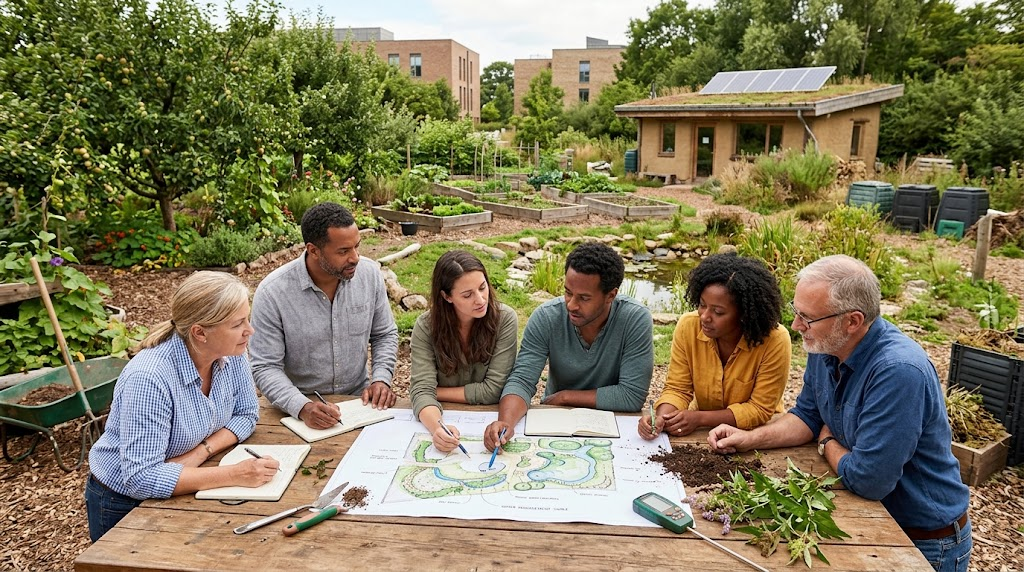
Higher education is changing as learners look for more than lectures, textbooks, and traditional examinations. Many students want to understand how knowledge can be applied to real situations and how their learning can translate into meaningful work. This is where project based learning higher education approaches can offer a valuable alternative.
Project based learning places students in an active role. Instead of simply receiving information, learners investigate questions, solve problems, create outcomes, collaborate with others, and reflect on what they have discovered. For students interested in sustainability, ecological design, regenerative systems, and permaculture, this approach can be especially relevant.
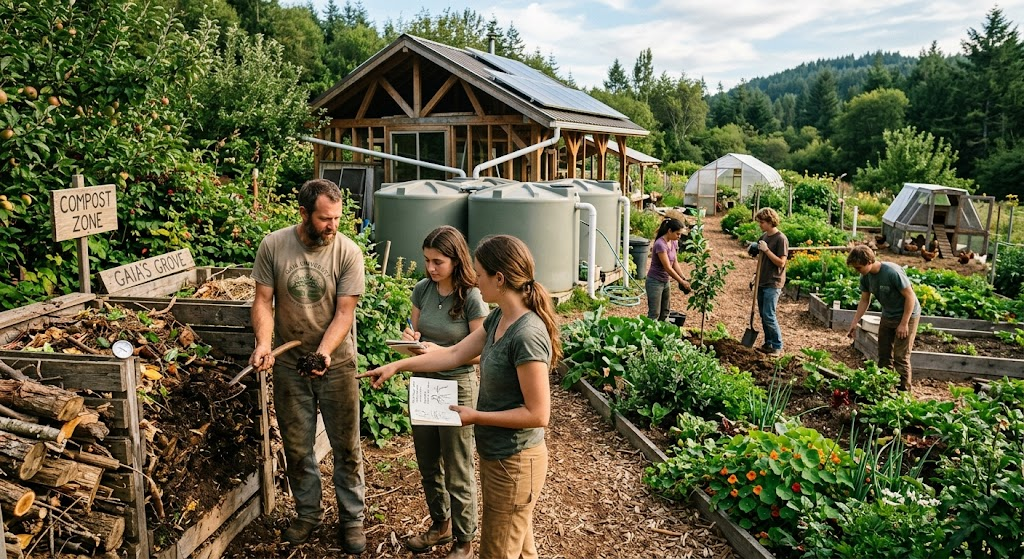
A permaculture education pathway is naturally connected to practical learning. Designing a food-growing system, assessing a landscape, developing a water-management strategy, or creating a community-based project requires observation and decision-making rather than memorization alone.
For prospective permaculture diploma seekers, understanding project based learning in higher education can therefore help explain why practical, interdisciplinary education can be useful for developing both knowledge and applied skills.
What Is Project Based Learning in Higher Education?
Project based learning (PBL) is an educational approach in which students learn by working on meaningful projects over a period of time. A project normally involves a question, challenge, problem, or opportunity that requires learners to research, plan, make decisions, produce something, and evaluate the results.
In traditional education, the sequence may look like this:
Learn information → take an assessment → receive a grade
In project based learning, the process is more likely to be:
Identify a challenge → research → plan → apply knowledge → create → evaluate → reflect
This does not mean that theory disappears. Instead, theoretical knowledge becomes a resource that students use while working through a practical challenge.
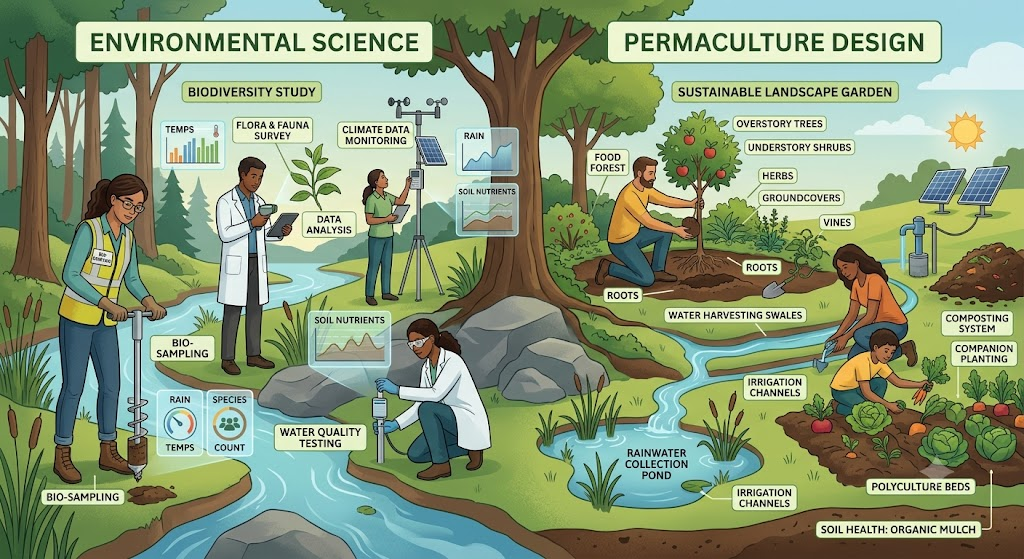
For example, a student studying sustainable land management might learn about soil systems, water cycles, biodiversity, climate, and plant relationships. Rather than studying each subject independently, the student could use those concepts to develop a design for a productive and resilient landscape.
This makes learning contextual. Students can see why particular concepts matter and how different areas of knowledge interact.
How Project Based Learning Differs From Traditional Learning
Understanding the distinction between project based learning and conventional education can help prospective students determine which learning environment fits their goals.
Traditional higher education often relies on lectures, reading, written assignments, examinations, and structured coursework. These methods can be useful for building foundational knowledge.
Project based learning adds another dimension: application.
A student may still read academic material and attend instructional sessions, but the information is connected to a project that requires action.
For example, learning about ecological succession is one thing. Applying that understanding while developing a planting strategy for a particular landscape is another.
The difference is not simply practical versus theoretical. Good project based learning combines both.
A strong project requires students to:
- Understand relevant concepts
- Research reliable information
- Analyze a real situation
- Identify constraints
- Develop possible solutions
- Make design decisions
- Test or communicate their ideas
- Reflect on outcomes
- Revise their thinking when necessary
These activities encourage learners to become active participants in their education.
Why Project Based Learning Is Relevant to Permaculture Education
Permaculture is inherently interdisciplinary. It brings together ecological observation, design, agriculture, water management, architecture, community systems, energy, economics, and social considerations.
That makes project based learning a natural educational framework for many permaculture topics.
Imagine a learner asked to design a small regenerative garden. The project might require them to consider:
- Existing soil conditions
- Sun and shade patterns
- Water availability
- Local climate
- Existing vegetation
- Food production goals
- Human movement through the site
- Maintenance requirements
- Biodiversity
- Available resources
- Social needs
- Long-term resilience
No single subject provides all the answers.
The learner must connect different areas of knowledge and make decisions based on the characteristics of the specific site.
This is one of the central strengths of project based learning higher education: students can develop the ability to connect knowledge rather than treating every subject as an isolated topic.
Learning Through Real-World Problems
One of the most important characteristics of project based learning is the use of meaningful problems.
A textbook exercise may provide all the necessary information. A real-world project usually does not.
A landscape, community, organization, or ecological system contains uncertainty. Students may have incomplete information, competing priorities, limited resources, and changing conditions.
For permaculture diploma seekers, this is particularly important.
A design that works in one location may not work in another. A strategy suitable for a wet climate may require significant modification in an arid environment. A technically sound design may also fail if it does not fit the people who will use or maintain it.
Project based learning gives students opportunities to work with this complexity.
Instead of asking only, “What is the correct answer?” learners can ask:
What information do I need?
What constraints am I working with?
What options are available?
Which solution best fits this particular context?
How can I evaluate the results?
These questions develop practical reasoning.
The Role of Research in Project Based Learning
Project based learning is not simply “learning by doing.” Effective projects require research.
A student working on a permaculture design may need to investigate soil characteristics, climate patterns, water resources, plant species, ecological relationships, local conditions, and social requirements.
Research helps prevent projects from becoming based entirely on assumptions.
Students can learn to distinguish between:
- Observation and interpretation
- Evidence and opinion
- Established knowledge and speculation
- General principles and site-specific information
- Short-term solutions and long-term consequences
This research component is important in higher education because it encourages students to approach practical problems systematically.
For a permaculture learner, the process can begin with observation before moving toward intervention. The student first tries to understand the system and then considers possible design responses.
Developing Systems Thinking Through Projects
Systems thinking is particularly valuable in sustainability education.
A system is composed of interconnected elements. Changing one part can influence other parts.
For example, changing how water moves across a landscape may influence soil moisture, vegetation, erosion, productivity, biodiversity, and maintenance requirements.
A project provides an opportunity to explore these relationships.
Rather than studying water management as an isolated subject, students can investigate how water interacts with the rest of a landscape.
This can lead to more comprehensive thinking.
For permaculture diploma seekers, systems thinking is particularly useful because permaculture design involves relationships between people, land, resources, and ecological processes.
Project based learning can help students practice identifying these relationships in concrete situations.
Collaboration and Team-Based Learning
Many higher education projects involve collaboration.
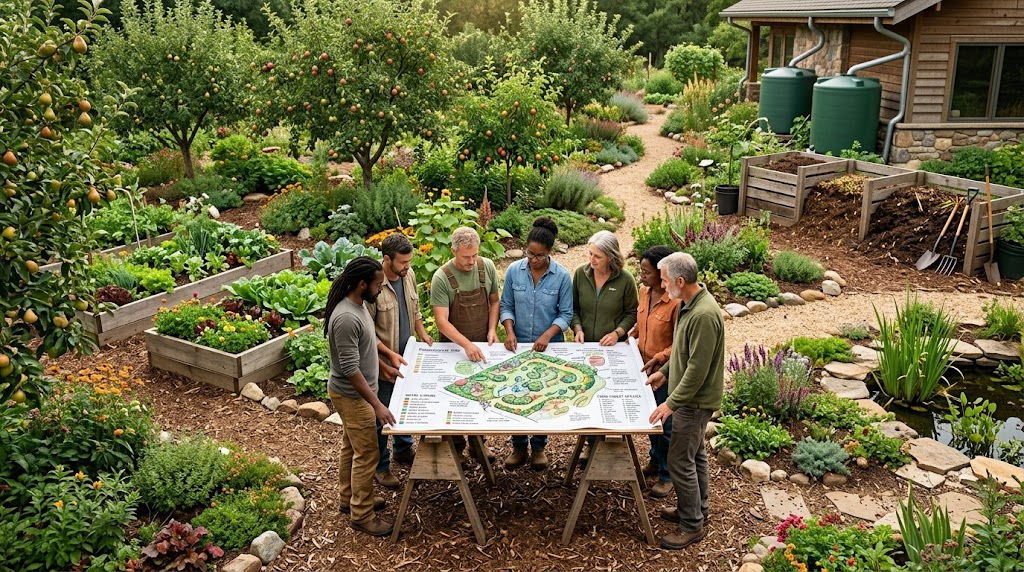
Students may work in groups where different people contribute different skills, perspectives, and experiences. This can mirror professional environments, where projects are rarely completed by one person working entirely alone.
A sustainability project, for example, could involve people interested in:
- Ecological design
- Food production
- Construction
- Community development
- Education
- Business
- Landscape management
- Research
Collaboration requires more than dividing tasks.
Students must learn to communicate ideas, explain decisions, listen to different perspectives, manage disagreements, and coordinate work.
These capabilities can be valuable for permaculture practitioners who may eventually work with landowners, communities, educators, designers, farmers, organizations, or other stakeholders.
Reflection Is an Important Part of Project Based Learning
A project should not end simply because a final product has been created.
Reflection helps learners understand what happened and why.
Students can ask:
- What worked?
- What did not work?
- What assumptions were incorrect?
- What information was missing?
- What would I change?
- What did I learn?
- How could the project be improved?
- Which skills do I need to develop further?
Reflection transforms experience into learning.
This is particularly important in complex fields such as permaculture because there may not be one universal solution to a design challenge.
A student can learn from both successful decisions and unsuccessful ones.
What Skills Can Students Develop?
One advantage of project based learning higher education is that projects can develop multiple skills simultaneously.
Research Skills
Students learn how to locate, interpret, organize, and apply information relevant to a specific problem.
Critical Thinking
Projects require learners to evaluate alternatives instead of automatically accepting the first solution.
Problem-Solving
Students encounter challenges that require practical responses.
Communication
Presenting a project requires students to explain their reasoning clearly.
Collaboration
Group projects encourage coordination, listening, negotiation, and shared responsibility.
Project Management
Longer projects require planning, scheduling, prioritization, and organization.
Creativity
Open-ended challenges can allow students to explore multiple possible solutions.
Self-Directed Learning
Students often need to identify what they do not know and determine how to learn it.
Adaptability
Projects rarely progress exactly according to the original plan. Students learn to respond to new information and changing circumstances.
These skills can complement subject-specific knowledge and help learners become more capable of applying what they know.
Project Based Learning and Permaculture Design
Permaculture design is particularly compatible with project-based approaches because design itself is a process.
A learner might begin by observing a site and documenting existing conditions. The next step could involve analyzing patterns, identifying resources and constraints, defining goals, developing design concepts, and creating a final proposal.
The project could result in:
- A site analysis
- A landscape plan
- A food-growing strategy
- A water-management design
- A community project proposal
- A regenerative land-use plan
- A written design report
- A presentation
- A practical implementation plan
The important point is that the student is not simply learning what permaculture design is. They are practicing the process of designing.
This distinction can make project based education especially meaningful for learners who want to move from conceptual understanding toward practical application.
How Assessment Works in Project Based Learning
Assessment in project based learning can look different from a traditional examination.
Instead of evaluating only whether a student remembers information, instructors may consider the entire learning process.
Assessment can include:
- Research quality
- Project planning
- Application of theory
- Problem-solving
- Design decisions
- Documentation
- Communication
- Collaboration
- Final project quality
- Reflection
A project portfolio can be particularly useful because it provides evidence of what a learner has actually produced.
For a prospective permaculture professional, documenting projects may also help communicate experience and capabilities to future collaborators or clients.
The exact assessment structure varies between institutions and programs, so prospective students should examine how a particular program defines projects, assessment, supervision, and final outcomes.
Examples of Project Based Learning for Permaculture Students
Project based learning can be applied at different scales.
Designing a Home Food System
A learner could analyze a residential site and develop a food-producing system based on available space, sunlight, water, climate, and household needs.
Developing a Community Garden
Students could work with a hypothetical or real community to investigate needs and develop a garden design that considers food production, accessibility, social interaction, biodiversity, and maintenance.
Creating a Water Management Plan
A project could focus on understanding water movement across a site and proposing strategies for reducing waste, improving infiltration, and supporting productive vegetation.
Developing a Regenerative Landscape Proposal
Students could assess an existing landscape and create a long-term design based on ecological functions and human requirements.
Creating an Educational Project
A learner interested in teaching could develop a workshop or educational program introducing permaculture concepts to a specific audience.
Each example requires the student to combine research, analysis, design, communication, and reflection.
Choosing a Project Based Higher Education Program
If you are considering a program that uses project based learning higher education, look beyond the phrase itself.
Ask what students actually do.
Useful questions include:
Are Projects Central to the Curriculum?
A program may include occasional projects while still being primarily lecture-based. Find out how much of the learning involves applied work.
What Types of Projects Are Included?
Look for projects connected to your interests. For permaculture students, this might include ecological design, land systems, food production, community development, or sustainability.
How Much Independence Do Students Have?
Consider whether projects allow students to identify questions, investigate problems, and make design decisions.
Is Feedback Provided?
Project work becomes more valuable when learners receive constructive feedback throughout the process rather than only at the end.
Is Reflection Included?
Reflection can help students understand how their thinking and skills develop during a project.
Can Students Build a Portfolio?
A portfolio can document learning through designs, reports, presentations, research, and project outcomes.
These questions can help you evaluate whether a program’s educational approach matches your goals.
Project Based Learning and Online Education
Project based learning does not necessarily require students to be physically present in a traditional classroom.
Online programs can also use projects as a central component of learning.
Digital tools can support:
- Research
- Collaborative documents
- Online discussions
- Digital mapping
- Project presentations
- Portfolio development
- Instructor feedback
- Peer collaboration
- Documentation
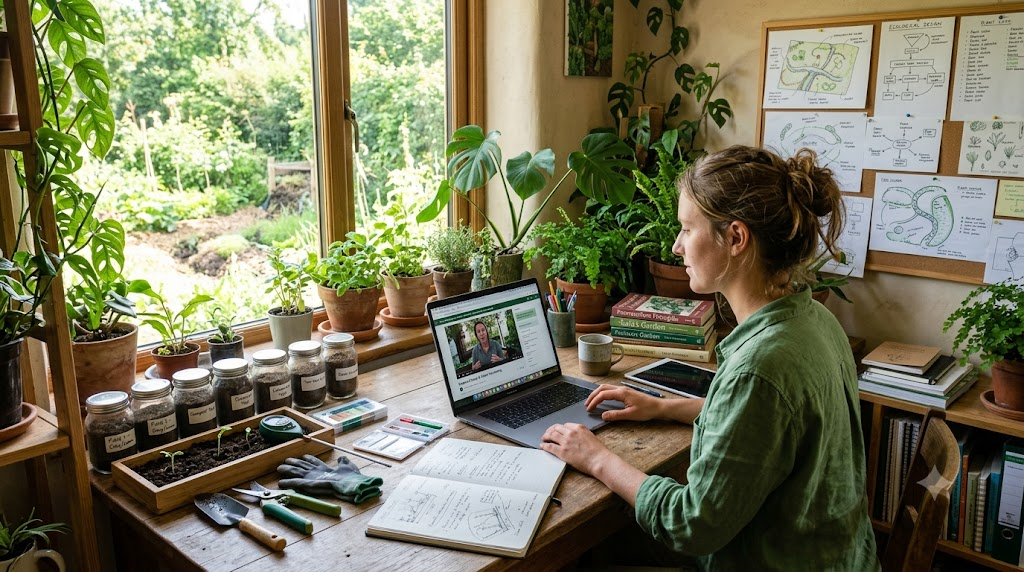
For permaculture students, an online learning environment can still incorporate site observation and practical assignments.
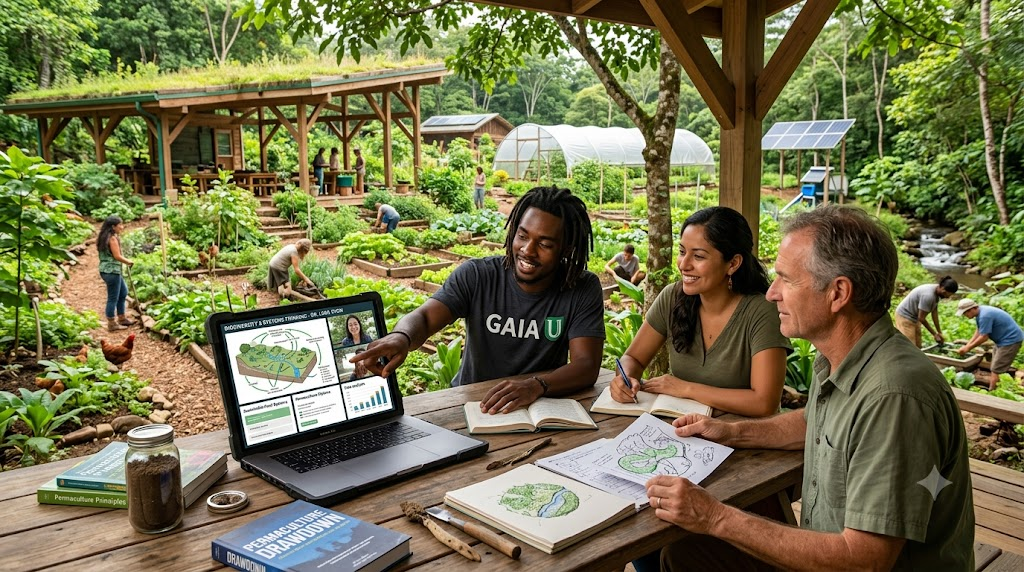
A learner might study concepts online and then apply them to a local landscape. The resulting observations, photographs, maps, analysis, and design can become part of a project portfolio.
This approach can connect digital education with physical environments.
Project Based Learning at Gaia University
For learners interested in regenerative education and applied sustainability, Gaia University provides an educational model centered on self-directed learning and practical transformation.
You can explore the university’s approach and available learning pathways on the Gaia University website.
For a student considering a permaculture-focused educational journey, it can be useful to examine how a program connects personal learning goals with practical projects and real-world application.
Building a Strong Project From Start to Finish
If you are preparing for project based learning, a structured process can make complex assignments easier to manage.
1. Define the Challenge
Start with a clear problem, question, or goal.
2. Observe the Existing Situation
Gather information before proposing solutions. In permaculture, observation is often a critical starting point.
3. Research
Identify the knowledge required to understand the challenge.
4. Analyze
Look for relationships, patterns, constraints, opportunities, and potential consequences.
5. Generate Options
Develop more than one possible response when appropriate.
6. Select a Direction
Explain why a particular approach fits the project’s goals and constraints.
7. Develop the Project
Turn the concept into a detailed plan, design, proposal, or practical outcome.
8. Gather Feedback
Use feedback to identify weaknesses and opportunities for improvement.
9. Revise
Good project work often develops through several iterations.
10. Reflect
Document what you learned, what changed, and what you would do differently in the future.
This process can help students become more intentional learners.
Common Challenges With Project Based Learning
Although project based learning offers many benefits, it also presents challenges.
One challenge is uncertainty. Students who are accustomed to having every step clearly defined may initially find open-ended projects uncomfortable.
Time management can also become important. A project may involve research, planning, implementation, documentation, and revision.
Another challenge is scope. Students may attempt to solve a problem that is too large for the available time or resources.
The solution is not necessarily to avoid complexity. Instead, learners can define realistic project boundaries.
For example, rather than attempting to redesign an entire community’s food system, a student might focus on developing a detailed food-production strategy for a specific site or user group.
Clear objectives and boundaries make projects more manageable.
Making the Most of a Project Based Education
Students can take several practical steps to improve their experience.
Document your process. Keep notes about observations, decisions, questions, sources, and revisions.
Ask for feedback early. Waiting until a project is nearly finished can make major changes more difficult.
Connect theory to practice. Whenever you learn a new concept, consider how it could influence your project.
Stay open to revision. Changing your approach after receiving new information is part of learning.
Define measurable outcomes. Clear outcomes make it easier to determine whether your project has achieved its purpose.
Reflect regularly. Do not wait until the final day to think about what you are learning.
These habits can make project work more purposeful and easier to document.
Project Based Learning as Preparation for Real-World Work
One reason project based learning higher education can be valuable is that it creates opportunities to practice working with ambiguity.
Real-world sustainability challenges rarely arrive as neatly structured examination questions.
Instead, practitioners may receive a broad goal such as improving food production, reducing resource use, restoring a degraded landscape, strengthening community resilience, or creating a more sustainable system.
They must determine what information is needed, who should be involved, which constraints matter, and what solutions are realistic.
Project based education gives learners opportunities to practice this type of thinking before applying it beyond an educational environment.
For permaculture diploma seekers, this connection between education and real-world application can be especially relevant.
Conclusion: Learning by Applying Knowledge
Project based learning higher education offers an approach in which knowledge is developed through investigation, application, collaboration, creation, and reflection.
For permaculture students, this model has particular relevance because permaculture itself requires learners to connect multiple forms of knowledge and apply them to specific ecological and human contexts.
The value of project based learning is not simply that students produce projects. Its deeper value comes from the learning process behind those projects: observing carefully, asking meaningful questions, researching, analyzing systems, making decisions, testing ideas, responding to feedback, and reflecting on outcomes.
When evaluating a permaculture education pathway, prospective students can therefore look beyond course titles and consider how learning actually happens. A program that gives learners meaningful opportunities to investigate real problems and develop practical responses can help bridge the gap between knowing about a subject and learning how to work with it.
For anyone exploring a permaculture diploma, project based learning can provide a practical framework for developing knowledge, design thinking, systems awareness, and the confidence to apply learning to complex real-world situations.
Responses