
Online Permaculture Design Certificate Course for Diploma Seekers

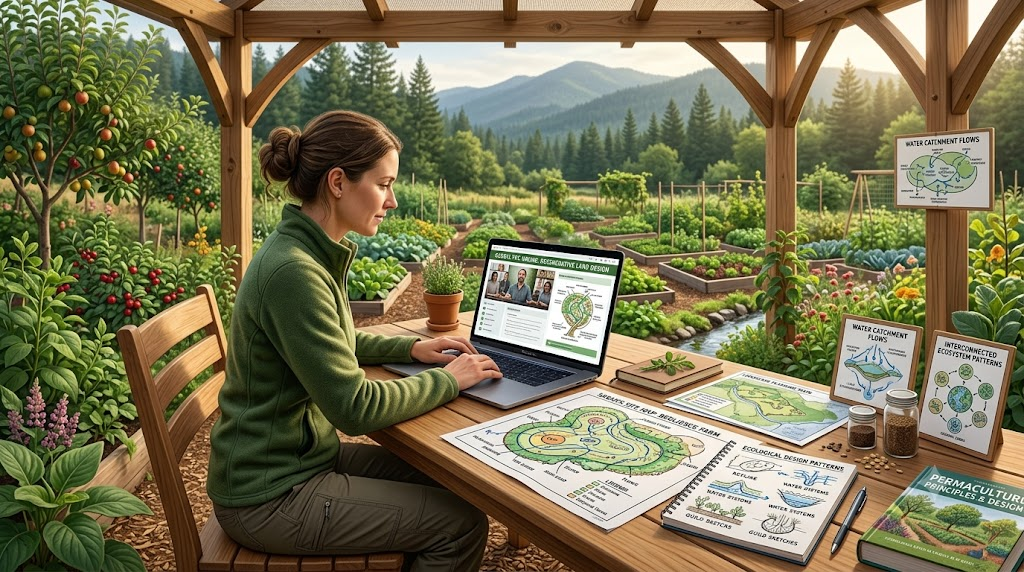
An online permaculture design certificate course provides learners with foundational knowledge of ecological design, sustainable systems, and regenerative practices. For permaculture diploma seekers, a certificate course is often an important first step because it builds the design skills, ethical understanding, and practical confidence needed for advanced study.
Permaculture education is not only about gardening or farming. It is a whole-systems approach that explores how people can design healthier relationships with land, resources, communities, and natural ecosystems. Online certificate programs make this learning accessible to students who want to study from different locations while preparing for deeper professional development.
What Is an Online Permaculture Design Certificate Course?
An online permaculture design certificate course is a structured educational program that teaches the principles and methods of permaculture through digital learning. Students typically explore ecological patterns, sustainable design strategies, resource management, and practical approaches for creating regenerative systems.
Unlike traditional short courses focused on one topic, permaculture certification introduces learners to interconnected systems thinking. Students learn how different elements—such as soil, water, plants, buildings, energy, and communities—can work together.
Online learning formats may include:
- Video lessons and digital learning materials
- Interactive discussions
- Design exercises
- Assignments and reflection activities
- Online mentoring or feedback sessions
For students seeking a permaculture diploma, this foundation helps create a strong understanding of the concepts used in more advanced projects and practical applications.
Why Diploma Seekers Start With a Certificate Course
Many learners interested in a permaculture diploma begin with certificate-level education because it establishes essential knowledge and design skills.
A certificate course helps students:
- Understand core permaculture ethics and principles
- Learn the language used in ecological design
- Develop observation and analysis skills
- Practice creating basic design solutions
- Build confidence before advanced study
A diploma pathway usually requires learners to move beyond theory and apply their knowledge through projects, documentation, and deeper exploration. A certificate creates the foundation for this transition.
Learners interested in advanced pathways can explore Gaia University’s diploma information through its official program resources. Gaia University diploma programs
Core Skills Learned in Permaculture Design Certification
A high-quality online permaculture design certificate course focuses on practical and transferable skills.
Systems Thinking
Permaculture teaches learners to view environments as connected systems rather than separate parts. This mindset helps students understand relationships between natural resources, human activities, and long-term sustainability.
Ecological Observation
Observation is one of the most important design skills. Students learn how to analyze landscapes, identify patterns, and understand environmental conditions before making design decisions.
Sustainable Design Principles
Students explore methods for creating systems that reduce waste, conserve resources, and support ecological health.
Project Planning and Design Development
Certificate learners often practice turning ideas into structured designs. This may include analyzing challenges, identifying opportunities, and creating practical solutions.
Community and Social Design
Modern permaculture extends beyond land management. Students also explore how communities can become more resilient through cooperation, shared resources, and thoughtful planning.
Key Topics Covered in a Permaculture Certificate Program
Although course structures vary, many online permaculture programs include several foundational areas.
Permaculture Ethics
The three commonly recognized ethical foundations of permaculture are:
- Care for the Earth
- Care for People
- Fair Share
These ethics guide decision-making and encourage balanced relationships between humans and natural systems.
Natural Patterns and Ecosystems
Students learn how ecosystems function and how natural patterns can inspire better human designs.
Food Systems and Regenerative Practices
Permaculture education often explores sustainable food production, soil improvement, biodiversity, and ecological farming approaches.
Water and Resource Management
Learners study methods for understanding resource flows and designing systems that use resources efficiently.
Design Methodologies
Students are introduced to approaches for creating plans that respond to specific environments and community needs.
Gaia University provides information about its certificate-based learning pathways and online educational approach through its official resources. Gaia University certificate programs
Benefits of Studying Permaculture Online
Online education has made permaculture learning more accessible for students worldwide.
Flexible Learning Schedule
Many learners choose online courses because they can balance education with work, family responsibilities, or existing projects.
Global Learning Community
Online programs can connect students with people from different regions and backgrounds. This creates opportunities to exchange ideas and learn from diverse experiences.
Lower Geographic Limitations
Students do not always need to travel to access specialized education. Online learning allows people to study from their own location.
Learning Through Practice
The strongest permaculture education combines concepts with application. Many programs encourage learners to apply ideas through design exercises and practical projects.
How Certificate Learning Supports Diploma Pathways
A certificate course is often the beginning of a longer learning journey. Diploma seekers use certification to strengthen their understanding before working on more advanced designs and projects.
After completing foundational studies, learners may continue developing:
- Personal design portfolios
- Practical project experience
- Research abilities
- Community-based solutions
- Professional skills
A diploma-level pathway usually focuses more on independent work, mentorship, documentation, and applying knowledge in real situations.
Gaia University’s International Diploma of Permaculture Design describes an advanced learning pathway that builds on previous permaculture education through project work, documentation, and mentoring. International Diploma of Permaculture Design
Choosing the Right Online Permaculture Course
When comparing an online permaculture design certificate course, diploma seekers should consider several factors.
Course Content
Review whether the curriculum covers essential topics such as ecological design, ethics, systems thinking, and practical application.
Learning Format
Consider whether the course style matches your preferred learning method. Some students prefer self-paced study, while others benefit from interactive discussions and feedback.
Practical Application
A strong course should encourage learners to apply concepts through projects, exercises, or design activities.
Future Learning Opportunities
Students planning to continue toward a diploma should consider whether the certificate supports further education and skill development.
Career and Practical Applications of Permaculture Skills
Permaculture knowledge can support many personal and professional goals.
Graduates may use their skills in areas such as:
- Sustainable landscape design
- Community projects
- Environmental education
- Regenerative agriculture initiatives
- Ecological consulting
- Personal sustainability projects
The value of permaculture education extends beyond employment. Many learners use these skills to improve their homes, communities, and local environments.
Frequently Asked Questions
What is an online permaculture design certificate course?
An online permaculture design certificate course is an educational program that teaches ecological design principles, sustainable systems thinking, and practical approaches to creating regenerative solutions.
Is a certificate course necessary before a permaculture diploma?
Many diploma seekers begin with certificate-level education because it provides foundational knowledge and prepares them for more advanced study.
Can beginners take an online permaculture certificate course?
Yes. Many certificate programs are designed to introduce beginners to permaculture concepts while gradually developing their understanding.
What skills will I learn from permaculture certification?
Students can develop skills in ecological observation, systems thinking, sustainable design, project planning, and resource management.
How long does an online permaculture certificate course take?
Course length varies depending on the provider, learning format, and depth of study. Students should review individual program structures before enrolling.
Can permaculture skills be used professionally?
Yes. Permaculture skills can support careers and projects related to sustainability, education, ecological design, and community development.
Conclusion
An online permaculture design certificate course is a valuable starting point for anyone seeking a permaculture diploma and deeper knowledge of regenerative design. It helps learners develop foundational concepts, practical skills, and the confidence needed to continue their educational journey.
For diploma seekers, certification is more than an introduction—it is a foundation for applying permaculture principles in real-world projects. By choosing a course that combines theory, practice, and meaningful learning experiences, students can build the skills needed to contribute to sustainable and resilient communities.

Responses