
How Environmental Management Courses Online Are Transforming Permaculture Education


Introduction to Environmental Management Courses Online
The demand for sustainability professionals continues to grow as communities, organizations, and governments seek practical solutions to environmental challenges. As a result, environmental management courses online have become increasingly popular among learners who want flexible, meaningful, and action-oriented education.
For permaculture diploma seekers, these programs offer far more than academic knowledge. They provide opportunities to develop ecological literacy, understand complex environmental systems, and apply regenerative principles in real-world contexts.
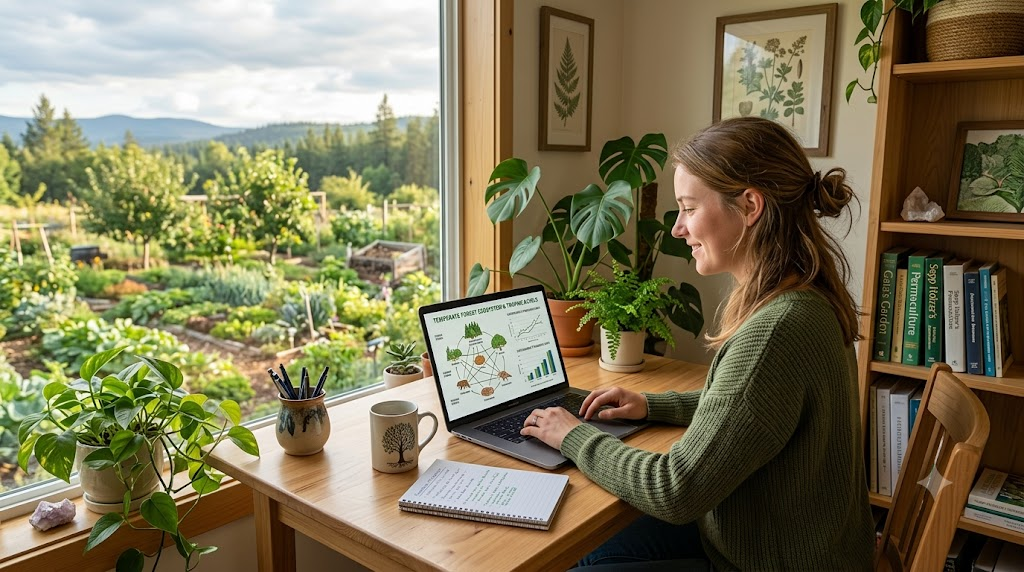
Unlike traditional classroom education, online environmental management programs allow students to learn while actively engaging in projects within their own communities and ecosystems. This combination of flexibility and practical application makes online learning especially attractive for individuals pursuing careers in sustainability, regenerative agriculture, ecological restoration, and community development.
Why Sustainability Education Matters More Than Ever
Modern environmental challenges are interconnected. Climate change, biodiversity loss, soil degradation, water scarcity, and pollution affect every region of the world. Addressing these issues requires professionals who can think holistically and implement practical solutions.
Environmental education helps learners:
- Understand ecological systems
- Evaluate environmental impacts
- Develop sustainable management strategies
- Promote regenerative practices
- Lead community-based initiatives
- Build resilience in social and ecological systems
For permaculture practitioners, sustainability education strengthens the ability to design systems that mimic natural patterns while meeting human needs responsibly.
Understanding Environmental Management in a Permaculture Context
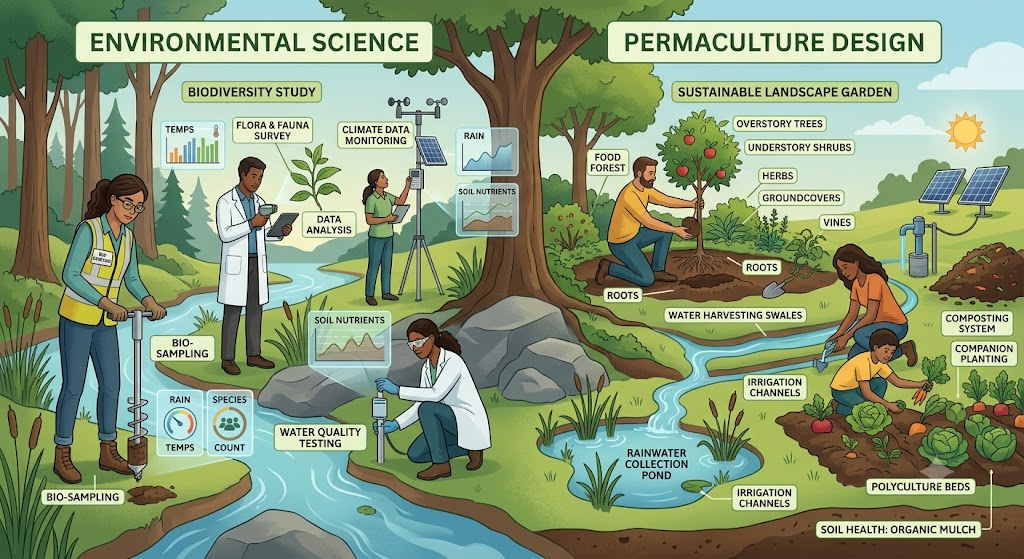
Environmental management focuses on balancing human activities with ecological health. In permaculture, this concept aligns naturally with principles that prioritize care for the earth, care for people, and fair distribution of resources.
Ecological Systems Thinking
Systems thinking is a foundational concept in both environmental management and permaculture. Rather than examining individual issues in isolation, systems thinking explores relationships, feedback loops, and interconnected processes.
Students learn to ask questions such as:
- How does water management affect soil health?
- How does biodiversity influence productivity?
- What social factors impact environmental outcomes?
This holistic perspective supports more effective decision-making.
Regenerative Land Stewardship
Environmental management extends beyond conservation. Increasingly, educators emphasize regeneration—the active restoration of ecosystems and landscapes.
Permaculture learners benefit from studying:
- Soil regeneration
- Watershed restoration
- Agroforestry
- Ecosystem recovery
- Carbon sequestration practices
These topics help create productive and resilient landscapes.
Community-Based Environmental Solutions
Environmental problems rarely exist independently of social systems. Effective management requires collaboration among communities, organizations, and stakeholders.
Online programs often encourage learners to develop community projects that generate measurable environmental and social benefits.
Key Benefits of Environmental Management Courses Online
Flexible Learning Opportunities
One of the most significant advantages of online education is flexibility.
Students can:
- Study from any location
- Maintain employment while learning
- Apply concepts immediately in real-world settings
- Progress according to their schedules
This flexibility is especially valuable for adult learners and practitioners already involved in sustainability projects.
Self-Directed Study Paths
Many sustainability professionals thrive when given autonomy over their learning.
Self-directed programs encourage learners to:
- Pursue areas of personal interest
- Focus on local environmental challenges
- Build specialized expertise
- Develop independent research skills
Such approaches often result in deeper engagement and stronger practical outcomes.
Global Networking and Collaboration
Online learning environments connect students from diverse regions and cultures.
This global perspective enables learners to:
- Share innovative solutions
- Learn from different ecosystems
- Collaborate on sustainability initiatives
- Expand professional networks
Exposure to multiple viewpoints strengthens environmental problem-solving abilities.
Essential Topics Covered in Environmental Management Education
Climate Change Adaptation
Climate adaptation strategies help communities prepare for changing environmental conditions.
Students may explore:
- Resilience planning
- Water conservation systems
- Climate-smart agriculture
- Disaster risk reduction
- Community preparedness frameworks
Understanding adaptation enables practitioners to create systems that remain functional under uncertain future conditions.
Biodiversity Conservation
Healthy ecosystems depend on biodiversity.
Environmental management courses often cover:
- Habitat preservation
- Species protection
- Ecological monitoring
- Wildlife corridors
- Landscape connectivity
Permaculture practitioners benefit greatly from understanding how biodiversity supports ecosystem resilience.
Natural Resource Management
Effective stewardship of resources is central to sustainability.
Learners develop knowledge in:
- Water management
- Soil conservation
- Forest management
- Renewable resource utilization
- Sustainable harvesting techniques
These competencies support long-term ecological health.
Ecological Restoration
Restoration involves repairing degraded ecosystems.
Key learning areas may include:
- Native species reintroduction
- Soil rehabilitation
- Wetland restoration
- Reforestation strategies
- Ecosystem recovery assessment
Restoration skills are increasingly valuable as environmental degradation accelerates worldwide.
How Online Learning Supports Permaculture Diploma Seekers
Integrating Theory with Real-World Projects
The most effective environmental education combines academic learning with practical implementation.
Permaculture students often apply coursework through:
- Farm development projects
- Community gardens
- Ecosystem restoration initiatives
- Educational programs
- Local sustainability enterprises
This experiential approach strengthens both competence and confidence.
Developing Practical Environmental Leadership
Environmental leaders require more than technical knowledge.
Successful practitioners also need:
- Communication skills
- Facilitation abilities
- Strategic planning capabilities
- Conflict resolution techniques
- Project coordination experience
Online learning environments frequently provide opportunities to develop these leadership competencies.
Building a Personalized Learning Journey
Every sustainability practitioner follows a unique path.
Some focus on:
- Regenerative agriculture
- Urban sustainability
- Watershed management
- Ecological education
- Community resilience
Personalized educational pathways allow learners to align studies with their goals and local contexts.
Skills Developed Through Environmental Management Courses Online
Systems Analysis
Students learn to evaluate complex environmental interactions and identify leverage points for positive change.
Strategic Planning
Environmental initiatives require careful planning, resource allocation, and long-term thinking.
Project Management
Managing sustainability projects involves budgeting, scheduling, stakeholder engagement, and performance evaluation.
Environmental Assessment
Assessment skills help practitioners measure ecological impacts and improve decision-making processes.
Together, these competencies prepare learners for diverse environmental leadership roles.
Choosing the Right Environmental Management Program
Selecting the right program is one of the most important decisions for future sustainability professionals.
Accreditation and Recognition
Prospective students should evaluate whether a program aligns with their professional objectives and educational philosophy.
Mentor Support
Strong mentorship can significantly improve learning outcomes.
Mentors provide:
- Guidance
- Accountability
- Professional insight
- Feedback on projects
- Networking opportunities
Experiential Learning Opportunities
Practical application remains one of the strongest indicators of educational effectiveness.
Programs that encourage real-world implementation often produce graduates with stronger professional capabilities.
Gaia University and Regenerative Education
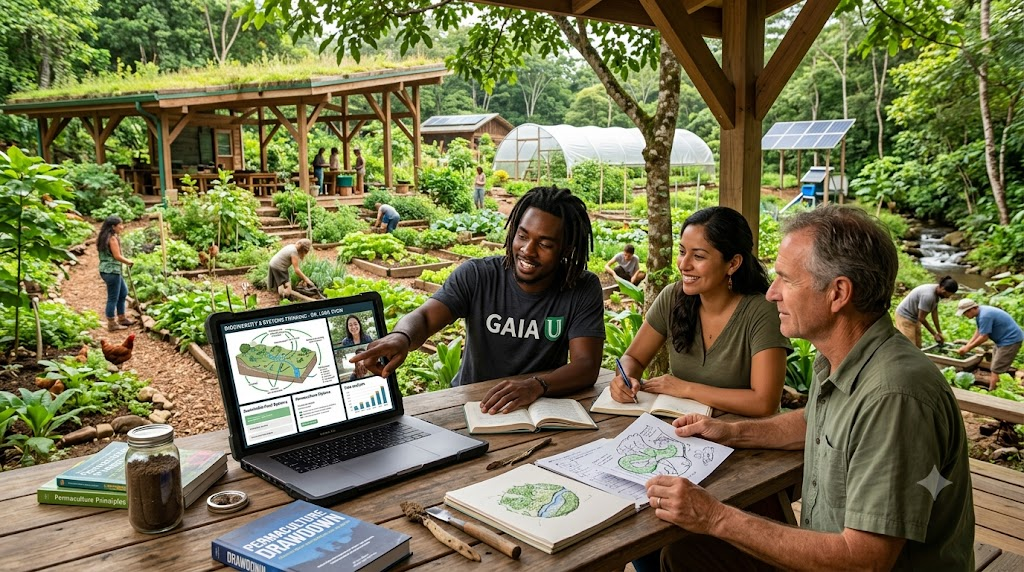
For learners seeking a highly personalized and project-based educational experience, Gaia University offers a distinctive approach focused on self-directed learning and regenerative practice.
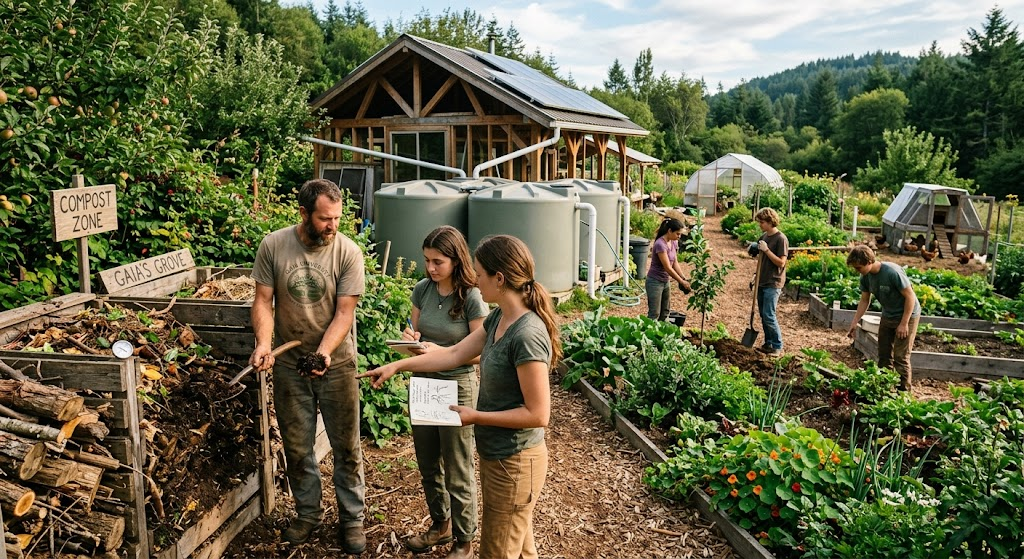
Rather than separating education from real-world impact, learners are encouraged to engage directly with projects that create positive environmental and social outcomes. This model aligns particularly well with permaculture principles because students can integrate their studies into ongoing sustainability initiatives.
The university’s emphasis on action learning allows participants to build competencies while contributing to ecological regeneration, community development, and environmental stewardship.
Those interested in sustainability-focused educational pathways can also explore the institution’s educational philosophy through Gaia University’s learning approach.
Career Opportunities After Environmental Management Studies
Graduates of environmental management programs often pursue careers in:
- Sustainability consulting
- Environmental project management
- Ecological restoration
- Conservation planning
- Regenerative agriculture
- Environmental education
- Community development
- Natural resource management
- Climate adaptation planning
- Nonprofit leadership
As organizations increasingly prioritize sustainability, demand for professionals with interdisciplinary environmental knowledge continues to expand.
Common Challenges and How to Overcome Them
Managing Time Effectively
Online learners benefit from creating structured schedules and setting clear milestones.
Maintaining Motivation
Connecting coursework to meaningful projects often increases engagement and persistence.
Balancing Theory and Practice
Applying concepts immediately through local projects helps reinforce learning and improve retention.
Building Professional Networks
Participating in collaborative learning communities can strengthen both educational and career outcomes.
Future Trends in Environmental Education
Environmental education continues to evolve in response to global sustainability needs.
Emerging trends include:
- Regenerative development frameworks
- Climate resilience planning
- Nature-based solutions
- Community-centered sustainability initiatives
- Digital collaboration platforms
- Interdisciplinary systems education
- Project-based credential pathways
These developments suggest that future environmental professionals will require increasingly diverse and adaptive skill sets.
Additional information about regenerative learning pathways can be found through Gaia University’s programs and opportunities.
Frequently Asked Questions
1. What are environmental management courses online?
They are educational programs that teach sustainability, ecological systems, resource management, environmental planning, and related topics through online learning platforms.
2. Are environmental management courses online suitable for permaculture students?
Yes. Many concepts taught in environmental management align closely with permaculture principles, including systems thinking, ecological design, and regenerative land stewardship.
3. Can I study while working full-time?
Most online programs offer flexible schedules, making them suitable for working professionals and active practitioners.
4. What skills can I gain from environmental management education?
Students often develop skills in project management, environmental assessment, sustainability planning, leadership, systems analysis, and ecological restoration.
5. Do online environmental management programs include practical experience?
Many programs emphasize project-based learning, allowing students to apply concepts through real-world environmental initiatives.
6. What career paths are available after completing environmental management studies?
Graduates may pursue careers in sustainability consulting, conservation, regenerative agriculture, ecological restoration, environmental education, and community development.
7. Why are environmental management skills becoming more important?
Organizations worldwide increasingly seek professionals who can address environmental challenges, improve sustainability performance, and support climate resilience efforts.
Conclusion
The growing popularity of environmental management courses online reflects a broader shift toward flexible, practical, and sustainability-focused education. For permaculture diploma seekers, these programs offer valuable opportunities to deepen ecological understanding, strengthen leadership skills, and engage directly in regenerative projects.
As environmental challenges become more complex, the need for skilled practitioners capable of integrating systems thinking, ecological stewardship, and community engagement continues to rise. Online learning provides an accessible pathway for developing these competencies while remaining actively involved in real-world sustainability work.
By choosing educational pathways that emphasize practical application, mentorship, and regenerative outcomes, aspiring environmental leaders can build the knowledge and experience necessary to create meaningful and lasting change.

Responses