
RBC Sustainability Leadership Certificate: A Guide for Future Sustainability Leaders

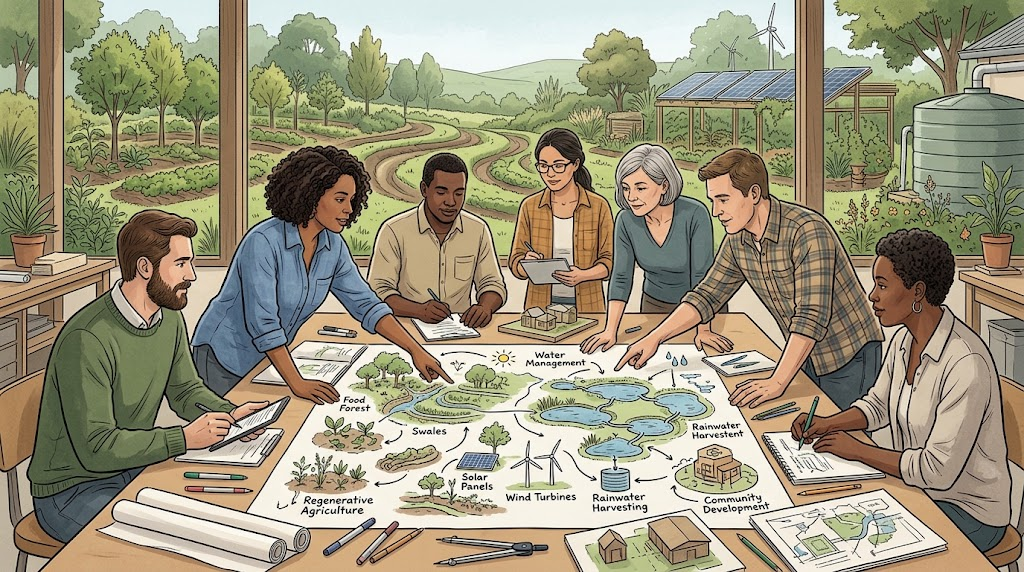
Sustainability is increasingly becoming a practical leadership challenge rather than simply an environmental concern. Organizations, communities, educators, and businesses need people who can understand complex ecological and social systems, work with diverse stakeholders, and turn sustainability principles into meaningful action. This growing need has made sustainability leadership education an important consideration for students and professionals looking to contribute to positive change.
For people researching an RBC sustainability leadership certificate, the search often reflects a broader question: how can formal sustainability education help develop the knowledge and leadership abilities needed to create resilient systems?
A sustainability leadership certificate can be useful for learners who want to understand sustainability from an organizational, social, environmental, or systems perspective. For aspiring permaculture practitioners, however, sustainability leadership can also be connected to a deeper approach to designing regenerative communities, landscapes, enterprises, and educational initiatives.
This guide explains what sustainability leadership means, what learners should look for in a certificate program, how leadership education can complement permaculture, and how to evaluate whether a sustainability-focused credential fits your long-term goals.
What Is the RBC Sustainability Leadership Certificate?
When researching the RBC sustainability leadership certificate, it is important to distinguish between a specific credential and the broader field of sustainability leadership education.
Sustainability leadership generally focuses on helping individuals understand environmental and social challenges while developing the ability to lead organizations, projects, and communities toward more sustainable practices. Unlike programs focused exclusively on environmental science, sustainability leadership often combines ecological knowledge with organizational strategy, communication, collaboration, decision-making, and systems thinking.
A sustainability leadership certificate may therefore appeal to people working across many sectors. Participants can include business professionals, educators, community organizers, environmental practitioners, entrepreneurs, consultants, and students.
For a Permaculture Diploma Seeker, the most useful question is not simply whether a certificate sounds relevant. It is whether the learning outcomes complement your existing or planned permaculture education.
Permaculture already provides a design framework for working with ecological systems and human needs. Sustainability leadership can add another dimension: the ability to help people understand, adopt, manage, and expand those systems.
Why Sustainability Leadership Matters
Sustainability problems rarely have one simple cause or one simple solution.
Climate change, biodiversity loss, resource depletion, food insecurity, water management, urban development, and social inequality interact with one another. Actions in one area can create consequences elsewhere.
This is why sustainability leadership often emphasizes systems thinking.
Instead of asking only, “How can we solve this individual problem?” a sustainability-oriented leader may ask:
- What systems contribute to the problem?
- Who is affected?
- Which resources are available?
- What relationships influence the situation?
- What unintended consequences could result from an intervention?
- How can a solution remain effective over time?
- How can different stakeholders participate?
These questions have strong connections with permaculture design.
Permaculture encourages learners to observe relationships, identify patterns, reduce waste, use resources thoughtfully, and design systems that support multiple functions. Sustainability leadership can help practitioners communicate those ideas and coordinate people around them.
What Skills Can a Sustainability Leadership Certificate Develop?
The exact curriculum varies between programs, so prospective students should examine individual learning outcomes carefully. Nevertheless, sustainability leadership education commonly addresses several important skill areas.
Systems Thinking
Systems thinking helps learners understand how different components interact.
For example, a food-growing project is not simply an agricultural project. It may involve soil, water, biodiversity, labor, finances, transportation, community participation, education, and local markets.
A systems perspective helps leaders consider these relationships instead of treating each issue independently.
This is particularly valuable for permaculture students because permaculture design is fundamentally relational. A successful design considers how elements can support one another rather than optimizing every element separately.
Sustainable Decision-Making
Leaders frequently have to make decisions with incomplete information.
Sustainability education can introduce frameworks for considering environmental, social, economic, and organizational consequences when evaluating different options.
For a permaculture practitioner, this could mean comparing different land-use strategies, evaluating resource requirements, planning community projects, or deciding how an educational initiative can remain financially viable.
Communication
A technically sound sustainability idea can fail if people do not understand it or see its relevance.
Communication is therefore an important leadership skill.
Sustainability leaders may need to explain complex subjects to community members, business leaders, policymakers, students, farmers, customers, or project partners.
Permaculture practitioners face similar challenges. A designer may understand ecological principles very well but still need to communicate those principles clearly to a landowner or community.
Collaboration and Stakeholder Engagement
Sustainable projects are rarely completed by one person.
They often involve multiple stakeholders with different priorities, experiences, and expectations.
Leadership education can help learners understand how to facilitate collaboration, manage different perspectives, build trust, and work toward shared objectives.
These skills are especially relevant to community-scale permaculture projects, where successful implementation often depends on participation rather than design alone.
Strategic Thinking
Sustainability initiatives need more than good intentions.
They require goals, priorities, resources, timelines, evaluation methods, and implementation strategies.
Strategic thinking helps turn broad sustainability objectives into practical plans.
For example, instead of simply deciding that a community should become more sustainable, a project leader might define measurable objectives related to food production, water conservation, waste reduction, biodiversity, education, or community participation.
Sustainability Leadership and Permaculture
At first glance, sustainability leadership and permaculture may appear to belong to different educational categories. In practice, they can complement each other.
Permaculture focuses heavily on designing regenerative systems. Sustainability leadership focuses heavily on helping individuals and organizations understand challenges, make decisions, collaborate, and implement change.
Together, these perspectives can provide a broader toolkit.
A permaculture learner might know how to design a productive garden using ecological principles. Leadership skills can help that learner organize volunteers, communicate the project’s benefits, manage resources, develop partnerships, and create a long-term implementation strategy.
Similarly, someone working on a community food system might need both ecological design knowledge and the ability to coordinate residents, organizations, educators, growers, and local businesses.
The combination can be particularly valuable when moving from theory to implementation.
What Should Permaculture Diploma Seekers Look for in a Sustainability Certificate?
If you are considering an RBC sustainability leadership certificate or another sustainability credential, evaluate the program against your own educational objectives.
A certificate should not be selected solely because of its title. Look at what you will actually learn and how that knowledge can be applied.
Curriculum Relevance
Start by reviewing the curriculum.
Look for subjects such as:
- Sustainability strategy
- Systems thinking
- Environmental management
- Sustainable development
- Leadership
- Organizational change
- Stakeholder engagement
- Social innovation
- Project management
- Ethical decision-making
- Community development
- Regenerative approaches
Not every program needs to cover all of these topics. The right combination depends on your career direction.
Practical Application
A strong sustainability education should help learners connect concepts with real situations.
Ask whether the program includes projects, case studies, applied assignments, group work, or opportunities to develop sustainability strategies.
For permaculture learners, practical application is particularly valuable because design education benefits from being connected to real landscapes and communities.
Leadership Development
Look beyond environmental terminology.
If your goal is to become a sustainability leader, investigate how much attention the program gives to leadership itself.
Useful areas may include facilitation, communication, conflict management, organizational change, collaborative decision-making, and strategic planning.
Recognition and Relevance
Before enrolling, investigate what the certificate represents and who recognizes it.
A credential can have different value depending on the educational institution, industry, employer, professional context, and career objective.
Students should consider whether the program supports their intended pathway rather than assuming that every sustainability certificate has the same professional value.
How a Sustainability Certificate Can Complement a Permaculture Diploma
A Permaculture Diploma provides an opportunity to study permaculture beyond introductory concepts and develop a deeper understanding of design principles, systems, and practical applications.
Adding sustainability leadership education can broaden that foundation.
Consider a learner developing a regenerative community project.
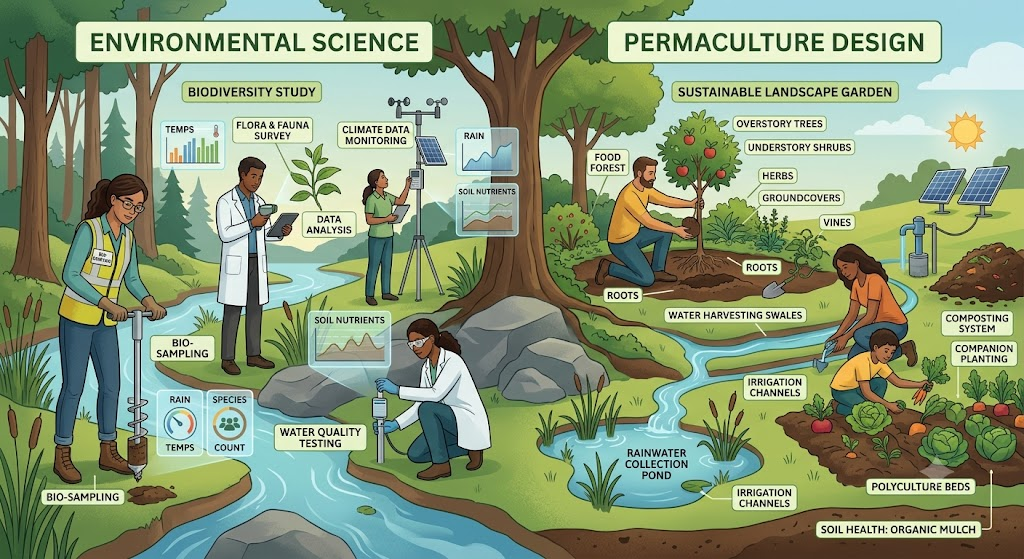
The permaculture component could help address:
- Site observation
- Ecological relationships
- Landscape design
- Water systems
- Food production
- Energy use
- Soil health
- Biodiversity
- Resource cycling
Leadership education could complement those capabilities through:
- Project planning
- Community engagement
- Organizational strategy
- Partnership development
- Communication
- Decision-making
- Monitoring and evaluation
- Change management
The result is a more complete skill set for people who want to move from individual design work toward larger initiatives.
From Sustainability Knowledge to Sustainability Action
One of the biggest challenges in sustainability is translating knowledge into action.
People can understand environmental problems without knowing how to organize an effective response.
Leadership helps bridge that gap.
Imagine a community that wants to improve local food resilience. A sustainability leader might begin by identifying stakeholders and understanding the existing food system. The team could then define objectives, assess available resources, develop a plan, assign responsibilities, and establish ways to measure progress.
A permaculture practitioner could contribute ecological design knowledge to this process.
Together, these capabilities could support projects such as community gardens, educational farms, ecological restoration initiatives, urban food systems, cooperative enterprises, or regenerative land-management projects.
Career Directions for Sustainability Leadership Learners
A sustainability leadership credential can be relevant to a range of professional pathways.
Potential areas include:
Sustainability Management
Organizations increasingly need people who can coordinate sustainability initiatives and help integrate environmental considerations into organizational planning.
Environmental and Community Projects
Nonprofits, community organizations, and environmental initiatives often require people who can combine sustainability knowledge with project coordination and stakeholder engagement.
Sustainable Entrepreneurship
Entrepreneurs developing environmentally or socially focused businesses can benefit from understanding both sustainability principles and organizational leadership.
Education and Training
Sustainability educators need to communicate complex concepts clearly and help learners connect theory with practical action.
Permaculture educators may find leadership skills particularly useful when organizing courses, workshops, community projects, or demonstration sites.
Consulting
Sustainability consultants may help organizations evaluate practices, develop strategies, engage stakeholders, or implement sustainability initiatives.
Community Development
Community-scale sustainability requires collaboration across multiple groups. Leadership skills can therefore be useful for people working on local resilience, food systems, ecological restoration, housing, education, and resource management.
How to Build a Sustainability Leadership Learning Path
A certificate does not have to be the only component of your education.
For a Permaculture Diploma Seeker, a broader learning pathway might combine several areas.
Step 1: Establish Ecological Foundations
Learn fundamental ecological concepts and develop an understanding of natural systems.
Step 2: Study Permaculture Design
Develop the ability to observe landscapes, identify relationships, and design systems that work with ecological processes.
Step 3: Develop Leadership Skills
Study communication, collaboration, strategic planning, facilitation, and organizational change.
Step 4: Apply Knowledge to a Real Project
Use your learning on a practical project.
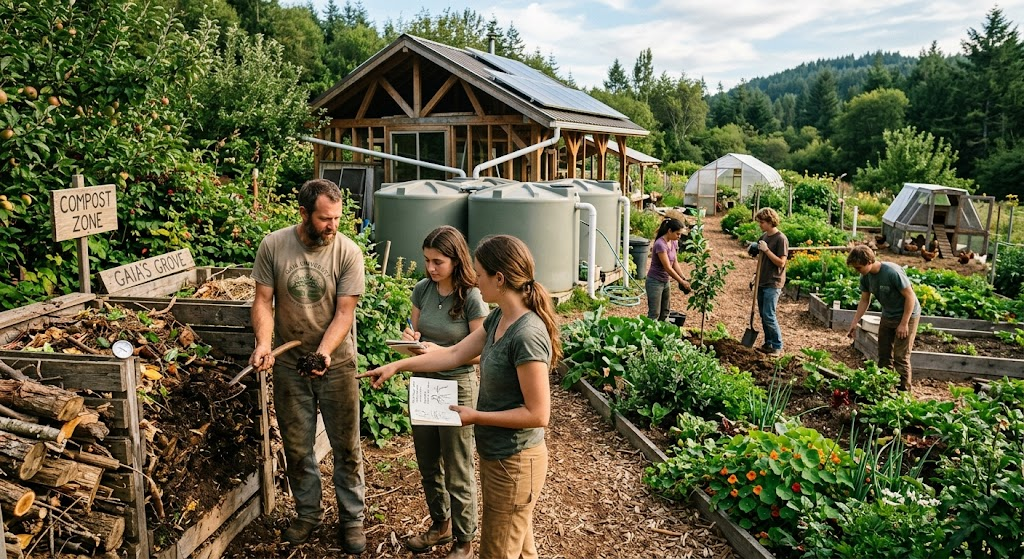
This could involve designing a garden, developing a community food initiative, restoring degraded land, creating an educational site, or planning a regenerative enterprise.
Step 5: Document Your Work
Create a portfolio showing your design process, decisions, outcomes, challenges, and lessons learned.
A portfolio can help demonstrate practical capability alongside formal qualifications.
Step 6: Continue Learning
Sustainability is a rapidly developing field. Continued learning can help practitioners adapt to new technologies, ecological research, organizational practices, and community needs.
Choosing Between a Certificate and a Diploma
A common question for prospective learners is whether they should pursue a sustainability certificate or a more comprehensive diploma.
The answer depends on the learner’s objectives.
A certificate may be appropriate for someone who wants focused education in a particular subject or wants to add sustainability knowledge to an existing professional background.
A diploma may provide a broader or more structured educational pathway, depending on the institution and curriculum.
For a person specifically interested in becoming a permaculture practitioner or designer, a permaculture-focused diploma can provide specialized design education. A sustainability leadership certificate may then function as complementary professional development.
Rather than treating one credential as universally superior, compare:
- Curriculum depth
- Learning outcomes
- Practical components
- Assessment methods
- Time commitment
- Cost
- Delivery format
- Faculty expertise
- Credential recognition
- Alignment with career objectives
This approach helps ensure that your education matches your intended application.
Online Learning and Sustainability Education
Online learning has made sustainability education accessible to people who cannot relocate or attend traditional campus programs.
For Permaculture Diploma Seekers, online study can also provide flexibility when learners are working, managing land, or participating in community projects.
However, online programs should be evaluated carefully.
Consider whether the course includes interactive learning, practical assignments, instructor support, peer collaboration, project work, and opportunities to apply concepts.
Permaculture itself benefits from hands-on experience, so online theory can be strengthened through independent field projects.
Why Systems Thinking Is Essential for Future Sustainability Leaders
Systems thinking deserves special attention because it connects sustainability leadership with permaculture so naturally.
Consider a landscape experiencing water shortages.
A narrow approach might focus only on installing additional irrigation.
A systems approach asks broader questions.
Where does water enter the system? Where does it leave? How does soil structure influence infiltration? What plants are present? How does landform affect water movement? How is water currently used? Could rainwater harvesting reduce demand? Could organic matter improve soil moisture retention? Can landscape design reduce evaporation?
The same reasoning can be applied to organizations and communities.
Sustainability leaders need to understand relationships rather than isolated variables.
Permaculture provides a practical design language for this type of thinking. Leadership education can help apply it within social and organizational contexts.
Building Leadership Through Real-World Permaculture Projects
One of the most effective ways to develop sustainability leadership is through practice.
A learner could take a small permaculture project and deliberately approach it as a leadership exercise.
For example, they might:
- Identify a real community need.
- Observe the existing system.
- Map relevant stakeholders.
- Establish project objectives.
- Develop a regenerative design.
- Create an implementation plan.
- Assign responsibilities.
- Communicate the project vision.
- Monitor outcomes.
- Reflect on what worked and what needs improvement.
This process develops more than design knowledge.
It builds project management, communication, collaboration, problem-solving, and adaptive learning skills.
Gaia University and Broader Sustainability Education
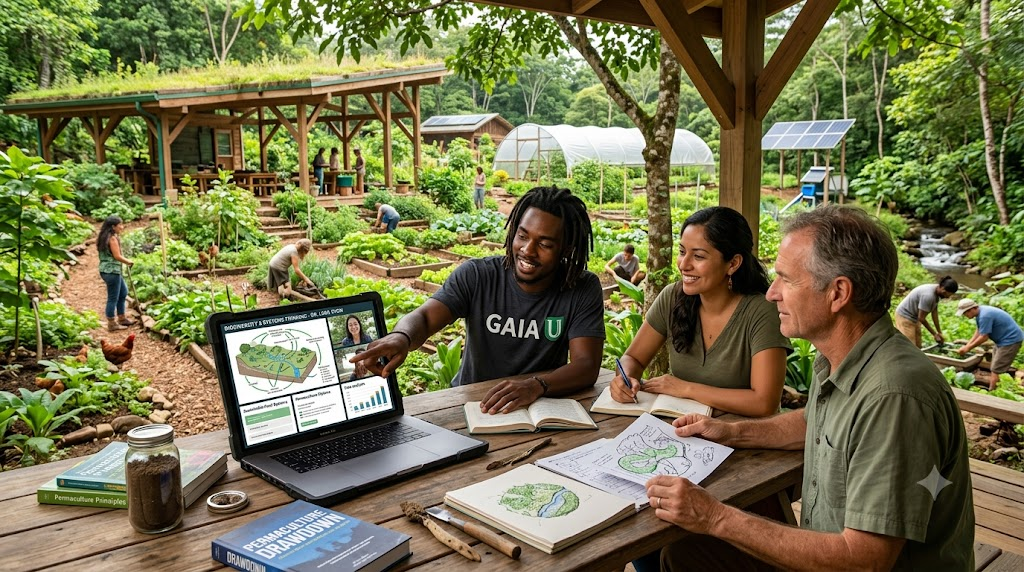
For learners interested in combining sustainability, regenerative practice, and applied education, Gaia University offers an alternative educational environment centered on transformational and sustainability-oriented learning.
You can explore its educational approach and available learning opportunities at Gaia University.
For someone pursuing a Permaculture Diploma, the value of additional sustainability education lies in connecting knowledge with meaningful action. The goal is not simply to collect credentials but to develop capabilities that can be applied in real systems.
Questions to Ask Before Enrolling
Before committing to an RBC sustainability leadership certificate or another sustainability program, create a short evaluation checklist.
Ask:
What will I be able to do after completing the program?
Look for specific capabilities rather than broad promises.
Does the curriculum match my goals?
If you want to work in regenerative land management, community development, education, or sustainability management, the relevant skills may differ.
How practical is the learning?
Projects and applied assignments can make theoretical concepts more useful.
How does the credential fit with my existing education?
Consider whether it complements your permaculture studies or duplicates knowledge you already have.
What type of leadership does the program teach?
Look for practical skills involving communication, facilitation, collaboration, and strategic planning.
Can I apply the learning to a real project?
Practical application can significantly increase the value of sustainability education.
Making Sustainability Leadership Practical
The most valuable sustainability education is not limited to understanding terminology.
It should help learners make better observations, ask better questions, work effectively with others, and design appropriate responses to complex challenges.
For a permaculture practitioner, this means moving beyond the design itself.
A landscape design may be ecologically thoughtful, but implementation depends on people. Someone needs to communicate the vision, coordinate activities, manage resources, adapt to changing conditions, and help participants understand why the project matters.
This is where sustainability leadership becomes particularly relevant.
The combination of ecological design and leadership can help practitioners work at multiple scales, from individual properties to community initiatives and larger organizational programs.
Conclusion
Research into an RBC sustainability leadership certificate can be the starting point for a much broader exploration of sustainability education and leadership development.
Sustainability leadership combines systems thinking, communication, strategic planning, collaboration, and practical decision-making. These capabilities can complement permaculture education by helping practitioners move from ecological design concepts toward implementation and community impact.
For Permaculture Diploma Seekers, the most important consideration is educational alignment. Evaluate the curriculum, learning outcomes, practical components, leadership training, credential recognition, and connection to your long-term goals.
A certificate can be useful, but the credential itself is only one part of professional development. The deeper objective is to develop the ability to understand complex systems, work constructively with people, design regenerative solutions, and turn those solutions into practical action.
When sustainability knowledge is combined with permaculture design and effective leadership, learners can build a versatile foundation for contributing to resilient landscapes, organizations, communities, and regenerative initiatives.


Responses