
Online Environmental Studies Programs: A Powerful Path for Permaculture Diploma Seekers


Environmental challenges are becoming more complex every year, and the need for people with strong ecological knowledge continues to grow. For students pursuing a Permaculture Diploma, understanding natural systems, sustainability principles, and environmental relationships is essential. Online environmental studies programs provide a flexible and accessible way for learners to develop these skills while exploring solutions for climate resilience, regenerative agriculture, and sustainable living.
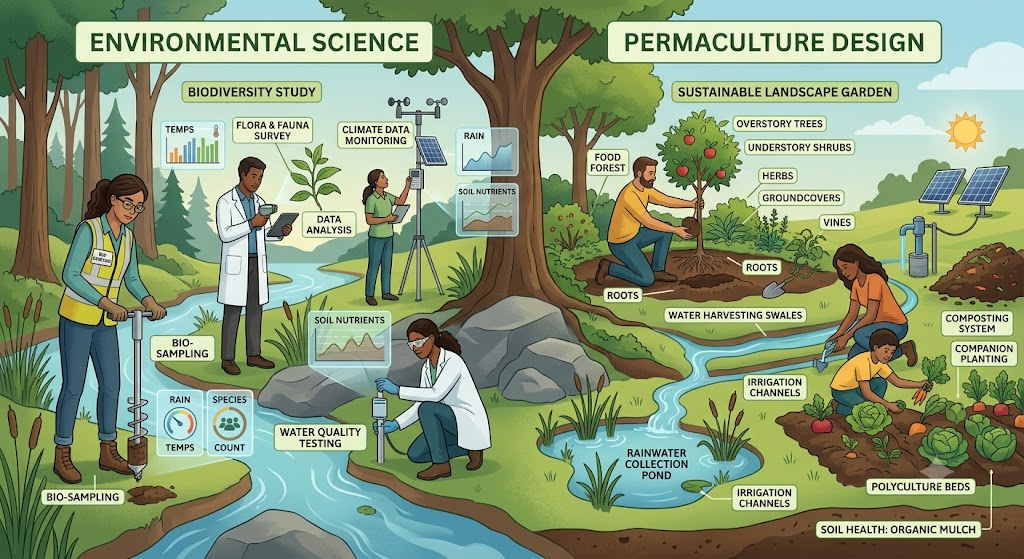
Unlike traditional environmental education that often focuses only on scientific theory, modern sustainability programs can combine ecological science with practical approaches such as permaculture, community development, and regenerative design. This combination allows students to understand not only how ecosystems function but also how humans can participate in restoring and protecting them.
For aspiring permaculture professionals in the USA, online learning creates opportunities to study environmental concepts without relocating or leaving existing work commitments. These programs can support learners who want to design sustainable landscapes, establish ecological projects, educate communities, or contribute to environmental transformation.
Understanding Online Environmental Studies Programs and Their Growing Importance
Environmental studies is an interdisciplinary field that examines the relationship between humans and the natural world. It combines knowledge from ecology, biology, environmental science, social sciences, sustainability studies, and resource management.
Online environmental studies programs bring these areas of learning into digital classrooms where students can explore important topics such as:
- Ecosystem health and biodiversity
- Climate change adaptation
- Sustainable food systems
- Renewable resource management
- Conservation strategies
- Environmental policy
- Community resilience
- Regenerative design principles
For permaculture diploma seekers, this broader environmental understanding provides an important foundation. Permaculture is based on observing nature and creating systems that work with ecological patterns rather than against them. A strong environmental studies background helps students understand why certain practices succeed and how they can be adapted to different environments.
Modern environmental education is also shifting toward practical solutions. Students are increasingly interested in learning how knowledge can be applied to real-world challenges. Whether restoring damaged land, creating sustainable farms, or supporting local food networks, environmental studies provides the scientific and social understanding needed to make meaningful changes.
Why Environmental Studies Matter for Permaculture Students
Permaculture is often described as a design approach inspired by natural ecosystems. It focuses on creating sustainable systems that support people while protecting the environment. However, successful permaculture projects require more than gardening skills. They require an understanding of ecological relationships.
Environmental studies helps permaculture learners explore questions such as:
- How do ecosystems maintain balance?
- What causes environmental degradation?
- How can human activities support biodiversity?
- What strategies improve soil health?
- How can communities become more resilient?
A permaculture designer working with landscapes needs to understand water cycles, climate patterns, soil systems, plant relationships, and human impacts. Environmental education strengthens these abilities by providing scientific knowledge that complements hands-on permaculture practices.
For example, a student designing a food forest benefits from understanding ecological succession, nutrient cycling, and native species relationships. A person developing a community garden benefits from studying social sustainability, resource sharing, and local environmental conditions.
By combining environmental studies with permaculture principles, learners develop a complete perspective that connects ecological theory with practical action.
The Relationship Between Sustainability Education and Permaculture Practice
Systems Thinking: The Foundation of Regenerative Solutions
One of the most valuable concepts shared between environmental studies and permaculture is systems thinking. Instead of viewing environmental problems as isolated issues, systems thinking examines how different elements influence one another.
A forest, for example, is not simply a collection of trees. It is a complex system involving:
- Plants
- Animals
- Soil organisms
- Water movement
- Climate conditions
- Human interactions
Permaculture designers use similar thinking when creating sustainable environments. They consider how each element contributes to the overall health of a system.
Environmental studies programs help students develop this perspective by exploring ecological connections and human-environment relationships. This knowledge allows future permaculture professionals to create designs that are more adaptable, efficient, and environmentally responsible.
How Online Environmental Studies Programs Support Permaculture Diploma Goals
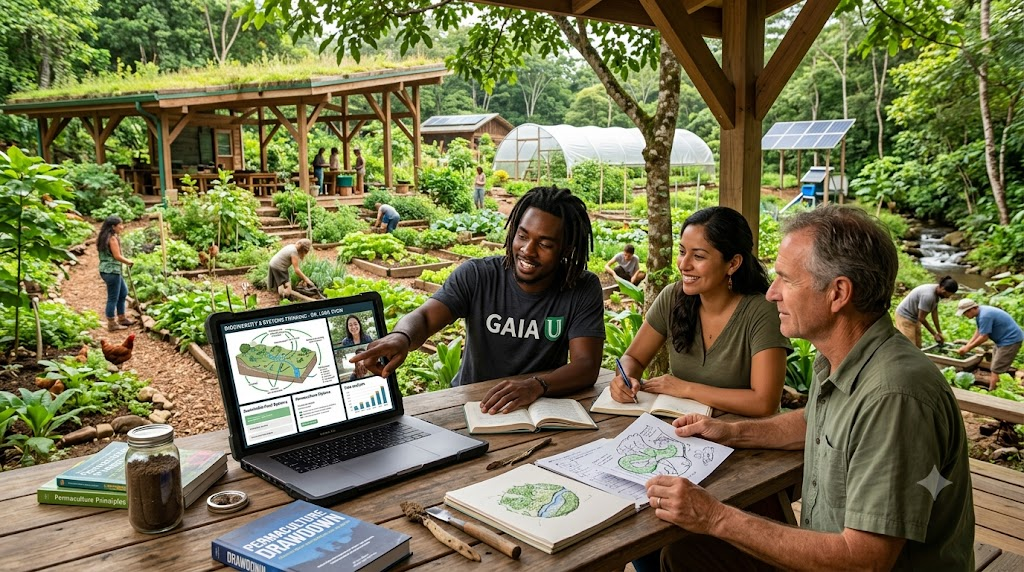
Many students interested in permaculture choose online education because it offers flexibility without sacrificing depth of learning. Online environmental studies programs allow learners to study ecological concepts while continuing professional responsibilities, managing farms, or working on sustainability projects.
For Permaculture Diploma seekers, online education can provide several advantages:
| Benefit | How It Supports Permaculture Learning |
| Flexible schedules | Allows students to balance study with practical projects |
| Diverse course materials | Expands understanding of environmental systems |
| Global perspectives | Introduces ecological solutions from different regions |
| Independent research | Encourages personal sustainability projects |
| Digital collaboration | Connects learners with environmental communities |
Online learning is especially valuable for adult students who want to transition into sustainability careers. Many learners already have professional experience in areas such as agriculture, education, construction, business, or community development. Environmental studies can help them apply their existing skills in new ecological contexts.
Programs focused on transformative learning, including those offered by Gaia University, emphasize practical action, ecological awareness, and community-based solutions. Learners interested in connecting education with regenerative practices can explore programs through Gaia University official website.
Core Subjects Covered in Environmental Studies Education
Ecology and Ecosystem Management
Ecology is one of the most important areas for anyone studying permaculture. It examines how living organisms interact with each other and their environment.
Students commonly explore:
- Ecosystem structures
- Biodiversity conservation
- Habitat restoration
- Ecological relationships
- Environmental changes
This knowledge helps permaculture students create designs that respect natural processes. Instead of forcing landscapes into artificial patterns, they learn how to work with existing ecological conditions.
Sustainable Agriculture and Regenerative Land Practices
Food production is a major focus within environmental studies and permaculture education. Sustainable agriculture examines methods that protect soil, conserve water, and maintain long-term productivity.
Important concepts include:
- Soil regeneration
- Organic growing methods
- Agroecology
- Water conservation
- Integrated farming systems
For permaculture diploma seekers, these topics provide practical knowledge for designing productive landscapes that support both humans and ecosystems.
Choosing the Right Online Environmental Studies Programs
Selecting the right educational pathway is an important decision for anyone pursuing a Permaculture Diploma or a sustainability-focused career. With many online learning options available, students should carefully evaluate programs based on their learning goals, practical interests, and long-term plans.
A strong environmental studies program should provide more than basic information about environmental problems. It should help learners understand ecological systems, develop problem-solving abilities, and apply sustainability concepts in real-world situations.
When comparing online environmental studies programs, permaculture students should consider several important factors.
Accreditation, Curriculum Quality, and Learning Outcomes
Academic credibility is one factor students often review when choosing an online program. A quality environmental studies curriculum should clearly explain what students will learn and how those skills can be applied.
Important curriculum areas may include:
| Learning Area | Importance for Permaculture Students |
| Ecology | Helps students understand natural systems and biodiversity |
| Sustainability studies | Builds knowledge of long-term environmental solutions |
| Climate science | Supports climate-resilient design strategies |
| Natural resource management | Improves understanding of water, soil, and land use |
| Social sustainability | Helps develop community-based solutions |
A well-designed program should encourage learners to connect theory with practice. Environmental challenges are rarely solved through one discipline alone. Successful solutions often require collaboration between science, community engagement, design, and ethical decision-making.
For permaculture students, the best educational experience is one that encourages observation, experimentation, and practical application. Learning about ecosystems becomes more valuable when students can use that knowledge to create sustainable systems.
Practical Learning Opportunities for Permaculture Seekers
Although online programs are delivered digitally, effective environmental education can still include practical activities. Many learners apply their studies through personal projects, community initiatives, land restoration efforts, or sustainability research.
Examples of practical learning activities include:
- Developing a home or community garden
- Monitoring local ecosystems
- Creating sustainable landscape designs
- Studying regional climate patterns
- Supporting conservation projects
- Researching regenerative agriculture methods
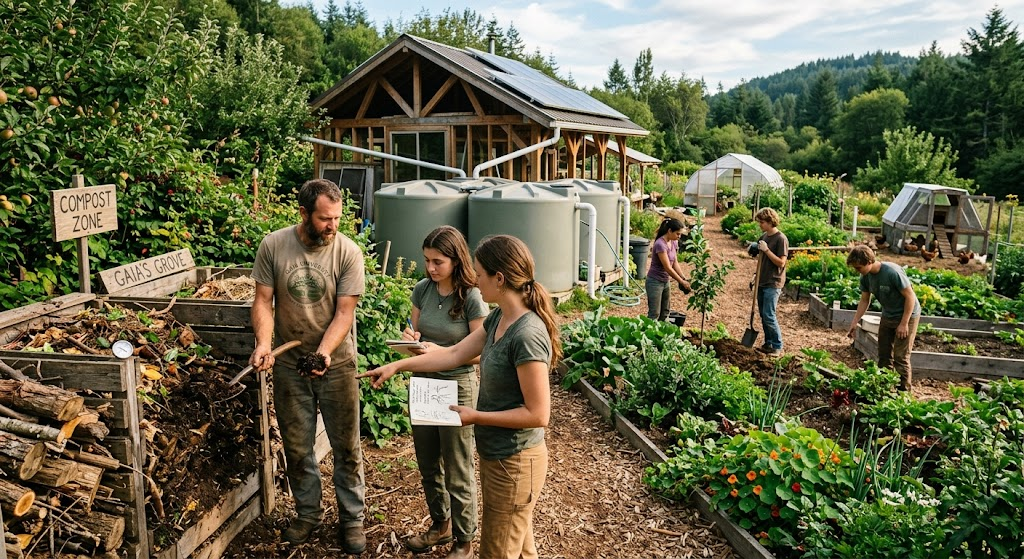
Permaculture is built around learning from the environment itself. Online education can provide the knowledge framework, while practical experiences allow students to test ideas and develop confidence.
This combination of academic understanding and hands-on experimentation creates a powerful learning approach. Students become better prepared to design systems that are environmentally responsible and socially beneficial.
Learners interested in combining higher education with real-world ecological transformation can explore Gaia University’s approach to self-directed and action-oriented learning through Gaia University learning programs.
Key Benefits of Studying Environmental Science Online
Online education has changed how people access knowledge. Students no longer need to move to a specific location to study important environmental topics. Instead, they can connect with educators, resources, and learning communities from anywhere.
For permaculture diploma seekers, online environmental studies programs offer several unique benefits.
Flexible Learning for Working Professionals and Adult Students
Many people interested in sustainability are already involved in careers, family responsibilities, farming activities, or community projects. Traditional classroom schedules may not fit their lifestyles.
Online learning provides flexibility by allowing students to:
- Study at convenient times
- Review course materials repeatedly
- Learn from different locations
- Balance education with professional commitments
This flexibility is especially useful for individuals transitioning into sustainability fields. A person working in agriculture, construction, education, or business may be able to add environmental knowledge without completely changing their current routine.
The ability to learn while practicing sustainability principles creates a continuous cycle of education and action.
Building Skills for Sustainable Careers
Environmental education can prepare students for many emerging opportunities. As communities and organizations focus more on sustainability, people with ecological knowledge and practical design skills are increasingly valuable.
Potential career directions include:
- Permaculture designer
- Sustainability educator
- Ecological restoration specialist
- Community development worker
- Environmental consultant
- Sustainable agriculture advisor
- Regenerative project coordinator
A combination of environmental studies and permaculture knowledge can help individuals create unique professional pathways. Many sustainability careers involve working across multiple fields, including agriculture, education, conservation, and social innovation.
The future of environmental work is increasingly focused on solutions rather than only identifying problems. Professionals who understand ecological systems and community needs can help develop strategies that create lasting positive change.
Gaia University and Transformative Ecological Learning
Education for sustainability is not only about collecting information. It is also about developing the ability to create meaningful change. Some educational approaches focus on transformation, encouraging students to become active participants in ecological and social improvement.
Gaia University represents an educational model centered around action learning, ecological awareness, and regenerative practices. Rather than separating learning from real-life application, this approach encourages students to connect their studies with projects and personal initiatives.
This type of learning can be especially valuable for permaculture students because permaculture itself is based on active observation, experimentation, and continuous improvement.
Integrating Social Change, Ecology, and Permaculture Principles
A sustainable future requires more than environmental knowledge alone. Communities also need cooperation, creativity, and responsible decision-making.
Environmental studies combined with permaculture education helps learners explore:
- Ecological restoration
- Community resilience
- Sustainable food systems
- Ethical resource use
- Local solutions to global challenges
Permaculture recognizes that human communities are part of ecosystems. Sustainable designs must support both environmental health and human well-being.
For example, a successful regenerative farm is not only about growing food. It may also involve:
- Building community relationships
- Supporting local economies
- Protecting biodiversity
- Educating future generations
This broader perspective allows students to approach sustainability challenges with a more complete understanding.
Career Opportunities After Environmental Studies and Permaculture Education
The demand for sustainability knowledge continues to expand across many industries. Organizations, communities, and businesses are increasingly looking for individuals who can understand environmental challenges and develop practical solutions.
Students who complete environmental studies education alongside permaculture training may explore opportunities in several areas.
Sustainable Design and Ecological Restoration
Ecological restoration is one growing area where environmental knowledge plays an important role. Restoration specialists work to improve damaged ecosystems by rebuilding natural processes and supporting biodiversity.
Permaculture principles can complement restoration work by focusing on:
- Regenerating soil
- Improving water systems
- Supporting native species
- Creating resilient landscapes
Another opportunity exists in sustainable design. Professionals in this area help create systems that reduce waste, conserve resources, and work more effectively with natural patterns.
Community Development and Environmental Education
Many environmental challenges require community involvement. Educators and community organizers help people understand sustainability practices and participate in local solutions.
Environmental educators may work with:
- Schools
- Community organizations
- Farming groups
- Sustainability networks
- Environmental projects
A strong background in ecological studies allows educators to communicate complex ideas in simple and practical ways.
Permaculture diploma seekers often have a passion for teaching and sharing knowledge. Combining environmental education with communication skills can open doors to meaningful careers focused on positive change.
Frequently Asked Questions About Online Environmental Studies Programs
1. What are online environmental studies programs?
Online environmental studies programs are educational courses or degree pathways that teach students about ecological systems, sustainability, conservation, and human relationships with the environment through digital learning platforms.
They can help students develop knowledge for careers and projects related to sustainability, conservation, and regenerative practices.
2. Are online environmental studies programs useful for permaculture students?
Yes. Environmental studies provides scientific and ecological knowledge that supports permaculture design. Students gain a deeper understanding of ecosystems, climate patterns, biodiversity, and sustainable resource management.
This knowledge can improve their ability to create effective regenerative systems.
3. Can I study environmental topics online while working?
Yes. One of the main advantages of online education is flexibility. Many programs allow students to study at their own pace, making them suitable for working professionals, farmers, entrepreneurs, and adult learners.
4. What subjects should permaculture students look for in an environmental studies program?
Permaculture students should look for subjects such as:
- Ecology
- Sustainability
- Climate adaptation
- Soil and water systems
- Regenerative agriculture
- Community development
- Environmental design
These areas provide knowledge that supports practical sustainability work.
5. Can environmental studies lead to a sustainability career?
Yes. Environmental studies can support careers in conservation, education, sustainable agriculture, ecological restoration, environmental consulting, and community development.
Combining environmental education with permaculture skills can create additional opportunities in regenerative design and sustainability projects.
6. How do online environmental studies programs support lifelong learning?
Environmental challenges continue to change, so ongoing education is valuable. Online programs allow learners to update their knowledge, explore new sustainability approaches, and remain connected with environmental communities.
Conclusion: Building a Regenerative Future Through Environmental Education
The future of sustainability depends on people who understand the connections between nature, communities, and human choices. For Permaculture Diploma seekers, environmental education provides the scientific foundation needed to create effective regenerative solutions.
Online environmental studies programs offer a flexible pathway for learners who want to deepen their ecological knowledge while continuing their personal, professional, or community commitments. By combining environmental understanding with permaculture principles, students can develop the skills needed to design healthier landscapes, support resilient communities, and contribute to long-term environmental solutions.
Whether the goal is ecological restoration, sustainable agriculture, environmental education, or community transformation, learning about the environment is a powerful step toward creating positive change.
For those seeking an education model that connects learning with real-world action, exploring Gaia University’s sustainability-focused opportunities can be a valuable next step: Gaia University official site.
The journey toward a regenerative future begins with knowledge, observation, and the willingness to apply what we learn. Environmental studies and permaculture together provide a pathway for individuals who want to become active contributors to a healthier planet.

Responses