
Environmental Science Bachelor Degree Online for Permaculture Diploma Seekers

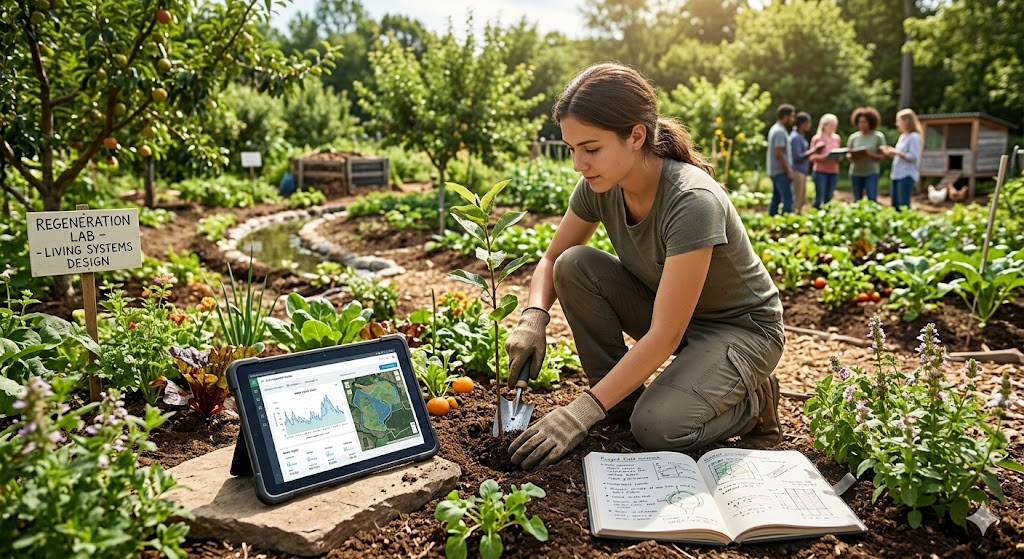
Introduction: Why This Educational Path Matters
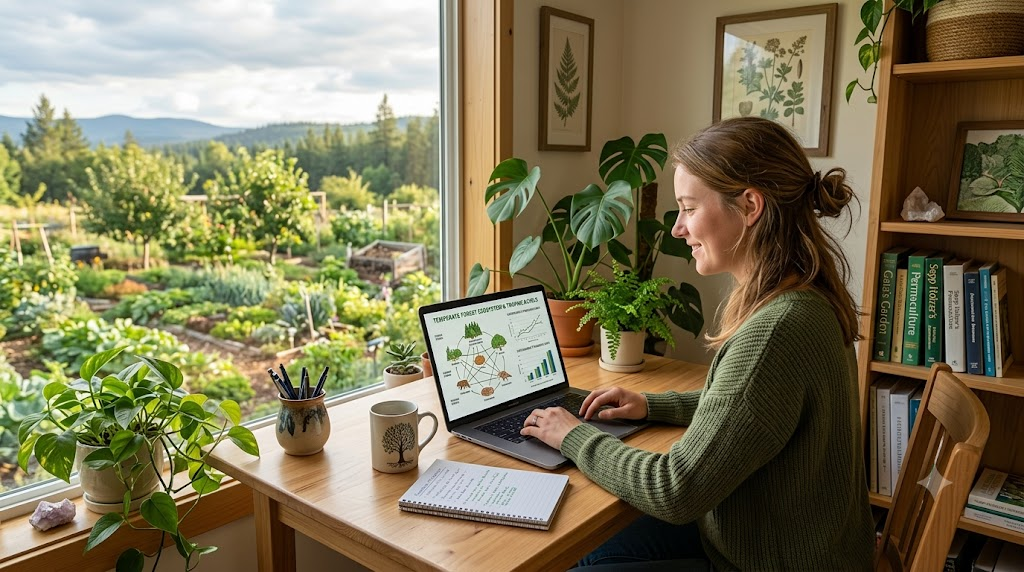
An environmental science bachelor degree online is increasingly becoming a flexible entry point for learners interested in ecology, sustainability, and regenerative living systems. For permaculture diploma seekers, this pathway can act as a strong scientific foundation while supporting hands-on ecological design practice.
Rather than replacing permaculture education, environmental science studies often complement it by offering structured knowledge of ecosystems, climate systems, soil science, and environmental impact analysis. When combined with applied frameworks like permaculture design, learners develop both scientific literacy and practical design intelligence.
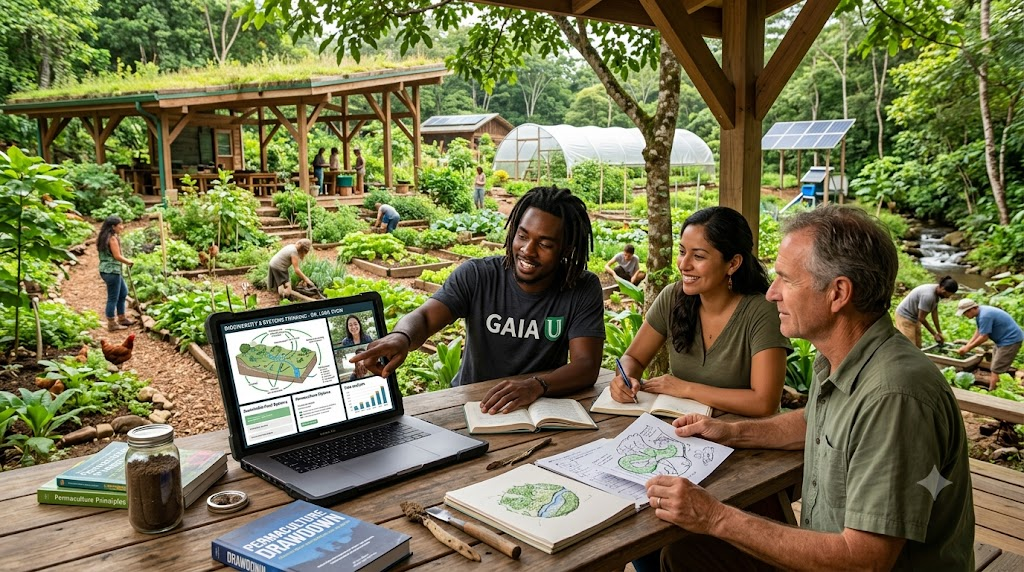
One example of an integrated learning philosophy can be found in Gaia University’s approach to ecosocial education, which blends ecological understanding with real-world project work and reflective practice.
Understanding Environmental Science Bachelor Degree Online Programs
What the Degree Covers
An online environmental science bachelor’s degree typically includes:
- Ecology and ecosystem dynamics
- Climate systems and environmental change
- Soil science and land use
- Pollution and environmental health
- Sustainability and resource management
- Environmental policy and ethics
These programs aim to help students understand how natural systems function and how human activity impacts them.
Why Online Learning Has Become Popular
Online environmental science degrees are growing because they:
- Offer flexible scheduling for working learners
- Allow global access to education
- Integrate digital simulations and case studies
- Reduce relocation and travel costs
According to environmental education frameworks, many online programs still require strong self-directed study and may include virtual labs or project-based learning instead of traditional fieldwork .
Connection Between Environmental Science and Permaculture Diploma Learning
Shared Foundations in Ecology
Permaculture and environmental science both explore:
- Ecosystem relationships
- Soil regeneration
- Water cycles
- Biodiversity
- Sustainable land management
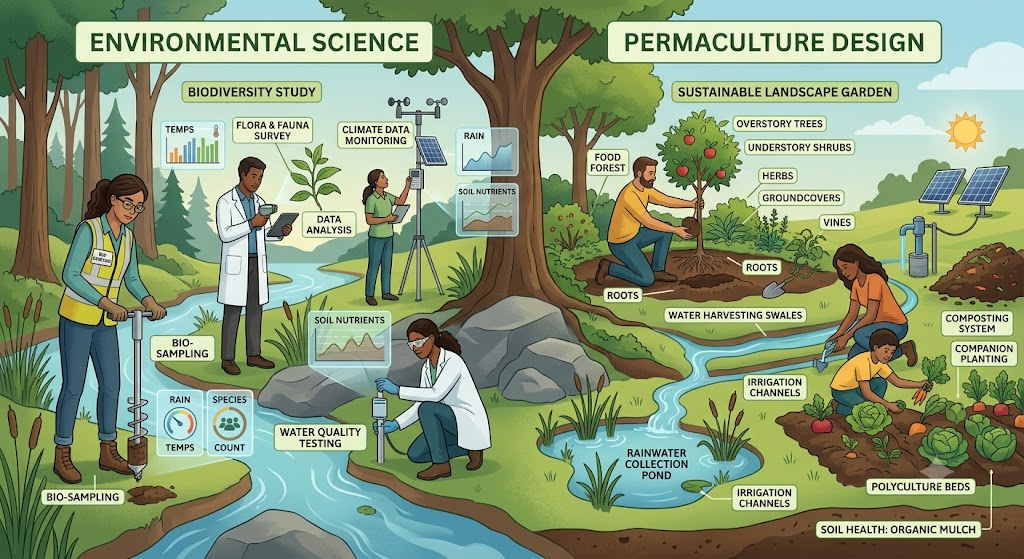
However, they differ in approach. Environmental science is more analytical and research-based, while permaculture focuses on design, implementation, and regeneration.
Where They Differ
| Environmental Science | Permaculture Diploma |
| Academic & research-driven | Practice & design-driven |
| Focus on large-scale systems | Focus on site-specific solutions |
| Policy and data analysis | Ethical design principles |
| Scientific modeling | Real-world implementation |
For permaculture diploma seekers, environmental science helps explain why systems behave as they do, while permaculture focuses on how to design better systems based on that knowledge.
Gaia University’s Ecosocial Learning Approach
Integrative Ecosocial Design Pathway
A relevant example of bridging science and practice is Gaia University’s Integrative Ecosocial Design (IESD) pathway. This model combines ecological understanding with hands-on learning and self-directed projects .
Students typically engage in:
- Online coursework
- Reflective learning journals
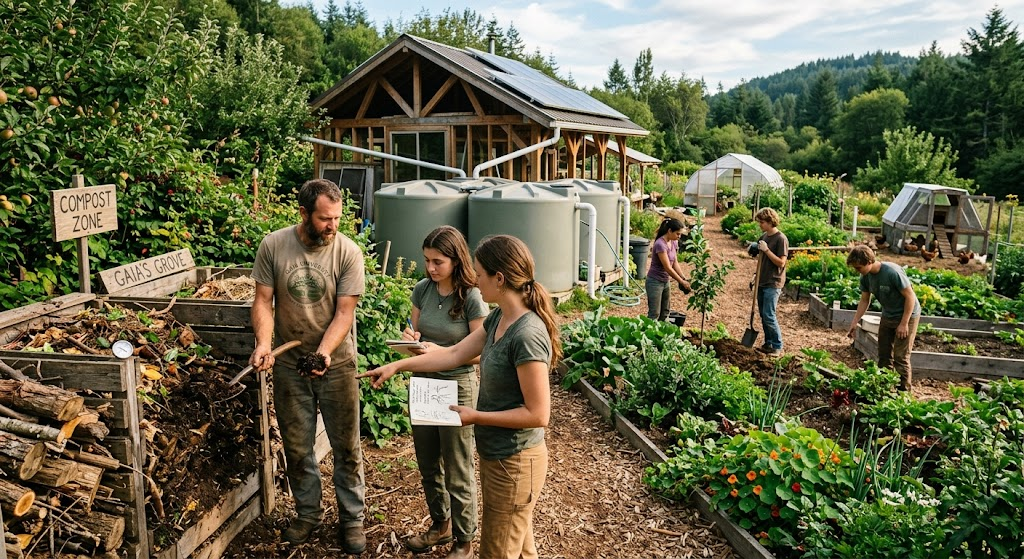
- Real-world ecological projects
- Mentoring and peer feedback
- Portfolio development
Why This Matters for Permaculture Learners
For permaculture students, this approach is useful because it:
- Encourages real-life ecological experimentation
- Builds project documentation skills
- Develops systems thinking
- Connects theory with practice
This type of learning structure aligns closely with the philosophy of regenerative education, where learners actively participate in ecological restoration while studying it.
The Role of Environmental Science in Regenerative Education
Scientific Literacy for Designers
Permaculture design requires more than intuition. Environmental science provides:
- Data interpretation skills
- Understanding of ecological limits
- Climate adaptation knowledge
- Soil and water system analysis
These skills help permaculture practitioners design systems that are both productive and ecologically sound.
From Observation to Action
A key transformation happens when learners move from:
- Studying ecosystems → Designing ecosystems
- Observing degradation → Planning regeneration
- Theoretical models → Living systems design
This shift is central to many regenerative education pathways.
Online Learning vs Hands-On Permaculture Practice
Strengths of Online Environmental Science Degrees
- Accessible anywhere in the world
- Structured academic progression
- Strong theoretical foundation
- Recognized scientific credentials
Limitations to Consider
- Limited physical fieldwork
- Less direct land-based experience
- Reduced hands-on soil and planting practice
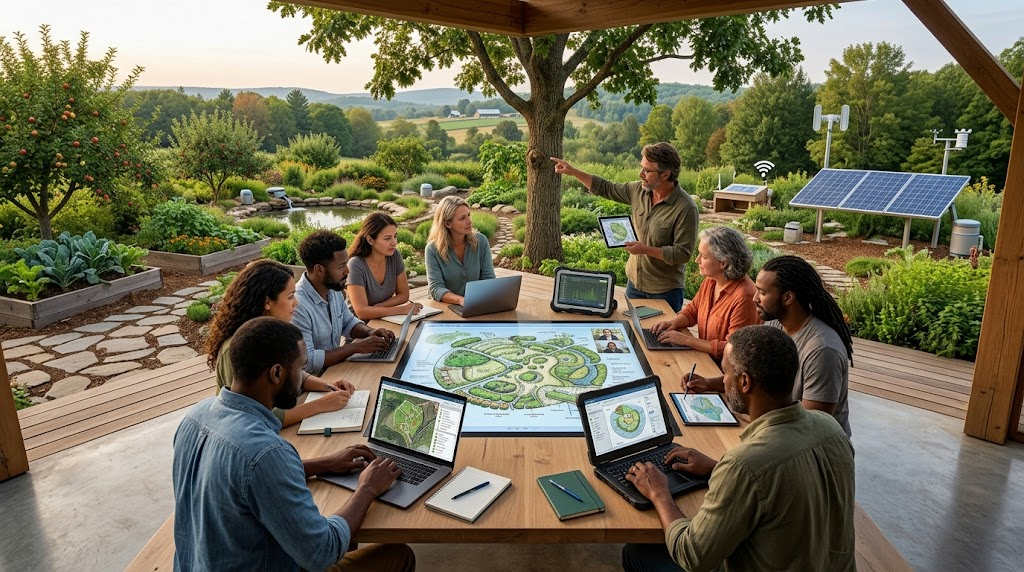
This is why many permaculture learners combine online environmental science study with practical permaculture diploma programs or land-based apprenticeships.
How Permaculture Diploma Seekers Can Combine Both Paths
Step 1: Build Scientific Understanding
Start with environmental science to understand:
- Ecosystem processes
- Climate interactions
- Resource cycles
Step 2: Add Design Skills
Then move into permaculture diploma training, focusing on:
- Site design
- Food systems
- Water harvesting
- Regenerative agriculture
Step 3: Apply Through Real Projects
The most important step is practice:
- Community gardens
- Regenerative farming projects
- Ecovillage design work
- Soil restoration initiatives
This combination builds both academic knowledge and real-world competence.
Career and Learning Outcomes
Learners who combine environmental science with permaculture often move into:
- Sustainability consulting
- Ecological restoration work
- Community agriculture projects
- Environmental education
- Regenerative design initiatives
Rather than a single career path, this combination supports a flexible ecological skill set.
Common Challenges in This Learning Path
1. Over-Academic Focus
Some environmental science degrees may feel too theoretical for hands-on learners.
2. Balancing Study and Practice
Permaculture requires time in real ecosystems, not just digital classrooms.
3. Finding Integration
Not all programs clearly connect science with regenerative design, so learners must actively bridge the gap.
FAQs: Environmental Science Bachelor Degree Online & Permaculture Learning
1. Is an environmental science bachelor degree online useful for permaculture?
Yes. It provides scientific understanding of ecosystems, which supports better permaculture design decisions.
2. Do I need an environmental science degree to study permaculture?
No. Permaculture can be learned independently, but environmental science can deepen your understanding.
3. Can I study permaculture and environmental science at the same time?
Yes. Many learners combine online science study with practical permaculture diploma programs.
4. What skills do environmental science degrees develop?
They build skills in ecology, climate systems, soil science, and environmental analysis.
5. What is the difference between permaculture and environmental science?
Environmental science is analytical and research-based, while permaculture is design- and practice-based.
6. Are online environmental science degrees fully practical?
Not always. Many include simulations and case studies rather than real fieldwork.
Conclusion: Choosing the Right Educational Balance
An environmental science bachelor degree online can be a powerful foundation for permaculture diploma seekers who want to deepen their ecological understanding before or alongside hands-on practice. While environmental science builds the theory of natural systems, permaculture develops the art of designing those systems for regeneration.
Together, they form a balanced educational pathway that supports ecological literacy, practical design skills, and long-term regenerative thinking. For learners drawn to ecosystems, sustainability, and land-based living, combining both approaches can lead to a more complete and effective learning journey.
Responses