
Master Ecological Systems: The Ultimate Guide to a Permaculture Certificate Course

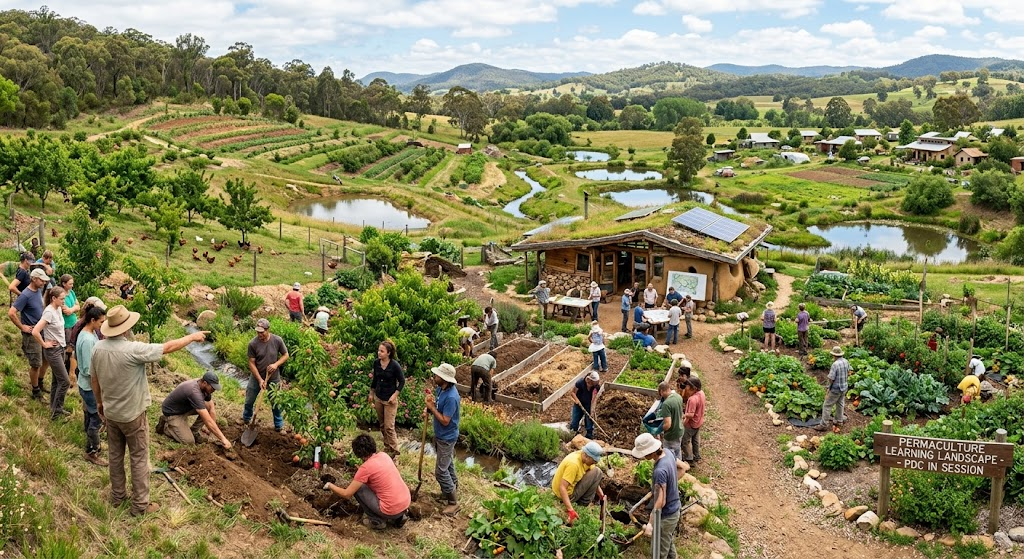
As global ecological challenges escalate, the demand for actionable, land-based solutions has reached an unprecedented high. Whether you aim to transform degraded landscapes, establish resilient homesteads, or build regenerative community enterprises, completing a permaculture certificate course—traditionally known as a Permaculture Design Course (PDC)—serves as the foundational milestone.
For aspiring ecological designers, community organizers, and sustainability consultants, a certification is not merely a credential; it is the entry point into a global movement of applied systemic design. However, earning a certificate is often just the beginning. Many graduates quickly realize that mastering these complex systems requires moving beyond introductory concepts toward advanced practice and self-directed study, such as pursuing a diploma in permaculture design.
This comprehensive guide breaks down everything you need to know about selecting, navigating, and maximizing a permaculture certificate course, as well as how to strategically leverage your training to advance toward higher-level diplomas and professional practice.
What Is a Permaculture Certificate Course?
A permaculture certificate course is a standardized training program based on the foundational framework established by Bill Mollison and David Holmgren in the late 1970s. The curriculum is centered on ecological design principles, ethics, and site-specific strategies that mimic natural ecosystems to meet human needs while enhancing biodiversity.
The Standard 72-Hour Curriculum
While delivery formats vary—ranging from intensive two-week residential retreats to multi-month online programs—the recognized international standard requires at least 72 hours of direct instruction.
The standard curriculum typically covers:
- Permaculture Ethics & Principles: Earth Care, People Care, and Fair Share (Return of Surplus), alongside the 12 design principles popularized by David Holmgren.
- Systemic Observation & Site Analysis: Mapping methodologies, reading landscapes, identifying microclimates, and analyzing sector influences (e.g., wind, sun, fire, water flow).
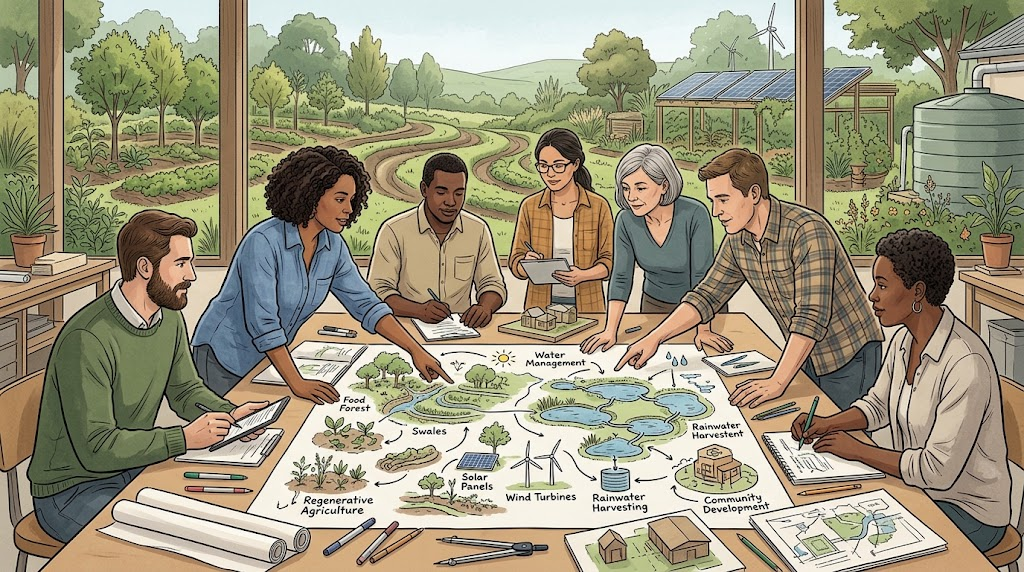
- Water Management: Earthworks, swales, keyline design, rainwater harvesting, greywater reuse, and watershed restoration.
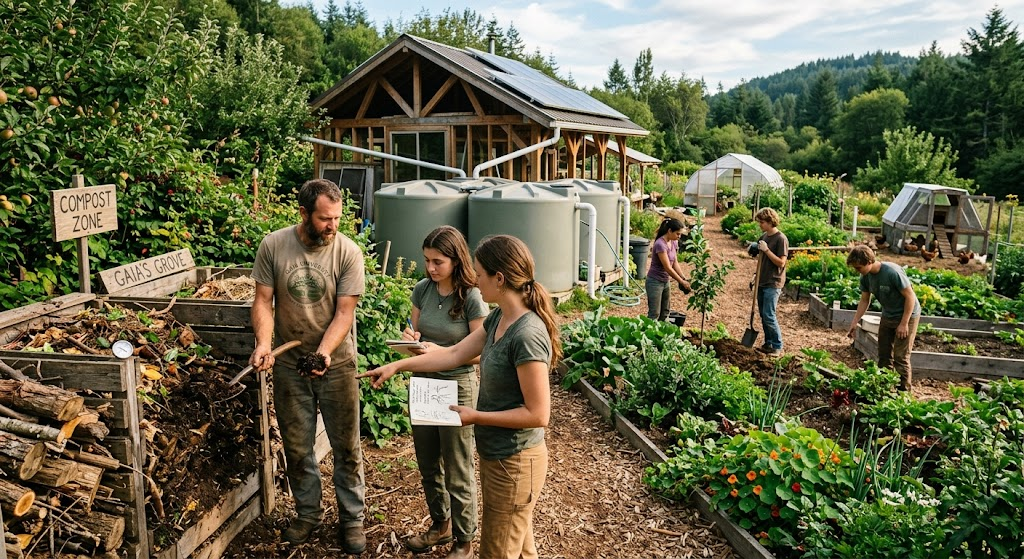
- Soil Regeneration: Soil biology, composting systems, biochar, cover cropping, and accelerated soil building.
- Ecosystem & Food Forest Design: Guild creation, multi-layered agroforestry, plant succession, and integrated pest management.
- Built Environment & Energy: Passive solar design, natural building materials, appropriate technology, and renewable energy integration.
- Social & Invisible Structures: Community governance, alternative economics, land tenure, and social permaculture.
Core Components of a Permaculture Certificate Course
1. Site Analysis and Base Mapping
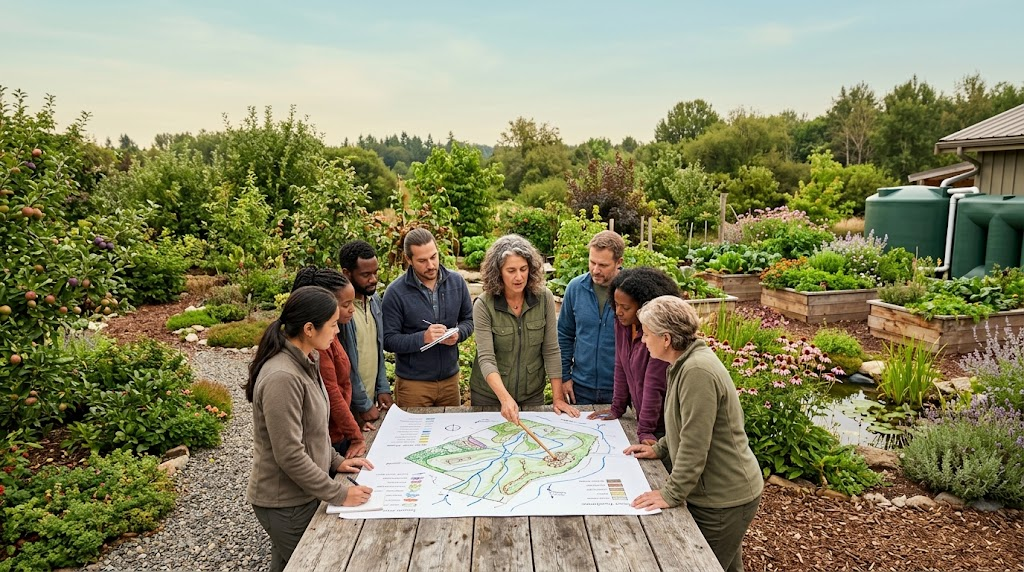
Before drawing a single element on a map, students learn to observe landscapes neutral of human assumptions. You will learn to measure contours, assess soil texture, analyze sunlight angles across seasons, and map historical climate data.
2. Zoning and Sector Planning
Efficient design reduces human labor and maximizes energy retention. Zoning organizes elements based on frequency of use (Zone 0 being the home, moving out to Zone 5 as wild nature). Sector planning maps wild energy moving through the site—such as summer storms, winter winds, or wildfire risks—allowing designers to place elements where they harvest beneficial energy or block hazards.
3. The Final Design Project
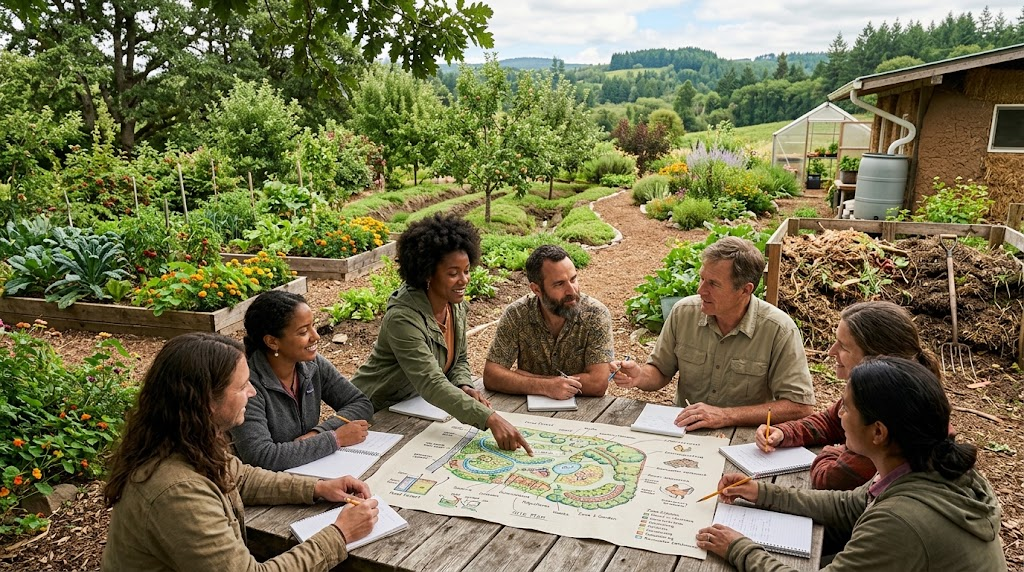
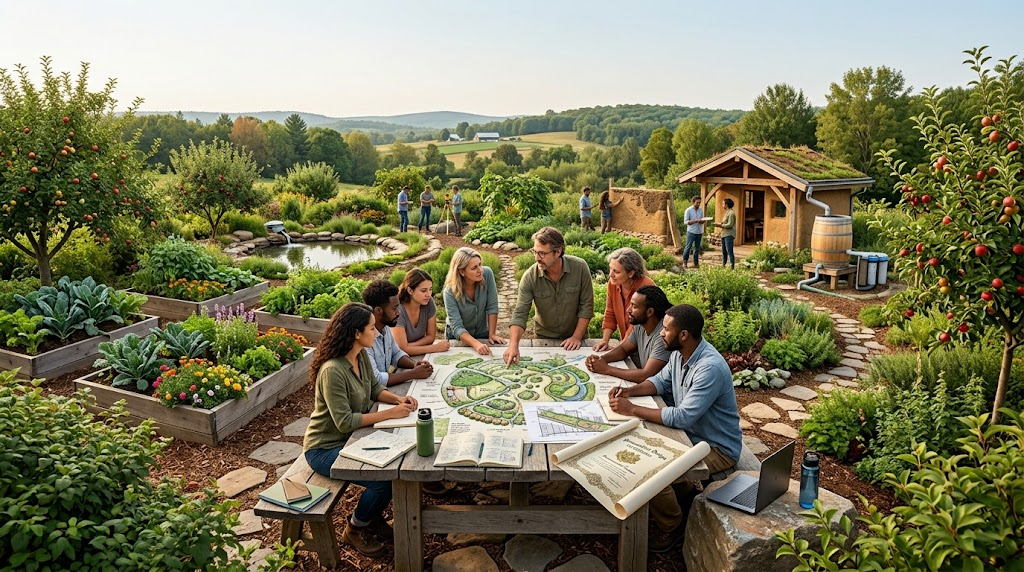
The capstone of any accredited course is the design project. Working individually or in teams, students select a real-piece of land, conduct a site assessment, interface with client requirements, and produce a comprehensive design portfolio featuring base maps, overlays, budget estimates, and implementation schedules.
Key Benefits of Earning Your Certificate
Enrolling in a structured course provides tangible advantages over self-study through books or videos:
- Systemic Thinking Skills: You learn to view properties and communities as interconnected systems rather than isolated problems.
- Practical Toolkits: Gain actionable strategies for soil building, water conservation, and low-energy construction that apply directly to rural homesteads or urban micro-plots.
- Peer Network & Mentorship: Connect with instructors and classmates who share a commitment to ecological stewardship.
- Credentialing for Advanced Work: A certificate is a mandatory prerequisite for enrolling in accredited diploma programs, working with professional design firms, or teaching accredited courses.
Evaluating Course Formats: In-Person vs. Online
Selecting the right learning environment depends on your schedule, budget, and preferred learning style.
| Feature | In-Person Residential Course | Online / Hybrid Course |
| Duration | Typically 12 to 14 consecutive days | 10 weeks to 12 months (self-paced) |
| Hands-on Experience | High (physical earthworks, planting, building) | Moderate (guided household/site assignments) |
| Community Immersion | Intense, immediate bond with cohort | Virtual forums, global networking |
| Flexibility | Low (requires dedicated leave) | High (fits alongside full-time work) |
| PDC Design Scale | Limited to host property site | Applied directly to your local landscape |
Bridging the Gap: From Certificate to Permaculture Diploma
While a permaculture certificate course introduces foundational concepts, it does not turn you into a seasoned professional overnight. The certificate teaches you how to design; a diploma proves that you have applied those designs across diverse real-world contexts.
If your long-term goal involves consulting, leading large-scale land restoration projects, or designing socio-ecological systems, pursuing higher education or an action-learning diploma is the next logical step.
What Is a Permaculture Diploma?
A Diploma in Permaculture Design is a self-directed, pathway-driven credential that typically takes 2 to 3 years to complete following your initial certificate. Instead of attending traditional lectures, diploma candidates assemble a portfolio of real-world design implementations, demonstrating mastery across multiple disciplines such as:
- Site Design & Land Restoration: Designing agricultural properties, public parks, or broadacre water management systems.
- Community Development & Social Permaculture: Developing eco-villages, urban gardens, regional food security networks, or cooperative business models.
- Education & Research: Teaching design workshops, writing educational literature, or conducting field trials on soil microbiology and plant yields.
For those seeking an action-learning pathway that combines regenerative design with formal higher education degrees, institutions like Gaia University offer self-directed degree and diploma options built around your ongoing project work.
How to Prepare for Your Permaculture Certificate Course
To gain the most from your training, proactive preparation makes a substantial difference.
- Read Foundational Texts: Familiarize yourself with Bill Mollison’s Permaculture: A Designers’ Manual or David Holmgren’s Permaculture: Principles and Pathways Beyond Sustainability.
- Observe Your Local Landscape: Spend time analyzing your immediate environment. Where does rainwater collect after a storm? Which areas receive the most sun? How does the soil change across different microclimates on your property?
- Learn Basic Mapping Software: While hand drawing is widely taught and valuable, basic familiarity with digital mapping tools like Google Earth Pro, QGIS, or Illustrator will streamline your final design project.
Frequently Asked Questions
Is a permaculture certificate recognized internationally?
Yes, provided the course follows the standard 72-hour curriculum established by early permaculture institutes and is taught by a certified teacher. The certificate demonstrates that you understand core ecological design principles worldwide.
Can I practice professionally right after getting certified?
A certificate qualifies you to work on basic homestead designs, consult for residential properties, or assist experienced design firms. However, managing complex commercial projects or teaching accredited courses usually requires a portfolio of implemented work, often documented through a diploma pathway.
What is the difference between a PDC and a Permaculture Diploma?
A PDC (Permaculture Design Course) is an introductory 72-hour educational course that teaches theory and basic application. A Diploma is an advanced credential earned through years of documented, real-world project execution and peer review.
Take the Next Step in Your Ecological Design Career
Earning your permaculture certificate is an empowering first step toward designing a resilient future. By grounding your understanding in ecological principles, site observation, and practical systems planning, you acquire tools that apply across landscapes, communities, and organizations.
If you already hold a certificate and are ready to elevate your career through self-directed action learning, explore how Gaia University programs can help you transform your real-world projects into a recognized degree or professional diploma. Learn more about pathways for advanced practitioners on the Gaia University home page to start building your portfolio today.
Responses