
Online Master’s in Sustainable Development: A Flexible Path for Regenerative Leaders

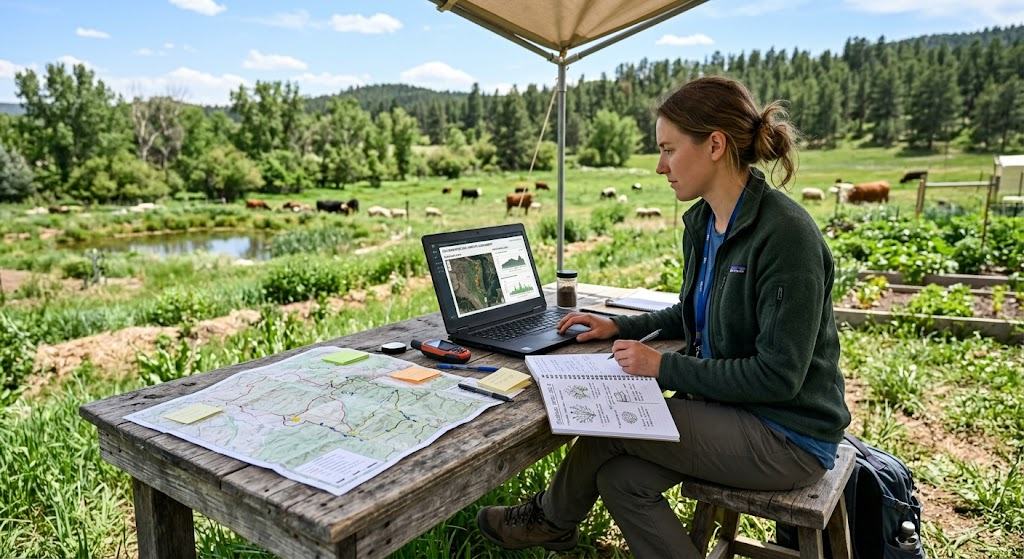
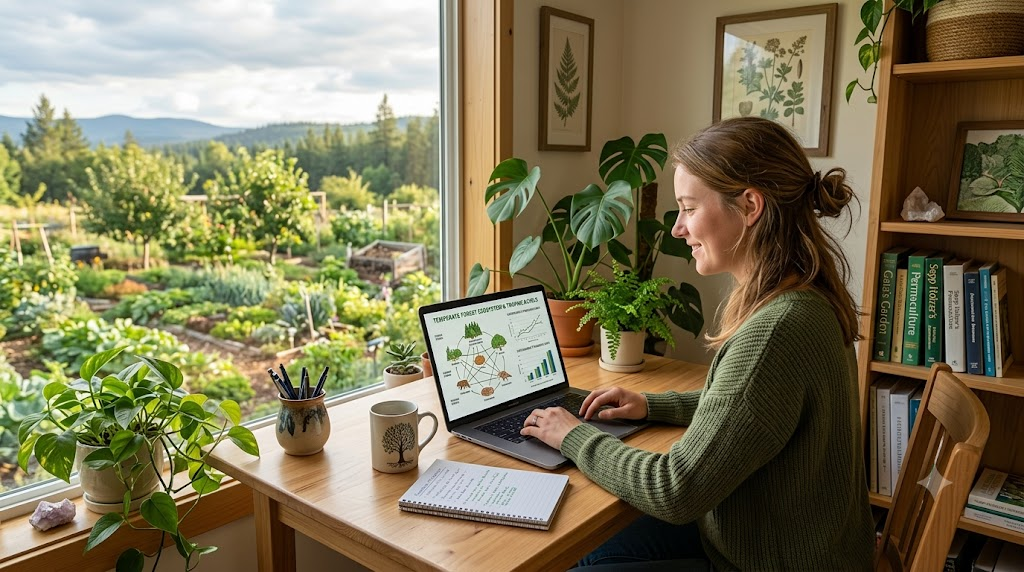
The growing demand for environmental leadership, regenerative agriculture, and community resilience has made the online master’s in sustainable development one of the most sought-after graduate study options. Professionals, educators, designers, farmers, and changemakers increasingly seek flexible education that helps them solve complex environmental and social challenges while continuing their current work.
For learners pursuing a Permaculture Diploma, an online master’s program can provide an opportunity to deepen systems thinking, strengthen research skills, expand leadership capacity, and document meaningful work already taking place in their communities.
Unlike many traditional graduate degrees that emphasize classroom theory alone, modern sustainability education increasingly values practical application, interdisciplinary thinking, and measurable impact.
Understanding Sustainable Development
Sustainable development focuses on meeting present needs while maintaining the environmental, economic, and social systems that future generations depend upon.
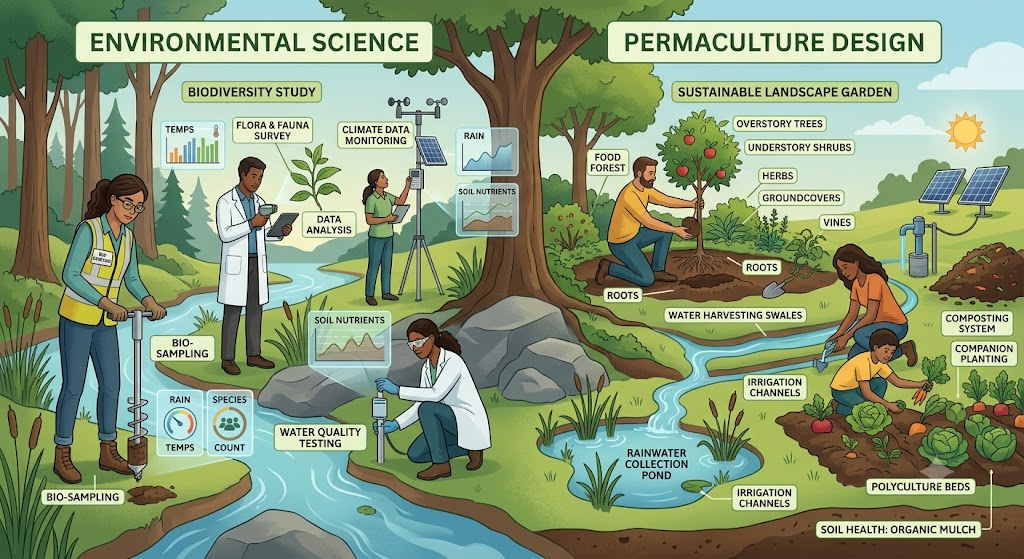
Rather than treating environmental issues as isolated problems, sustainable development examines how ecological health, food systems, economics, governance, education, culture, and community well-being interact.
Key areas commonly explored include:
- Regenerative agriculture
- Ecological restoration
- Climate resilience
- Community development
- Circular economies
- Sustainable business
- Environmental leadership
- Food sovereignty
- Biodiversity conservation
- Systems thinking
This interdisciplinary perspective makes sustainable development relevant across numerous professions and sectors.
Why Study an Online Master’s in Sustainable Development?
Online graduate education offers flexibility without requiring learners to pause their careers or relocate.
Benefits often include:
Flexible Scheduling
Students can continue working while completing coursework around professional and personal commitments.
Learning Within Your Own Community
Many sustainability challenges are local. Online education allows students to study while remaining actively involved in their own landscapes, organizations, or businesses.
Immediate Application
Rather than postponing implementation until after graduation, learners can often apply new concepts directly to existing projects.
Global Perspectives
Online learning environments frequently connect students with peers working across diverse climates, cultures, and ecosystems, encouraging broader perspectives on sustainability.
Why Permaculture Learners Often Pursue Sustainable Development
Permaculture already encourages observation, ecological design, ethical decision-making, and regenerative thinking.
An online master’s can complement these foundations by expanding knowledge in areas such as:
- Policy and governance
- Research methods
- Organizational leadership
- Project evaluation
- Community engagement
- Ecological economics
- Systems analysis
- Educational practice
For many learners, graduate education becomes an opportunity to integrate years of practical experience into a broader academic and professional framework.
Core Skills Developed
A quality online master’s in sustainable development typically strengthens several essential competencies.
Systems Thinking
Students learn to recognize relationships between ecological, economic, and social systems rather than viewing challenges independently.
Research and Critical Analysis
Graduate-level study develops the ability to evaluate evidence, analyze complex issues, and communicate findings effectively.
Project Design
Learners gain experience planning initiatives that consider long-term environmental and community outcomes.
Leadership
Sustainability work often requires collaboration across multiple stakeholders. Leadership skills help graduates facilitate meaningful change.
Communication
Graduates improve their ability to explain sustainability concepts to policymakers, businesses, educators, and community members.
Reflective Practice
Many programs encourage continuous reflection to improve decision-making and lifelong learning.
Learning Through Real Projects
One of the greatest strengths of sustainability education is experiential learning.
Rather than relying exclusively on examinations, many programs encourage learners to demonstrate knowledge through projects such as:
- Regenerative farm development
- Community gardens
- Watershed restoration
- Educational programs
- Ecological design
- Food forest implementation
- Social enterprises
- Local resilience initiatives
These projects allow students to connect academic concepts with practical outcomes.
What to Look for in an Online Master’s Program
Not all sustainability programs follow the same educational philosophy.
When evaluating options, consider whether a program offers:
Practical Learning
Look for opportunities to apply knowledge through real-world projects rather than relying solely on theoretical assignments.
Interdisciplinary Curriculum
Sustainability challenges rarely fit within one discipline. Strong programs integrate ecological, social, economic, and cultural perspectives.
Experienced Mentorship
Guidance from mentors with practical experience can support deeper learning and professional growth.
Flexibility
Programs that accommodate working professionals often make graduate education more accessible.
Reflection and Portfolio Development
Documenting learning through portfolios, project reports, or reflective practice can demonstrate growth over time.
Career Opportunities
Graduates with expertise in sustainable development may contribute across numerous sectors.
Potential career pathways include:
- Sustainability consultant
- Regenerative agriculture practitioner
- Environmental educator
- Community development coordinator
- Ecological restoration specialist
- Nonprofit leadership
- Climate adaptation planner
- Sustainable business advisor
- Food systems strategist
- International development practitioner
Many graduates also continue developing their own regenerative enterprises, educational initiatives, consulting practices, or community organizations.
Gaia University’s Educational Approach
For learners seeking an educational model aligned with regenerative practice and permaculture, Gaia University offers an approach centered on self-directed, project-based learning.
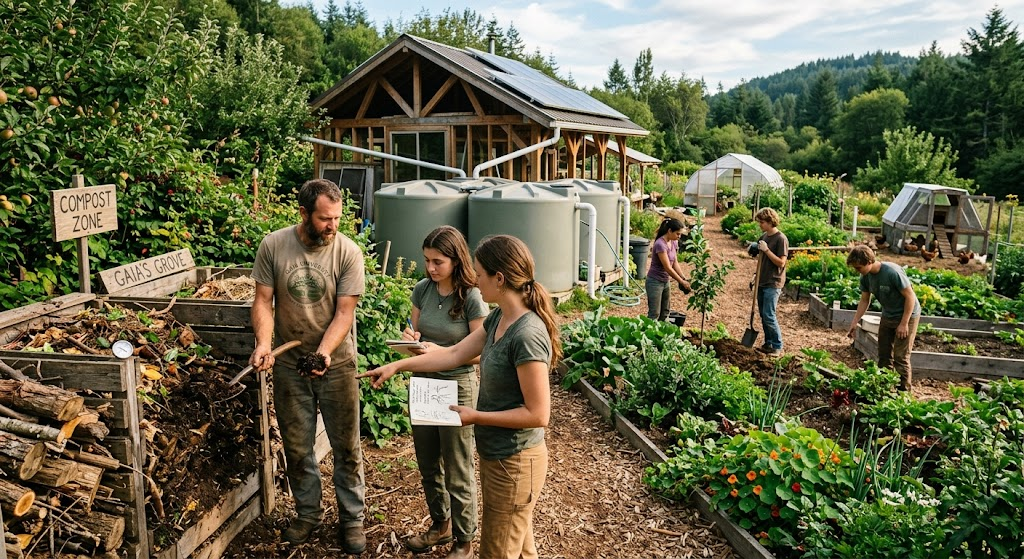
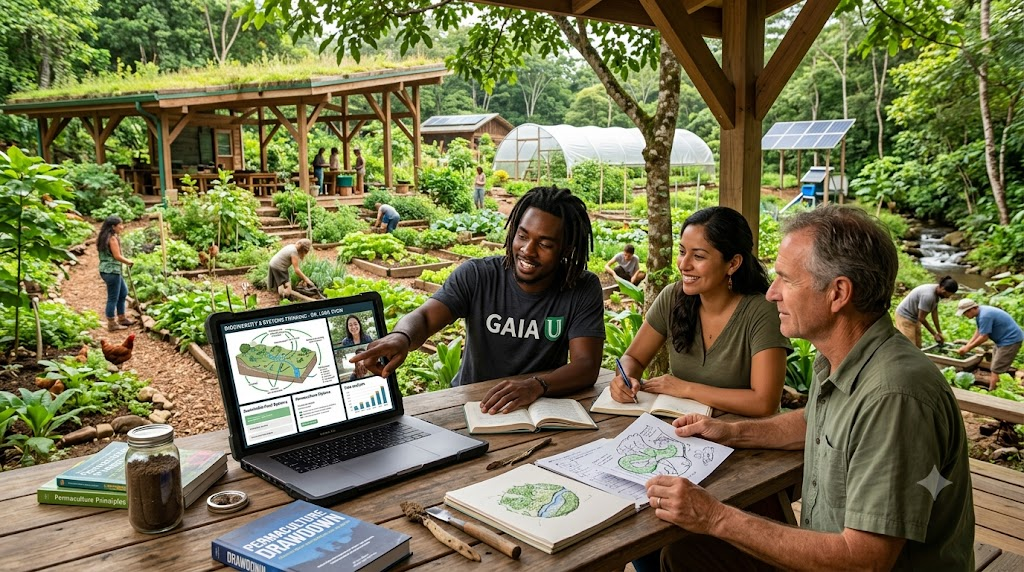
Rather than separating academic study from practical implementation, learners develop knowledge through meaningful work within their own communities and ecosystems. This model emphasizes reflective practice, mentorship, systems thinking, and documented evidence of learning.
Prospective learners can explore the university’s educational philosophy through the About section.
Those interested in graduate pathways can review academic offerings here:
https://gaiauniversity.org/
Additional information about the learning model is available here.
Frequently Asked Questions
Is an online master’s in sustainable development respected?
Many online graduate programs are designed with academic standards comparable to campus-based education. The quality of a program depends on its curriculum, educational approach, faculty or mentors, assessment methods, and alignment with a learner’s professional goals.
Can I study while working full-time?
Many online programs are intentionally structured to accommodate working professionals, allowing learners to integrate study with ongoing careers and community projects.
Is sustainable development only about environmental science?
No. Sustainable development combines ecological, social, economic, cultural, and governance perspectives to address complex challenges through integrated solutions.
How does sustainable development relate to permaculture?
Permaculture emphasizes regenerative design and ecological relationships. Sustainable development expands this perspective by incorporating leadership, research, policy, economics, education, and community systems.
What skills are most valuable for sustainability professionals?
Systems thinking, collaboration, project management, communication, research, ecological literacy, and adaptive leadership are widely applicable across sustainability careers.
Can practical experience strengthen graduate learning?
Yes. Many sustainability-focused programs encourage learners to connect academic concepts with ongoing professional or community-based work, helping bridge theory and practice.
Conclusion
Choosing an online master’s in sustainable development is about more than earning a graduate credential. It is an opportunity to deepen ecological understanding, strengthen leadership skills, and develop practical solutions that benefit communities and ecosystems.
For Permaculture Diploma seekers, graduate study can complement existing experience by expanding systems thinking, research capability, and reflective practice while remaining grounded in real-world implementation. A program that values experiential learning, interdisciplinary knowledge, and meaningful community engagement can provide a strong foundation for long-term regenerative leadership.
Responses