
Masters in Environmental Sustainability Online: A Comprehensive Path for Permaculture Diploma Seekers

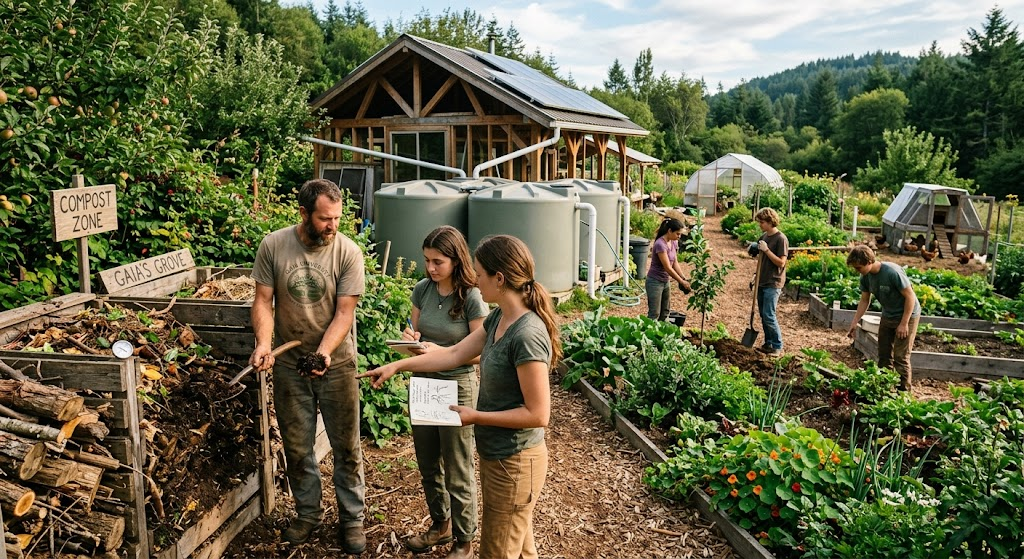
Environmental challenges are becoming increasingly complex, requiring professionals who understand not only ecological systems but also social, economic, and cultural connections. For individuals who have completed or are pursuing a permaculture diploma, continuing education through a masters in environmental sustainability online program can provide deeper knowledge and broader skills for designing regenerative solutions.
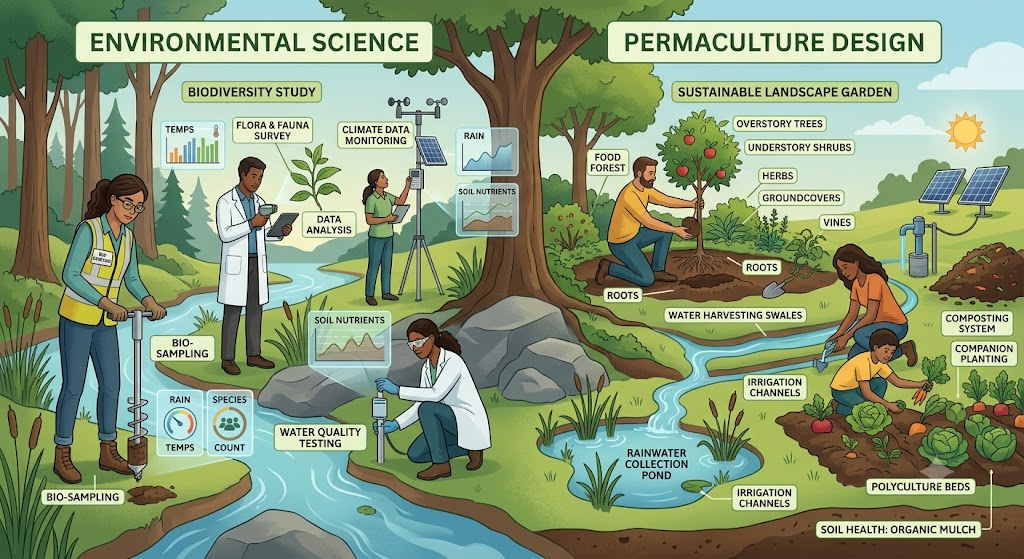
Permaculture already teaches learners how to work with nature rather than against it. It focuses on ecological relationships, responsible resource use, resilient communities, and sustainable food systems. However, advanced sustainability education can expand these principles by introducing research methods, environmental policy, systems thinking, leadership strategies, and global sustainability frameworks.
For many aspiring environmental professionals in the United States, online learning offers an accessible pathway to advanced education while allowing them to continue working, managing farms, developing ecological projects, or supporting local communities.
This article explores how advanced sustainability studies can complement permaculture knowledge and help learners become effective leaders in environmental transformation.
Understanding the Value of an Online Master’s in Environmental Sustainability
Why Sustainability Education Matters in Today’s Changing World
The modern world faces interconnected environmental concerns, including climate change, biodiversity loss, soil degradation, water challenges, and unsustainable consumption patterns. Solving these issues requires professionals who can understand the relationship between human activities and natural systems.
Traditional environmental education often focuses on specific scientific areas. However, sustainability education takes a broader approach by combining environmental knowledge with social responsibility, economic awareness, and community-based solutions.
A sustainability-focused master’s degree helps students explore questions such as:
- How can communities become more resilient?
- How can agriculture protect ecosystems while producing food?
- How can organizations reduce environmental impacts?
- How can humans create long-term relationships with natural systems?
For permaculture practitioners, these questions are already familiar. Permaculture encourages observation of ecosystems, thoughtful design, and responsible decision-making. Advanced sustainability education builds upon these foundations by adding academic frameworks and professional skills.
The combination of permaculture principles and sustainability studies creates a powerful learning pathway. Students can move beyond individual projects and begin understanding larger environmental systems affecting regions, industries, and communities.
The Connection Between Permaculture and Environmental Sustainability Studies
Permaculture and sustainability education share many common values. Both approaches recognize that environmental solutions must consider relationships between land, people, resources, and future generations.
A permaculture diploma typically introduces learners to areas such as:
- Ecological design principles
- Natural resource management
- Sustainable food production
- Regenerative practices
- Community resilience
- Ethical decision-making
A master’s-level sustainability program can deepen these concepts by exploring:
- Environmental research techniques
- Sustainability assessment methods
- Organizational change strategies
- Environmental leadership
- Policy development
- Systems-based problem solving
This combination allows learners to transform practical experience into broader environmental expertise.
For example, a permaculture practitioner may understand how to design a regenerative garden system. Advanced sustainability studies can help that same individual analyze how regenerative agriculture could be applied across communities, organizations, or larger landscapes.
The result is a more complete understanding of sustainability—from personal action to global transformation.
How Masters in Environmental Sustainability Online Programs Support Permaculture Professionals
Developing Systems Thinking for Ecological Design
One of the most valuable skills gained through advanced sustainability education is systems thinking.
Natural environments are not isolated systems. A change in one area often affects many others. For example, farming practices influence soil health, water quality, biodiversity, food security, and community economics.
Permaculture practitioners already work with this interconnected mindset. However, a sustainability master’s program can provide additional frameworks for analyzing complex challenges.
Students learn how to:
- Identify relationships between environmental factors
- Evaluate long-term impacts of decisions
- Design strategies that address root causes
- Balance ecological needs with human requirements
This approach is especially valuable for people interested in regenerative development, sustainable communities, and ecological entrepreneurship.
Instead of focusing only on individual solutions, graduates learn how to create systems that support lasting environmental improvement.
Expanding Knowledge Beyond Traditional Permaculture Practices
While permaculture provides a strong foundation for sustainable living, environmental sustainability includes many additional disciplines.
An online sustainability master’s program may introduce learners to topics such as:
| Sustainability Area | Practical Application |
| Climate studies | Understanding environmental changes and adaptation strategies |
| Ecological restoration | Repairing damaged ecosystems |
| Sustainable business | Creating environmentally responsible organizations |
| Environmental communication | Educating communities about sustainability |
| Resource management | Protecting water, energy, and natural materials |
This broader knowledge can help permaculture graduates work in diverse professional environments.
A learner who begins with garden design or sustainable farming may eventually become involved in community planning, environmental consulting, sustainability education, or regenerative business development.
Key Subjects Covered in Environmental Sustainability Master’s Programs
Sustainable Agriculture and Regenerative Land Management
Agriculture plays a major role in environmental sustainability. Soil health, biodiversity, water conservation, and food production are deeply connected.
Permaculture students often have hands-on experience with ecological growing methods. Advanced sustainability education expands this knowledge by exploring larger agricultural systems.
Topics may include:
- Regenerative agriculture principles
- Sustainable food networks
- Soil conservation strategies
- Agroecology
- Climate-resilient farming
These subjects help learners understand how local practices connect with broader food systems.
A sustainability professional can use this knowledge to support farms, communities, nonprofits, and organizations working toward healthier ecosystems.
Climate Solutions, Conservation, and Resource Management
Environmental sustainability requires careful management of natural resources.
Students explore methods for protecting ecosystems while meeting human needs. They learn about conservation approaches, renewable resources, and strategies for reducing environmental pressure.
For permaculture practitioners, this knowledge strengthens their ability to design projects that consider wider environmental impacts.
A small ecological project can become part of a larger movement toward climate resilience and sustainable development.
Benefits of Choosing an Online Sustainability Master’s Degree
Flexible Learning for Working Professionals and Practitioners
One of the greatest advantages of pursuing a masters in environmental sustainability online program is flexibility. Many sustainability learners are already actively involved in ecological projects, farms, nonprofits, education programs, or community initiatives. Traditional classroom-based education may not always fit their lifestyle or professional responsibilities.
Online learning allows students to continue gaining practical experience while developing advanced academic knowledge. This is particularly valuable for permaculture diploma seekers because much of their learning happens through direct interaction with land, communities, and real-world environmental challenges.
A flexible online sustainability program can allow learners to:
- Study from different locations
- Apply lessons directly to ongoing projects
- Balance education with professional commitments
- Connect with sustainability-focused communities worldwide
- Develop knowledge at a manageable pace
For example, a permaculture practitioner managing a regenerative farm can study sustainability concepts while immediately applying new strategies to soil improvement, resource management, or community education projects.
This relationship between learning and action creates a meaningful educational experience. Instead of separating theory from practice, students can continuously test ideas, observe results, and improve their approaches.
Global Perspectives on Environmental Challenges
Environmental issues do not exist within national borders. Climate change, biodiversity loss, food insecurity, and resource challenges affect communities across the world.
An online sustainability master’s program often brings together learners from diverse backgrounds. This creates opportunities to understand how different cultures, regions, and communities approach environmental solutions.
For permaculture students, this global perspective can be extremely valuable. Permaculture itself is based on adapting solutions to local conditions. A farming method suitable for one climate may need significant changes before being applied elsewhere.
By studying sustainability through a broader lens, learners can explore:
- International approaches to conservation
- Indigenous ecological knowledge
- Community resilience strategies
- Sustainable development models
- Environmental justice principles
This expanded viewpoint helps future sustainability leaders create solutions that respect both ecological systems and human communities.
Skills Permaculture Diploma Seekers Can Gain Through Advanced Sustainability Education
Research, Leadership, and Project Management Skills
Permaculture education often focuses on practical design and ecological awareness. A sustainability master’s program can add professional skills needed to lead larger initiatives.
Environmental leaders must often manage projects involving multiple stakeholders, including communities, organizations, governments, and businesses.
Advanced sustainability education can strengthen abilities in:
- Environmental research
- Strategic planning
- Leadership development
- Communication
- Collaboration
- Project evaluation
These skills are important because successful sustainability projects require more than good ideas. They require planning, organization, funding strategies, communication, and the ability to bring people together.
For example, someone with permaculture experience may understand how to create a community garden. With additional sustainability training, that same person may develop the skills needed to organize a city-wide food resilience program.
Leadership skills help transform individual environmental actions into broader social change.
Creating Sustainable Solutions for Communities
Sustainability is ultimately about improving relationships between people and the planet.
Many communities are searching for practical solutions to challenges such as:
- Food access
- Energy efficiency
- Waste reduction
- Ecosystem restoration
- Climate adaptation
Permaculture practitioners are already familiar with community-centered approaches. Advanced sustainability studies can help them evaluate these solutions through scientific, social, and economic perspectives.
Graduates can contribute to projects involving:
| Area | Example Application |
| Community development | Creating resilient neighborhoods |
| Food systems | Supporting sustainable agriculture networks |
| Education | Teaching ecological awareness |
| Conservation | Protecting natural habitats |
| Innovation | Developing sustainable technologies |
By combining practical ecological knowledge with advanced sustainability concepts, learners can become effective change-makers.
Career Opportunities After Completing Environmental Sustainability Studies
Environmental Consultant and Sustainability Specialist Roles
A growing number of organizations are seeking professionals who understand environmental responsibility and sustainable practices.
Graduates with advanced sustainability knowledge may pursue careers as:
- Sustainability consultants
- Environmental program coordinators
- Sustainability managers
- Environmental educators
- Community development specialists
These roles involve helping organizations reduce environmental impacts and create responsible strategies.
A sustainability consultant may work with businesses to improve resource efficiency. A community sustainability specialist may help neighborhoods develop resilience plans. An environmental educator may teach future generations about ecological responsibility.
For permaculture diploma seekers, these careers offer opportunities to combine practical environmental knowledge with professional sustainability expertise.
Ecological Designer and Regenerative Development Careers
Many permaculture practitioners are interested in designing systems that restore rather than simply reduce harm.
Regenerative development focuses on improving ecological and social systems over time. It goes beyond sustainability by asking how human activities can actively contribute to environmental renewal.
Career paths connected to regenerative thinking may include:
- Ecological designer
- Regenerative agriculture advisor
- Sustainable community planner
- Restoration project coordinator
- Environmental entrepreneur
These roles allow professionals to work on projects that reconnect people with natural systems.
A person with both permaculture experience and advanced sustainability education may be uniquely positioned to design solutions that combine ecological principles, community needs, and long-term resilience.
Choosing the Right Masters in Environmental Sustainability Online Program
Curriculum Quality and Practical Learning Approaches
Choosing an online sustainability program requires careful consideration. Not every program approaches sustainability in the same way.
Permaculture diploma seekers should look for programs that emphasize:
- Real-world application
- Ecological systems thinking
- Community engagement
- Independent research
- Transformational learning
A strong sustainability education should not only provide information. It should help students develop the ability to analyze problems, create solutions, and take meaningful action.
Learners should consider whether a program supports their personal goals. Someone interested in sustainable agriculture may want different learning opportunities than someone focused on environmental policy or community development.
The best educational pathway is one that connects personal passion with practical skills.
Alignment With Permaculture Values and Ecological Ethics
For many permaculture learners, sustainability is more than a career choice. It is a way of understanding relationships between humans and the Earth.
When selecting an advanced program, students may want to consider whether the educational philosophy aligns with values such as:
- Care for the Earth
- Care for people
- Responsible resource sharing
- Regenerative practices
- Long-term thinking
Programs that encourage active participation, reflection, and practical projects can be especially meaningful for permaculture students.
An education that respects ecological principles can help learners develop not only professional skills but also a deeper understanding of their role within natural systems.
Gaia University’s Approach to Transformative Sustainability Education
For learners seeking an educational pathway connected with ecological action, Gaia University offers programs focused on practical transformation, sustainability leadership, and action-based learning. Gaia University official website
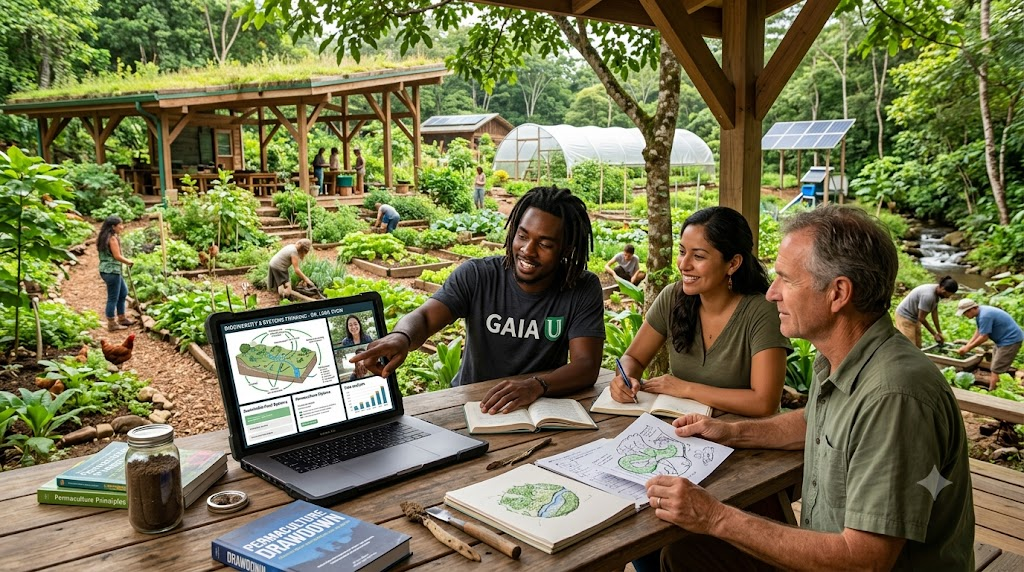
Gaia University’s approach emphasizes learning through real-world projects rather than separating education from practice. This model can be particularly meaningful for permaculture diploma seekers who want to develop knowledge while actively contributing to environmental and social change.
The university’s educational philosophy connects sustainability learning with personal development, ecological responsibility, and community transformation.
Learning Through Action-Based Education
Traditional education often follows a model where students first learn information and later apply it. Action-based learning reverses this process by encouraging learners to engage with real challenges while developing knowledge.
This approach aligns naturally with permaculture because permaculture itself is based on observation, experimentation, and practical application.
Students can develop skills by:
- Working on sustainability projects
- Reflecting on outcomes
- Collaborating with communities
- Creating practical solutions
This type of learning encourages independence and creativity.
Instead of simply studying sustainability concepts, learners become active participants in shaping sustainable futures.
Supporting Global Sustainability Leaders
Environmental transformation requires leaders who can connect knowledge with action.
Programs focused on sustainability leadership help individuals develop confidence in areas such as:
- Ecological innovation
- Community engagement
- Environmental communication
- Systems thinking
- Collaborative problem-solving
For permaculture diploma seekers, this leadership development can open new opportunities to influence sustainability efforts at local and global levels.
Whether working with communities, organizations, or environmental initiatives, sustainability leaders play an important role in creating long-lasting change.
FAQs About Masters in Environmental Sustainability Online Programs
1. What is a masters in environmental sustainability online program?
A masters in environmental sustainability online program is an advanced educational pathway that explores environmental challenges, sustainable solutions, ecological systems, and strategies for creating a healthier relationship between humans and nature.
It combines environmental knowledge with leadership, research, and practical problem-solving skills.
2. Is an online sustainability master’s degree useful for permaculture practitioners?
Yes. Permaculture practitioners can benefit from advanced sustainability education because it expands their understanding of ecological systems, community development, and environmental leadership.
It helps connect hands-on experience with broader sustainability frameworks.
3. What careers can I pursue after studying environmental sustainability?
Graduates may explore careers in sustainability consulting, environmental education, regenerative development, ecological design, conservation, community planning, and sustainability management.
Career options depend on individual interests and previous experience.
4. Can I study sustainability online while working on environmental projects?
Yes. Online programs are often designed for learners who want to continue professional or community activities while studying.
This flexibility allows students to apply sustainability concepts directly to real-world situations.
5. How does permaculture relate to environmental sustainability?
Permaculture and environmental sustainability share principles such as ecological responsibility, resource conservation, resilience, and designing systems that support life.
Permaculture provides practical methods, while sustainability education can provide broader analytical and leadership skills.
6. What should I look for in an online sustainability master’s program?
Students should consider curriculum quality, practical learning opportunities, sustainability philosophy, flexibility, and whether the program supports their personal environmental goals.
A strong program should encourage both knowledge development and meaningful action.
Conclusion: Building a Sustainable Future Through Advanced Learning
The journey toward environmental sustainability requires people who can combine practical experience with advanced knowledge. For permaculture diploma seekers, pursuing a masters in environmental sustainability online can provide an opportunity to expand ecological understanding, develop leadership abilities, and create solutions that benefit both people and the planet.
Permaculture offers a strong foundation built on observation, ethics, and ecological design. Advanced sustainability education builds upon that foundation by adding research skills, systems thinking, and professional capabilities.
As environmental challenges continue to grow, the need for skilled sustainability leaders becomes increasingly important. Individuals who combine practical ecological wisdom with advanced education can help guide communities, organizations, and future generations toward more regenerative ways of living.
By choosing an educational path that connects learning with action, permaculture practitioners can move beyond individual projects and contribute to wider environmental transformation.
Responses