
Online Bachelor’s in Environmental Science: A Complete Pathway for Permaculture Diploma Seekers

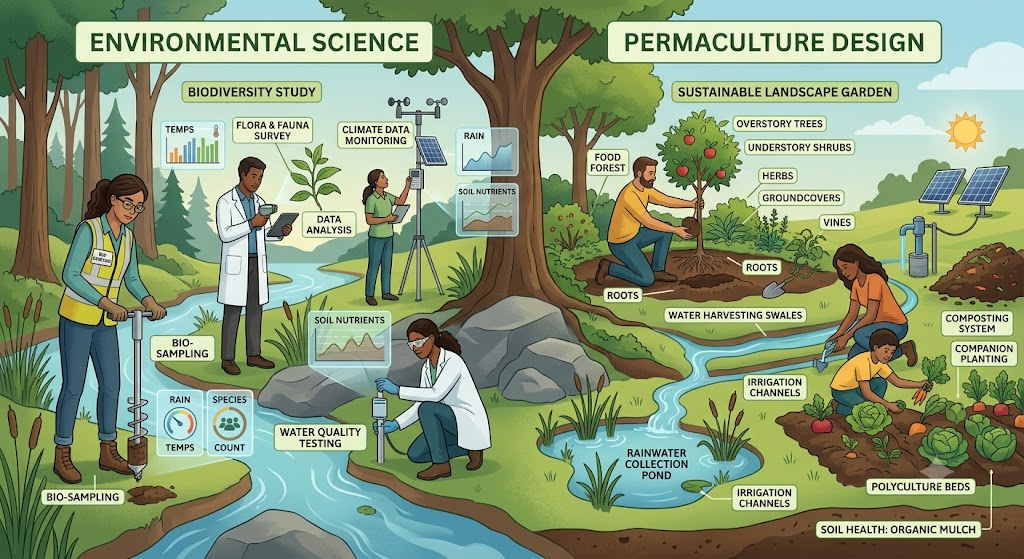
Understanding the Connection Between Environmental Science and Permaculture Education
The growing interest in sustainable living, ecological restoration, and regenerative systems has encouraged many learners to explore advanced education options. For permaculture diploma seekers, combining practical ecological design skills with deeper scientific understanding can create new opportunities for personal growth and professional development.
An online bachelor’s in environmental science offers a structured way to study natural systems, environmental challenges, and sustainable solutions while maintaining the flexibility needed by many adult learners. This educational pathway can complement permaculture studies by connecting hands-on experience with broader scientific concepts.
Permaculture is built around observing nature, designing resilient systems, and creating harmony between humans and the environment. Environmental science expands this perspective by exploring the scientific processes behind ecosystems, climate patterns, biodiversity, conservation, and resource management.
Together, these fields create a powerful foundation for individuals who want to contribute to ecological regeneration, sustainable communities, and environmental innovation.
Why Environmental Knowledge Matters for Sustainable Design
Permaculture practitioners often work directly with landscapes, food systems, water management, and community development. While practical experience is essential, understanding environmental science can help learners make more informed decisions.
Environmental science explores how living organisms interact with their surroundings and how human activities influence ecological balance. This knowledge can support permaculture designers when they analyze land conditions, evaluate environmental impacts, and develop long-term solutions.
For example, a permaculture practitioner may understand the importance of planting diverse species. Environmental science can add deeper knowledge about biodiversity, soil ecology, ecosystem relationships, and conservation principles.
This combination allows students to move beyond individual projects and understand larger environmental patterns.
Some important areas where environmental science supports permaculture include:
| Environmental Science Concept | Permaculture Application |
| Ecosystem studies | Designing balanced landscapes |
| Soil science | Improving regenerative agriculture practices |
| Climate research | Creating climate-resilient systems |
| Conservation biology | Protecting biodiversity |
| Resource management | Developing sustainable communities |
How Academic Learning Supports Permaculture Practice
Many permaculture diploma seekers already have practical knowledge gained through workshops, field experience, and ecological projects. A bachelor’s degree can add academic depth and help learners communicate their ideas within professional, educational, and organizational environments.
Environmental challenges are becoming increasingly complex. Issues such as climate change, habitat loss, water scarcity, and unsustainable resource use require professionals who understand both practical solutions and scientific principles.
An online degree format allows students to continue working, managing projects, or participating in sustainability initiatives while developing advanced knowledge.
This approach is especially valuable for people who want to:
- Lead ecological restoration projects
- Teach sustainability concepts
- Work with environmental organizations
- Develop regenerative communities
- Support sustainable agriculture initiatives
- Create educational programs focused on environmental awareness
What Is an Online Bachelor’s in Environmental Science?
An online bachelor’s in environmental science is an undergraduate program focused on understanding environmental systems and developing solutions for ecological challenges. These programs typically combine natural sciences, sustainability concepts, research methods, and environmental management.
For students interested in permaculture, this type of education can provide a scientific framework for many principles already explored through ecological design.
Instead of focusing only on individual environmental problems, environmental science encourages learners to examine relationships between ecosystems, societies, and human decision-making.
A well-designed environmental science program may explore topics such as:
- Ecology and biodiversity
- Environmental policy
- Conservation strategies
- Climate systems
- Sustainable resource management
- Environmental research methods
- Renewable solutions
- Human relationships with natural systems
Online learning provides flexibility because students can access coursework remotely while applying their knowledge in real-world settings.
Core Subjects Covered in Environmental Science Degree Programs
Environmental science education is interdisciplinary, meaning it combines knowledge from several fields. This broad approach helps students understand environmental challenges from multiple perspectives.
Ecology, Conservation, and Natural Systems
Ecology is one of the foundations of environmental science. It examines how plants, animals, microorganisms, and landscapes interact.
For permaculture learners, ecology is especially relevant because successful designs depend on understanding natural relationships.
Students may explore:
- Ecosystem structures
- Species relationships
- Biodiversity protection
- Habitat restoration
- Natural cycles
These concepts help learners design systems that work with nature instead of against it.
Climate Science and Regenerative Solutions
Climate-related challenges are among the most important topics in modern environmental education. Understanding climate patterns, environmental impacts, and adaptation strategies can help sustainability professionals create effective solutions.
Permaculture already emphasizes resilience and regeneration. Environmental science adds research-based knowledge about climate systems and environmental change.
Together, these disciplines can help learners develop approaches for:
- Sustainable food production
- Water conservation
- Carbon reduction
- Ecological restoration
- Community resilience
Why Permaculture Diploma Seekers Should Consider Environmental Science Degrees
Permaculture education provides valuable skills in ecological observation, design thinking, and sustainable living practices. However, many learners eventually seek additional credentials that can expand their professional opportunities.
An environmental science degree can complement permaculture training by providing broader recognition, academic structure, and scientific expertise.
For students looking for an educational pathway that connects sustainability with higher education, Gaia University offers a bachelor degree option focused on transformative learning and ecological approaches.
Expanding Practical Skills With Scientific Knowledge
Permaculture practitioners often develop strong abilities in land design, gardening, natural building, and community engagement. Adding environmental science knowledge can strengthen these skills.
For example:
- A garden designer can better understand ecosystem functions.
- A sustainability educator can explain environmental concepts more effectively.
- A community organizer can develop stronger ecological planning strategies.
Scientific understanding does not replace practical experience. Instead, it enhances it by providing additional tools for analysis and decision-making.
Creating More Effective Sustainable Solutions
Environmental problems rarely exist separately. Soil degradation, climate change, biodiversity decline, and resource challenges are connected.
Environmental science teaches students to examine these connections through systems thinking.
This approach aligns closely with permaculture principles because both fields encourage learners to understand relationships rather than isolated elements.
A person trained in both areas can approach sustainability challenges with a broader perspective, combining observation, research, creativity, and practical action.
Benefits of Studying Environmental Science Online in the USA
The increasing availability of online education has made environmental studies more accessible to learners across the United States. For permaculture diploma seekers, an online bachelor’s in environmental science can provide the flexibility to continue building sustainable projects while gaining advanced academic knowledge.
Many sustainability-focused learners are already involved in farms, ecological communities, nonprofit projects, gardens, education programs, or environmental initiatives. Traditional campus-based education may not always fit their lifestyle. Online learning allows students to study at their own pace while connecting their coursework with real-world environmental experiences.
A flexible educational model can be especially valuable for people who believe learning should happen through both theory and practice.
Flexible Learning for Working Sustainability Practitioners
Many permaculture students are active practitioners. They may be managing land, developing community projects, teaching workshops, or working in sustainability-related fields.
An online environmental science degree allows learners to balance education with existing responsibilities.
Common benefits of online study include:
- Learning from different locations
- Creating a personalized study schedule
- Continuing professional or community activities
- Applying academic concepts directly to practical projects
- Developing digital collaboration skills
For sustainability professionals, the ability to connect classroom concepts with ongoing environmental work can create a stronger learning experience.
Rather than separating education from daily life, online programs can encourage students to integrate knowledge into their current projects.
Accessing Global Ecological Perspectives
Environmental challenges are not limited by geographic boundaries. Climate change, biodiversity loss, and resource management require global thinking.
Online environmental science programs often connect students with diverse perspectives. Learners may interact with people from different regions, cultures, and ecological backgrounds.
This global approach is valuable for permaculture practitioners because many sustainable solutions depend on understanding local conditions while learning from worldwide examples.
A student studying ecological systems in the USA can explore how different communities approach:
- Food security
- Sustainable agriculture
- Watershed protection
- Renewable resource use
- Community resilience
By combining local action with global awareness, environmental science students can become more effective sustainability leaders.
How an Online Bachelor’s in Environmental Science Supports a Permaculture Career
Permaculture is more than gardening or landscape design. It represents a holistic approach to creating sustainable human systems. As interest in regenerative practices grows, individuals with combined environmental knowledge and practical design skills may find opportunities in education, consulting, agriculture, and community development.
An online bachelor’s in environmental science can help permaculture diploma seekers strengthen their professional foundation by developing research abilities, communication skills, and environmental analysis techniques.
The combination of ecological design and scientific education can prepare graduates to contribute to projects focused on long-term sustainability.
Environmental Consulting and Sustainable Development
Environmental consultants help organizations understand environmental challenges and develop responsible solutions. Professionals in this area may work with communities, businesses, landowners, or nonprofit organizations.
A background in permaculture can provide practical insight into regenerative approaches, while environmental science education can strengthen understanding of ecological assessment and sustainability planning.
Potential areas of work include:
- Sustainable land management
- Ecological restoration planning
- Environmental education
- Community sustainability programs
- Resource conservation projects
Professionals who understand both human needs and ecological systems can help create balanced solutions.
Community-Based Ecological Projects
Many sustainability initiatives begin at the community level. Local food systems, ecological gardens, conservation programs, and educational projects often depend on people who understand both environmental principles and community engagement.
Permaculture practitioners are often naturally involved in community development because the discipline emphasizes cooperation, resilience, and shared responsibility.
Environmental science knowledge can support these efforts by helping leaders:
- Evaluate environmental conditions
- Understand ecosystem impacts
- Measure project outcomes
- Communicate scientific information
- Develop evidence-based strategies
This combination can be valuable for creating projects that are both practical and environmentally responsible.
Choosing the Right Online Environmental Science Degree Path
Selecting an educational program is an important decision. Permaculture diploma seekers should look for programs that align with their values, learning goals, and future plans.
Not every environmental science program has the same approach. Some focus heavily on traditional scientific research, while others may emphasize sustainability, systems thinking, or applied ecological solutions.
Before choosing a program, students should consider how the curriculum supports their personal mission.
Important Factors to Evaluate Before Enrollment
Curriculum Design and Learning Approach
A strong environmental science program should provide knowledge that can be applied beyond the classroom.
Important areas to review include:
| Area of Study | Why It Matters for Permaculture Learners |
| Ecology | Helps understand natural relationships |
| Sustainability studies | Connects environmental knowledge with human systems |
| Research methods | Builds analytical skills |
| Environmental management | Supports planning and decision-making |
| Systems thinking | Encourages holistic problem-solving |
Students should consider whether a program encourages creativity, practical application, and independent thinking.
Practical Application Opportunities
Environmental education becomes more meaningful when students can apply concepts to real situations.
Permaculture learners often value experiential education because they understand that ecosystems must be observed and experienced.
A useful degree pathway may encourage:
- Project-based learning
- Community involvement
- Environmental problem-solving
- Independent research
- Real-world sustainability applications
Learning through action can help students develop confidence and leadership abilities.
Gaia University’s Approach to Ecological Higher Education
For learners interested in combining sustainability, ecological awareness, and transformative education, Gaia University provides an alternative approach to higher learning.
The institution focuses on self-directed learning, practical projects, and developing change-makers who can contribute to ecological and social transformation.
Its educational philosophy aligns with many principles valued by permaculture communities, including:
- Learning through action
- Systems thinking
- Community participation
- Regenerative approaches
- Personal and professional development
Students interested in exploring a bachelor-level pathway can learn more through Gaia University’s Bachelor Degree page.
This type of educational model can appeal to learners who want their studies to connect directly with meaningful environmental projects.
Skills Developed Through Environmental Science and Permaculture Studies
Combining environmental science education with permaculture knowledge can help learners develop a diverse set of skills.
These skills are valuable because sustainability challenges require more than technical knowledge. They require creativity, collaboration, leadership, and the ability to understand complex systems.
Systems Thinking and Ecological Analysis
One of the most important abilities developed through environmental education is systems thinking.
Systems thinking means understanding how different parts influence each other.
For example:
- Soil health affects plant growth.
- Plant diversity affects ecosystems.
- Ecosystems influence climate resilience.
- Human choices affect environmental balance.
Permaculture already uses this way of thinking. Environmental science strengthens it by adding scientific methods and research-based understanding.
This skill can help graduates design more effective solutions for environmental challenges.
Project Management and Community Leadership
Environmental projects often require planning, communication, and cooperation.
Whether someone is creating a community garden, managing a restoration project, or teaching sustainability principles, leadership skills are essential.
Students can develop abilities such as:
- Organizing environmental initiatives
- Collaborating with diverse groups
- Communicating ecological ideas
- Managing resources responsibly
- Creating long-term strategies
These skills can support both professional careers and community-based efforts.
Career Opportunities After Combining Environmental Science With Permaculture
The combination of environmental science and permaculture can open pathways in several sustainability-focused areas.
While career opportunities depend on individual experience, location, and professional goals, graduates may explore roles connected to ecological restoration, education, sustainable agriculture, and environmental planning.
Regenerative Agriculture Specialist
Regenerative agriculture focuses on improving soil health, supporting biodiversity, and creating sustainable food systems.
Professionals in this field may work with:
- Farms
- Community gardens
- Agricultural organizations
- Food sustainability programs
Permaculture training provides practical design knowledge, while environmental science adds deeper understanding of ecological processes.
Sustainability Educator
Education plays an important role in environmental change.
Sustainability educators help individuals and communities understand ecological challenges and develop responsible practices.
They may create programs about:
- Climate awareness
- Sustainable living
- Food systems
- Conservation
- Ecological design
A combination of scientific knowledge and practical sustainability experience can help educators communicate effectively with different audiences.
Environmental Project Coordinator
Environmental projects require people who can connect ideas with action.
Project coordinators may help organize initiatives involving:
- Habitat restoration
- Community sustainability
- Conservation efforts
- Ecological research
- Environmental awareness
Skills in planning, communication, and environmental analysis are valuable for success in these roles.
Frequently Asked Questions About Online Environmental Science Degrees
1. Is an online bachelor’s in environmental science useful for permaculture students?
Yes. An online bachelor’s in environmental science can complement permaculture education by adding scientific knowledge about ecosystems, climate, conservation, and sustainability. It can help learners expand their understanding and apply ecological principles more effectively.
2. Can I study environmental science online while working on sustainability projects?
Yes. Online programs are often designed for flexibility, allowing students to continue professional work, community projects, or personal sustainability initiatives while completing coursework.
3. How does environmental science connect with permaculture?
Environmental science studies natural systems, ecological relationships, and environmental challenges. Permaculture applies similar ecological principles to design sustainable human systems. Both fields focus on creating healthier relationships between people and nature.
4. What careers can combine environmental science and permaculture?
Possible career directions include sustainability education, regenerative agriculture, environmental consulting, ecological restoration, community development, and environmental project management.
5. Is online environmental education recognized in the USA?
Recognition depends on the specific institution, program structure, and educational standards. Students should carefully review program information and choose a pathway that matches their professional goals.
6. Why should permaculture diploma seekers consider higher education?
Higher education can help permaculture practitioners expand their scientific understanding, strengthen professional credibility, and develop additional skills for larger-scale environmental projects.
Conclusion: Building a Sustainable Future Through Education
The future of environmental sustainability depends on people who can combine knowledge, creativity, and practical action. Permaculture diploma seekers already possess valuable skills in ecological observation, design, and regenerative thinking. Adding an online bachelor’s in environmental science can provide deeper scientific understanding and broader opportunities to create positive change.
Environmental science and permaculture share a common goal: developing healthier relationships between humans and the natural world. By combining academic learning with hands-on experience, students can prepare themselves to contribute to sustainable communities, ecological restoration, and regenerative solutions.
For learners seeking an education pathway connected with sustainability, Gaia University offers a bachelor degree approach centered around transformative learning and ecological action.
Through continued learning and practical application, environmental leaders can help build a more resilient and sustainable future. The journey begins with understanding nature, applying knowledge responsibly, and creating solutions that support both people and the planet.

Responses