
Change Agent Education: A Complete Guide for Permaculture Diploma Seekers

Understanding Change Agent Education
What Is a Change Agent?
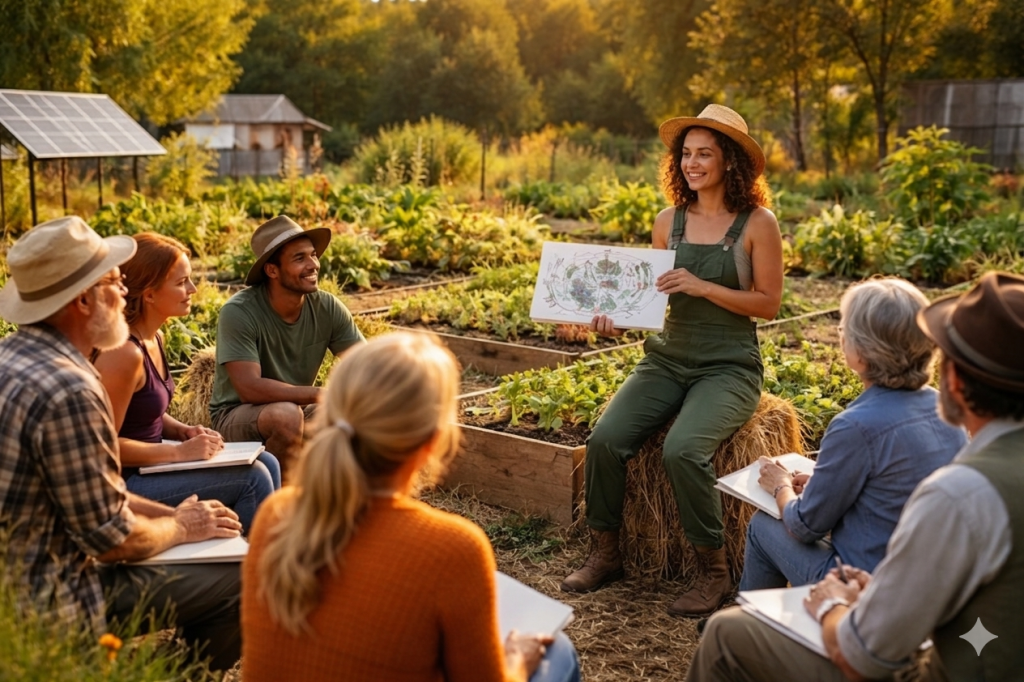
A change agent is someone who actively works to create positive transformation within systems—whether ecological, social, or economic. In the context of permaculture, this means designing sustainable environments while influencing communities to adopt regenerative practices.
Change agent education focuses on equipping learners with the mindset, tools, and skills needed to drive these transformations. It’s not just about gaining knowledge—it’s about becoming a catalyst for change.
Unlike traditional education, which often emphasizes theory, this approach blends learning with action. It encourages students to step into leadership roles and apply their knowledge in real-world contexts.
Core Principles of Change Agent Education
At its core, change agent education is built on several foundational principles:
- Holistic Thinking: Understanding the interconnectedness of natural and human systems
- Action-Oriented Learning: Applying knowledge through hands-on experiences
- Continuous Reflection: Learning from successes and failures
- Collaboration: Working with communities rather than in isolation
This approach aligns perfectly with permaculture’s ethics: care for the earth, care for people, and fair share.
Importance for Permaculture Diploma Seekers
Bridging Theory and Practice
One of the biggest challenges permaculture students face is applying theory to real-world situations. Change agent education closes this gap.
Instead of just learning design principles, students:
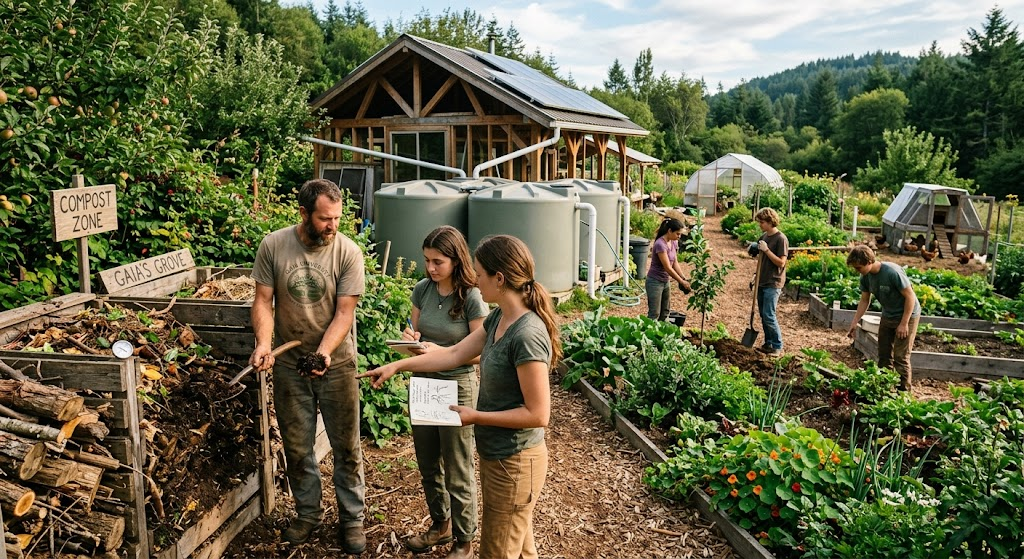
- Work on actual land-based projects
- Engage with communities
- Solve real environmental problems
This practical experience is essential for earning a permaculture diploma and becoming effective in the field.
Empowering Regenerative Leaders
Permaculture isn’t just about gardening—it’s about leadership. Through change agent education, learners develop the confidence and skills to:
- Lead community initiatives
- Facilitate workshops
- Inspire behavioral change
This transformation turns students into leaders who can influence systems at multiple levels.
Key Skills Developed Through Change Agent Education
Systems Thinking
Systems thinking is the ability to see how different elements interact within a whole. In permaculture, this means understanding how soil, water, plants, animals, and people are interconnected.
Students learn to:
- Identify patterns and relationships
- Predict outcomes of interventions
- Design resilient systems
This skill is crucial for creating sustainable solutions.
Communication and Facilitation
A great idea is only powerful if it can be shared effectively. Change agent education emphasizes:
- Clear communication
- Active listening
- Group facilitation techniques
These skills help permaculture practitioners teach others and build strong communities.
Problem-Solving and Adaptability
Real-world challenges are rarely straightforward. Learners develop the ability to:
- Think critically
- Adapt to changing conditions
- Innovate under pressure
This flexibility is key in dynamic environments.
Learning Methods in Change Agent Education
Experiential Learning
Learning by doing is central to this approach. Instead of passive lectures, students:
- Build gardens
- Design landscapes
- Test solutions in real time
This hands-on experience deepens understanding and retention.
Peer-to-Peer Learning
Collaboration is a powerful learning tool. Students learn from each other through:
- Group projects
- Knowledge sharing
- Feedback sessions
This creates a supportive learning environment.
Reflective Practice
Reflection helps students internalize their experiences. Common methods include:
- Journaling
- Group discussions
- Self-assessment
This process builds self-awareness and improves future performance.
Integrating Change Agent Education into Permaculture Studies
Design Projects
Design projects are a cornerstone of permaculture education. Through these projects, students:
- Apply theoretical knowledge
- Solve real-world problems
- Develop practical skills
These projects often become part of a student’s professional portfolio.
Community Engagement
True change happens at the community level. Students are encouraged to:
- Collaborate with local groups
- Understand community needs
- Co-create solutions
This ensures that designs are relevant and sustainable.
Tools and Frameworks for Change Agents
Permaculture Design Principles
Permaculture principles provide a framework for sustainable design. These include:
- Observe and interact
- Catch and store energy
- Use and value diversity
These principles guide decision-making and problem-solving.
Systems Mapping Tools
Visual tools help learners understand complex systems. Common tools include:
- Flow diagrams
- Mind maps
- Stakeholder maps
These tools make it easier to identify leverage points for change.
Challenges Faced by Learners
Overwhelm and Complexity
Permaculture systems can be complex. Students may feel overwhelmed by:
- The amount of information
- The interconnected nature of systems
Breaking learning into manageable steps helps overcome this challenge.
Resistance to Change
Not everyone welcomes new ideas. Change agents often face:
- Skepticism
- Cultural resistance
Building trust and demonstrating results can help overcome these barriers.
Real-Life Applications of Change Agent Education
Community Projects
Many permaculture students apply their skills in community settings, such as:
- Urban gardens
- Food forests
- Educational programs
These projects create tangible benefits for local communities.
Ecological Restoration
Change agents also work on restoring degraded environments by:
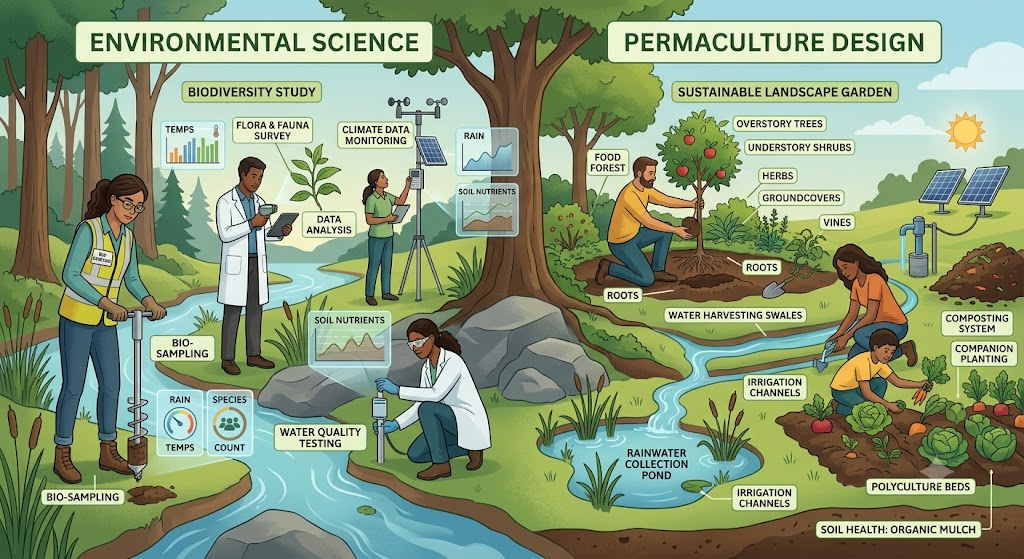
- Improving soil health
- Reintroducing native species
- Managing water systems
These efforts contribute to long-term sustainability.
Career Opportunities for Change Agents
Sustainability Consulting
Graduates can work as consultants, helping organizations:
- Implement sustainable practices
- Design regenerative systems
Education and Training
Many become educators, sharing their knowledge through:
- Workshops
- Courses
- Online platforms
This helps spread permaculture principles globally.
Measuring Impact as a Change Agent
Social Impact Metrics
Success can be measured through:
- Community engagement levels
- Behavioral changes
Environmental Indicators
Environmental impact includes:
- Soil improvement
- Biodiversity increase
- Water conservation
Tracking these metrics helps evaluate effectiveness.
❓ FAQs About Change Agent Education
1. What is change agent education in permaculture?
It’s a learning approach that equips students with the skills to create sustainable change in ecological and social systems.
2. Why is change agent education important for permaculture diploma seekers?
It bridges the gap between theory and practice, preparing students for real-world challenges.
3. What skills are developed through change agent education?
Key skills include systems thinking, communication, leadership, and problem-solving.
4. How is change agent education different from traditional education?
It focuses on experiential learning, real-world application, and continuous reflection.
5. Can a change agent education lead to a career?
Yes, it opens pathways in consulting, education, and sustainability projects.
6. How can I start applying for change agent education today?
Begin with small projects, engage your community, and reflect on your learning experiences.
🌿 Conclusion
Change agent education is more than just a learning method—it’s a transformative journey. For permaculture diploma seekers, it provides the tools, mindset, and confidence needed to create meaningful change in the world.
By combining theory with action, fostering collaboration, and embracing continuous learning, this approach prepares individuals to tackle some of the most pressing environmental and social challenges of our time.
If you’re pursuing a permaculture diploma, embracing change agent education could be the key to unlocking your full potential as a regenerative leader.



Responses