What Does Regenerative Farming Mean? Powerful Insights Every Permaculture Diploma Seeker Must Know

Introduction: Why Understanding What Does Regenerative Farming Mean Matters in Permaculture
If you are pursuing a Permaculture Diploma, you’ve probably asked yourself: what does regenerative farming mean, really? It’s more than a buzzword. It’s more than a marketing trend. For serious land stewards and ecological designers, it represents a shift in mindset—from sustaining resources to actively restoring them.
Permaculture and regenerative farming share deep roots. Both focus on healing landscapes, increasing biodiversity, and building resilient food systems. However, understanding the exact meaning of regenerative farming helps you apply its principles more effectively in design portfolios, site assessments, and long-term land management plans.
For Diploma seekers, this knowledge isn’t optional—it’s foundational.
Defining What Does Regenerative Farming Mean in Modern Agriculture
Core Definition and Philosophy
So, what does regenerative farming mean in practical and philosophical terms?
Regenerative farming is an agricultural approach that improves soil health, increases biodiversity, restores water cycles, and enhances ecosystem services while producing food. Unlike conventional systems that often degrade land, regenerative practices aim to leave soil, water, and ecosystems better than they were before.
At its heart, regenerative farming operates on one powerful idea: agriculture can be a solution to environmental problems rather than a cause.
This means:
- Building soil organic matter
- Enhancing microbial life
- Sequestering atmospheric carbon
- Reducing synthetic inputs
- Designing farms as ecosystems
For Permaculture Diploma seekers, this aligns closely with the ethics of Earth Care, People Care, and Fair Share.
Historical Roots and Indigenous Knowledge
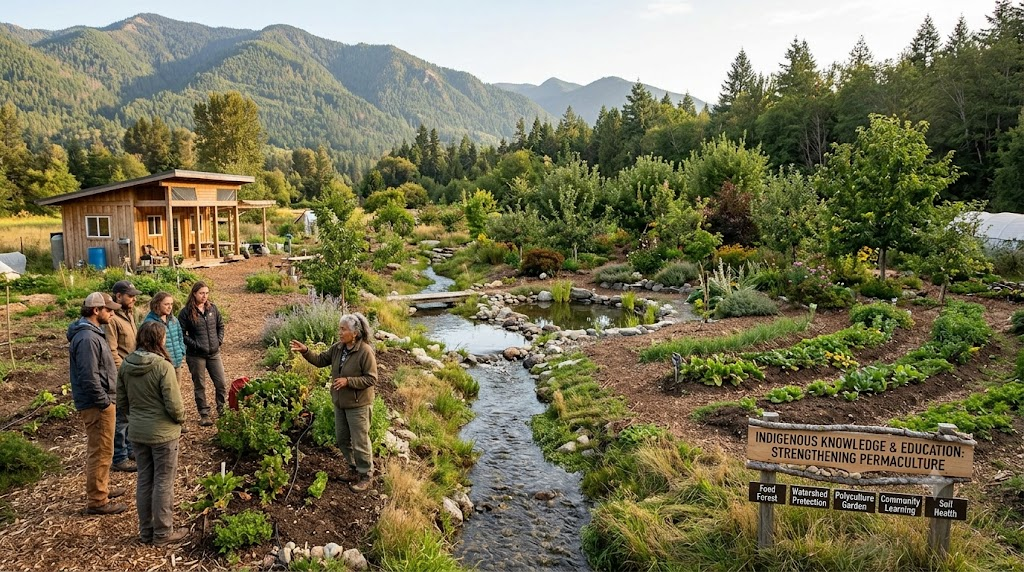
Regenerative practices aren’t new. Indigenous communities worldwide practiced land stewardship techniques that built soil fertility and enhanced biodiversity for generations.
From Indigenous agroforestry systems in the Amazon to holistic grazing methods inspired by African savannas, regenerative farming draws heavily from traditional ecological knowledge. Modern advocates such as Allan Savory have helped popularize holistic land management methods, especially in grazing systems.
Understanding this lineage strengthens your credibility as a Permaculture practitioner. It reminds us that innovation often means remembering.
The Ecological Principles Behind Regenerative Farming
Soil as a Living Ecosystem
Healthy soil isn’t dirt—it’s alive.
A single teaspoon of healthy soil can contain billions of microorganisms. These microbes:
- Break down organic matter
- Transport nutrients
- Build soil aggregates
- Improve water retention
Regenerative farming prioritizes minimizing disturbance (reducing tillage), keeping soil covered, and maintaining living roots year-round.
For Diploma seekers, this means designing systems that protect soil biology through mulching, perennial crops, and minimal mechanical disruption.
Biodiversity and Polyculture Systems
Monoculture weakens ecosystems. Regenerative systems favor:
- Polycultures
- Agroforestry
- Companion planting
- Integrated livestock
Biodiversity increases resilience. When one crop fails, others thrive. When pests arrive, predator species are already present.
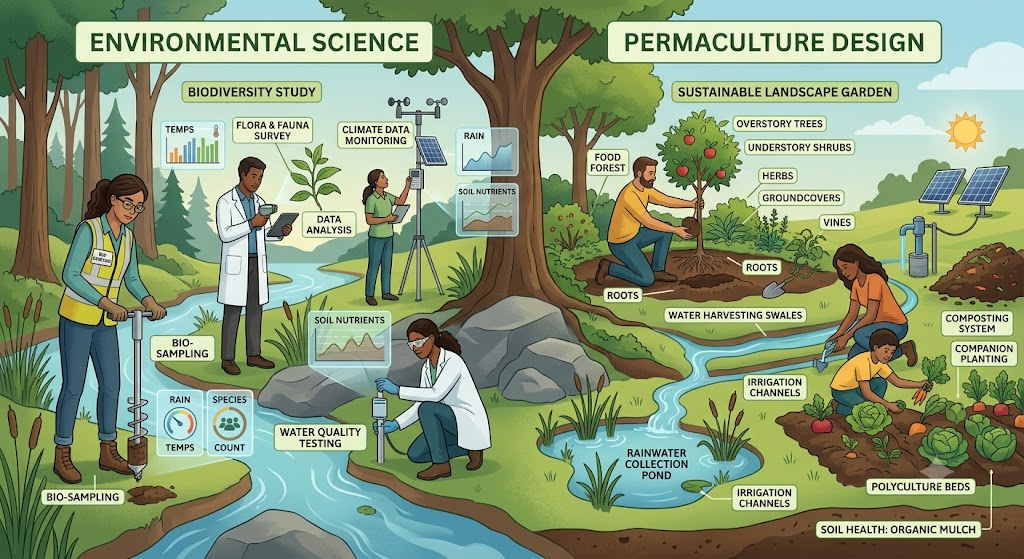
Permaculture design tools such as guild planting and food forests naturally complement regenerative farming strategies.
Water Cycle Restoration
Degraded land sheds water quickly, causing erosion and drought stress. Regenerative systems increase infiltration and reduce runoff.
Healthy soils act like sponges. Increasing organic matter by just 1% can significantly boost water-holding capacity.
This directly supports drought resilience—an essential design consideration in climate-unstable regions.
Regenerative Farming vs. Organic Farming: Key Differences
Certification vs. Outcomes
Organic farming avoids synthetic pesticides and fertilizers. However, it does not always guarantee soil regeneration.
Regenerative farming focuses on outcomes:
- Increased soil carbon
- Improved biodiversity
- Enhanced ecosystem function
While some regenerative farms are organic, not all organic farms are regenerative.
For Diploma seekers, this distinction is important when designing projects or consulting clients.
Soil Carbon Focus
One of the biggest differences is the emphasis on soil carbon.
Various permaculture organizations conduct research showing that regenerative practices can increase soil organic matter and potentially help mitigate climate change. Understanding these studies strengthens your academic and professional credibility.
Soil Health: The Foundation of Regenerative Systems
Soil Microbiology and Mycorrhizal Networks
Mycorrhizal fungi form symbiotic relationships with plant roots. They extend the plant’s ability to access nutrients and water.
Disturbing soil through heavy tillage destroys these networks. Regenerative systems protect and encourage them.
Design implication for Diploma seekers:
- Limit tillage
- Use perennial species
- Apply compost teas strategically
Compost, Mulch, and Cover Crops
Cover crops protect bare soil, fix nitrogen, and add organic matter. Compost introduces beneficial microbes. Mulch prevents moisture loss.
Together, these practices:
- Increase soil fertility naturally
- Reduce erosion
- Build humus
These are core strategies in both regenerative farming and permaculture design systems.
Carbon Sequestration and Climate Resilience
Carbon Farming Techniques
Carbon farming involves practices that draw CO₂ from the atmosphere into the soil. These include:
- Agroforestry
- Silvopasture
- Rotational grazing
- Biochar application
Well-managed grazing systems, inspired by holistic management principles, mimic natural herd movements to stimulate plant growth and soil carbon storage.
Measuring Soil Carbon
Soil testing is becoming more advanced. Diploma seekers should understand:
- Baseline soil testing
- Organic matter percentage tracking
- Carbon sequestration metrics
These measurable indicators help demonstrate regeneration in professional portfolios.
Livestock Integration in Regenerative Systems
Rotational and Holistic Grazing
Instead of continuous grazing, animals are moved frequently between paddocks.
Benefits include:
- Even manure distribution
- Reduced overgrazing
- Stimulated root growth
This mimics natural herd behavior and strengthens grassland ecosystems.
Nutrient Cycling
Livestock play a vital role in nutrient cycling. Their manure feeds soil organisms, which feed plants, which feed animals again.
This closed-loop system reflects classic permaculture design principles.
Water Management in Regenerative Agriculture
Swales and Keyline Design
Water harvesting techniques such as swales and keyline plowing improve infiltration and reduce erosion.
These methods are directly aligned with permaculture earthworks training.
Increasing Water Infiltration
Building organic matter increases soil porosity. Deep-rooted plants break compaction layers, allowing water to penetrate deeply.
For Diploma projects, incorporating these methods demonstrates advanced ecological design skills.
Economic and Social Benefits
Farm Profitability
Regenerative systems often reduce input costs over time:
- Fewer fertilizers
- Reduced pesticides
- Improved soil fertility
Although transition periods can be challenging, long-term profitability often improves.
Community and Food Sovereignty
Regenerative farming supports:
- Local food systems
- Farmer independence
- Ecological literacy
It strengthens rural economies and enhances community resilience.
Regenerative Farming in Permaculture Design
Zone Planning Integration
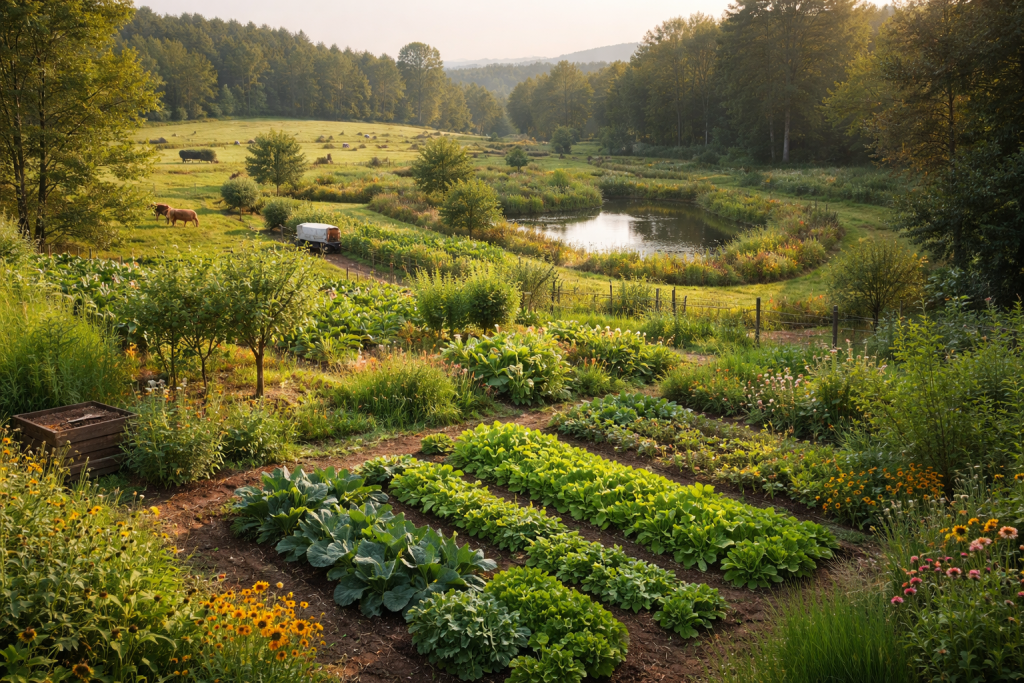
Zone 1 kitchen gardens can use regenerative soil-building practices. Zone 3 grazing systems can apply rotational management.
Understanding scale is essential.
Stacking Functions
In permaculture, every element should serve multiple purposes. Regenerative systems do this naturally:
- Trees provide shade, fodder, carbon storage, and habitat
- Animals provide fertility, pest control, and income
This synergy defines advanced design work.
Practical Steps for Permaculture Diploma Seekers
Observation and Site Analysis
Before designing, observe:
- Soil texture
- Water flow
- Existing biodiversity
- Microclimates
Regeneration begins with understanding the land deeply.
Designing Regenerative Systems
Start small:
- Introduce cover crops
- Reduce tillage
- Integrate compost systems
- Add rotational grazing where appropriate
Document changes for your Diploma portfolio.
Challenges and Misconceptions
Greenwashing Concerns
Not every farm labeled “regenerative” truly improves ecosystems. Clear metrics and soil testing matter.
Transition Period Realities
Yields may temporarily drop during transition. Soil biology needs time to recover. Patience and planning are key.
Frequently Asked Questions
1. What does regenerative farming mean in simple terms?
It means farming in a way that restores soil, increases biodiversity, and improves ecosystem health rather than degrading it.
2. Is regenerative farming the same as organic farming?
No. Organic farming avoids synthetic chemicals, while regenerative farming focuses on rebuilding soil health and ecosystem function.
3. Can regenerative farming help fight climate change?
Yes. By increasing soil carbon, regenerative practices can help remove CO₂ from the atmosphere.
4. Do regenerative systems require livestock?
Not always, but livestock can significantly enhance nutrient cycling and soil regeneration when managed properly.
5. Is regenerative farming profitable?
Over time, many farmers report reduced input costs and improved resilience, which can increase profitability.
6. How can I apply regenerative farming in my Permaculture Diploma project?
Focus on soil building, biodiversity, water management, and measurable ecological outcomes.
Conclusion: The Future of Regenerative Agriculture
So, what does regenerative farming mean for Permaculture Diploma seekers?
It means stepping beyond sustainability into restoration. It means designing farms that heal soil, store carbon, strengthen communities, and build resilience for future generations.
Regenerative farming isn’t a trend—it’s a transformation. As a future permaculture professional, your role is not just to grow food, but to regenerate ecosystems.
And that’s powerful.