
What Is Regenerative Agriculture? A Powerful Guide to the Future of Sustainable Farming (7 Key Insights)

Introduction: What Is Regenerative Agriculture and Why It Matters
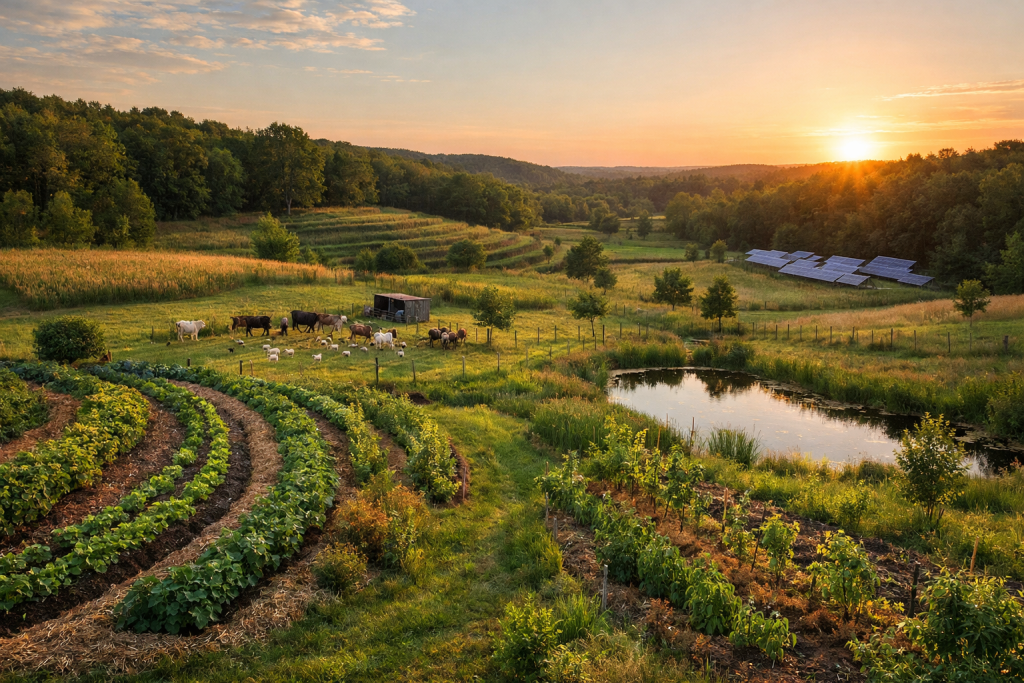
What is regenerative agriculture is one of the most important questions being asked by students of permaculture and sustainable land design today. At its core, regenerative agriculture is a holistic farming approach that focuses on restoring and enhancing ecosystems rather than simply sustaining them. Unlike conventional or even “sustainable” agriculture, regenerative systems aim to improve soil health, increase biodiversity, strengthen water cycles, and sequester carbon over time.
For permaculture diploma seekers, understanding what is regenerative agriculture is essential because it aligns closely with permaculture ethics: Earth Care, People Care, and Fair Share. This approach treats the farm as a living system, where soil, plants, animals, and humans work together in mutually beneficial ways.
As climate change, soil degradation, and food insecurity increase globally, regenerative agriculture offers a hopeful and practical pathway forward.
The Core Principles of Regenerative Agriculture
Building Living Soil Systems
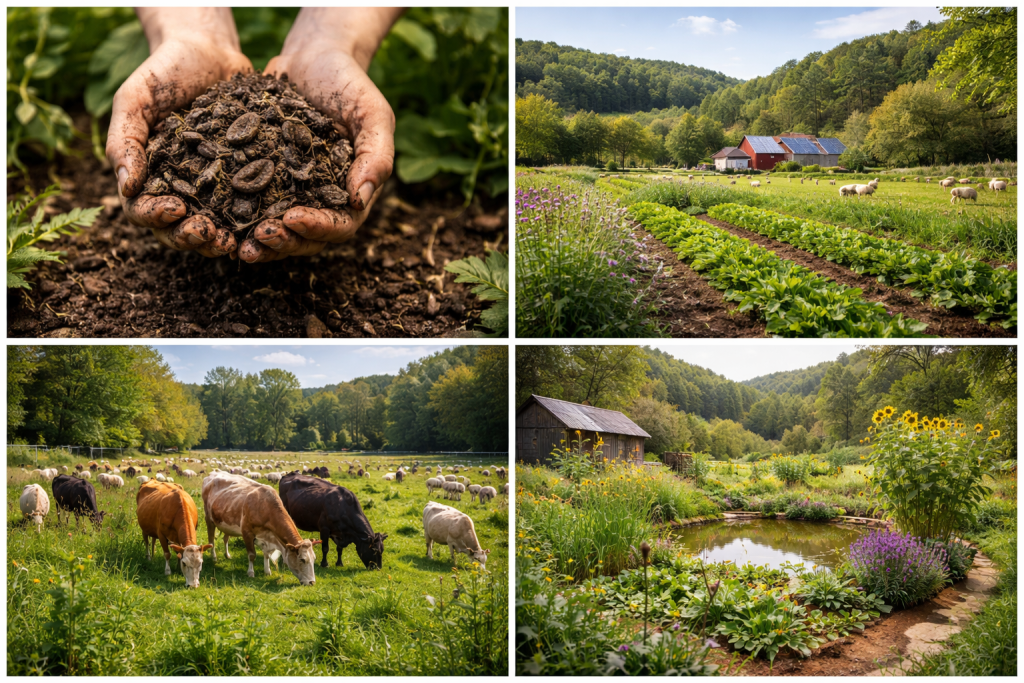
Healthy soil is the foundation of regenerative agriculture. Instead of relying on synthetic fertilizers, regenerative systems focus on feeding soil biology through compost, organic matter, and plant diversity.
Key soil-building practices include:
- Minimal or no tillage
- Compost and compost teas
- Mulching and organic amendments
- Encouraging microbial life
Living soil improves nutrient cycling, water retention, and plant resilience.
Enhancing Biodiversity Above and Below Ground
Biodiversity is not optional—it is essential. Regenerative agriculture promotes diverse plant species, beneficial insects, soil organisms, and animals.
Examples include:
- Polyculture planting instead of monocultures
- Hedgerows and wildlife corridors
- Integrated livestock systems
- Native and perennial species
Greater biodiversity leads to natural pest control, healthier crops, and ecosystem stability.
Regenerative Agriculture vs Conventional Farming
| Aspect | Conventional Agriculture | Regenerative Agriculture |
|---|---|---|
| Soil Health | Depletes soil | Rebuilds soil |
| Inputs | Synthetic fertilizers & pesticides | Natural inputs & biology |
| Biodiversity | Low | High |
| Carbon Impact | High emissions | Carbon sequestration |
| System Design | Linear | Holistic & cyclical |
Understanding this comparison helps clarify what is regenerative agriculture and why it represents a shift in mindset, not just farming techniques.
Key Regenerative Practices Used Worldwide
Cover Cropping and Green Manures
Cover crops protect soil from erosion, suppress weeds, and feed microorganisms. They also fix nitrogen and increase organic matter.
Common cover crops include:
- Legumes (clover, vetch)
- Grasses (rye, oats)
- Multi-species mixes
Rotational and Holistic Grazing
Livestock, when managed correctly, can regenerate land. Rotational grazing mimics natural herd movement, allowing grasslands to recover while fertilizing soil naturally.
Benefits include:
- Increased soil carbon
- Improved pasture health
- Reduced erosion
The Role of Carbon Sequestration
One of the most exciting answers to what is regenerative agriculture lies in its climate potential. Healthy soils act as carbon sinks, drawing carbon dioxide from the atmosphere and storing it underground.
Regenerative practices:
- Increase soil organic carbon
- Reduce reliance on fossil fuels
- Improve long-term land resilience
According to research shared by the Rodale Institute, regenerative agriculture has the potential to reverse climate change trends when adopted at scale.
Why Regenerative Agriculture Matters for Permaculture Students
For permaculture diploma seekers, regenerative agriculture:
- Reinforces systems thinking
- Provides real-world land management tools
- Complements design frameworks like zones and sectors
- Supports ethical decision-making
It bridges theory and practice, preparing students to design landscapes that heal rather than harm.
Common Challenges and Misconceptions
- ❌ “It’s just organic farming”
- ❌ “It’s not productive enough”
- ❌ “It only works on small farms”
In reality, regenerative agriculture can scale from backyard gardens to large farms and often improves productivity over time by reducing input costs.
FAQs About What Is Regenerative Agriculture
1. What is regenerative agriculture in simple terms?
It is a farming approach that restores soil, ecosystems, and natural cycles while producing food.
2. Is regenerative agriculture the same as permaculture?
They are closely related, but permaculture is a broader design system, while regenerative agriculture focuses more on farming practices.
3. Can regenerative agriculture feed the world?
Yes, studies show it can be productive, resilient, and scalable when applied correctly.
4. Does regenerative agriculture require livestock?
No, but animals can enhance regeneration when integrated responsibly.
5. How long does regeneration take?
Soil improvements can begin within 1–3 years, depending on climate and practices.
6. Is regenerative agriculture scientifically supported?
Yes, increasing research supports its benefits for soil health, climate, and biodiversity.
Conclusion: The Future Is Regenerative
Understanding what is regenerative agriculture is more than academic knowledge—it is a call to action. For permaculture diploma seekers, this approach offers practical tools, ethical clarity, and ecological hope. By working with nature rather than against it, regenerative agriculture helps restore land, communities, and future food systems.

Responses