
Permaculture What Is It? A Powerful Guide to Sustainable Living (7 Key Benefits)

Introduction to Permaculture: What Is It and Why It Matters
Permaculture is a way of designing human environments that work with nature instead of against it. If you’re asking permaculture what is it, the simplest answer is this: permaculture is a sustainable design system that helps people create productive landscapes while protecting the planet.
The word permaculture comes from “permanent agriculture,” but today it also means “permanent culture.” That’s because permaculture isn’t just about farming—it’s about how we live, build homes, manage waste, use energy, and support communities. It focuses on long-term solutions rather than quick fixes.
In a world facing climate change, soil loss, and food insecurity, permaculture offers practical and hopeful answers. It teaches us how to grow food, save water, and reduce waste by copying patterns found in natural ecosystems. Instead of harming the environment, permaculture helps restore it.
The History and Origins of Permaculture
Permaculture was developed in the 1970s by Bill Mollison and David Holmgren in Australia. They noticed that industrial farming methods were damaging land, water, and ecosystems. Their goal was to design systems that could last for generations.
They studied forests, wetlands, and natural landscapes to understand how nature stays productive without chemicals or machines. By applying these natural patterns to human systems, they created permaculture—a method that works almost anywhere in the world.
Today, permaculture is practiced globally, from small backyard gardens to large farms and eco-villages.
Core Ethics of Permaculture
At the heart of permaculture are three simple ethics:
1. Care for the Earth
This means protecting soil, water, air, plants, and animals. Healthy ecosystems support all life.
2. Care for People
Permaculture designs should meet human needs such as food, shelter, and community well-being.
3. Fair Share
Also called “returning the surplus,” this ethic encourages sharing extra resources and limiting consumption.
These ethics guide every permaculture decision, making it a values-based system—not just a gardening method.
The Principles of Permaculture Explained Simply
Permaculture uses design principles that help people think smarter, not harder. Here are a few key ones:
- Observe and interact – Learn from nature before taking action
- Catch and store energy – Save rainwater, sunlight, and soil nutrients
- Produce no waste – Reuse, recycle, and compost
- Use small and slow solutions – Start simple and grow over time
- Integrate rather than separate – Let elements work together
These principles help create systems that are efficient, resilient, and low-maintenance.
Permaculture in Gardening and Farming
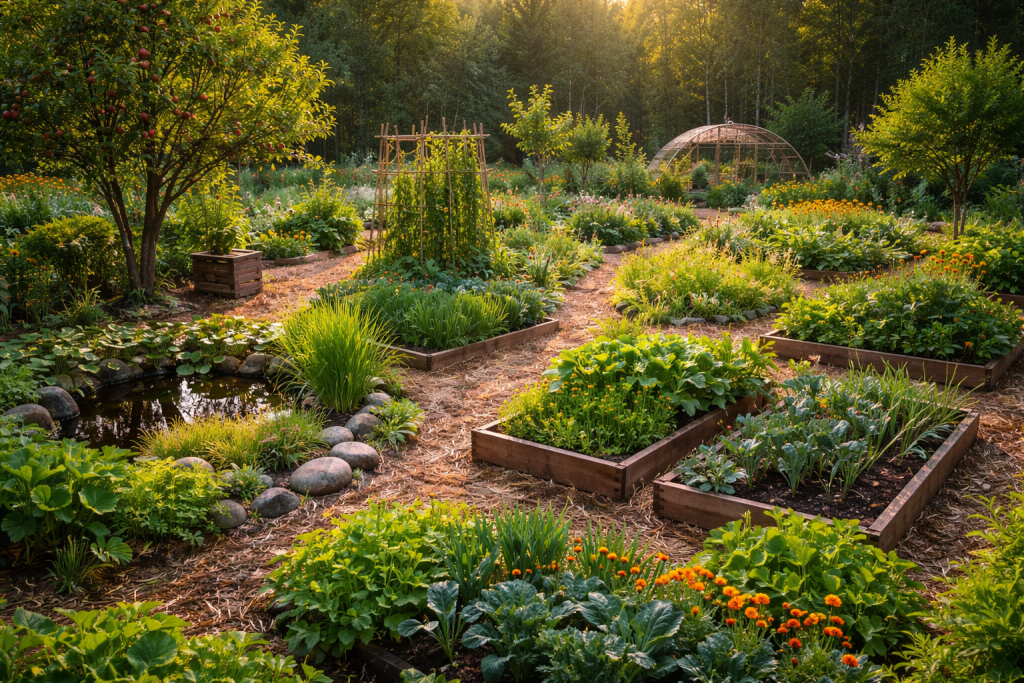
One of the most common uses of permaculture is food production. Instead of planting crops in rows, permaculture gardens look more like forests.
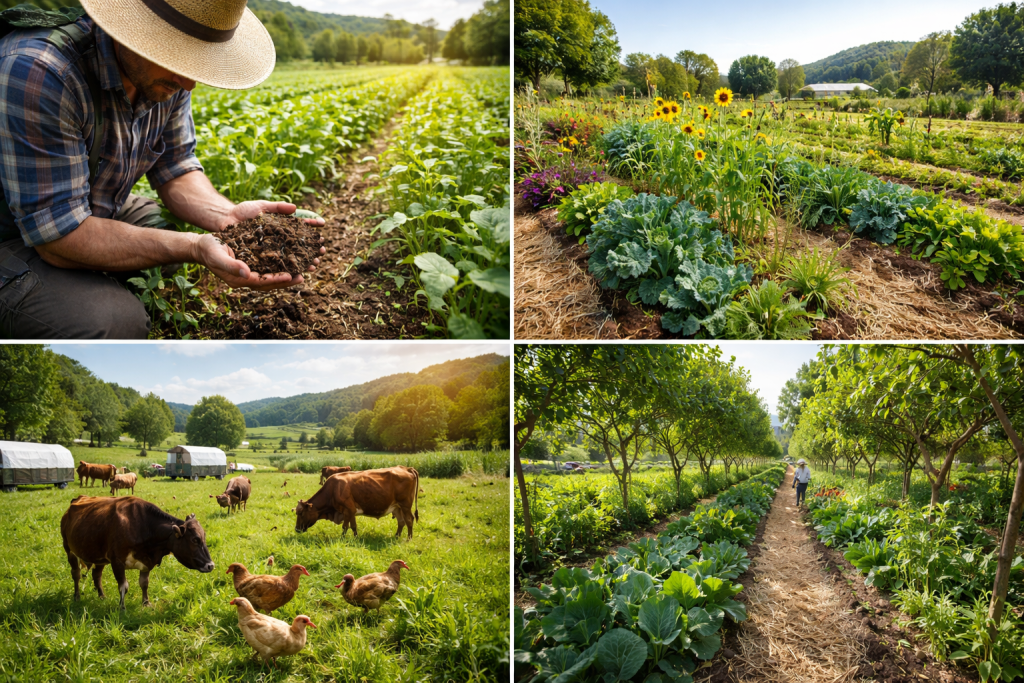
Key Features Include:
- Companion planting
- Mulching instead of digging
- Using perennial plants
- Natural pest control
- Composting food scraps
This approach improves soil health, saves water, and produces food year after year with less effort.
Permaculture Design: How It Works
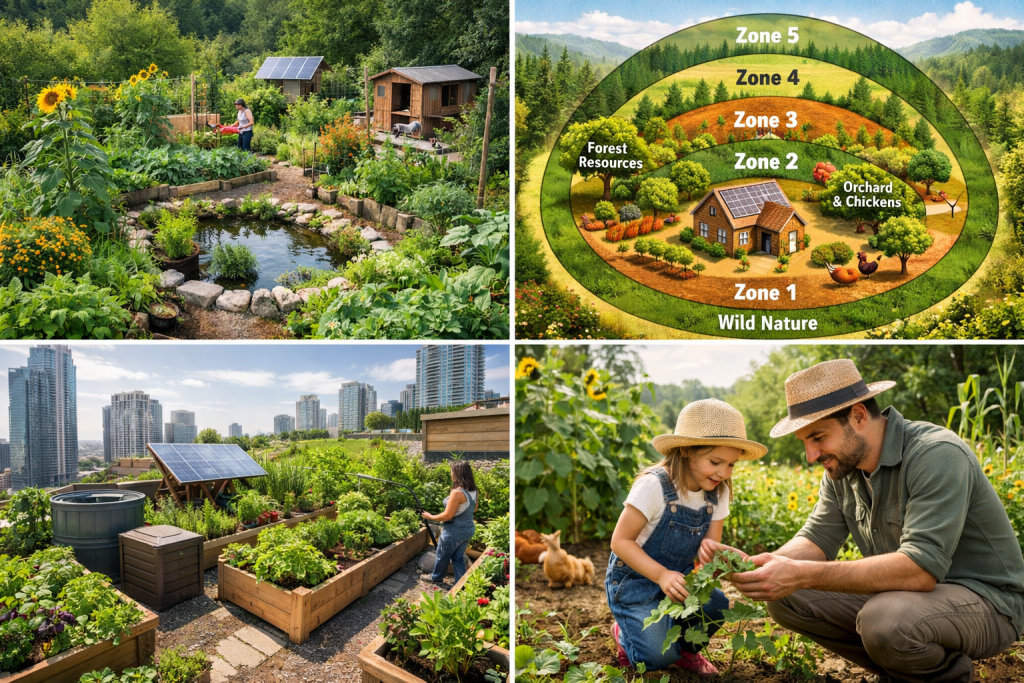
Permaculture design starts with careful planning. Designers look at sunlight, wind, water flow, soil, and human needs before placing anything.
A common concept is zones, which organize spaces based on how often they are used:
- Zone 0: The home
- Zone 1: Kitchen garden
- Zone 2: Orchards and animals
- Zone 5: Wild, untouched nature
This layout saves time and energy while improving efficiency.
Permaculture and Sustainability
Permaculture is strongly linked to sustainability because it:
- Reduces reliance on fossil fuels
- Encourages renewable energy
- Builds healthy soil
- Protects biodiversity
Unlike conventional systems, permaculture improves the land over time instead of wearing it out.
Permaculture in Urban Environments
You don’t need a farm to practice permaculture. It works in cities too.
Urban permaculture includes:
- Balcony gardens
- Rooftop farms
- Community gardens
- Rainwater harvesting
- Compost bins
Even small actions can make a big difference.
Benefits of Permaculture for the Environment
Permaculture helps:
- Prevent soil erosion
- Improve water retention
- Reduce pollution
- Support wildlife
- Fight climate change
It turns damaged land into thriving ecosystems.
Economic and Social Benefits of Permaculture
Permaculture can lower food costs, create local jobs, and strengthen communities. It encourages sharing knowledge, resources, and responsibility.
People who practice permaculture often feel more connected—to nature and to each other.
Common Myths About Permaculture
- “It’s only for farmers” – Anyone can practice it
- “It’s expensive” – Many techniques save money
- “It’s unscientific” – It’s based on ecology and systems thinking
How to Get Started with Permaculture
Start small:
- Observe your space
- Compost kitchen waste
- Grow easy plants
- Learn from nature
Permaculture – What Is It: FAQs
1. Permaculture – what is it in simple words?
It’s a way of living and growing food that works with nature, not against it.
2. Is permaculture organic?
Yes, it avoids chemicals and focuses on natural methods.
3. Can permaculture work anywhere?
Yes, it can be adapted to almost any climate.
4. Is permaculture hard to learn?
No, it starts simple and grows as you learn.
5. Does permaculture really help the environment?
Yes, it restores soil, saves water, and supports ecosystems.
6. Can kids and beginners practice permaculture?
Absolutely! It’s great for learning responsibility and caring for nature.
Conclusion: Why Permaculture Matters Today
Understanding permaculture (what is it?) helps us see that sustainability isn’t just possible—it’s practical. Permaculture gives us tools to care for the Earth, support people, and create a better future. Whether you live in the countryside or a city apartment, permaculture offers ideas that anyone can use to live more wisely and responsibly.

Responses