
The Ultimate Guide to sustainability courses online: 12 Powerful Benefits for Permaculture Diploma Seekers


Introduction to sustainability courses online
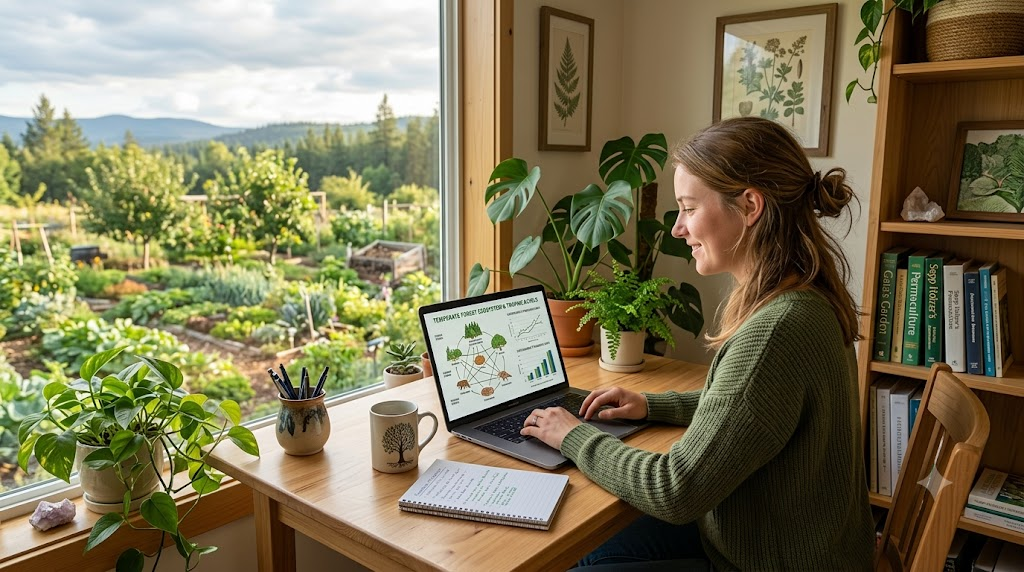
For today’s environmental learners, sustainability courses online have become a powerful pathway toward deeper ecological knowledge and practical design skills. If you are pursuing a Permaculture Diploma, you already understand that sustainability is more than a buzzword—it is a way of life. Online sustainability education now bridges theory and hands-on practice in ways that were once impossible.
With digital learning platforms expanding rapidly, learners can now study regenerative agriculture, ecological design, renewable energy systems, and climate science from anywhere in the world. This flexibility is especially valuable for permaculture diploma seekers who are often balancing land-based work, internships, and personal commitments.
In this comprehensive guide, we will explore how sustainability education delivered online can strengthen your permaculture journey, enhance your credentials, and expand your global perspective.
Understanding Sustainability Education in the Digital Era
What Is Sustainability?
Sustainability refers to meeting present needs without compromising future generations. It rests on three pillars:
- Environmental stewardship
- Social equity
- Economic resilience
For permaculture students, sustainability also means designing systems that mimic natural ecosystems—resilient, regenerative, and self-sustaining.
Sustainability education typically covers:
| Pillar | Focus Area | Example Topics |
| Environmental | Ecosystem health | Soil conservation, biodiversity |
| Social | Community well-being | Ethical labor, food justice |
| Economic | Resource efficiency | Circular economy models |
Understanding these interconnected systems is foundational for any Permaculture Diploma.
Why Online Learning Is Transforming Sustainability Studies
Digital platforms have revolutionized access to environmental education. Previously, students needed to relocate or attend in-person seminars. Now, structured programs, webinars, and accredited courses are available globally.
Benefits include:
- Remote access to global experts
- Recorded lectures for review
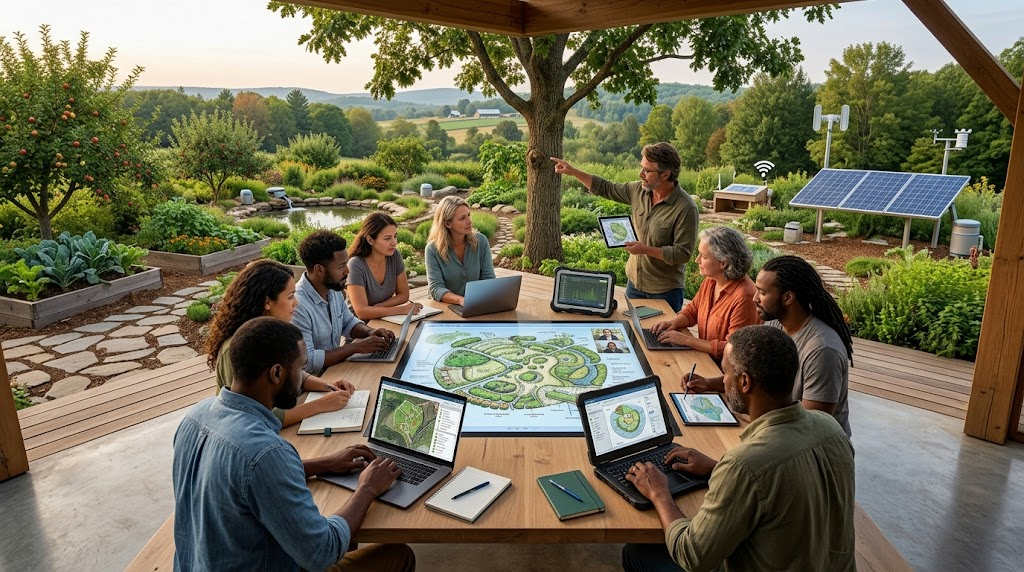
- Interactive forums and peer learning
- Lower tuition costs compared to traditional programs
Institutions like Gaia University International highlight the urgent need for accessible sustainability education worldwide, reinforcing the value of online programs.
Why sustainability courses online Matter for Permaculture Diploma Seekers
Integrating Ecological Design and Sustainable Practices
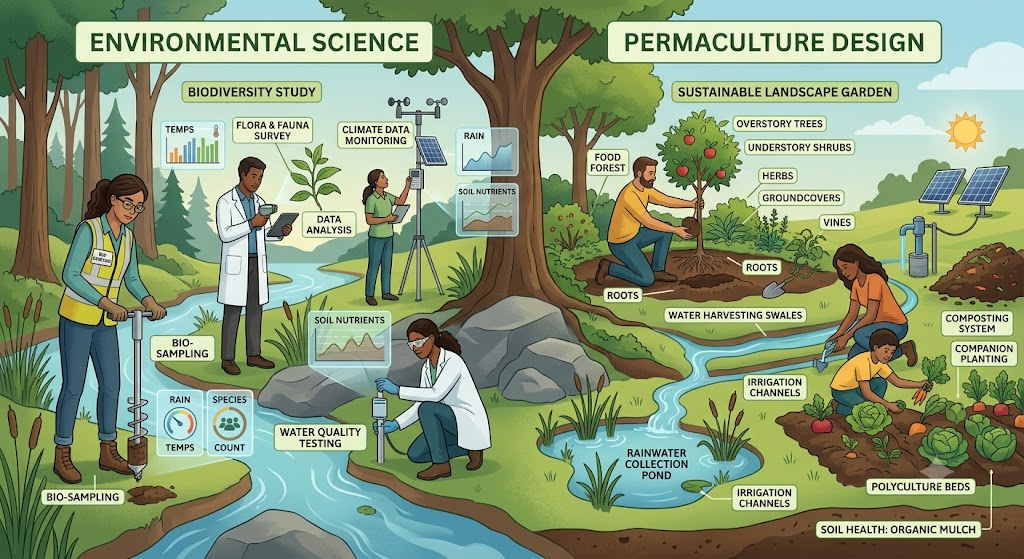
Permaculture is fundamentally about ecological design. Online sustainability courses often include:
- Systems thinking
- Landscape design principles
- Soil regeneration techniques
- Water harvesting strategies
These directly support permaculture diploma modules, particularly design portfolios and applied projects.
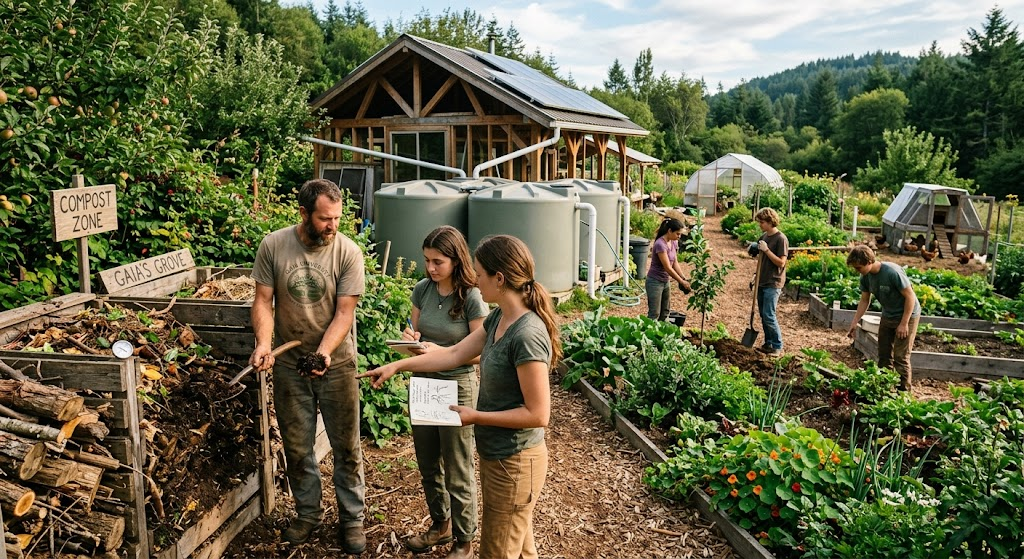
By combining digital theory lessons with field implementation on your land or internship site, you can immediately test and refine concepts.
Building Regenerative Systems Knowledge
Sustainability courses expand understanding beyond agriculture to include:
- Renewable energy integration
- Carbon sequestration
- Urban sustainability
- Sustainable infrastructure
This broader systems knowledge strengthens your design capacity and ensures your permaculture projects address environmental challenges holistically.
Core Topics Covered in sustainability courses online
Climate Change and Environmental Science
Climate literacy is critical. Courses often explore:
- Greenhouse gas cycles
- Impacts on agriculture
- Adaptation and mitigation strategies
- Policy frameworks
Permaculture designers must anticipate climate variability. Online coursework builds that scientific foundation.
Renewable Energy and Resource Management
Energy systems influence land design. Topics include:
- Solar photovoltaic systems
- Wind energy basics
- Energy efficiency
- Sustainable water management
Understanding these allows diploma seekers to incorporate renewable systems into site plans.
Sustainable Agriculture and Agroecology
This is where sustainability and permaculture strongly overlap:
- Organic soil fertility
- Polyculture systems
- Agroforestry
- Integrated pest management
Online modules often provide case studies and data analysis tools.
Circular Economy and Waste Reduction
Modern sustainability education emphasizes waste elimination through:
- Composting systems
- Resource loops
- Industrial ecology
- Zero-waste design
These align perfectly with permaculture ethics of “Produce No Waste.”
Accreditation and Certification Pathways
Aligning Courses with Permaculture Diploma Requirements
When selecting sustainability courses online, ensure they:
- Offer verifiable certificates
- Include practical assignments
- Cover core sustainability pillars
- Complement required permaculture modules
Some programs provide continuing education credits that strengthen professional credibility.
Key Benefits of sustainability courses online
Self-Paced Learning for Land-Based Practitioners
Permaculture students often work outdoors. Online study allows:
- Evening or seasonal coursework
- Replayable lectures
- Modular pacing
This flexibility reduces burnout while maintaining academic progress.
Global Community and Expert Mentorship
Many platforms include discussion forums and mentorship networks. This:
- Expands professional contacts
- Encourages collaborative design
- Introduces diverse climate perspectives
Learning from international case studies enriches local implementation.
How to Choose the Right sustainability courses online
Curriculum Depth and Practical Application
Evaluate whether the course includes:
- Field-based assignments
- Real-world case studies
- Design simulations
- Peer review processes
A course heavy on theory but lacking applied components may not serve permaculture diploma goals effectively.
Instructor Expertise and Industry Experience
Look for instructors with:
- Academic credentials
- Field-based sustainability projects
- Published research
- Community engagement
This ensures credible, experience-backed instruction.
Comparing Free vs Paid sustainability courses online
| Feature | Free Courses | Paid Courses |
| Certification | Limited | Usually included |
| Instructor Access | Minimal | Direct mentorship |
| Depth | Introductory | Advanced |
| Assignments | Optional | Structured |
While free resources are useful, diploma seekers often benefit more from structured, paid programs.
Tools and Platforms Offering sustainability courses online
Popular platforms include:
- University MOOCs
- Environmental institutes
- Regenerative agriculture academies
- Professional sustainability certification bodies
Research reviews, curriculum outlines, and alumni feedback before enrolling.
Case Study: A Permaculture Student’s Learning Path
Consider a diploma student working on a 5-acre regenerative farm. They enroll in:
- Climate adaptation course
- Renewable energy systems module
- Circular economy design program
They apply:
- Solar integration in irrigation
- Improved compost systems
- Climate-resilient crop rotations
The result? A more holistic, resilient design portfolio that exceeds diploma expectations.
Challenges and Solutions in Online Sustainability Learning
Common challenges:
- Limited hands-on supervision
- Digital fatigue
- Time management
Solutions include:
- Blending coursework with field experiments
- Joining peer accountability groups
- Scheduling dedicated study blocks
Frequently Asked Questions (FAQs)
1. Are sustainability courses online recognized for Permaculture Diploma programs?
Many are recognized as supplemental education. Always verify alignment with your diploma accreditation body.
2. How long do sustainability courses online typically take?
Courses range from short 4-week modules to year-long certification programs.
3. Can I apply online learning directly to my land project?
Yes. Most programs encourage practical implementation alongside theoretical study.
4. Are sustainability courses online suitable for beginners?
Yes. Many start with foundational content before progressing to advanced topics.
5. Do employers value online sustainability certifications?
Increasingly, yes—especially when issued by reputable institutions.
6. How do I stay motivated in an online course?
Set clear goals, join study groups, and immediately apply what you learn in real-world projects.
Conclusion: Advancing Your Permaculture Journey Through sustainability courses online
In today’s interconnected world, sustainability education is more accessible than ever. For Permaculture Diploma seekers, sustainability courses online offer structured, flexible, and globally informed pathways to deepen ecological knowledge.
By selecting credible programs, aligning coursework with diploma goals, and actively applying lessons in the field, you can transform digital learning into tangible environmental impact.
Your permaculture journey is about designing resilient systems. With the right online sustainability education, you are not just studying theory—you are building the foundation for a regenerative future.

Responses