
Permaculture online course: 7 Powerful Benefits for Diploma Seekers

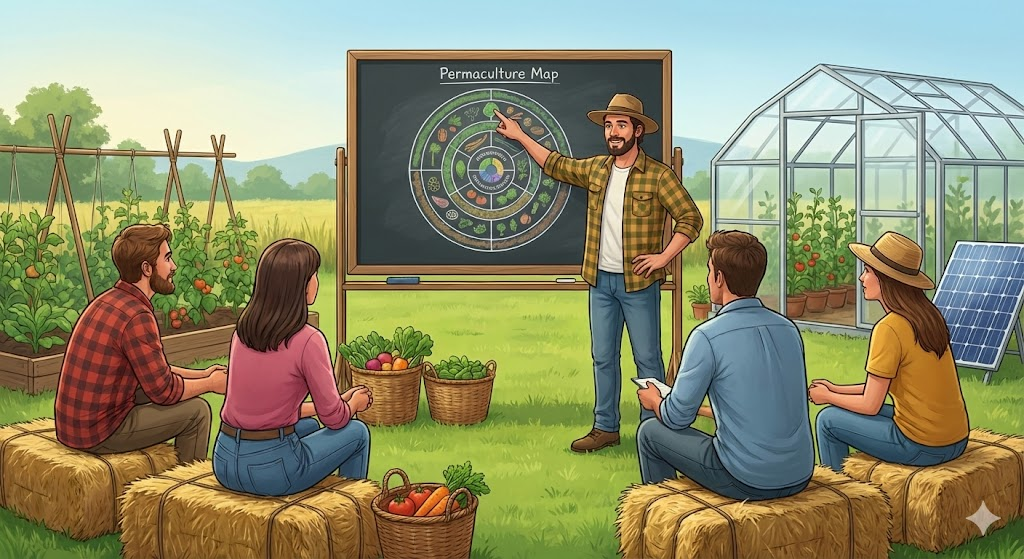
Introduction to permaculture online course
A permaculture online course has become one of the most accessible and effective ways for serious learners to begin or advance their journey toward a Permaculture Diploma. For diploma seekers, the challenge is not just learning theory—it is mastering ecological design, documenting real-world projects, and demonstrating competence across multiple areas of sustainability.
Permaculture, originally developed by Bill Mollison and David Holmgren, is a design system rooted in observing natural ecosystems and applying those patterns to human settlements. Today, education in this field has expanded globally. Thanks to digital platforms, students can now access structured, accredited programs from anywhere in the world.
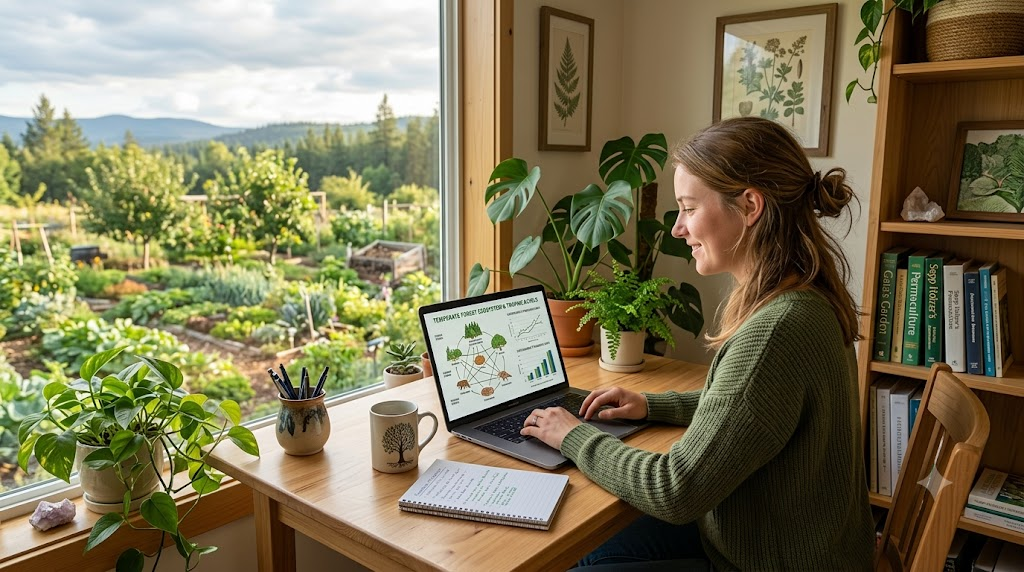
For aspiring diploma holders, online education offers flexibility without compromising academic depth. You can engage with global instructors, participate in collaborative design exercises, and build your portfolio while managing work or farm responsibilities. Let’s explore how this pathway supports serious, long-term professional growth.
Understanding Permaculture Principles and Ethics
Permaculture is not simply gardening—it is a holistic design science. Before committing to diploma-level work, learners must deeply understand its ethical and conceptual foundations.
The Three Core Ethics: Earth Care, People Care, Fair Share
Every design decision in permaculture stems from three ethics:
- Earth Care – Protect and regenerate natural systems.
- People Care – Support human well-being and community resilience.
- Fair Share – Distribute surplus responsibly and limit consumption.
These ethics form the moral compass guiding sustainable agriculture, regenerative landscapes, and community planning.
The 12 Permaculture Design Principles
David Holmgren’s 12 design principles help students translate ethics into practice. These include:
- Observe and interact
- Catch and store energy
- Produce no waste
- Integrate rather than segregate
- Use and value diversity
A high-quality program ensures students apply these principles to real projects, not just memorize them.
Why Choose a permaculture online course for Your Diploma Journey?
Choosing a permaculture online course is a strategic decision for serious learners pursuing diploma-level credentials.
Flexibility and Self-Paced Learning
Diploma seekers often balance professional work, farming, or community projects. Online courses allow learners to:
- Study during evenings or weekends
- Revisit lectures
- Progress at their own speed
This flexibility ensures deeper comprehension rather than rushed participation.
Access to Global Experts and Case Studies
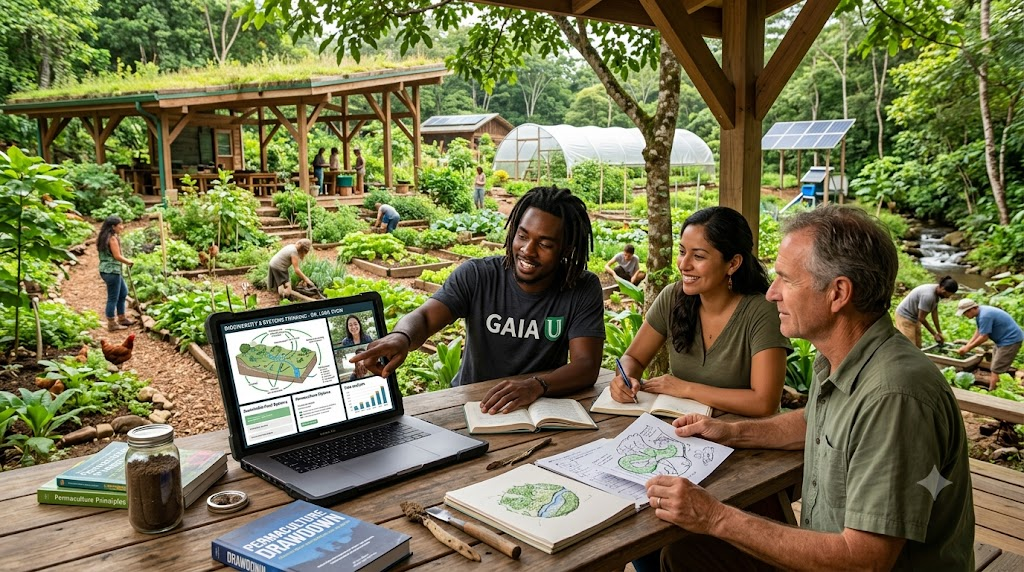
Online platforms connect students with instructors from diverse climates and bioregions. This exposure expands ecological literacy beyond one’s local environment. Case studies from tropical agroforestry, arid-land restoration, or temperate food forests enrich design thinking.
For global standards and recognized pathways, organizations like the Gaia U International provide structured frameworks and international insights.
Cost-Effectiveness Compared to In-Person PDCs
Traditional Permaculture Design Certificate (PDC) courses require travel, accommodation, and time away from work. Online alternatives reduce:
- Travel costs
- Venue fees
- Printed materials
For diploma seekers, financial sustainability matters just as much as ecological sustainability.
Curriculum Structure of a High-Quality permaculture online course
A serious diploma pathway requires a comprehensive curriculum. Let’s examine core components.
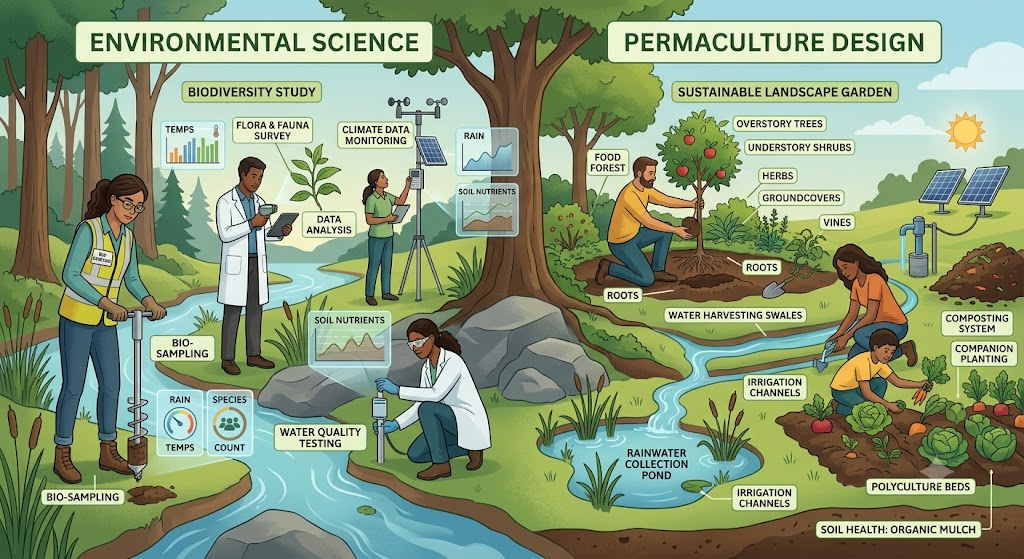
Soil Science and Regenerative Agriculture
Healthy soil is the foundation of permaculture design. Students explore:
- Soil microbiology
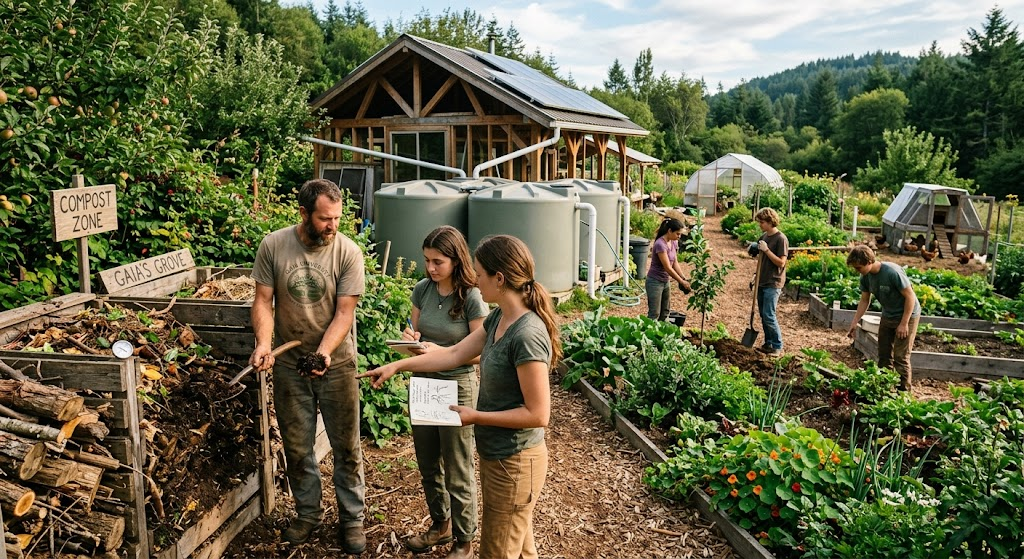
- Composting systems
- Biochar production
- No-till methods
Understanding nutrient cycles allows diploma seekers to design regenerative agricultural systems.
Water Harvesting and Landscape Design
Water is life. Courses cover:
- Swales and contour mapping
- Keyline design
- Rainwater harvesting systems
- Greywater recycling
Students learn to design landscapes that conserve water while preventing erosion.
Food Forests and Agroforestry Systems
Food forests replicate natural woodland ecosystems. Topics include:
- Plant guilds
- Layered planting strategies
- Nitrogen-fixing species
- Perennial crop systems
This knowledge supports long-term, self-sustaining food production.
Urban Permaculture and Community Design
Permaculture applies beyond rural farms. Online programs teach:
- Rooftop gardening
- Community resilience planning
- Cooperative housing design
- Waste reduction systems
Diploma seekers must demonstrate adaptability across contexts.
Accreditation and Pathways to a Permaculture Diploma
Understanding certification pathways is critical.
What Is a Permaculture Design Certificate (PDC)?
A PDC is typically a 72-hour foundational course covering core design principles. It is the entry requirement for diploma progression.
Moving from PDC to Diploma
The diploma stage requires:
- Extensive project documentation
- Peer-reviewed designs
- Applied fieldwork
- Mentorship oversight
Online systems often provide digital submission platforms and mentor evaluations.
Recognized Institutions and Standards
Seek programs aligned with international standards and experienced practitioners. Accreditation ensures your work is respected globally.
Key Skills Developed Through Online Permaculture Training
Diploma seekers gain both theoretical and practical expertise.
Ecological Design Thinking
Students learn to see patterns, flows, and interconnections within ecosystems.
Systems Mapping and Site Analysis
Mapping tools help analyze:
- Sun patterns
- Wind direction
- Soil types
- Water flow
This analytical foundation is essential for professional credibility.
Project Documentation and Portfolio Building
A strong portfolio includes:
- Site maps
- Design explanations
- Implementation photos
- Maintenance plans
Online platforms streamline digital documentation.
Tools and Technologies Used in Online Learning
Digital education now integrates advanced tools.
Learning Management Systems (LMS)
Platforms organize lectures, assignments, quizzes, and peer discussions.
GIS Mapping and Digital Design Tools
Geographic Information Systems (GIS) allow precise landscape analysis.
Virtual Community Forums and Peer Review
Peer feedback strengthens design quality and critical thinking.
Fieldwork Requirements and Practical Implementation
Even in online programs, real-world implementation is mandatory.
Designing Real-World Projects
Students must apply theory to:
- Farms
- Urban gardens
- Community spaces
Documenting Case Studies
Documentation ensures accountability and growth.
Mentorship and Feedback Loops
Experienced mentors review and guide progress toward diploma standards.
Evaluating the Best permaculture online course Options
Not all programs are equal.
Instructor Credentials and Experience
Look for instructors with:
- Documented projects
- Years of practice
- Teaching experience
Student Reviews and Alumni Outcomes
Success stories reflect program quality.
Course Duration and Depth
Comprehensive programs offer depth beyond introductory content.
Challenges of Online Permaculture Education
Online learning demands discipline.
Staying Motivated in Self-Paced Programs
Set study schedules and join discussion groups.
Bridging the Gap Between Theory and Practice
Apply concepts immediately in your local environment.
Financial Planning and Scholarships
Diploma-level training is an investment.
Tuition Costs and Payment Plans
Many providers offer installment plans.
Grants and Community Sponsorship
Some ecological organizations provide funding assistance.
Career Opportunities After Completing a Diploma
A diploma opens professional pathways.
Permaculture Consultant
Advise landowners on regenerative design.
Regenerative Farm Designer
Develop sustainable agricultural systems.
Community Educator or NGO Specialist
Work in sustainability education and development.
Frequently Asked Questions (FAQs)
1. Is a permaculture online course recognized internationally?
Yes, if it follows standard PDC guidelines and is issued by reputable institutions.
2. Can I complete my diploma fully online?
Theory components are online, but practical projects must be implemented locally.
3. How long does it take to earn a diploma?
It varies, but typically several years of documented practice are required.
4. Do I need farming experience before enrolling?
No, but hands-on application will be necessary during the program.
5. What tools do I need for online learning?
A computer, internet access, and mapping or design software.
6. Is mentorship included in most programs?
High-quality programs include mentor feedback for diploma progression.
Conclusion: Advancing Your Diploma Through Online Learning
A permaculture online course provides a flexible, comprehensive, and globally connected pathway for serious diploma seekers. By combining ecological ethics, scientific design principles, digital tools, and real-world application, online programs prepare students for meaningful careers in regenerative agriculture and sustainable community development.
For dedicated learners, the journey requires discipline, documentation, and hands-on practice. Yet the rewards—professional credibility, environmental impact, and community resilience—are worth the commitment.If you are committed to ecological design excellence, enrolling in a permaculture online course may be the most strategic step toward achieving your Permaculture Diploma.
Responses