
Experiential Online Learning: A Powerful Shift in Permaculture Education for Sustainable Futures (2026 Guide)


Understanding Experiential Online Learning
Experiential online learning is an educational approach that places direct experience at the center of the learning process, even within a digital environment. Rather than focusing solely on lectures, readings, or quizzes, this model emphasizes active participation, reflection, and real-world application.
For permaculture diploma seekers, experiential online learning is especially relevant. Permaculture is rooted in observation, design, experimentation, and ethical decision-making. These skills cannot be fully developed through passive learning alone. Instead, learners must engage with their landscapes, communities, and personal projects while being guided through structured online frameworks.
Definition and Core Principles
Experiential online learning is based on several well-established educational principles:
- Learning occurs through doing, not just consuming information
- Reflection deepens understanding and improves future action
- Feedback loops strengthen skill development
- Knowledge is contextual and place-based
In this model, the online platform acts as a facilitator, not a replacement for real-world engagement.
How It Differs from Traditional Online Courses
Traditional online education often relies on recorded lectures, standardized tests, and fixed answers. Experiential online learning, by contrast, is adaptive and process-oriented. Learners are asked to apply concepts in their own environments, document outcomes, and reflect on successes and challenges.
This distinction is critical for ecological education, where no two sites are the same.
Why Permaculture Education Requires Experiential Learning
Permaculture is not simply a body of knowledge; it is a design science and ethical framework. Understanding zones, sectors, water flows, soils, and social systems requires observation over time and interaction with living systems.
Systems Thinking and Hands-On Practice
Systems thinking is best learned through direct engagement. When learners map their own sites, analyze feedback, and adjust designs, abstract concepts become tangible. Experiential online learning allows students to practice these skills where they live, making learning immediately relevant.
Observation, Feedback, and Iteration
One of the core permaculture principles is “observe and interact.” Experiential online learning supports this by encouraging ongoing observation, documentation, and iterative improvement rather than one-time assessments.
Experiential Online Learning for Permaculture Diploma Seekers
For those pursuing a permaculture diploma, experiential online learning offers a viable pathway to deep competence without the need for constant in-person attendance.
Aligning Digital Learning With Permaculture Ethics
Permaculture ethics—care for the earth, care for people, and fair share—are well supported by experiential online learning. Learners reduce travel impacts, apply knowledge locally, and often contribute directly to their communities through projects.
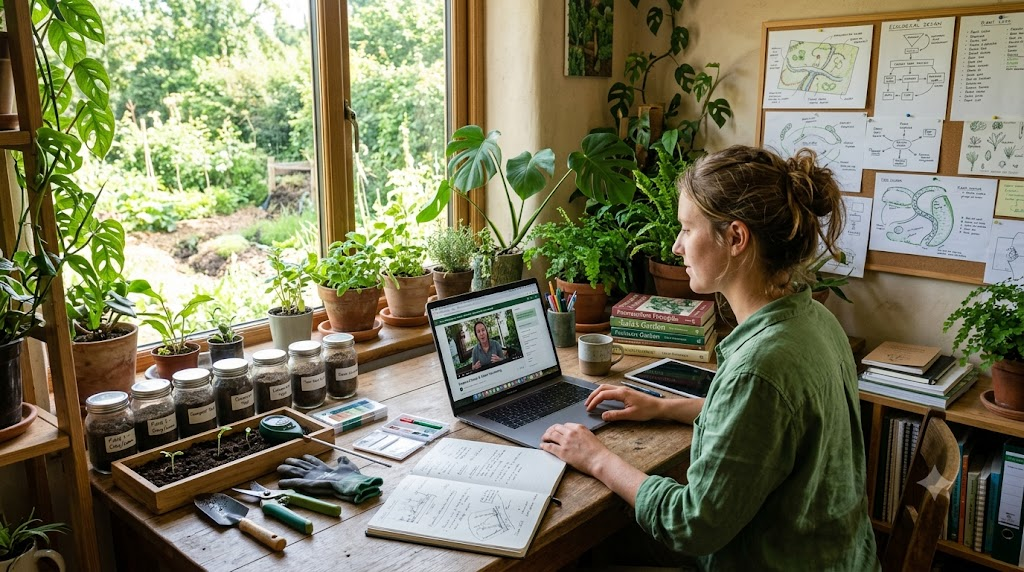
Learning by Doing in a Virtual Environment
Although instruction occurs online, learning happens offline. Students might:
- Conduct site assessments
- Build small-scale systems
- Observe seasonal changes
- Engage with local ecosystems
These experiences are then shared digitally for feedback and reflection.
Key Components of Effective Experiential Online Learning
Not all online programs are truly experiential. High-quality programs share several essential elements.
Project-Based Assignments
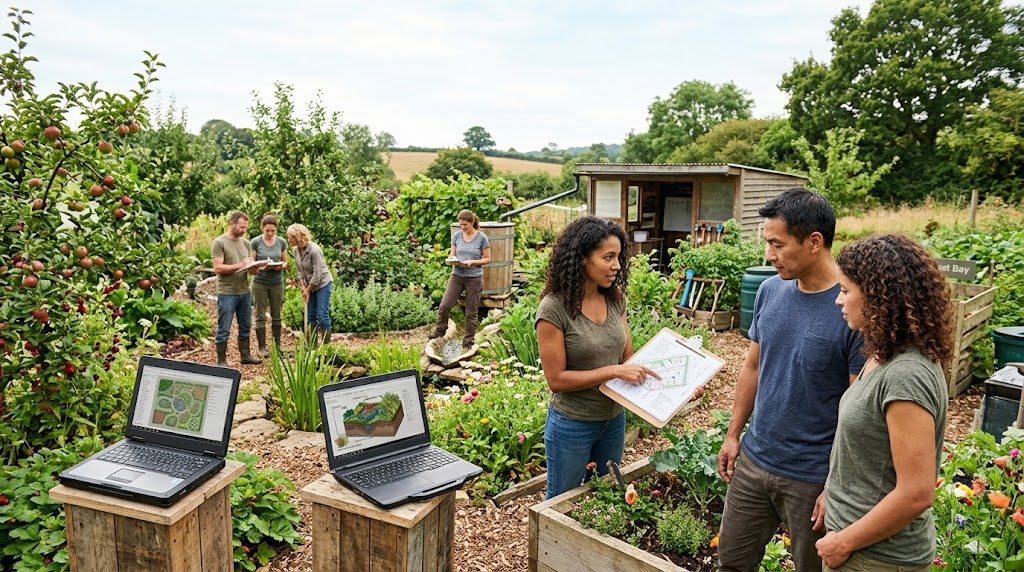
Meaningful projects anchor learning in reality. Rather than hypothetical designs, learners work on real sites and real challenges.
Place-Based Learning at Home
Experiential online learning recognizes that each learner’s location is unique. This diversity becomes a strength, exposing learners to a wide range of climates, cultures, and solutions.
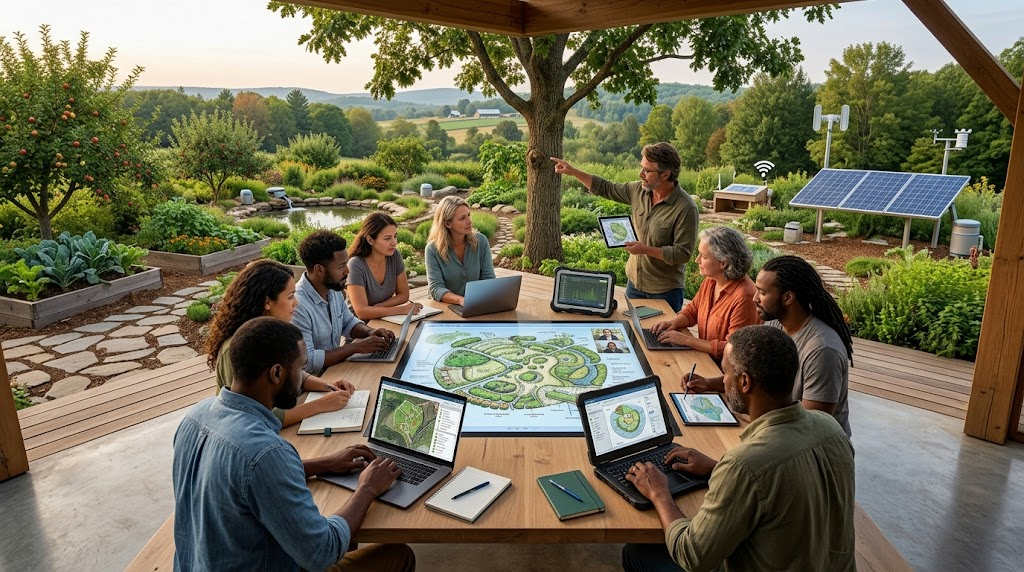
Mentorship and Peer Interaction
Guidance from experienced practitioners and dialogue with peers help learners refine their understanding and avoid common mistakes.
Benefits of Experiential Online Learning for Adult Learners
Permaculture diploma seekers are often adult learners balancing family, work, and community commitments.
Flexibility Without Losing Depth
Experiential online learning allows learners to progress at a sustainable pace while maintaining depth and rigor.
Real-World Skill Transfer
Because learning occurs in real contexts, skills transfer naturally into professional practice, land stewardship, or community projects.
Challenges and Limitations
While powerful, experiential online learning is not without challenges.
Self-Discipline and Time Management
Learners must take responsibility for their schedules and motivation.
Access to Land and Resources
Some projects require access to outdoor spaces, which may vary by learner. Strong programs adapt expectations to individual circumstances.
How to Evaluate a Quality Experiential Online Program
Before enrolling, permaculture diploma seekers should assess program quality carefully.
Curriculum Design
Look for structured pathways that integrate theory, practice, and reflection.
Assessment and Feedback Methods
Meaningful feedback, reflective assessments, and mentor support are signs of a strong experiential model.
The Future of Experiential Online Learning in Permaculture
Experiential online learning continues to evolve, combining digital tools with grounded practice.
Blended Models and Global Learning Networks
Many programs now blend online learning with optional in-person intensives and global peer networks, creating rich learning ecosystems.
For further insight into experiential education models.
Frequently Asked Questions
What is experiential online learning in permaculture?
It is a learning approach that combines online instruction with real-world practice, reflection, and feedback.
Can I earn a permaculture diploma through experiential online learning?
Yes, many reputable programs now offer diploma pathways using this model.
Is experiential online learning effective without in-person classes?
When well designed, it can be highly effective because learning happens in real environments.
How much time does experiential online learning require?
Time commitment varies, but learners typically engage weekly in observation, projects, and reflection.
Do I need access to land?
Not necessarily. Many programs adapt projects to urban, suburban, or community-based settings.
Is experiential online learning suitable for beginners?
Yes, especially when mentorship and clear guidance are included.
Conclusion
Experiential online learning represents a meaningful evolution in permaculture education. For diploma seekers, it offers a practical, ethical, and flexible way to build real-world competence while staying rooted in local contexts. As digital tools continue to improve, experiential online learning is likely to remain a cornerstone of sustainable education.


Responses