
Environmental Science Online Courses: A Powerful Pathway to Permaculture Success in 2026


Introduction to Environmental Science Online Courses
Environmental challenges are shaping the future of agriculture, land design, and sustainable living. For learners pursuing a Permaculture Diploma, understanding the science behind ecosystems is no longer optional—it is essential. This is where environmental science online courses play a powerful role.
Within the first stages of permaculture education, students often focus on design ethics and practical techniques. However, environmental science provides the academic backbone that explains why these techniques work. From soil chemistry to climate systems, online courses offer accessible, structured, and science-based learning that complements permaculture principles.
For permaculture diploma seekers, these courses deliver flexibility, affordability, and global perspectives, all while strengthening ecological literacy. As online education continues to evolve in 2026, environmental science has become one of the most valuable supporting disciplines for regenerative land design and sustainable agriculture.
Why Environmental Science Matters in Permaculture Education
Scientific Foundations for Ecological Design
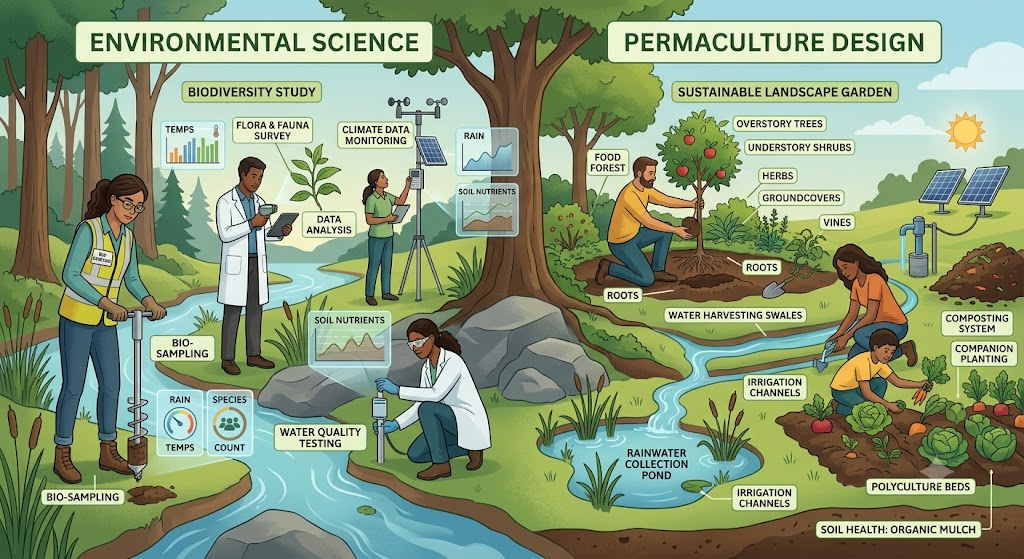
Permaculture thrives on observation and system thinking, but environmental science brings measurable data into the equation. Students learn how nutrient cycles, biodiversity, and energy flows operate in real ecosystems. This scientific grounding enhances decision-making in permaculture design projects.
Environmental science also explains ecosystem limits. Understanding carrying capacity, soil degradation, and water cycles helps permaculture practitioners avoid design mistakes that could harm land resilience over time.
Bridging Ethics and Evidence
Permaculture ethics emphasize care for the earth, people, and future generations. Environmental science validates these ethics with research-backed evidence. When diploma seekers combine ethics with scientific reasoning, their designs gain credibility and long-term effectiveness.
Key Benefits of Environmental Science Online Courses for Diploma Seekers
Flexible Learning for Field-Based Students
Most permaculture learners balance studies with hands-on land work. Online learning allows students to study ecosystem theory during off-hours without sacrificing practical experience. Recorded lectures, downloadable materials, and self-paced assessments make learning adaptable.
Global Perspectives on Sustainability
Environmental science online courses often include global case studies. These expose learners to climate adaptation strategies, conservation methods, and sustainable agriculture models from different regions. This global view strengthens permaculture designs across diverse climates.
Cost-Effective Skill Development
Compared to traditional university programs, online courses are affordable and accessible. Many platforms offer certificates, audit options, or modular learning paths, making them ideal supplements to a Permaculture Diploma.
Core Topics Covered in Environmental Science Online Courses
Soil Science and Regeneration
Soil is the foundation of permaculture. Environmental science courses explain soil structure, microorganisms, nutrient cycling, and erosion control. This knowledge supports regenerative farming, composting systems, and long-term soil health strategies.
Climate Systems and Resilience
Understanding climate patterns is critical for land design. Students learn about atmospheric processes, climate change impacts, and adaptive strategies. This empowers permaculture practitioners to design landscapes that remain productive under changing conditions.
Water Cycles and Watershed Management
Water harvesting and conservation are central to permaculture. Environmental science explores hydrology, watershed dynamics, and water quality management. These insights improve rainwater catchment, swales, and irrigation planning.
Biodiversity and Ecosystem Stability
Courses examine species interactions, food webs, and habitat conservation. This helps diploma seekers design systems that encourage biodiversity while maintaining productivity and ecological balance.
How Environmental Science Online Courses Complement a Permaculture Diploma
Enhancing Design Projects
Many Permaculture Diplomas require final design submissions. Environmental science coursework strengthens these projects with scientific data, environmental assessments, and sustainability metrics that meet professional standards.
Improving Career Opportunities
Graduates with both permaculture credentials and environmental science knowledge are more competitive in sustainability roles. These include land management, ecological consulting, regenerative agriculture, and environmental education.
Building Research and Analysis Skills
Environmental science teaches data collection, analysis, and reporting. These skills help permaculture practitioners evaluate system performance and improve designs based on evidence rather than assumptions.
Choosing the Right Environmental Science Online Course
Accreditation and Credibility
Select courses offered by recognized universities or reputable learning platforms. Accreditation ensures academic rigor and improves the value of certificates for professional use.
Curriculum Relevance to Permaculture
Look for courses covering ecology, soil science, climate change, and conservation biology. Avoid overly industrial or extractive-focused programs that do not align with regenerative values.
Assessment and Practical Application
The best courses include case studies, applied assignments, and real-world problem-solving. These mirror permaculture design processes and enhance learning retention.
FAQs About Environmental Science Online Courses
1. Are environmental science online courses suitable for beginners?
Yes. Many courses are designed for introductory learners and gradually build complexity, making them ideal for permaculture diploma seekers at any stage.
2. Can these courses replace formal environmental degrees?
They do not replace full degrees, but they strongly complement permaculture education and enhance professional credibility.
3. How long do environmental science online courses take?
Most courses range from 4 to 12 weeks, depending on depth and weekly study time.
4. Do these courses include certifications?
Many platforms offer certificates upon completion, which can be added to professional portfolios.
5. Are environmental science online courses recognized globally?
Courses from accredited institutions are widely recognized, especially when paired with practical permaculture experience.
6. How often should permaculture students study environmental science?
Continuous learning is ideal. Even one or two courses per year can significantly improve design knowledge and sustainability outcomes.
Conclusion: Strengthening Permaculture Through Science
For permaculture diploma seekers, education does not stop at design principles alone. Environmental science online courses provide the scientific depth needed to understand ecosystems, adapt to climate challenges, and design regenerative systems with confidence.
By blending permaculture ethics with environmental science knowledge, learners gain a balanced, future-ready education. This powerful combination supports healthier landscapes, resilient food systems, and informed environmental stewardship in 2026 and beyond.


Responses