
What Is Permaculture? A Powerful Guide for Diploma Seekers

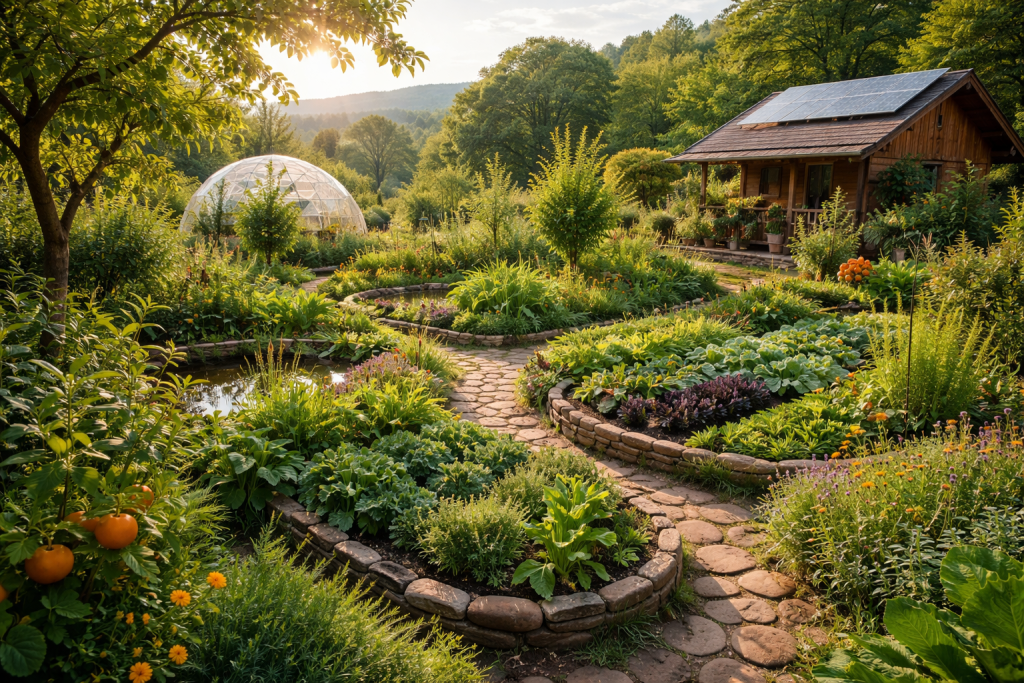
Understanding What Is Permaculture
What is permaculture? At its core, permaculture is a design system that helps humans create sustainable, regenerative environments by working with nature instead of against it. The term was developed in the 1970s by Bill Mollison and David Holmgren, combining the words permanent and agriculture. Over time, the concept expanded to include permanent culture, meaning systems that support long-term ecological and social well-being.
For permaculture diploma seekers, understanding what is permaculture goes far beyond gardening. It is about systems thinking, ethical design, and practical application across land use, food systems, water management, economics, and even community structures. Permaculture encourages observation, patience, and thoughtful intervention—skills that are central to advanced design work.
In today’s world of climate instability, soil degradation, and food insecurity, permaculture offers real-world solutions. It teaches how to regenerate landscapes, increase biodiversity, and design systems that are resilient and productive. This is why permaculture education has become increasingly valuable for those seeking meaningful environmental careers.
Core Ethics Behind Permaculture
Permaculture is guided by three foundational ethics. These ethics act as a moral compass for all design decisions and are especially important for diploma-level work.
Earth Care Explained
Earth Care focuses on protecting and regenerating natural systems. This includes soil health, water cycles, forests, and wildlife. Permaculture designs aim to restore ecosystems rather than exploit them, ensuring long-term sustainability.
People Care Explained
People Care recognizes that human needs—such as food, shelter, education, and connection—must be met in healthy ways. Permaculture promotes self-reliance, community cooperation, and designs that reduce stress and labor.
Fair Share and Resource Limits
Also known as Return of Surplus, this ethic encourages sharing excess resources and setting limits to consumption. For diploma seekers, this ethic reinforces responsible leadership and ethical land stewardship.
The 12 Permaculture Design Principles
David Holmgren identified 12 principles that guide effective permaculture design. These principles help translate ethics into action.
Systems Thinking in Design
Permaculture views landscapes as interconnected systems. Changing one element affects many others. Diploma students learn to design for relationships, not isolated components.
Observe and Interact
Observation is the foundation of good design. Before acting, permaculture designers study climate, soil, water flow, plants, and human activity.
Use and Value Renewable Resources
Permaculture prioritizes sunlight, rainwater, wind, and biological resources to reduce reliance on non-renewable inputs.
(Additional principles are explored in depth during diploma studies, including diversity, feedback loops, and small-scale solutions.)
Permaculture Design Process (P.A.O.L.U.)
Permaculture designs follow a structured process to ensure thoughtful outcomes.
Site Analysis and Mapping
Designers assess land features such as slope, soil type, vegetation, and microclimates. Accurate mapping is a core diploma skill.
Zone and Sector Planning
Zones organize elements based on frequency of use, while sectors analyze external energies like sun, wind, and fire. These tools help create efficient, resilient systems.
Permaculture in Practice
Permaculture is highly practical and adaptable to many environments.
Food Forests and Regenerative Agriculture
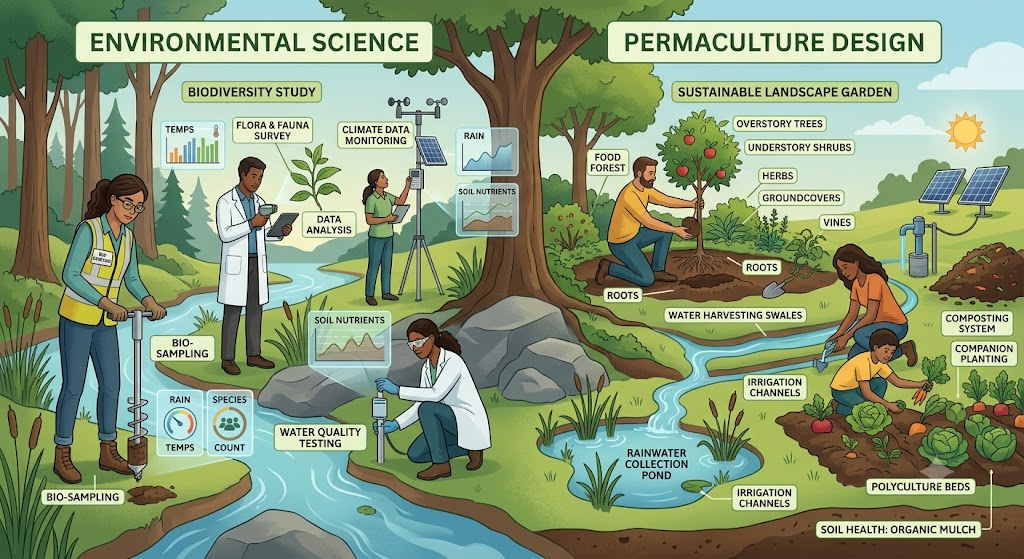
Food forests mimic natural ecosystems using layered plantings of trees, shrubs, and groundcovers. They produce food while improving soil health.
Water Harvesting Systems
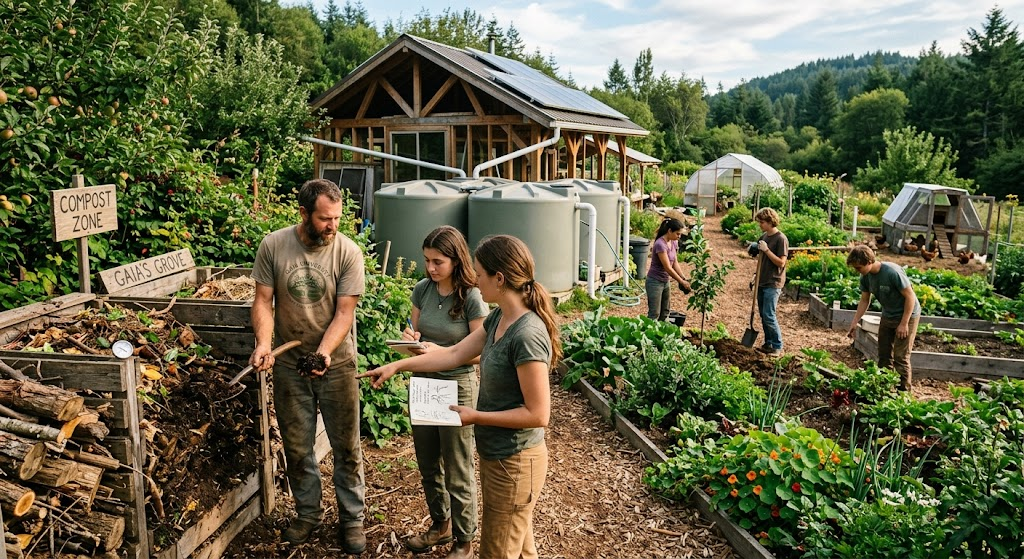
Techniques like swales, ponds, and rainwater tanks slow and store water in the landscape, reducing erosion and drought risk.
Natural Building Concepts
Permaculture also applies to shelter, using materials like earth, straw, and timber to create energy-efficient buildings.
What Is Permaculture Diploma and Why It Matters
A permaculture diploma represents advanced competency in design and teaching.
Skills You Gain from a Diploma
Diploma holders develop skills in site design, project management, client consultation, and systems analysis. These skills are recognized globally.
Career Pathways for Diploma Holders
Graduates often work as designers, educators, consultants, or project managers in sustainability-focused fields. Many also start their own regenerative projects.
Common Misconceptions About Permaculture
- Permaculture is not just gardening
- It is science-based, not guesswork
- It works in urban, rural, and suburban settings
- It focuses on long-term systems, not quick fixes
FAQs About What Is Permaculture
1. What is permaculture in simple terms?
It is a way of designing sustainable systems by copying how nature works.
2. Is permaculture only for farms?
No, it applies to homes, cities, businesses, and communities.
3. Do I need land to study permaculture?
No. Many diploma seekers work with case studies or community projects.
4. How long does it take to earn a permaculture diploma?
It varies, but typically several years of applied design work.
5. Is permaculture scientifically supported?
Yes, it integrates ecology, soil science, hydrology, and systems theory.
6. Why is permaculture important for the future?
It offers solutions for climate resilience, food security, and ecological repair.
Conclusion: Your Path Forward in Permaculture
Understanding what is permaculture is the first step toward becoming a skilled designer and ethical land steward. For permaculture diploma seekers, this knowledge forms the foundation for advanced practice, teaching, and leadership. With its strong ethics, proven principles, and practical tools, permaculture empowers you to design systems that truly support life—now and for generations to come.

Responses