
Trauma Informed Education: A Powerful 7-Step Framework for Transformative Learning

Understanding Trauma in Educational Contexts
Trauma is not limited to extreme or isolated events. In higher education, especially at the post-graduate level, trauma may stem from prolonged stress, displacement, discrimination, professional burnout, or adverse learning experiences. Many adult learners return to academia while balancing work, family responsibilities, and unresolved psychological stressors. These experiences can significantly affect concentration, motivation, memory, and academic confidence.
For post-graduate diploma students, the pressure to perform at an advanced academic level can intensify existing stress responses. Tight deadlines, high-stakes assessments, and competitive environments may unintentionally mirror earlier negative experiences, triggering disengagement or anxiety. Recognizing trauma as a learning barrier rather than a learner deficit is a critical first step toward inclusive education.
Foundations of Trauma-Responsive Pedagogy
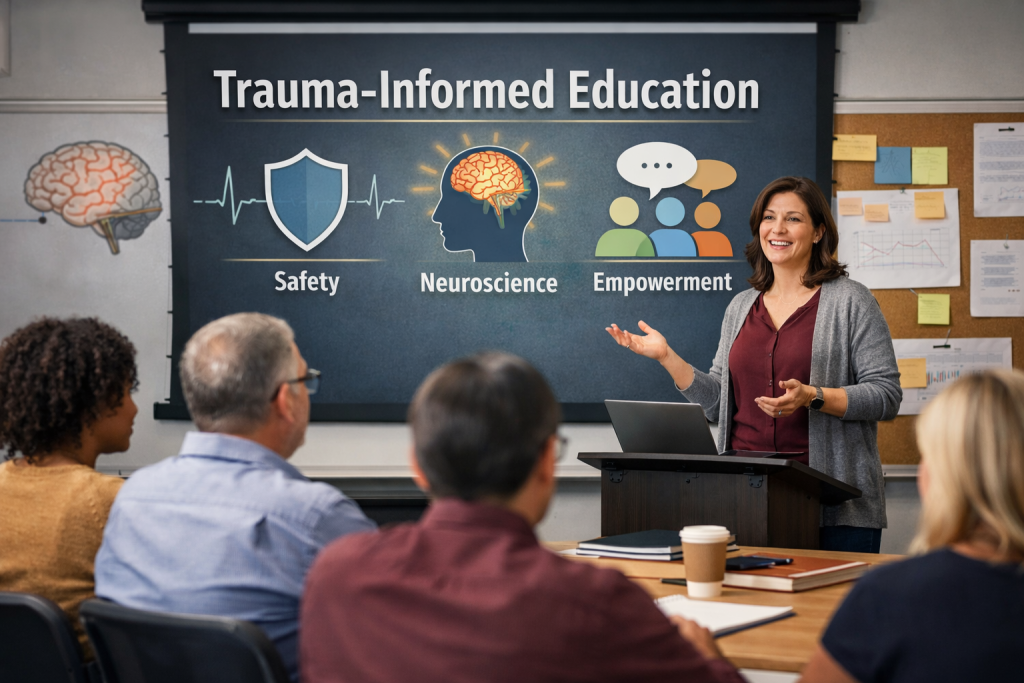
At its core, trauma-responsive pedagogy is built on principles that prioritize human dignity and emotional safety. These principles include safety, trustworthiness, choice, collaboration, and empowerment. When learners feel psychologically safe, their capacity for critical thinking and creativity improves.
Empowerment is especially important for adult learners. Providing choice in assessment formats, encouraging reflective dialogue, and validating lived experience allows students to reclaim agency in their learning journey. Rather than lowering academic standards, this approach removes invisible barriers that prevent capable students from thriving.
Neuroscience Behind Trauma and Learning
From a neurological perspective, trauma activates the brain’s survival mechanisms. When the stress response is constantly engaged, the prefrontal cortex—responsible for reasoning, planning, and problem-solving—becomes less effective. This has direct implications for post-graduate study, where analysis, synthesis, and independent research are essential.
Chronic stress also affects working memory and executive function. Educators who understand these mechanisms can design learning experiences that reduce unnecessary cognitive load. Clear instructions, predictable schedules, and transparent assessment criteria help the brain shift from survival mode to learning mode.
Implementing Trauma-Aware Practices in Higher Education
Practical implementation does not require educators to become therapists. Instead, it involves intentional design and communication. Trauma-aware curriculum design includes flexible deadlines where appropriate, scaffolded assessments, and opportunities for formative feedback.
Communication also plays a vital role. Using respectful language, normalizing help-seeking behavior, and setting clear expectations contribute to a supportive learning climate. Simple practices—such as sharing lesson agendas in advance or allowing brief reflective pauses—can significantly enhance learner engagement.
Role of Educators and Institutions
While individual educators can make a meaningful difference, sustainable impact requires institutional commitment. Faculty development programs should include training on trauma awareness, reflective teaching, and inclusive assessment. Institutions must also ensure access to academic advising, counseling services, and disability support.
Policies that acknowledge mental health, flexible learning pathways, and culturally responsive teaching signal to students that their well-being matters. According to research shared by organizations such as SAMHSA, systemic support is essential for trauma-responsive environments.
Benefits for Post-Graduate Diploma Students
For post-graduate diploma students, the benefits are both immediate and long-term. Trauma-responsive learning environments improve retention, deepen engagement, and foster intellectual risk-taking. Students are more likely to participate in discussions, collaborate effectively, and persist through academic challenges.
Professionally, these learners carry forward ethical, empathetic leadership skills into their fields. Whether in education, healthcare, business, or social services, graduates who experience trauma informed education are better equipped to lead with compassion and resilience.
Challenges and Ethical Considerations
Despite its benefits, this approach requires careful boundaries. Educators must avoid over-disclosure, role confusion, or emotional overextension. Trauma-responsive teaching is about supporting learning, not diagnosing or treating trauma.
Institutions must also guard against staff burnout by providing adequate resources and realistic expectations. Ethical implementation balances empathy with academic rigor and professional responsibility.
Future Directions in Trauma-Responsive Higher Education
As higher education becomes increasingly diverse and global, trauma-responsive approaches will play a central role in equitable learning. Digital learning environments, in particular, must consider accessibility, flexibility, and social connection.
Ongoing research, student feedback, and interdisciplinary collaboration will continue to refine best practices, ensuring that advanced education remains both intellectually challenging and human-centered.
Frequently Asked Questions
1. Is trauma-responsive teaching suitable for adult learners?
Yes. Adult and post-graduate learners often carry complex life experiences that directly affect learning.
2. Does this approach lower academic standards?
No. It maintains rigor while removing unnecessary psychological barriers.
3. Do educators need clinical training?
No. Awareness, empathy, and clear boundaries are sufficient.
4. How does this benefit professional practice?
It builds emotional intelligence, ethical reasoning, and leadership capacity.
5. Can this be applied in online programs?
Absolutely. Clear structure and supportive communication are especially effective online.
6. Is institutional support necessary?
Yes. Sustainable impact requires policy alignment and faculty development.
Conclusion
Trauma informed education is not a trend—it is an evidence-based, ethical response to the realities of modern learning. For post-graduate diploma students, it creates conditions where academic excellence and human well-being coexist. By embedding empathy into pedagogy, higher education can truly become transformative.



Responses